by Dr Ghulam Mohammad Khan and Dr Manzoor Ahmad Parey
A chance meeting uncovers poet Shahbaz’s enduring legacy, exploring how longing, suffering, and acceptance transform pain into spiritual inheritance and resilience.
We remember it as a morning of light and sorrow. It was early June. The sun had not yet learned to burn. The sudden demise of a close relative of our friend took us to Kupwara, a district we had never visited before. We went to pay our respects, carrying nothing but our presence. Curiosity stirred within us like a caged bird. We wished to see everything. Yet in Kashmir, nature’s apparel scarcely changes from one valley to another. The landscape around the road repeats itself like a familiar verse, a refrain that never tires. Only one thing seized our attention. An old chinar stood by the roadside. Its branches were dry, bare, and peeled. Against the backdrop of the sky, that tree looked like a charcoal sketch drawn by a mourning hand. To witness a massive chinar, leafless and dried at summer’s threshold, felt like a sorrowful elegy. As John Keats wrote, “the sedge has withered from the lake, and no birds sing.” So too did that ancient tree mourn its own silence. We did not know then that this image would return to us, again and again, as we walked deeper into the geography of grief.
By noon, we reached Kunan Poshpora. We stepped inside the tent to pay our respects; we found a crowd steeped in silence. That silence grew heavy like a cloud pregnant with unshed tears. Then someone began reciting prayers in Arabic for the departed soul. Soon, most of the men rose and left. People rushed in and then rushed out, a restless tide of grief and duty.
Then a group in black and blue uniforms walked in. They seized every eye in the tent. Their leader announced they were from a blood donation NGO. They had travelled from a distant place. They came to honour a man who had donated forty-nine pints of blood to their organisation. Think of that number. Forty-nine. Each pint a drop of his own life. Each drop a thread binding him to strangers he would never meet. As the saying inscribed on the Buland Darwaza in Fatehpur Sikri goes, “The world is a bridge, pass over it but build no house upon it.” Yet this departed soul built bridges of blood. He made his body a river for the thirsty. We watched in silence, wondering at the architecture of human generosity.
Then a middle-aged gentleman stood. He wore an ornate sleeveless waistcoat over a dark kurta salwar. His face was weathered like a walnut tree that had witnessed every season. He rose to thank the uniformed men. But when he spoke, the air itself leaned in to listen. His Kashmiri was not conversational. It was literature distilled into breath. Each word carried metaphorical grace. Each pause held the weight of control. Each syllable was precise as a blade and arresting as dawn. He turned that humble tent into a hall of learning. We all listened with the patience of students who had finally found their teacher. His true mastery lay in how he unleashed a flurry of Kashmiri verses. He ascribed them to his Baba Soab. Then he wove those verses into the fabric of the moment. He tied them to the passing of the departed soul. He spoke of impermanence. He reminded us that human existence is nothing but a froth on the river of time.
For one crystalline moment, we believed this was the hidden purpose of our journey. Not the landscape. Not the condolence. But this man’s voice. The way he articulated those verses showed how deeply he had lived inside literature. How deeply he had read his late Baba Soab. And the manner in which he thanked those who had travelled from faraway places was itself a poem. It rose like prayer beads slipping through trembling fingers. It fell like autumn rain on parched ground. As the Persian saying goes, “Words should be like pearls scattered from a broken necklace.” That man’s thanks were such pearls. Each one luminous. Each one irreplaceable. We sat there, two strangers in a tent of mourning, and felt ourselves being transformed by the gravity of his utterance.
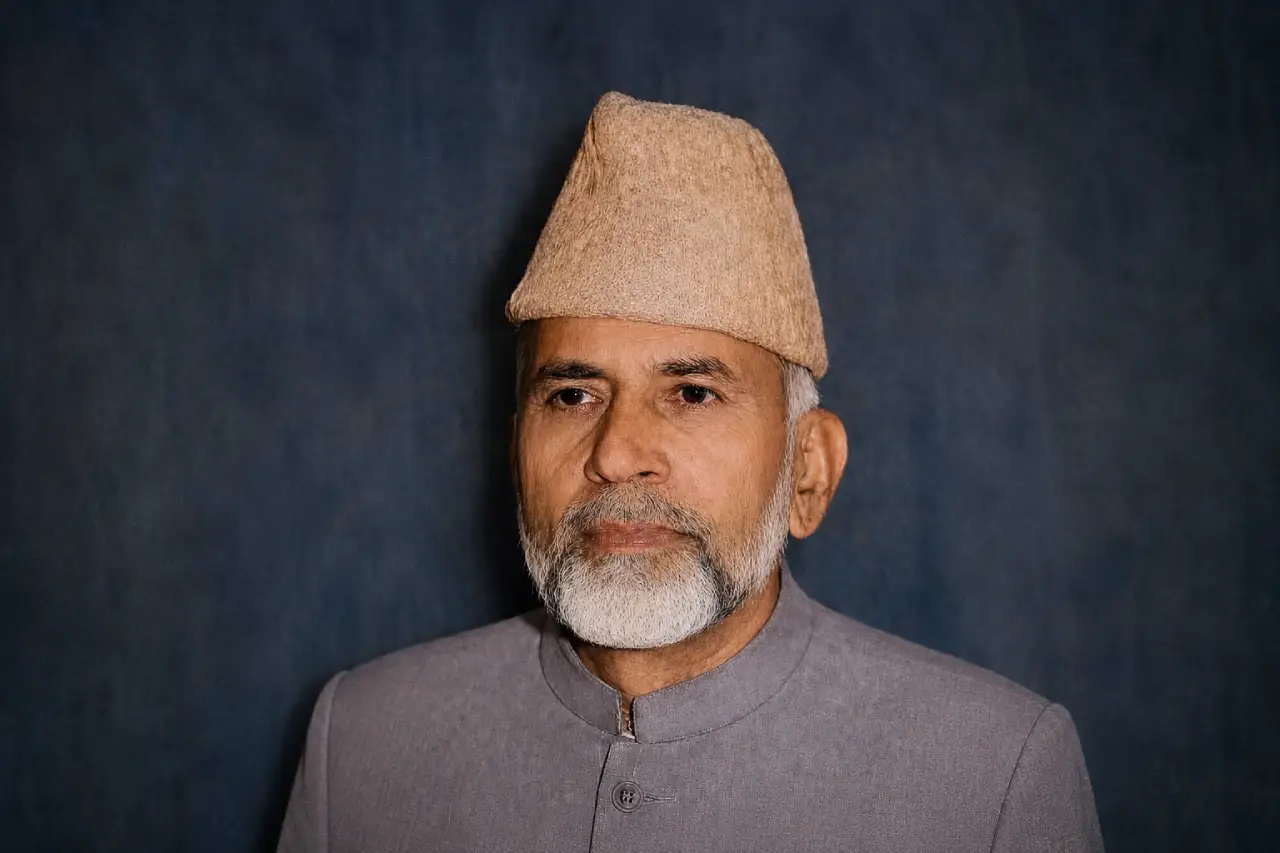
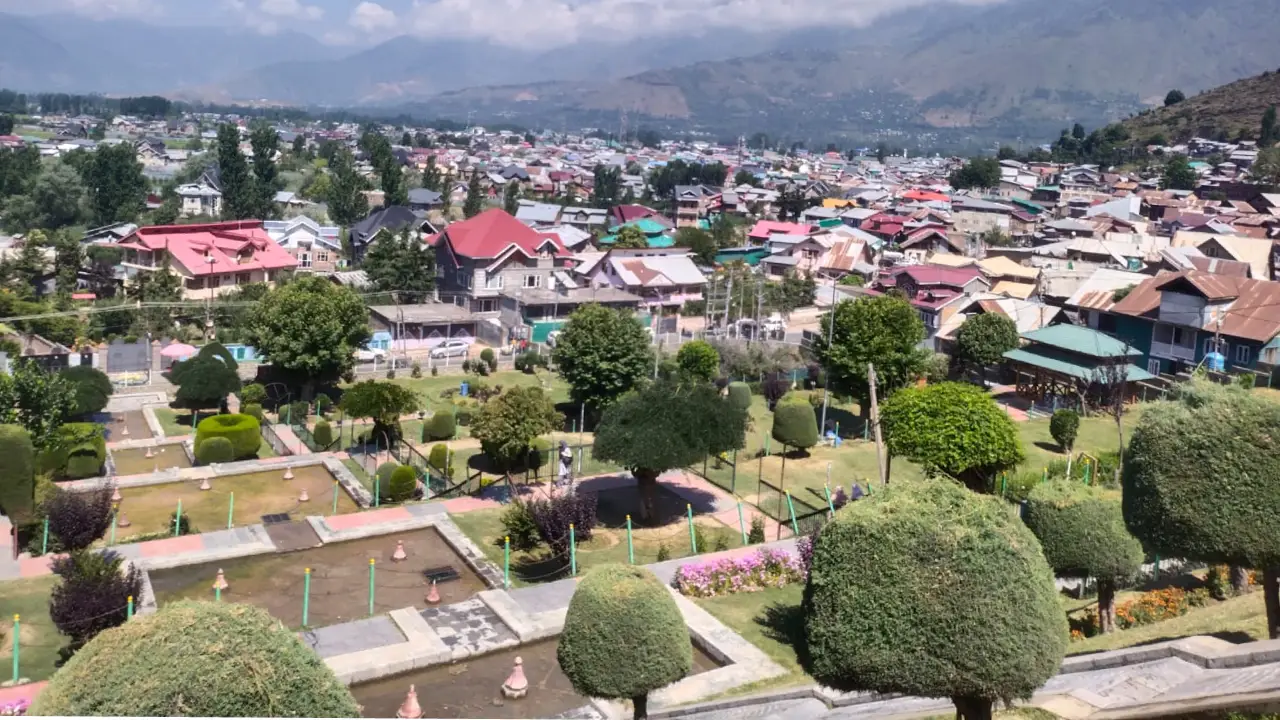
When we rose to leave, we shook hands with him. But he did not let our hands go for a while. He held them with the affection of a person who had known us for years. His grip was warm as a hearth in winter. “Who are you?” he muttered. “And where do you come from?” “From Bandipora,” we replied. A light flickered in his eyes like the first star at dusk. “That is where my Baba Soab wrote the song,” he said promptly. Then he recited its opening line like a secret passed between souls: Thovuth Khodaya Lalavun Taqdeer Myani Bapath. “The poet is your father?” we asked, almost startled by the revelation. He smiled. “Yes.” That smile was a key. It unlocked a door we had never noticed.
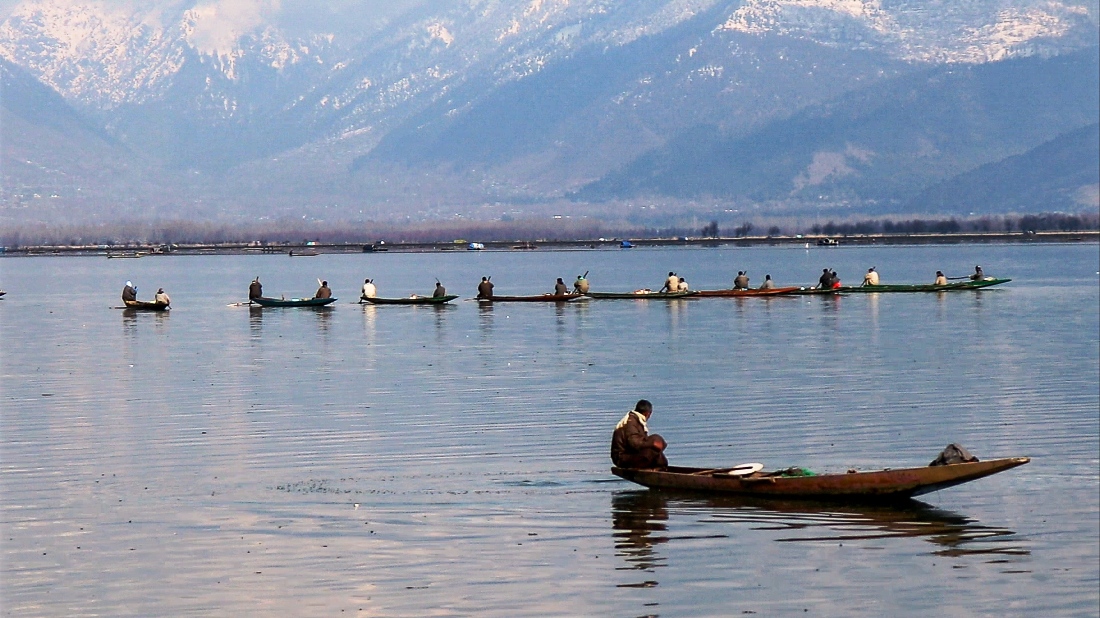
This is how we came to know the poet. His name was Ali Mohammad Quershi. His pen name was Shahbaz. A revolutionary voice of the Kashmiri language. He belonged to Kupwara. That song had lived in our ears for years, but we had never known its creator. This one was written on March 5, 1970. It was composed on the banks of the Wular Lake, in Kehnusa, a village that rests by the lake’s own banks like a child at its mother’s knee. Kehnusa lies in Bandipora. He recited the opening lines into our ears. We promised him our analysis. He pressed our hands and released them. We left Kunan Poshpora carrying a name and a debt.
Back home, we began reading about Shahbaz. That is when the weight of our ignorance pressed upon us like a stone on the chest. We know so little of our own literary figures. Their contributions lie scattered like unstrung pearls at the bottom of a forgotten well. More importantly, these poets stand equal to most of the poets we read in English. Thematically and formally, they hold the same ground. Yet we adore only the distant voice. We cross oceans in our reading but forget the spring at our doorstep. This pervasive disownment of the local is a quiet tragedy. It is a wound that does not bleed but never heals. It demands a different space for exploration. A certain and fearless room where our own verses breathe aloud like incense in an empty shrine.
We searched. We found the poem and translated it into English. Its English translation rests here, a fragile vessel carrying an ancient cargo. Shahbaz wrote:
Thowuth khudaya lalwun taqdeer Myane Bapath
Kyah ous naa kunay kanh tadbeer Myane Bapath
(O Lord, You left this reeling fate for me to bear—
Was there no plan spared for me?)
Az taam lage tamanna sari maiy girde Aabas
Khwabs akes che lach lach tabeer Myaane Baphat
(All my life’s longings have drowned in one whirlpool’s crest—
A single dream holds a thousand interpretations for me.)
Baiqal hakeem raawakh lache bedd zamadah kare kare
Kenchaa chh Soonch badlaiy tadbeer Meyane Bapath
(Fool of a Hakeem, you’ll lose yourself in every remedy—
Devise some other cure, some different reckoning for me.)
Kus thaawe waanse laadan myaanes mates amaaras
Kus aane yara sanz akh tasveer Myaane Bapath
(Who can count the years of this mad, unhinged desire?
Who will bring a sign of the beloved for me?)
Hargaah su pare te kune wiz tahreer myuon Qaasid
Sharan che kare ze paanaiy tafseer Myaane Bapath
(If ever the messenger reads my letters aloud,
You yourself must interpret the verses for me.)
Bad e sabaa chh wanzes chaanes yenas chu peyaraan
Tate kare ze bas youhuy akh taqreer Myaane Bapath
(O morning breeze! carry this word—their coming is awaited—
And when you reach there, perform only this elocution for me.)
Yudwaiy su paan’ne dess zanh akh qatra chawih Saqee
Zahras chu Nabaduk hyuv taseer Meyani Bapath
(When the cupbearer’s own hand pours me a single drop,
Even poison will run sweet as honey for me.)
Chate draakh rougih rooshith mettih dyutt panun amanat
Akh tchuhh te kare ze haiy zanh takheer Meyani Baapath
(You too walked away displeased—I too proclaimed my end—
Still, you could have held back just one moment for me.)
Yena sa zanah gindun hekh zulfan gulaab mashny
Bad-e-sabaa khasi yena takhseer myaane baapath
(Don’t touch that curling lock. You’ll forfeit all innocence.
O morning breeze, beware: carry no forgiveness for me.)
Oush waane kyaah chetts pyee kumah saraan gye wujoodas
peetrath chh waanse loluk ta’zeer myaane baapath
(O river of tears, at last you see how every shore is flooded—
You have borne love’s sentence all your life for me.)
Shahbaz doud loluk lookan chu kryuoth baasan
Rozen ye doud roozen jageer Myaane Bapath
(Shabaz, this pain that makes the whole world turn away—
Let this same pain become my jagir, an estate, for me.)
We held these verses in our hands like fragments of a broken mirror. We began to read. A ghazal walks on the crutches of its refrain. Here, that refrain is “for me.” It is a whisper that becomes a wound. Translation theory reminds us that every rendering is a loss and a gain. Walter Benjamin spoke of the afterlife of a text. When Shahbaz’s Kashmiri meyani bapath travels into English, it carries the echo of a solitary man pressing his palm against the glass of fate. The domesticating impulse might soften that solitude, but the foreignness of that repeated plea resists. Every verse is a closed chamber. Yet each opens onto the same abyss. The tone is sombre, a quiet thunder rolling across an empty plain. God, the cupbearer, the healer, the beloved. These are not saviours. They are imagined interlocutors, figures conjured only to be dismissed.
The poet calls to the Divine, to the intoxicating hand of the saqi, to the indifferent beloved. He asks them to rearrange his fortune. But their silence is the only reply. He turns to the Hakeem, the foolish physician. He asks for a cure. Yet the true malady is existence itself. This is where critical theory finds its mirror. The poem does not wail. It recoils into silence. Each verse ends not with a scream but with a surrender. That repetition binds the scattered shards of the ghazal into a single lament, a necklace of identical beads.
Despite all his dreams disappearing in the devouring whirlpool’s sway, they do not cease. They refuse to be stilled. Desires and dreams continue to find their way, carving paths through the very waters that threaten to drown them. They do not stop simply because they end in the whirlpool. Their nature is that of the Phoenix. They live and resurrect through the very intimidation of mortality and uncertainty. Each dissolution births a new longing. Each loss becomes a seed for the next dream. This is the paradoxical pulse of the poem. The whirlpool devours, but the dreams keep arriving, like waves that break only to reform. The first verse opens with a question, a desperate inquiry flung at the heavens: Was there no planning done for me? It is a voice trembling on the edge of accusation.
The last verse closes with a capitulation, but not of defeat. It is a capitulation of bravery, a quiet victory of the spirit. The poet does not denounce his fate. He embraces it. He calls it his jagir, his estate, his inherited land. This is not the resignation of a broken man. This is the sovereign act of a soul that has chosen to own its own emptiness. The English translation of the word “estate” carries the weight of property, permanence, and belonging. Shahbaz transforms pain into patrimony. This is the existential turn. Kierkegaard spoke of the leap of faith. Camus saw Sisyphus happy. Shahbaz, sitting by the Wular in Kehnusa, sees his dangling fate and calls it home. The permanent sway, the eternal uncertainty, the unanswered questions. These become his inheritance. He does not ask for relief. He asks for the right to claim his suffering.
The poem does not descend into silence. It ascends into ownership. Shahbaz does not ask for the whirlpool to cease. He asks for the right to reside within its circumference. The Hakeem sought cures. The poet sought none. He found the only remedy that endures, which is the refusal to disown the wound. This is the jagir of the soul. It has no borders. It cannot be seized by time or ravaged by forgetfulness. Think of that leafless chinar on the road to Kupwara. Its bare branches looked like a sketch against the sky. That tree did not weep for its missing leaves. It simply stood, naked and unashamed. Shahbaz does the same. He stands before the Divine, before the indifferent beloved, before the foolish physician, and declares his barrenness as his only wealth.
The ghazal, with its independent verses, becomes a garden of such claims. Each verse is a separate plot, yet the refrain binds them all into one landscape of longing. The Hakeem, the cupbearer, the beloved, the morning breeze. They are all witnesses to this final bequest. The poet hands himself over to the whirlpool, not as a victim but as an heir. As the Palestinian poet Mahmoud Darwish once wrote, “We have on this earth what makes life worth living.” Shahbaz has his pain on this earth. That is enough. That is his jagir. The poem does not end. It echoes, like the water of Wular, forever swaying.
On that March morning in 1970, by the banks of Wular, the water reflected not just the sky but the face of a man who had made peace with the absolute. The lake still sways. Kehnusa still watches. And the poem still travels, crossing languages and decades, carrying its silent cargo of courage. Translation cannot diminish it. Criticism cannot contain it. The poem is its own estate, a jagir bequeathed to every reader who has ever tasted poison and called it honey. Shahbaz knew what the existentialists would formalise. But he knew it in his marrow, in the sweat of his brow, in the ache of his beloved’s absence. He did not theorise emptiness. He inhabited it. And by inhabiting it, he transfigured it.
The Persian poet Hafiz once wrote, “The heart is a thousand-stringed instrument that can only be tuned with love.” Shahbaz tuned his heart in the love of unanswered prayers. He played the music of helplessness until helplessness became a melody. This poem is that melody. It does not resolve. It does not harmonise with hope. But it lingers, like the echo of a lone voice across the Wular, asking nothing more than to be heard. And now, we have heard it. We have claimed it. That is our jagir too.

We dedicate this essay to the son of Shahbaz. He pressed our hands in a tent of mourning. He recited his father’s verses into our ears. He trusted us with a legacy. We return it now, not as analysis alone, but as homage. The leafless chinar on the road to Kupwara stood naked against the sky. Shahbaz stood naked against fate. We are all, in the end, bare branches sketching our lives against the vast indifference of the heavens. But some among us, like Shahbaz, turn that nakedness into an estate. They make their vulnerability their only wealth. And in doing so, they teach us how to endure. This is what we learned on that sunny morning in June. This is what we carry back to Bandipora, to the banks of Wular. This is what we now offer, as a gift, to the poet’s son.
(The authors teach at Government Degree College, Bandipora. Ideas are personal.)