by Dr Fayaz Shawl
Eating vegetables and protein before rice or bread may reduce post-meal glucose spikes. A Kashmir-focused guide offers practical advice on traditional meals, Kandur breads, wazwan and diabetes management.

For many Kashmiri families, a meal brings together rice, haakh, dal, yoghurt and dishes shared across generations. Diabetes advice should make room for these familiar foods. The aim is to help people enjoy them in portions and combinations that support better health.
What we eat and how much we eat remain central to diabetes care. The order in which we eat may also help. A practical meal sequence is to begin with vegetables, either on their own or mixed with a modest serving of plain, unsweetened Kashmiri curd (dahi or zamutdud). Next, eat protein foods or dal, and finish with a modest portion of rice or roti. Avoid beginning the meal with rice or roti.
A Helping Order?
During digestion, the starch in rice and bread is broken down into glucose. In people with diabetes, the body has difficulty keeping blood glucose within a healthy range. A large portion of carbohydrate can therefore produce a substantial rise in blood sugar.
Small clinical studies have found that eating vegetables and protein before carbohydrate can reduce the immediate rise in blood glucose in people with type 2 diabetes. This is a useful additional strategy, but the evidence is stronger for short-term responses after a meal than for lasting improvements in diabetes control or the prevention of complications.
Foods interact during digestion. Fibre, protein and fat can influence how quickly a meal leaves the stomach and how rapidly glucose reaches the bloodstream. No protective lining makes a large serving of rice harmless. Portion size still matters.
 Nut Serving
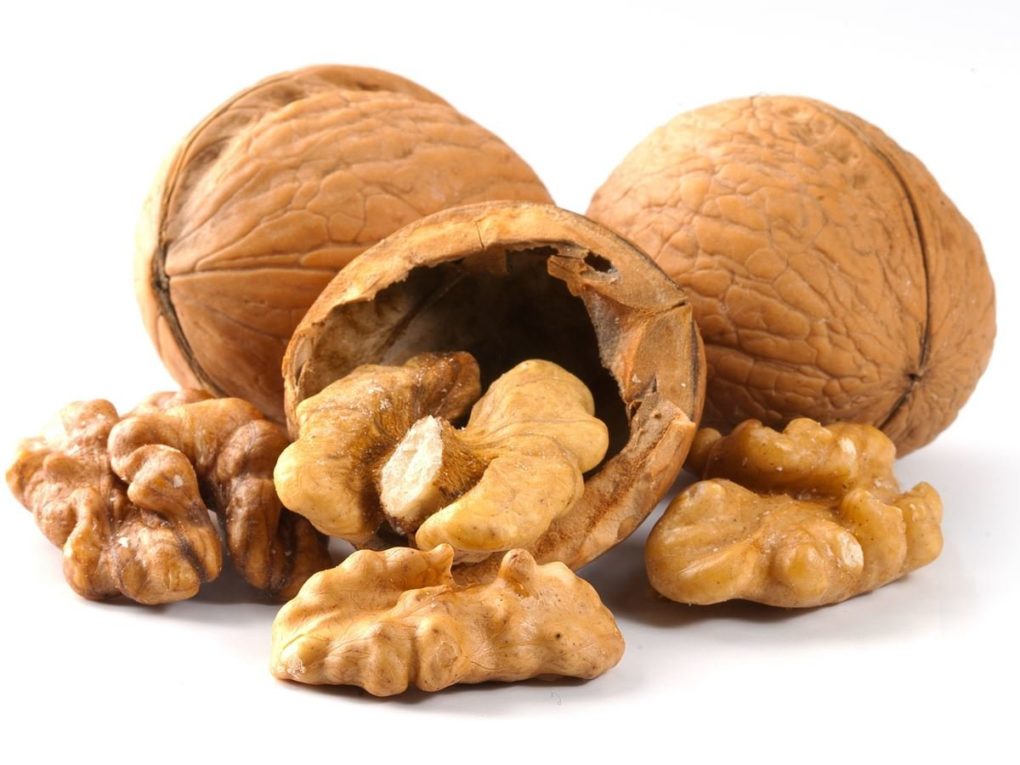
One option is to eat a small serving of unsalted Kashmiri walnuts and almonds 20–30 minutes before a meal, with a glass of water. About 10 almonds and four walnut halves—roughly 20 grams in total—is a practical portion, not a prescribed dose. Count these nuts as part of your daily food intake, replacing other calories rather than adding them before every meal. Avoid nuts if you have a nut allergy.
In my clinical experience using continuous glucose monitors (CGMs), I have noticed smaller glucose spikes when nuts are eaten before meals. This is an observation, not the result of a controlled study. Meal size, food choices and physical activity also affect glucose levels.
A small randomised study involving Asian Indians with prediabetes found benefits from eating 20 grams of almonds 30 minutes before meals. That study did not test the combination of walnuts and almonds or a 20-minute interval. Nuts provide fibre, protein and unsaturated fats, which may influence digestion and feelings of fullness. Water supports hydration and may help you feel full sooner, but it has not been shown to lower glucose further. Anyone who has been prescribed a fluid restriction should follow it.
Vegetables First
Begin with haakh, cooked monji or gogji, or a cucumber salad. Cooked vegetables are suitable; there is no need to insist on raw food. Prepare them with moderate amounts of oil and salt, and give vegetables a generous place on the plate.
When it suits the meal, mix haakh or another non-starchy vegetable with a modest serving of plain, unsweetened zamutdud or dahi, or eat the curd alongside the vegetables. In my CGM observations, this combination was associated with a smaller rise in glucose after a meal. Plain yoghurt generally causes only a small rise in blood sugar and adds protein, but the combination of haakh and curd has not been tested in a controlled trial. Treat this as an observation, not a proven treatment. Choose curd without added sugar, honey or sweetened fruit.
Protein Next
Next, eat fish, skinless chicken, lean meat, eggs or dal. If you did not have plain zamutdud, dahi or unsweetened raita with the vegetables, it can accompany this part of the meal. Yoghurt does not have to be eaten before meat, and it is not compulsory at every meal. People with lactose intolerance or a dairy allergy need an alternative.
Dal is a valuable source of protein and fibre, but it also contains carbohydrates. Plain yoghurt contains natural milk sugar. Neither should be treated as a food that does not affect blood glucose. Keep rich gravies and fried dishes for occasional meals.
Then Rice
After the vegetables and protein, add a smaller serving of batta or whole-wheat roti. Eat it towards the end of the meal, rather than beginning with it, as is traditional. You can eat it with the vegetables, dal or protein remaining on your plate. There is no need to turn the meal into a rigid ritual or to wait a set number of minutes between foods.
Whole-wheat roti still contains carbohydrate, as does cooled rice. Neither allows unlimited portions. The appropriate serving depends on your activity, medicines, nutritional needs and blood glucose response.
Cook, Cool and Reheat
A practical option is to cook rice in advance, cool it promptly, refrigerate it for about 24 hours and then reheat only the portion you need. During cooling, some of the cooked starch changes into resistant starch, which the body digests less readily. A small clinical study found that white rice refrigerated for 24 hours at 4°C and then reheated produced a lower post-meal glucose response than freshly cooked rice.
The evidence is limited and not entirely consistent, so the effect cannot be guaranteed for every person or every variety of rice. Cooling and reheating do not remove the carbohydrate or make a large serving harmless. The most important steps remain choosing a smaller portion, eating rice after vegetables and protein, and checking your own response when glucose monitoring is available.
Food safety matters. Put cooked rice in shallow containers and refrigerate it within two hours. Keep the refrigerator at 4°C or below. After about 24 hours, reheat the portion until it is steaming hot throughout (74°C), and eat it promptly. Discard rice that has remained at room temperature for more than two hours.
The Kashmiri Meal
For an everyday meal of haakh, dal, zamutdud and batta, start with the haakh mixed with, or accompanied by, a modest serving of plain, unsweetened zamutdud. Have some dal next, then add a modest helping of rice alongside the remaining dal and vegetables.
For a family meal of gogji, monji and kheema, begin with the vegetables, follow with a moderate serving of lean kheema, and then add a small roti. Use less oil in preparation and avoid making meat the largest part of the meal.
The Breakfast
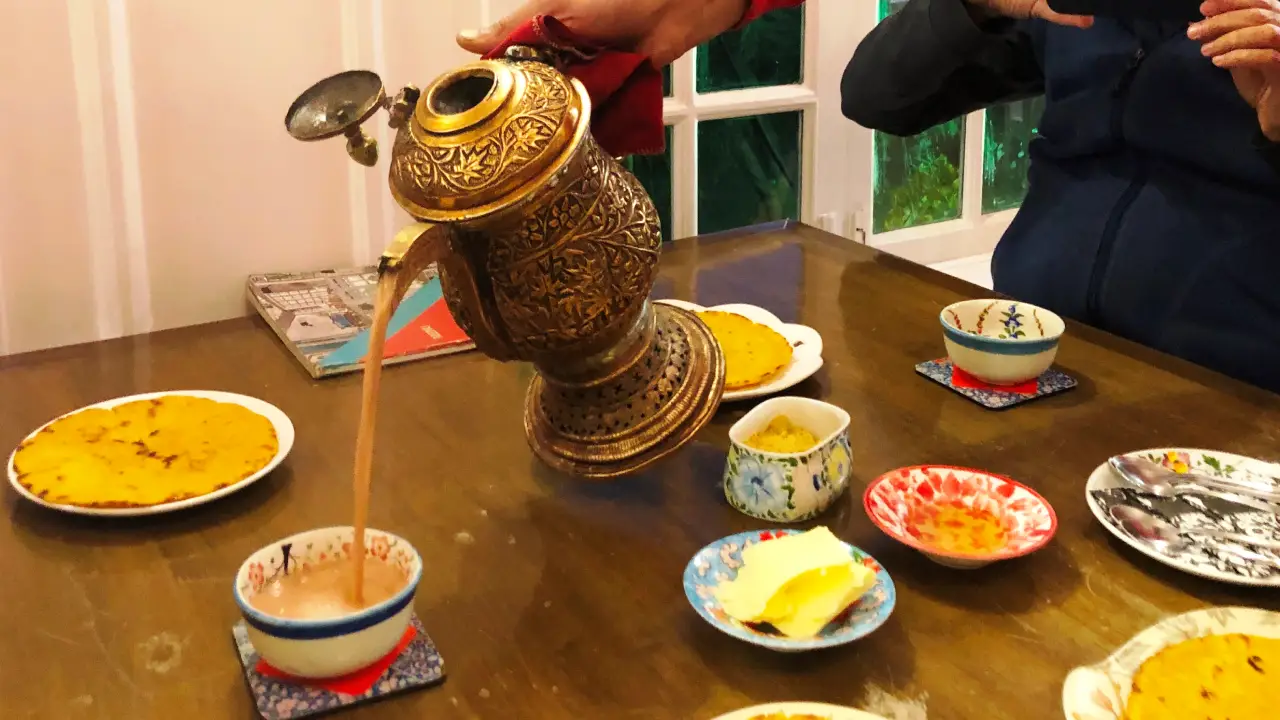
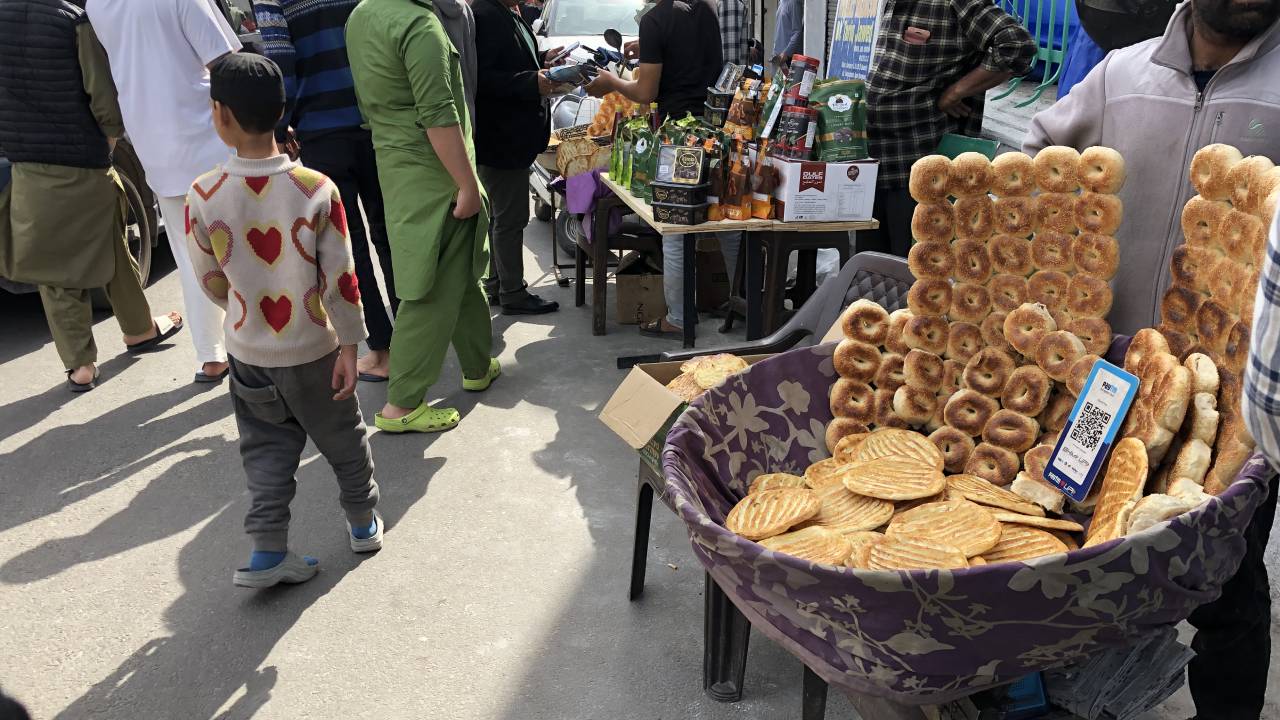
Kashmir’s Kandur tradition is an important part of everyday life. Kandur breads are not nutritionally identical: some are simple refined-flour breads, while others are closer to layered pastries because they contain generous amounts of ghee, butter, milk or sugar. Recipes also vary from one Kandur-waan to another. Judge a bread by its ingredients, richness, portion size and your own glucose response rather than by its name alone.
Most traditional Kandur breads are made mainly from maida, or highly refined wheat flour. Milling removes much of the grain’s fibre and structure, so the starch is digested rapidly. Eating such bread on its own, especially at breakfast after an overnight fast, can produce a substantial rise in blood glucose. Sesame or poppy seeds add flavour, but the small amount sprinkled on the surface does not cancel out the carbohydrate in the flour.
Girda or tchot. This round breakfast bread is made from refined flour, water, salt and a leavening agent, and is marked with finger impressions. It is less sweet than richer breads but is still mainly refined starch and is often eaten in a large portion. Strictly limit it when blood glucose is high. If you later include it, choose a small portion and eat it after protein.
Lavasa or lavas. This thin, usually unleavened flatbread is made from refined flour. Because it is thin, several pieces can seem like a modest amount even though the starch adds up quickly. Count every piece, and avoid using several pieces as wraps in one meal.
Chochwor or tsochwor. This ring-shaped bread is made from refined flour and is often topped with sesame or poppy seeds. The seeds do not offset the flour, while butter or jam adds calories or sugar. Avoid sweet spreads and consider a small portion only when your glucose control has improved.
Rich Breads
Kashmiri kulcha. This crisp refined-flour bread may include ghee or butter, milk and seeds. Its low fibre content and added fat make it calorie-dense. The fat may delay the glucose peak without eliminating it. If you choose it after your glucose control improves, have only a small piece occasionally.
Bakarkhani. This rich, layered, pastry-like bread is made with refined flour and repeated layers of ghee; some recipes also include milk or sugar. Spellings and recipes vary. The rise in blood glucose may be delayed and prolonged. Treat it as an occasional pastry, rather than an everyday bread.
Sheermal or krippe. This saffron-flavoured bread is made with refined flour, milk, ghee and usually sugar. It combines refined starch with added sweetness and little fibre, making it one of the less suitable choices. If your glucose control improves, keep it to a very small taste on an occasional celebration.
Katlam. This layered bread is made with refined flour, butter or ghee, milk, salt and poppy seeds. It is dense and high in calories, and a later rise in glucose is possible. Keep portions small and infrequent, even after glucose control improves.
Uncontrolled Diabetes
When HbA1c is 7 per cent or higher, or daily readings remain above the target agreed with your clinician, a cautious practical approach is to avoid rich and sweet breads such as bakarkhani, sheermal, kulcha and katlam, and to pause or strictly limit other Kandur breads. An HbA1c below 7 per cent is a commonly recommended goal for many non-pregnant adults, but it is not a universal definition of good control. Age, the risk of low blood sugar, pregnancy, kidney disease, other illnesses and the burden of treatment may require a different target set by your doctor.
Noon chai itself is usually not the main glucose problem when no sugar is added. The larger carbohydrate load usually comes from the bread, especially when several pieces are eaten during a long tea sitting. Noon chai is salty, however, and should be limited by people with high blood pressure, heart failure, kidney disease or a prescribed salt restriction. Adding sugar to noon chai, or eating bread with jam, honey, condensed milk or biscuits, increases the glucose burden further.
Do not eat the bread first on an empty stomach. Begin with protein, such as a boiled or poached egg, a vegetable omelette made with little oil, or another suitable protein food.
Add plain curd if desired. Plain zamutdud, dahi or raita can accompany the meal. It may make the meal more filling, but it does not make an unlimited portion of bread safe.
Choose one bread and keep the portion visibly small. Because Kandur breads vary greatly in size, a fraction of one bread or one small piece may be more sensible than automatically eating a whole bread. Do not combine bread with another large serving of starch at the same meal.
Avoid sweet and fatty accompaniments. Do not add jam, honey, sugar, butter or cream.
Measure your own response. Use a CGM when available, or check your blood glucose before the meal and about two hours after starting it, in accordance with your doctor’s monitoring plan. A high-fat bread may delay the rise in glucose, so a CGM trace over several hours can tell you more than a single early reading.
Walk after the meal when medically appropriate. Walking can support glucose management, but it does not make up for a large portion.
A practical tea-time example: Start with an egg or another protein food and, if desired, plain curd. If your glucose is within your agreed target, follow with one small piece of the least rich Kandur bread and unsweetened noon chai. Avoid a second piece simply because the tea sitting continues. Review your CGM response to judge whether the portion was right for you.
Enjoying Wazwan
At weddings, the trami often arrives with a generous bed of batta beneath kebabs, chicken and other meat dishes. It is natural to begin with rice and continue eating it with each course. For someone with diabetes, both the first bites and the total amount of rice deserve attention. The serving order can remain traditional while you choose a different eating order: vegetables first, protein and plain yoghurt next, and rice last.
Rice is the central staple in Kashmir and often takes up the largest part of the plate. Repeated large portions of white rice can therefore be an important, changeable contributor to high post-meal glucose and poor diabetes control. Rice is not the only factor involved in diabetes; weight, physical activity, heredity, medicines and the rest of the diet also matter. Nevertheless, the quantity and timing of rice deserve particular attention in Kashmiri meals.
This suggested sequence applies general diabetes nutrition principles to wazwan; it has not been tested as a specific wazwan plan. Menus and recipes vary between families and caterers.
Eating Order
Vegetables first. Begin with cucumber, radish or another salad, or a serving of haakh or palak if available. Ask for these before the rice course when possible. Dum aloo is a potato dish and should count as starch, not as the vegetable starter.
Plain yoghurt and a modest protein portion next. Have some unsweetened zamutdud or raita, followed by a small portion of skinless chicken, lean meat or part of a seekh kebab. Choose pieces with less visible fat and little gravy. These foods can be eaten together; there is no required pause between them.
Eat rice last, in a small planned portion. After the vegetables, yoghurt, and protein, take batta with the remaining food. Set aside your portion, preferably on a small plate, so you can judge the quantity instead of taking more rice with every course. At a wedding, do not assume that rice held or stored at room temperature is safe to reheat.
Finish without another carbohydrate course. Choose water or unsweetened kahwa. If you have dessert, take a small taste within your carbohydrate allowance rather than a full serving of phirni or another sweet after the rice.
If vegetables are unavailable, start with a little plain yoghurt and a modest portion of the least fatty protein available, then add the small rice portion. If you take insulin at mealtime, do not delay eating while waiting for a preferred dish.
Do choose a few dishes to enjoy in small portions. Rogan josh, rista and gushtaba can be tasted, but you do not need a full portion of every meat course. Limit rich gravies. Gushtaba’s yoghurt sauce is not the same as plain yoghurt, and kebabs or meatballs may contain substantial added fat.
Do limit tabak maaz, fried items and visible animal fat. These may contain little carbohydrate but still be rich in saturated fat and calories. A low early glucose reading does not make a rich meal heart-healthy, and a fatty meal can also cause a later rise in glucose.
Do not count methi maaz as a vegetable serving because its name includes fenugreek. Nor should you assume that every vegetable dish is light: ghee, frying or large amounts of oil change the meal. Choose less oily greens when available.
Do not keep replenishing rice as dishes arrive, add sweet drinks or treat an after-meal walk as permission to overeat. Continue your prescribed treatment. If you use insulin, follow your agreed meal-timing and glucose-monitoring plan during a long wedding meal.
Hosts can help by serving salad, greens and plain yoghurt early, offering smaller rice portions and providing water or unsweetened drinks. Guests can then enjoy the celebration while making choices that fit their health needs.
Eating Out
Restaurant meals are often larger and richer than home-cooked meals. Before ordering, whether at a restaurant or through a food-delivery app, you can give an AI assistant on your phone the restaurant’s name and ask: “I have type 2 diabetes. What should I order at (restaurant name) to avoid a large blood sugar spike?” You can also search for a dish online by asking, “Is [dish] suitable for someone with diabetes?” The same approach can help you plan for a wedding or family function when you know the menu.
Treat these answers as a starting point, not as medical advice. AI tools can make mistakes, and menus and portion sizes change. If you use a CGM, check afterwards which choices caused the smallest glucose rise, and keep a note of the dishes that work best for you at your favourite restaurants. At the table, apply the same principles: start with salad or vegetables, choose a protein-based dish, limit bread and rice, ask for less oil and gravy, and take part of a large portion home.
Whole Meal Count
A useful starting point is to fill about half the plate with non-starchy vegetables, one quarter with protein and one quarter with carbohydrate foods. When dal supplies the protein, remember that it also contains carbohydrate when deciding how much rice or roti to add. Choose water or unsweetened drinks.
If you are physically able, begin a gentle 10- to 15-minute walk within 10–15 minutes of finishing your meal. Walking soon after eating can help reduce the post-meal rise in glucose because active muscles take up glucose. A short walk after dinner can be especially useful; in bad weather, walking indoors is an option. Treat this as a practical target, not a strict deadline, and adapt the pace and timing to your mobility, comfort and health.
Continue the Medicine
Meal order can support diabetes treatment, but it does not replace it. Do not stop taking diabetes medicines because you have changed your diet. Eating less rice and bread can lower glucose relatively quickly in people taking insulin or sulfonylureas such as glimepiride or gliclazide. Anyone taking these medicines should discuss substantial changes in carbohydrate intake or meal timing with their doctor before making them.
Families can make these habits easier by serving vegetables generously and offering smaller first portions of rice. Familiar dishes can remain on the table. Begin with vegetables, include nourishing protein foods, keep starch portions sensible and build habits you can maintain every day.
Disclaimer
My observations come from continuous glucose monitors (CGMs), sensor patches worn on the arm that send readings to a mobile phone. Glucose may fall substantially after this dietary sequence; individual responses vary, and this is not a controlled trial. Patients taking insulin or medicines that can cause low blood sugar must coordinate dose adjustments with their treating physician. During the early stages of dietary change, monitor glucose frequently and do additional finger-stick tests, especially at bedtime, when the sensor shows a low or rapidly falling value, or when symptoms do not match the sensor reading. Do not change medication without guidance from your treating doctor.
This is the first of the three-part series.
(The author is a renowned interventional cardiologist and heads the United States-based Fayaz Shawl Philanthropic Foundation. Ideas are personal.)