After Delhi attack, Kashmiris living outside report distrust, harassment, housing denial, workplace profiling, and rising fear linked solely to their identity, reports Babra Wani

Chasing potential opportunities outside Kashmir, a doctor couple moved out three years ago. Navigating through different cities as part of a detox trip, they eventually took up a job in a North Indian state. The start was positive. They made friends in the neighbourhood morning walks. It was as smooth as expected.
In early 2025, however, things started changing. Days after the Pahalgam attack, people started viewing and treating them differently. Questioning became rampant: “Why does this happen in Kashmir? We had no answers.”
Tired of questions, the couple decided to move to another place. Now, they started facing difficulties in renting an apartment. “As soon as someone heard that we were Kashmiris, they started making excuses or just did not reply.”
The recent Delhi attack made things even worse.
“We are living under this constant sense of fear. Not knowing what was next,” the man said. “Initially, Kashmiri doctors were a lot in high demand, but now, as soon as someone hears that we are from Kashmir, they bluntly refuse to have any vacancy or job offer for us.”
This, however, is not an isolated case.
After 15 people were killed in Delhi’s Red Fort blast, Kashmiris living outside have been dealing with stigmatisation and fear, and in some cases, rampant questioning too.
A woman living in a Delhi locality for more than five years said her friend was denied accommodation in a nearby locality because of her place of origin.
A boy from Srinagar, who had completed a four-year civil engineering degree outside Jammu and Kashmir, said his institution’s HR department had hired him, but before joining, subjected him to repeated, intrusive questioning after the blast. Though his police verification and documents had been cleared months earlier, he was called in again and asked increasingly personal questions about his family, relatives, accommodation, and even his roommate. The scrutiny deepened when he was asked about a caller on his phone, making him realise it had turned into profiling. His WhatsApp display photo, showing a masked Palestinian figure, was also raised. He said he felt treated with suspicion despite four years at the university and active participation in campus events, including Independence and Republic Day programmes.
However, it is not just him.

A Delhi-based Kashmiri journalist shared his experience of how his identity has put him under scrutiny this year.
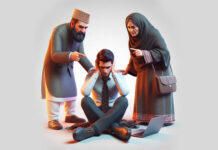
When the Blast occurred, the journalist was at his workplace. At that moment, a colleague repeatedly confronted him with accusatory remarks: “He told me at the same time, Why don’t you talk about it? Why don’t you protest against terrorism? Why don’t you come to the streets?”
The journalist tried to explain his position, but the pressure continued. “I explained to him. We are not supporting it, but he kept telling me again and again in the office. You come to the streets against this thing.” Soon, he found himself being taunted.
Shaken by the incident, the journalist later went to a salon. The atmosphere there also became hostile. “The salon owner knew me. He told the other people there that he is a Kashmiri.” This immediately triggered further accusations: “Then he also told me that you are supporting terrorism there.”
The tension rose quickly. Two or three young men in the salon joined in. “There were two or three boys there, questioning me about the situation in Kashmir. They were claiming that Kashmiris give shelter to terrorists, that they give them space, and that no one speaks about it.” The suspicion soon turned personal. “They kept saying, ‘There is no trust. What are you? What do we know about you?”
As the involvement of a Kashmiri doctor was reported, the following day brought renewed harassment. His colleague confronted him again: “He told me again that the Kashmiris cannot be trusted.” The colleague continued with comparisons: “Look, he was a doctor. You are a journalist. If there is a student here, then what can he do? We cannot trust you.”
When the scribe returned to his accommodation, the hostility persisted. The person in the room also told him the same thing. Now, his landlord demanded renewed verification. “Give me your verification again.” This included several formal documents: “He also asked me about the character certificate and handed that over to him too. he also asked for an authority letter from a local police station.”
The landlord clearly told him that he was afraid of giving accommodation to a Kashmiri. “After what happened in Faridabad, I cannot trust anyone.”
The journalist has since returned home. He is working from home.
A female entrepreneur from South Kashmir was invited to a talk show. At first, she was all happy and excited to be interviewed, but later she withdrew. “The times are not favourable,” she texted the host, “let things return to normal and then we can decide.”
She confided that she was scared because of the place she belonged to, which has been in the news for the past month.