by Bashir Ahmad
Tanvir Sadiq’s trousers remark has triggered ridicule, but Kashmir’s documented history of poverty, exploitation and land reforms tells a deeper story.
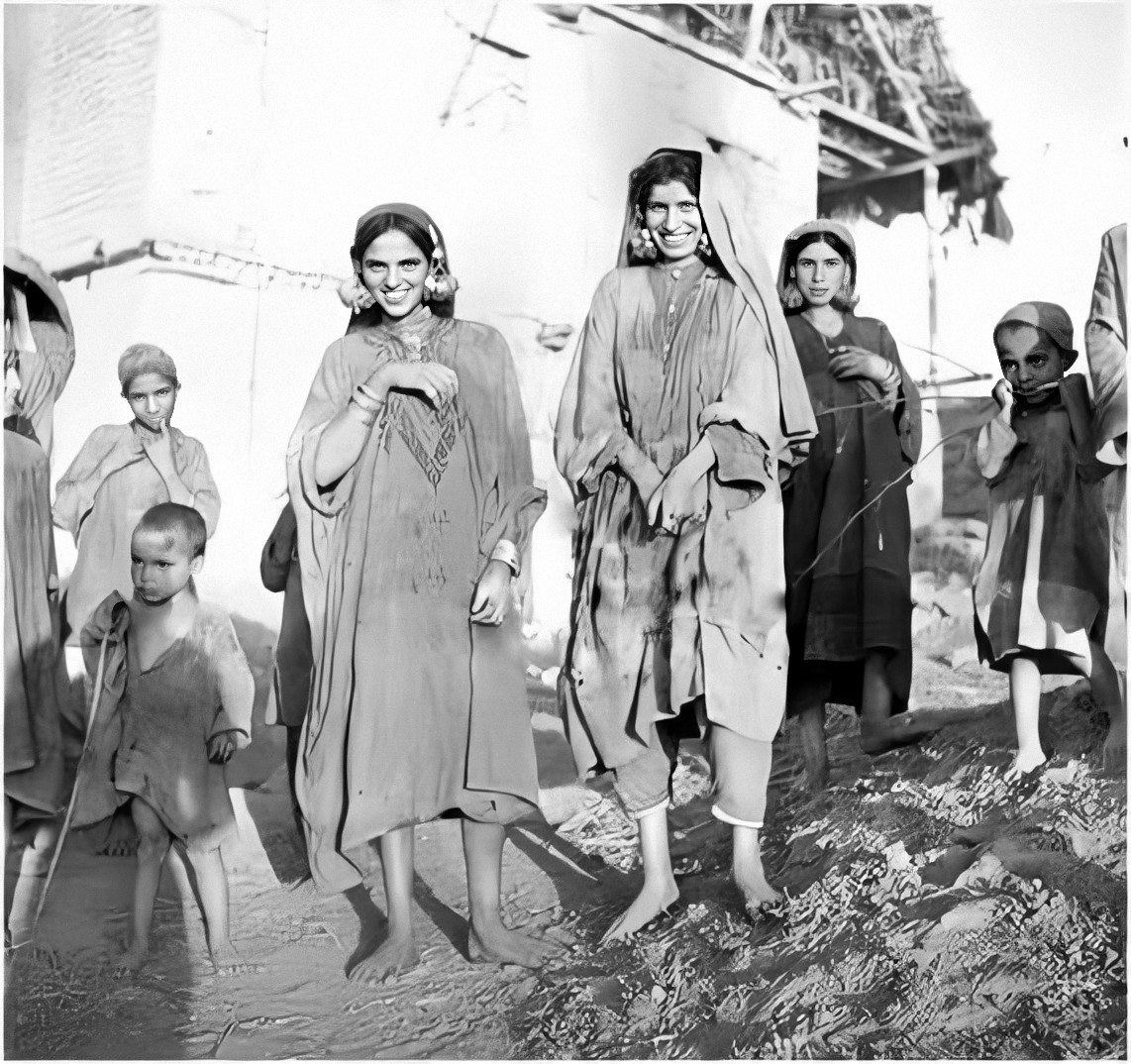
The political controversy over National Conference chief spokesperson Tanvir Sadiq’s remark that poverty in Kashmir had once been so acute that people had to share a single pair of trousers has acquired a life of its own. Memes, political attacks and competing claims of apology and defence are now dominating social media.
But beneath the ridicule lies a larger and considerably less amusing historical question: what did poverty actually mean for an ordinary Kashmiri before the great land reforms of the early 1950s?
The answer from contemporary accounts and later histories is stark. Poverty was not merely a matter of low income. For large sections of the rural population, it meant inadequate food, indebtedness, insecure tenancy, forced labour, heavy exactions and a level of material deprivation in which proper clothing itself could become a luxury.
Sadiq made the remark while speaking about the legacy of National Conference founder Sheikh Mohammad Abdullah and the transformation that followed the introduction of land reforms. He referred to the extreme poverty of the period before the reforms, saying that in some villages people had to share a single pair of trousers.
Reaction, Clarification
The remark immediately triggered criticism from the People’s Democratic Party and the Bharatiya Janata Party, with both accusing the NC leader of insulting Kashmiris. The BJP also held protests and burnt effigies of Sadiq.
There is an irony here that should not be lost. The political forces protesting Sadiq’s description of the poverty of pre-1947 Kashmir include a party whose political discourse in Jammu and Kashmir has often sought to appropriate, reinterpret or selectively remember the Dogra past. The historical record, however, does not depend on the politics of today’s BJP or PDP. It has to be examined on its own terms.
Sadiq subsequently clarified that his reference was intended to describe, rather than demean, the poverty of the period.
“When I spoke of villages having to share a single pair of trousers, I was highlighting the abject poverty and deprivation Kashmiris endured under Dogra rule, not demeaning Kashmiris,” he said. He argued that Sheikh Mohammad Abdullah’s land reforms had changed that reality by giving peasants ownership and dignity.
The controversy was initially complicated by an apology from NC MLA Salman Sagar, who said that if the remarks had hurt people’s sentiments, an apology was appropriate. But Chief Minister Omar Abdullah subsequently rejected the suggestion that the statement itself required an apology.
Speaking to reporters in Srinagar on Thursday, Omar said Sadiq’s description was historically accurate and pointed to the writings of historians, including Walter Lawrence, on the poverty of Kashmir’s rural population.
“What Tanvir said is historically accurate. He does not need to apologise or clarify what he said,” Omar said.
He referred to the system of zaildars, chakdars and landlords and said that there was a time when Kashmiris were so poor that they had to come to the city with their pyjamas from the mosque.
The chief minister’s intervention shifted the argument from the language used by Sadiq to the historical conditions he was attempting to describe.
And those conditions are not difficult to find in the historical record.
Documentary Evidence
There is considerable documentary evidence that the rural economy of Kashmir was deeply impoverished in the late nineteenth and early twentieth centuries.
Sir Walter Lawrence, the British settlement commissioner whose The Valley of Kashmir remains one of the important administrative accounts of the period, described a peasantry struggling under state exactions. His observations were not written as political propaganda for Sheikh Abdullah. They were the observations of an official who had closely studied the land and its people.
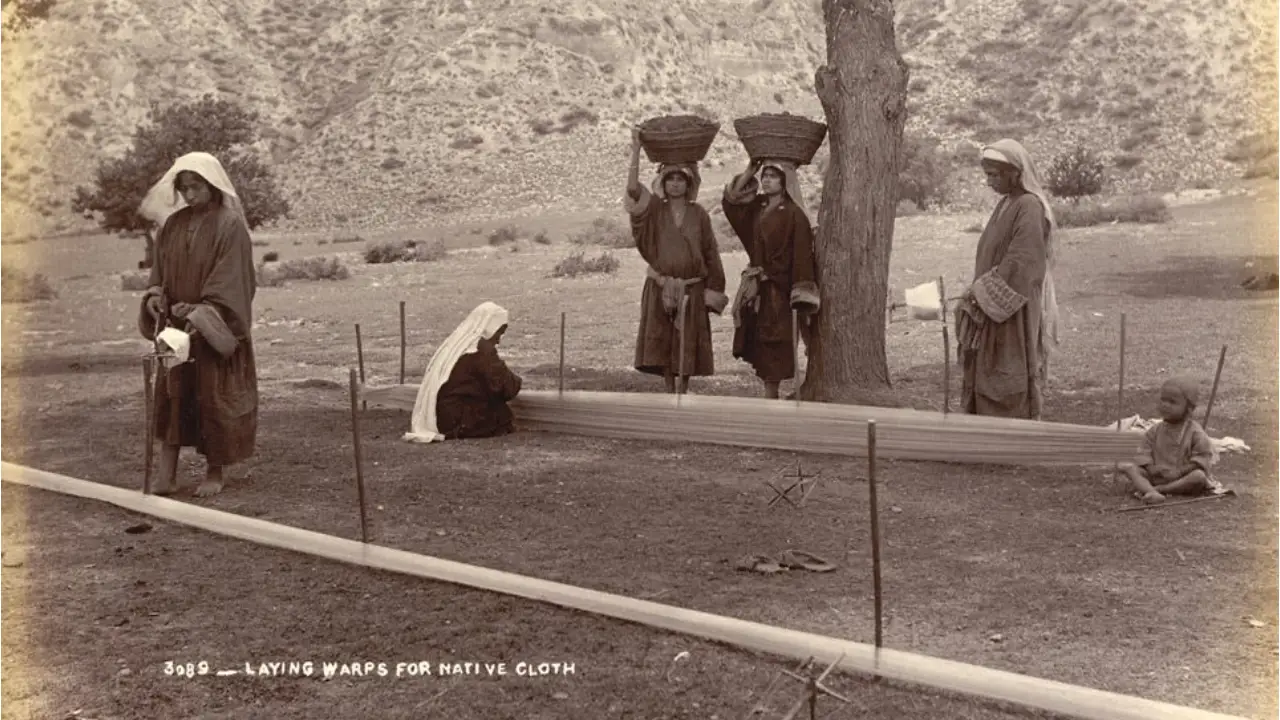
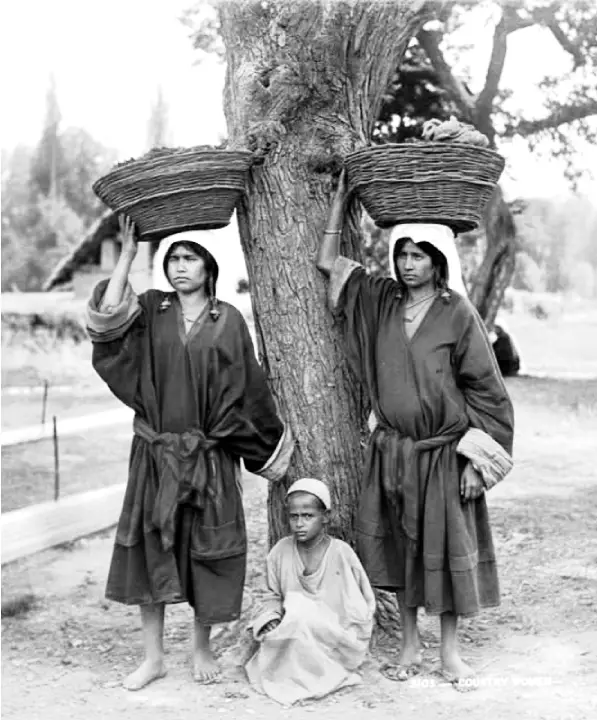
Lawrence described the Kashmiri peasant as being left with little after the State’s demands had been met. His account of the cultivator’s circumstances provides the historical background against which the question of clothing has to be understood. The pheran was the universal outer garment of ordinary Kashmiris, while trousers or pajamas could remain beyond the means of the poorest cultivators.
Prem Nath Bazaz was considerably more explicit.
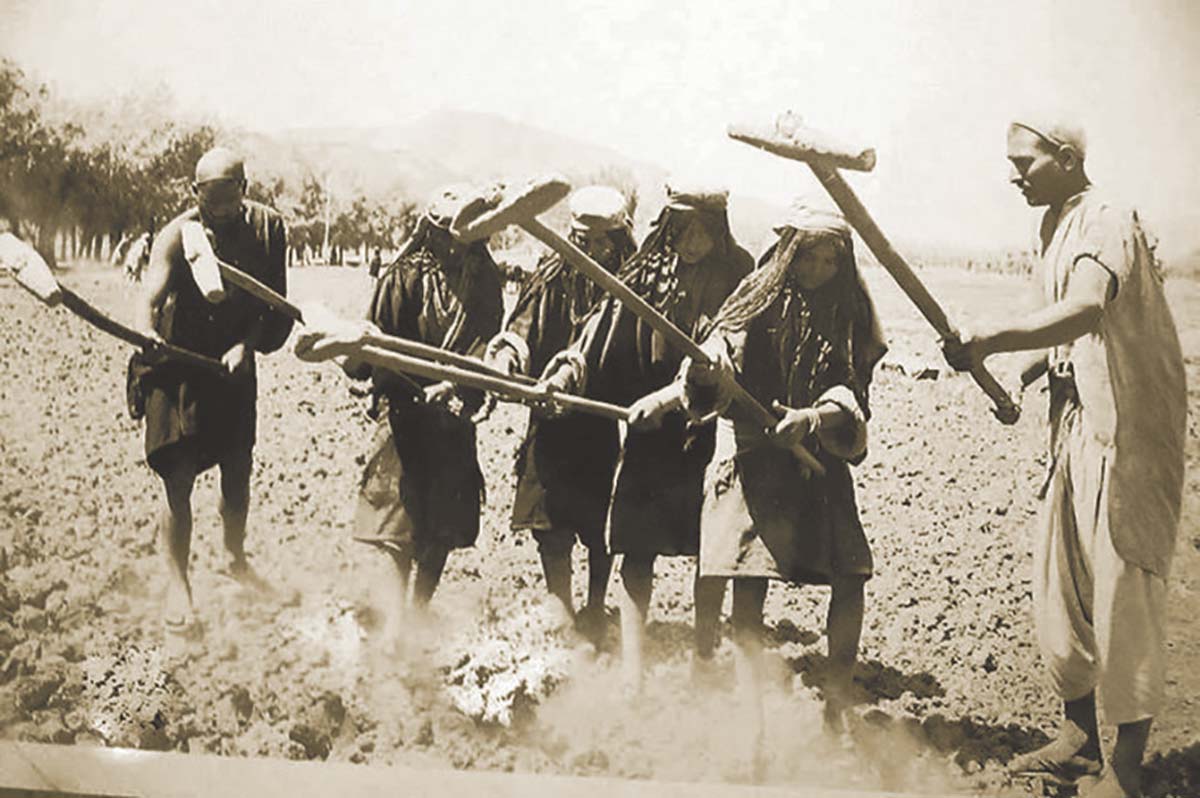
Writing in Inside Kashmir in 1941, Bazaz described the poverty of the Muslim masses as “appalling”. He wrote of peasants dressed in rags and going barefoot, and recorded that many were landless labourers working under absentee landlords whose share of agricultural production was insufficient to sustain them through the year.
Bazaz’s account is important because it moves the discussion beyond a single item of clothing. The possessions of a poor peasant, he observed, could be extraordinarily limited: clothing, a small house, a few earthen vessels, a wooden box, a couple of mats and debt.
He also described rural indebtedness as widespread, with families remaining trapped in debt across generations.
This is the Kashmir that disappears when the entire argument is reduced to a meme about trousers.
An Economy of Deprivation
The absence of trousers, if it occurred in the circumstances described by Sadiq, was not an isolated sartorial oddity. It belonged to a much larger economy of deprivation.
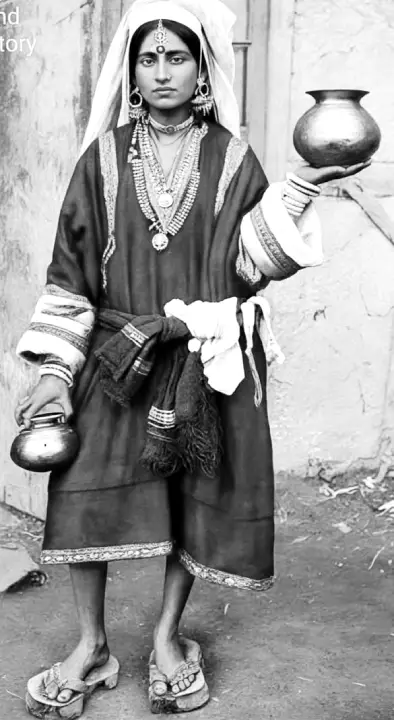
The pheran itself needs to be understood in this context. It was not simply the cultural garment that Kashmiris celebrate today. For generations it was also the practical outer garment of a population living through severe winters and limited access to manufactured clothing.
The historical evolution of the pheran also reflects class and occupational differences. Its cut, fabric and detailing could indicate community, occupation and social status. For the poorest, however, the garment was above all a means of survival.
The deprivation was closely connected with the structure of the agrarian economy.
Under Dogra rule, the State exercised extensive control over land revenue, trade and several important economic activities. Historical accounts describe intermediaries and officials extracting revenue and additional payments from cultivators, while systems of forced labour further burdened rural households.
Robert Thorp’s Cashmere Misgovernment, published in 1868, is among the earliest critical accounts of the system. Thorp described the condition of the Kashmiri cultivator in devastating terms and attacked the methods through which the State extracted wealth from the population.
Thorp wrote of a system in which the cultivator was subjected to severe revenue demands and official exactions. The consequence, he argued, was that the people who produced the wealth of the country were themselves reduced to misery.
Later historical accounts, drawing on Thorp and other records, have described the extraction of a substantial share of agricultural produce and the use of begaar, or forced labour.
A later account citing historical sources puts taxation on land produce at as much as 75 per cent and taxation of the shawl industry at 85 per cent. Such figures need to be read in their particular historical context and against the revenue systems to which they applied, but they illustrate the extraordinary scale of extraction described by contemporary critics.
The State also maintained monopolies over a range of commodities and resources. The question, therefore, was not simply how much a peasant produced. It was how much of what he produced he was actually allowed to retain.
Modern Kashmiri historians Abdul Ahad and GH Khan have also written about the economic consequences of this system. Ahad’s work on Kashmir’s arts and crafts and GH Khan’s study of the freedom movement place poverty within a wider structure of taxation, forced labour, debt and restrictions on economic activity.
Heavy customs duties, or chungi, affected imported cotton cloth as well. For people already trapped in the vicious cycle of begaar and indebtedness to moneylenders, even basic manufactured cloth could be difficult to afford.
The result was a society in which coarse locally available material and the pheran were not merely matters of fashion. For many people, they were what poverty permitted.
Bazaz’s 1941 description provides a striking picture of the consequences. He wrote of peasants spending the summer working the land while revenue, taxes, official exactions and moneylender interest consumed much of what they earned. During winter, sections of the rural population travelled outside the State in search of labour.
That is the historical setting in which the trousers anecdote needs to be placed.

The Return of Land
Then came the land-to-the-tiller revolution
The decisive change did not come simply because Kashmiris became richer overnight. It came through a structural change in ownership.
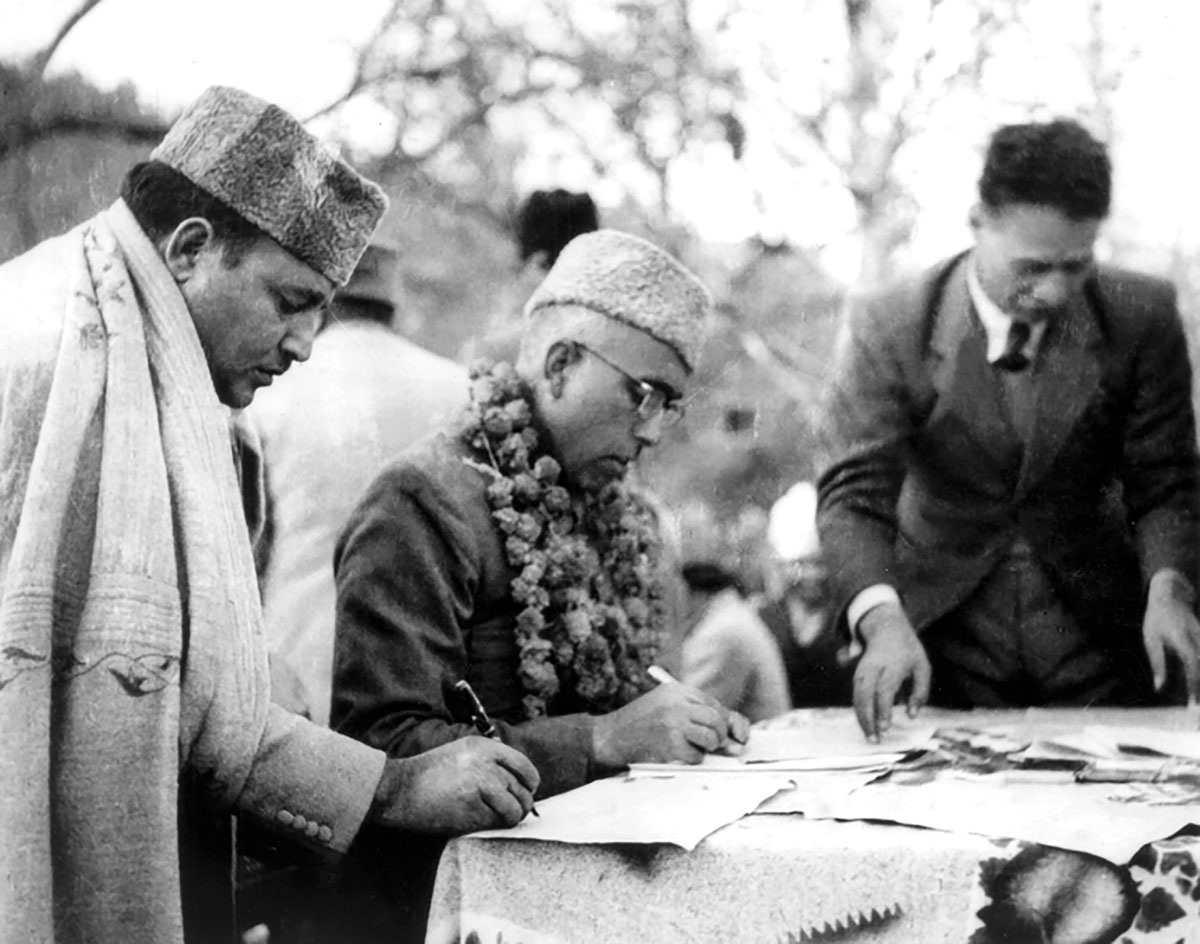
The Jammu and Kashmir Big Landed Estates Abolition Act, enacted in 1950, sought to abolish big landed estates and transfer land to the actual tillers. The legislation explicitly argued that lasting improvement in agriculture required removing intermediaries between the tiller and the State and transferring land held by big proprietors to those who cultivated it.
The law extinguished the ownership rights of proprietors in land covered by its provisions and provided for transfer of ownership to tillers in actual cultivation, subject to the statutory limits.
That was a profound departure from the earlier agrarian order.
For a tenant who cultivated somebody else’s land, ownership changed the economic equation. The person who had previously worked the soil for a landlord could acquire an ownership interest in the land he cultivated.
The reform therefore altered not merely the distribution of agricultural land but the social relationship between the cultivator and the landowner.
Modern scholarship has described the 1950 reform as one of the widest redistributions of land in postcolonial South Asia. It was also closely connected with the political leadership’s vision of restructuring Kashmir’s predominantly agrarian society.
This is where Sadiq’s argument has its strongest historical foundation.
The significance of the reform cannot be measured by asking whether a particular Kashmiri literally had a pair of trousers. It has to be measured by asking whether the economic system that produced such extreme deprivation was being dismantled.
Land Reforms
There is another part of the history that makes the present political debate particularly relevant.
The land reforms were introduced in the period when Jammu and Kashmir enjoyed a distinctive constitutional and political position. The state’s leadership had considerably greater room to pursue an agrarian programme that was radical by the standards of the newly independent subcontinent.
Recent scholarship has specifically linked the possibility of this far-reaching land redistribution to Kashmir’s autonomous status within the Indian Union.
The reforms therefore became one of the defining features of the political legacy claimed by Sheikh Mohammad Abdullah and the National Conference.
They also became part of the explanation for why Kashmir’s post-1947 political history cannot be understood simply through the familiar lens of accession, conflict and constitutional arrangements. For many ordinary rural families, the transformation was intensely material: it concerned the land beneath their feet, their relationship with landlords and the possibility of retaining the fruits of their labour.
Yet there is a danger in turning the history into a political slogan.
The claim that “Kashmiris had no trousers” is too sweeping if treated literally as a description of every Kashmiri. Kashmir was never economically or socially uniform. There were landlords, traders, officials, artisans, professionals and wealthy families alongside an impoverished peasantry.
Nor should one particular anecdote be elevated into a statistical description of an entire society.
What the historical record does establish is something more substantial: large sections of the rural population lived in extraordinary poverty, with inadequate clothing, food insecurity, indebtedness and limited control over the agricultural resources on which they depended.
Bazaz’s account alone is enough to demonstrate the scale of deprivation he witnessed in the late Dogra period. His description of peasants dressed in rags and lacking even basic household possessions is far more useful historically than the viral meme generated by Sadiq’s remark.
Ironic Controversy
And that is perhaps the irony of the current controversy.
The image of a Kashmiri politician being mocked for talking about trousers may be entertaining to social media. But the historical question underneath it is not.
Why would trousers have been a luxury in the first place?
Why did a population cultivating fertile land remain so poor?
Why did so many rural families remain indebted?
Why did peasants have so little control over the produce of their own labour?
And what changed when land moved from the hands of large proprietors to the people who actually cultivated it?
Those questions lead directly to the political economy of pre-1947 Kashmir and to the land reforms that followed.
The trousers may be disputed as an anecdote. The poverty is not.
There is, however, one final irony that the present debate throws up.
There was a Kashmir in which a pair of trousers could be a luxury, but where people could still possess a powerful sense of community, restraint, dignity and character despite material deprivation. Today, large sections of society can afford several pairs of trousers and yet seem remarkably comfortable stripping themselves of civility, historical memory and intellectual honesty in the name of political outrage.
The loudest voices in the present controversy are not necessarily the voices most interested in history. Some are simply shouting because an opponent has given them an opportunity to shout. The memes reduce a complex history to a joke; the outrage reduces it to an insult; partisan politics reduces it to a weapon.
But history is stubborn.
It tells us that Kashmir had people who were desperately poor. It tells us that taxation, land relations, indebtedness and forced labour contributed to that poverty. It tells us that land reform fundamentally altered the relationship between the peasant and the land.
And perhaps that is the more uncomfortable irony: there was once a Kashmir where people had very little to wear but had endured conditions that demanded enormous character to survive. Today, many have plenty to wear, yet some appear determined to remain intellectually and morally undressed.
That is not an argument for romanticising poverty. Poverty was brutal. Nor is it an argument for turning Sheikh Abdullah into an infallible historical figure.
It is simply an argument for remembering that dignity cannot be measured by the number of trousers in a wardrobe. Sometimes, the more important question is what a society chooses to do with the clothes it has and what it chooses to reveal underneath.
(The author has a master’s in history and is an educator. Ideas are personal.)