by Rafi Giri
In time, we understood a universal truth: death is inevitable. Some, like our father, are taken young before life allows them to fulfilment; others are granted more time to savour its offerings.
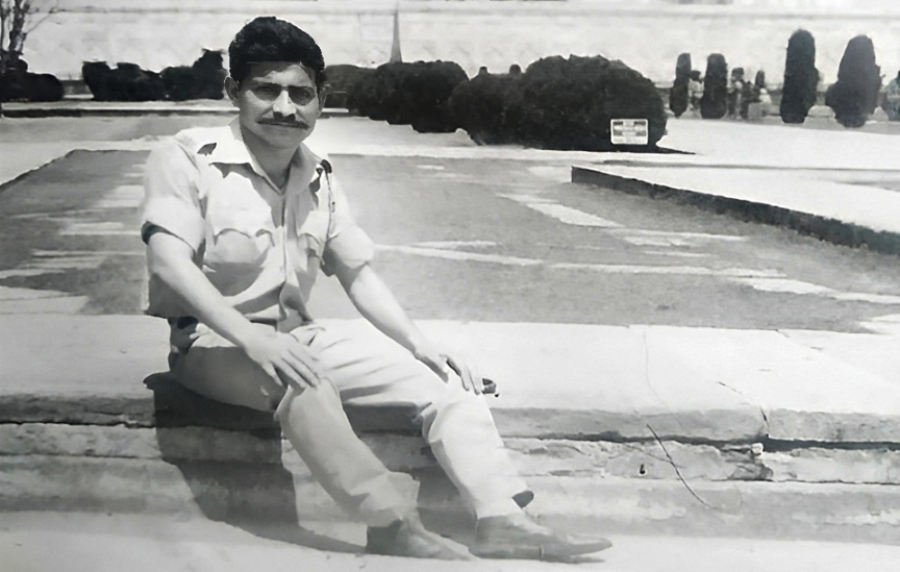
Though it was only in the still, dark hours before dawn that we came to know that the vehicle he had been travelling in met with an accident around 10 pm on April 20, 1985. It was a shattering moment—one that irreversibly altered the course of our lives. We had lost the sun of our world, our hero, our everything.
My grandparents, uncles, our mother, and a few others rushed—some to the hospital, others to the accident site—to see him. We, the two brothers and our sister, were locked inside a room. I can never forget seeing us weeping through the windows, clueless and frightened. We were too young to grasp what had happened or was unfolding.
In the morning, I recall being taken to the hospital. I sat in someone’s lap at the foot of my father’s bed. His head was completely wrapped in bandages, his eyes swollen and blackened. A few men stood at his head, trying to restrain him on the bed as he screamed and thrashed, tormented by the pain of his severe head injuries. I was soon taken away. He was then airlifted by a government helicopter to SMGS Hospital in Jammu, a move ordered by the then DIG of Police, Jammu Zone, who also visited him in the Kishtwar hospital.
That very afternoon, people began arriving at our ancestral home in Pochhal, shifting household items from the rooms. I did not understand what was happening—only the haunting image of my father’s bandaged head and his agonised cries lingered painfully in my young mind.
On the morning of April 22, 1985, his body was brought home in a departmental vehicle. Everyone was crying, wailing. I still remember, just after his final bath according to Islamic rituals, being shown his round, fair face in the coffin from someone’s lap. His coffin, draped in the tricolour, was later escorted by a small police platoon to the native graveyard. He was accorded a guard of honour before being buried, leaving behind memories, grief, and a young, bewildered family in utter despair.
Our lives go on without you,
But nothing is the same.
We have to hide our heartache
When someone speaks your name.
Sad are the hearts that love you,
Silent are the tears that fall.
Living without you
Is the hardest part of all.
You did so many things for us,
Your heart was kind and true.
And when we needed someone,
We could always count on you.
The special years will not return,
When we were all together.
But with the love in our hearts,
You walk with us forever.
My father died when he was just entering his thirties, and I was only five years old. It was 1985. I carry a few memories of him—only fleeting sights that flash across my mind, fragments from a time when I was too young to hold on to much. Yet, the pain of those few memories is searing. The image of his head, swathed in bandages, lying in a hospital bed, the stillness of his face in the coffin, and the solemnity of his funeral remain etched in my mind, vivid and immutable.
What haunts me most, however, is something I came to know only recently. After the accident around 10 pm on April 20, 1985, when the injured were shifted to the Sub-District Hospital in Kishtwar, my father was left behind. He had fallen several metres below the road, away from where the other injured passengers were found. In the early hours of the next morning, around 4 am, one of his colleagues, regaining consciousness in the hospital, asked about him. He informed the police and the others present that Ghulam Hassan had not been brought in and needed immediate medical attention.
It was then, in the cold stillness of April 21’s dawn, that the police rushed back to the accident site, alerting my father’s relatives. When they arrived, they found him lying supine, both hands placed beneath his head, his body soaked in blood. He had suffered a grievous head injury and had lain there for nearly six hours, from 10 pm until 4 am, losing almost all of his blood. By then, it was too late. He was barely alive, clinging to life in a critical state, already breathing his last.
Like every devoted father, his love for his children was profound. We were his world. My mother told me he adored us with a kind of love that defied all limits. He would rush home whenever he could—regardless of the hour, the weather, or the distance—just to be with us. I used to call him Tilla more often than Daddy, a name he loved hearing from me.
In our infancy, we would often wet our clothes, and he would wash my sister’s feet in his rice plate without complaint. He always wished to keep his family close. It was during his posting in Udhampur that I was born. He cherished me so much that he often said he would never send me to school, fearing it might cause me stress. He loved to lift us onto his shoulders and spend every possible moment in our company.
At the time of his death, we were living as a small family, separate from his brothers, who had married and moved out. We were, then, the happiest family, our world whole—until that night tore it all apart. He had just laid the foundation of our home, beginning its construction with the dreams of a future that would never come.
My father was the eldest son of my grandfather, the first employed in the family, and the one who shouldered the greatest responsibility. He initially secured jobs in the Agriculture and Jail Police departments, but driven by a deep passion for policing, he left both and joined the Jammu and Kashmir Police in 1977. On April 9, 1985, while investigating case FIR No 41 of 1985 under sections 382 and 341 of the Ranbir Penal Code at Police Station Kishtwar, he travelled with his team to Palmar Patimhalla. On their return journey to Kishtwar on April 20, 1985, the vehicle they were travelling in, bearing registration number JKN-6327, met with a tragic accident at Bandarkote Bindraban, just eight kilometres from Kishtwar town.
He had played a pivotal role in ensuring the education and employment of his brothers. He worked tirelessly for the well-being of his family during times when resources were scarce and comforts were few. All members of the extended family held him in high esteem and followed his guidance without question. His brothers and sisters, moved by deep affection, fondly called him Lalla, and he never failed to live up to their expectations.
The sudden death of our father, when we were at such tender ages, altered everything. Life as we knew it was shattered. Where there had once been joy, there was now despair; where dreams had once flourished, there was only a void. The comfort we knew evaporated, and pity became the expression on every face that turned towards us. Before we could fully understand our grief, life demanded we continue. The days that followed tested our endurance, forcing us into a world we had never imagined.
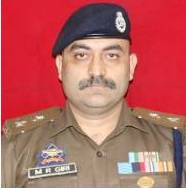
We lived through difficult years. I recall with pride that it was our mother who became the pillar that bore the weight of our sorrow. Despite the enormity of her loss, she stood firm for our sake. Our childhood was joyless and fraught with worry. She would toil late into the night, refusing rest, and managing the household alone in our modest home. The death of our father exposed us to the complexities of the world—its cruelties and its kindness. Some mocked us; others offered solace. We encountered every kind of human nature and slowly, through these trials, matured.
In time, we understood a universal truth: death is inevitable. Some, like our father, are taken young before life allows them to fulfilment; others are granted more time to savour its offerings.
Our father’s sacrifice, his martyrdom, is absolute. There can be no nobler death than laying down one’s life in the line of duty at an age when one is just beginning to dream of a full life and a promising career. We shall never forget him. He was our hero. We remember him always. He lived for us. And today, on his 41st death anniversary, we pray to the Almighty to accept his supreme sacrifice and grant him a place in paradise.
(The author is a Senior Superintendent of Police in the Jammu and Kashmir Police Service. Ideas are personal.)