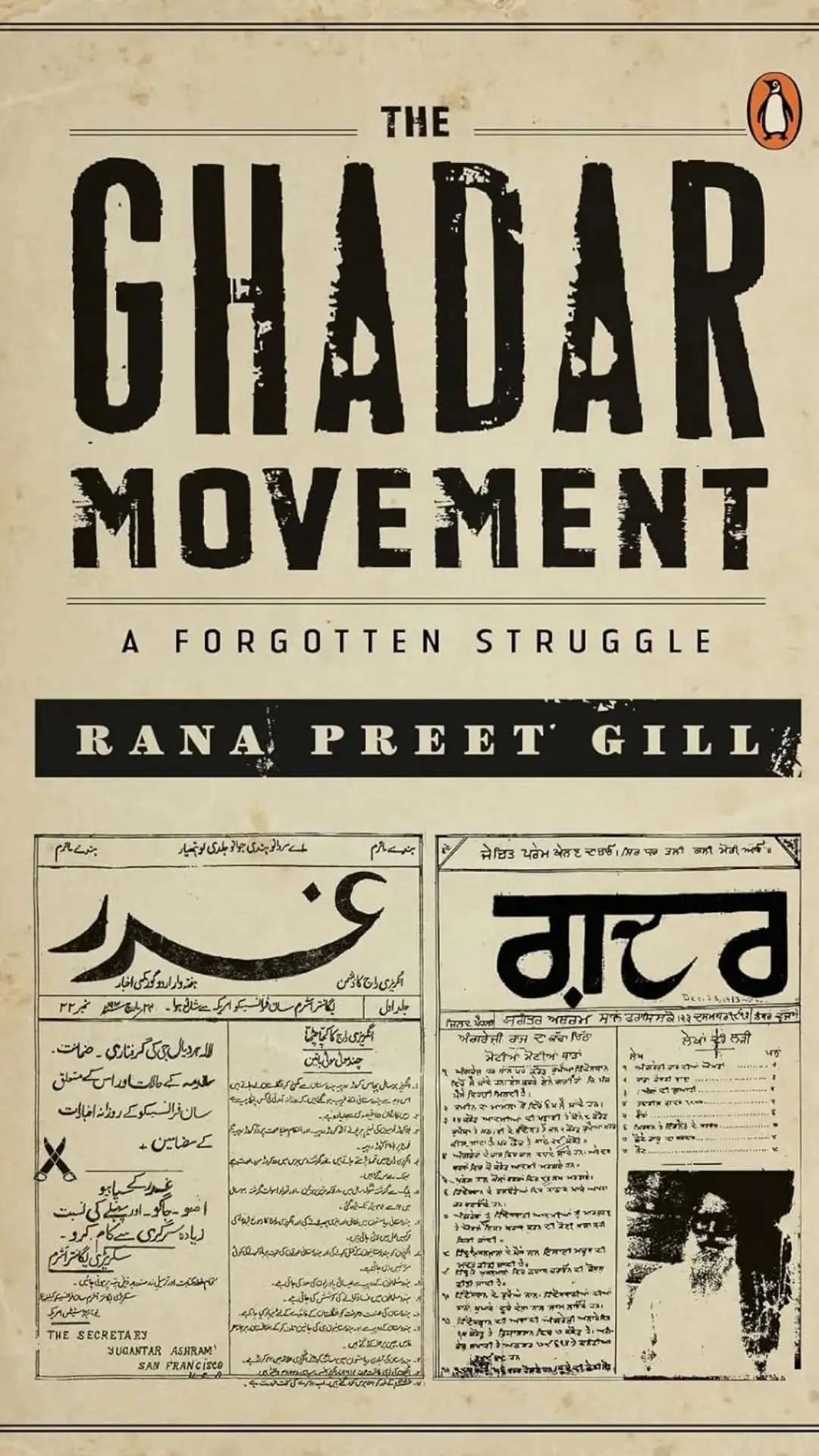
In The Ghadar Movement: A Forgotten Struggle, Rana Preet Gill excavates a buried chapter of India’s freedom struggle, reviving the stories of revolutionaries erased by state memory. Muhammad Nadeem read the book, tracing how its bold narrative reframes nationalism and restores a silenced legacy to public consciousness
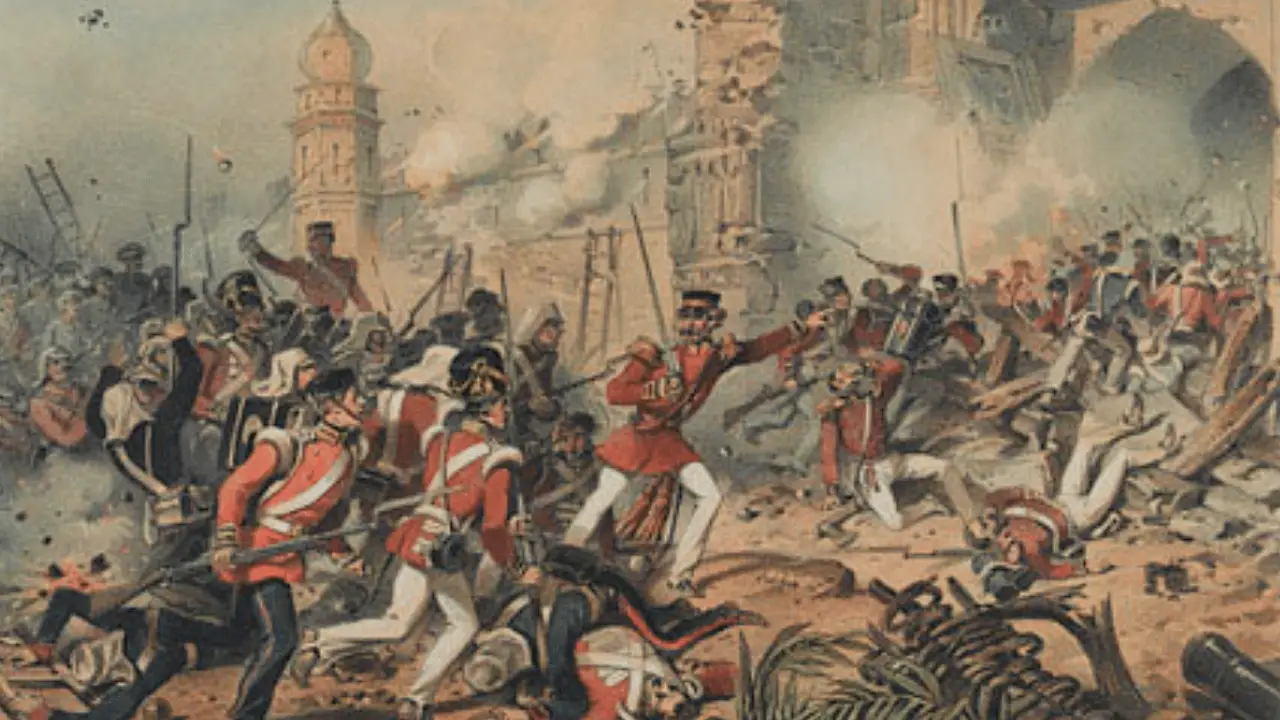
In the clamour of India’s national memory, where Mahatma Gandhi and Pandit Jawaharlal Nehru occupy the central stage and Bhagat Singh is immortalised as a symbol of rebellion, many voices have been pushed into silence. Among them are the Ghadarites: men and women who traversed continents, challenged orthodoxies, and waged a radical, high-risk struggle for Indian independence. It was India’s First War of Independence, which is also known as the Great Mutiny and the Sepoy Mutiny.
With The Ghadar Movement: A Forgotten Struggle, Rana Preet Gill takes a literary blowtorch to this silence, illuminating a revolutionary chapter that has long been obscured by regional pigeonholing and state-sanctioned amnesia.
Gill does not come from a formal historical background. She works as a veterinary officer, writes fiction in her spare time, and in this work assumes the role of a public historian with clear intent. Her earlier fiction revealed an eye for emotional precision and stylistic clarity. These qualities carry over into this non-fiction account, which is grounded in rigorous research, told with narrative confidence, and charged with emotional depth. The result is a study that binds history to lived experience and offers both intellectual and human insight.
The Ghadar Movement, as Gill establishes early in the book, was more than a reaction to colonial rule. Formed in 1913 in the United States by Indian immigrants such as Lala Har Dayal, Kartar Singh Sarabha, Sohan Singh Bhakna, and others, it was a transnational, secular, and militant initiative to provoke a nationwide rebellion against British control. Influenced by figures like Tilak, Madam Cama, and Shyamji Krishnavarma, its members organised arms shipments, plotted mutinies, and worked to raise political awareness among Indian soldiers deployed abroad.
Their mission culminated in an ambitious yet ultimately unsuccessful attempt to launch a mass uprising. Betrayal from within and failures in coordination led to its collapse under the scrutiny of the colonial surveillance apparatus. However, the defeat did not diminish its ideological power. As Gill points out, Ghadar was not merely a newspaper; it became a larger movement, whose impact continued long after its operational end, inspiring figures such as the young Bhagat Singh.
Muslims played a major role in the Ghadar Movement and broader revolutionary efforts against British colonialism. Prominent among them was Maulana Barkatullah, who spent much of his life abroad advocating Hindu-Muslim unity and seeking international alliances, particularly with Turkish and German authorities, to resist British rule. Maulana Hasrat Mohani supported armed rebellion and remained active in Ghadar-linked activities, while Abdul Bari Firangimahli rallied Muslim communities post-World War I in defiance of the Raj. These figures helped ensure the Ghadar Movement’s inclusive, multi-religious character.
In 1857 revolt Muslims and Hindus jointly fought and supported Bahadur Shah Zafar as a symbolic leader. The British crackdown was brutal; over 27,000 Muslims were reportedly executed in Delhi alone, underscoring their early sacrifices. It drew Sikhs, Hindus, and Muslims into a secular, anti-colonial coalition. The Ghadar newspaper, a key organ of the movement, circulated revolutionary ideas among Indian diaspora communities and promoted collective resistance.
More than a domestic rebellion, the Ghadar Movement linked Indian aspirations with global anti-colonial networks. It contributed to Pan-Asianist thinking and fostered a transnational revolutionary framework. Its significance lies not only in its numbers but in the political, ideological, and strategic vision it helped shape, offering a secular, united model of resistance that went beyond communal identities.
Gill’s account follows the evolution of this movement from its ideological origins in Lahore to its strategic developments in San Francisco, Berlin, and Punjab. It also follows the story of Lala Har Dayal, a gifted young man from Delhi who rejected the imperial path that had promised him advancement. The book is closely focused on biography, informed by historical context, and written with a strong sense of human complexity. The reader follows Har Dayal’s transformation from a colonial scholarship recipient to a revolutionary thinker, shaped by the teachings of Arya Samaj and Brahmo Samaj reformers in Lahore.
Gill adopts an approach that scholars might describe as prosopographic, drawing collective portraits to demonstrate how individuals from disparate walks of life, peasants, students, soldiers, and exilesfound common ground in a shared political vision. Her attention extends beyond well-known figures such as Kartar Singh Sarabha and Vishnu Ganesh Pingle to include those frequently omitted from mainstream accounts. Ram Rakha Bali, Harnam Singh Sahri, and Gurdit Singh emerge through her pages with the same urgency. The ill-fated journey of the Komagata Maru, in which Gurdit Singh played a central role, becomes a recurring symbol of exclusion and defiance.
Gill appears acutely aware of the weight of erasure and the burden of remembering. Forgetting, according to her, is a quiet race against remembrance. This sentiment runs through the book like a current, especially in her accounts of the Andaman Cellular Jail, where many Ghadar revolutionaries were confined under harsh sentences. The story of Ram Rakha Bali, who died following a three-month hunger strike in 1919, is told with minimal embellishment. Gill notes that the silence surrounding his death was not one of absence but of suppression, a deliberate erasure from state record and collective recall.
She attempts to place these forgotten lives within the broader struggle for Indian independence, presenting their sacrifice as part of a longer continuum. In doing so, she reclaims them from the margins of history and insists that their silence be acknowledged. This is not presented as stylistic ornamentation. It is treated as an ethical imperative.
The writing itself is restrained and clear, structured around brief chapters that unfold like bulletins from a submerged past. Across the book, the pacing is tight and the headings functional. The structure recalls that of a political thriller marked by conspiracies, coded letters, trials, and arrests but the narrative never lapses into exaggeration. Gill’s account remains tethered to evidence.
Incidents are presented with a sense of immediacy and control. The 1909 assassination of Curzon Wylie by Madan Lal Dhingra, the failed attempt on Viceroy Hardinge’s life in 1912, and the 1915 Komagata Maru episode are rendered without sentiment but with emotional precision. In the chapter devoted to the Komagata Maru, Gill offers a snapshot of overcrowded suffering: Hindus, Sikhs, and Muslims confined to 533 backless wooden benches. The lower deck resembled a third-class railway carriage, stripped of comfort or privacy.
She also recounts how the Vancouver Daily News Advertiser, expecting unruly and unkempt men, instead observed that the passengers were well-dressed and dignified, their turbans immaculately tied. Gill allows such ironies to stand unforced. Her prose is attuned to contradiction, shaped by tension rather than resolution.
The book’s strengths lie in its rigorous research, emotional clarity, and refined prose. Its approachable tone makes it suitable for younger readers and for those unfamiliar with the Ghadar story. Gill chooses to depict the revolutionaries not as flawless heroes but as individuals shaped by their time and surroundings. These were ordinary people, she notes, who travelled abroad seeking employment and were drawn into the currents of political resistance by circumstance.
What distinguishes this work is its commitment to portraying the Ghadar movement as both pan-Indian and transnational. Gill deliberately avoids reducing it to a Punjabi episode. She highlights the involvement of Tamils, Bengalis, and Maharashtrians, placing figures such as Darisi Chenchiah and Jatindra Nath Lahiri alongside more frequently cited names.
She also draws pointed parallels between the racism faced by Indian immigrants in early twentieth-century Canada and the rising xenophobia of the present. Today, the walls at the borders have grown taller and stronger. This link allows the Ghadar movement to speak beyond its historical moment, inviting readers to consider its relevance in the current political climate.
Gill interrogates the politics of remembrance. Why Baba Sohan Singh Bhakna remains confined to provincial memory despite his involvement in multiple national movements. It is concerning why more substantial work on Ghadar has emerged from the People’s Publishing House rather than from official institutions such as the National Book Trust.
Among the book’s more striking moments is Gill’s inclusion of Bhakna’s Last Testament, dictated from his hospital bed in 1968. He stated that he stood in complete opposition to Gandhism, which he believed had failed to address the country’s fundamental issues. The comment is arresting, particularly in a society where Gandhi occupies an unchallenged moral position. Gill refrains from commentary, allowing the words to stand. This choice reflects her broader resistance to narrative control.
She contends that the Ghadar movement’s legacy is not defined by loss but by the endurance of the revolutionaries who possessed strong will and luminous resolve, refusing to dim even after the fire had passed.
What ultimately emerges is a vision of patriotism rooted in plurality, sacrifice, and moral clarity. At a time when nationalism is often performative and dissent vilified, the Ghadarites offer a different model. They represent a form of devotion not confined to symbols or slogans, but grounded in a fight for the country’s integrity.
The Ghadar Movement stands as an act of retrieval. It restores to view a revolutionary episode marked by courage, equality, and international solidarity. It challenges the simplified narratives promoted through textbooks and official commemorations, offering instead a fuller, more difficult memory.
Most significantly, it restores the humanity of revolution. These were not sanctified figures draped in khadi, nor exaggerated emblems of defiance. They were complex individuals, marked by courage and contradiction, who held fast to the belief that a different world could be realised.
Gill’s work moves beyond conventional history. It becomes an inquiry into remembrance, a confrontation with absence, and a call to imagine anew. For readers seeking narratives that provoke thought, offer inspiration, and remain relevant, this book is indispensable.