by Sadaket Ali Malik
Jammu and Kashmir’s education challenge is shifting from access to achievement, with learning gaps, uneven teacher distribution, weak retention and rural disparities demanding systemic reform.
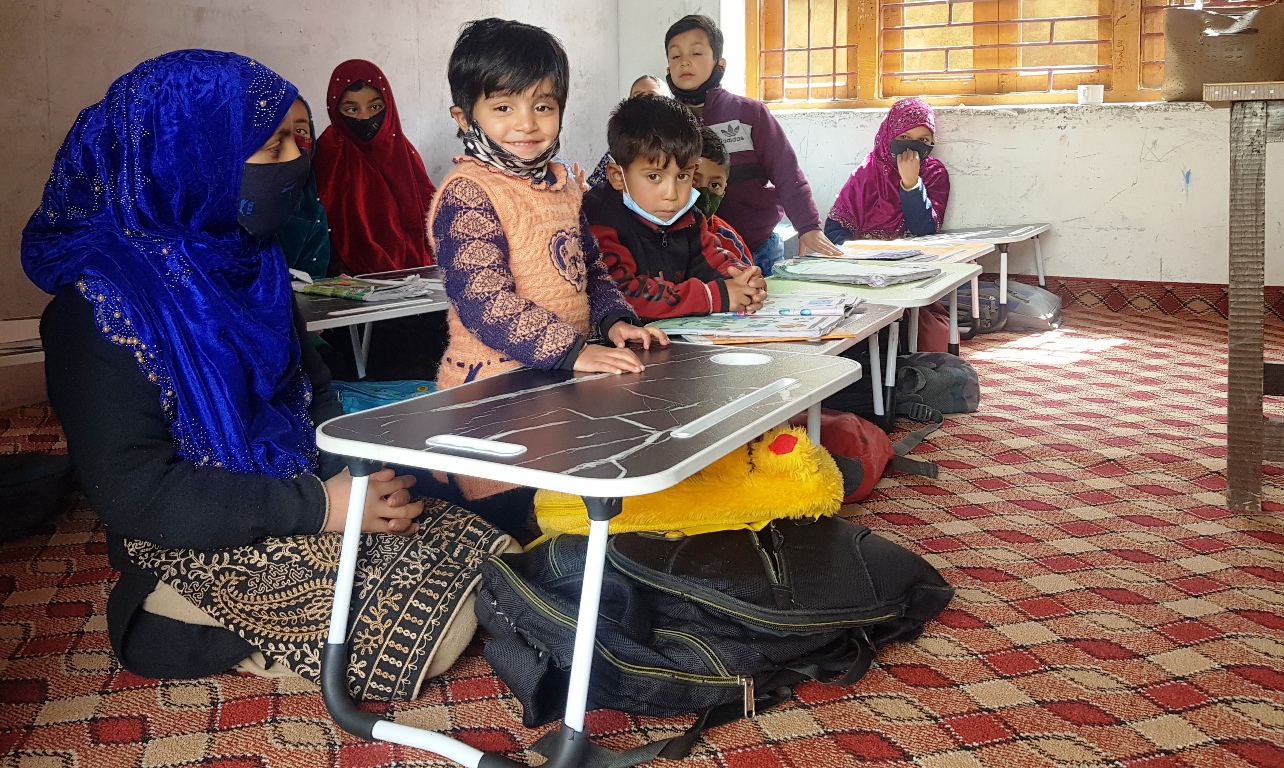
For years, the education debate in Jammu and Kashmir has largely revolved around access. How many schools exist, how many children are enrolled, how many teachers are available and how much money is being spent have become familiar measures of progress. These indicators remain important, but they no longer provide a complete picture of the health of the school education system.
In 2026, the more consequential question is what happens after a child enters the classroom. Does the child acquire the expected reading, language, mathematical and problem-solving abilities? Does the child successfully progress from one stage of education to the next? Does the school provide the specialist teaching required at the secondary and higher-secondary levels? And, ultimately, does twelve years of schooling translate into meaningful knowledge and opportunity?
The latest evidence suggests that Jammu and Kashmir has reached a point where educational policy must move decisively from measuring access to measuring achievement. The PARAKH Rashtriya Sarvekshan 2024 is particularly important in this regard because it shifts the focus towards competencies. It provides an opportunity to examine not simply whether children attend school, but what they are able to understand and apply. For policymakers, PARAKH should therefore be treated not as another examination report but as a diagnostic instrument capable of identifying weaknesses in classroom learning.
The significance becomes clearer when PARAKH is read alongside UDISE+ data. Jammu and Kashmir’s overall pupil-teacher ratio is around 16:1, a relatively favourable figure compared with the national picture. Yet UDISE+ 2025–26 records 1,544 single-teacher schools serving more than 33,000 students, while 188 schools report zero enrolment. The apparent contradiction is important. The Union Territory may have a comparatively healthy teacher-pupil ratio overall, but the distribution of teachers is uneven. A statewide average can therefore conceal classrooms where one teacher is responsible for several grades and subjects.
The official government-school statistics from Jammu division reinforce this disparity. The overall PTR ranges from 9:1 in Samba and 11:1 in Jammu to 23:1 in Ramban. Doda and Rajouri stand at 16:1, Reasi and Poonch at 19:1, while Kishtwar records 14:1. At higher-secondary level, the variation becomes considerably more pronounced. Ramban records a PTR of 46:1, Poonch 34:1 and Kishtwar 31:1, compared with 23:1 in Doda and 16:1 in Jammu. These figures should not be interpreted simply as evidence that some districts have teachers and others do not. They indicate that teaching capacity is distributed unevenly and that subject-specific requirements may be hidden behind aggregate numbers.
This distinction is fundamental. A school with ten teachers is not necessarily adequately staffed if the students require subjects for which qualified teachers are unavailable. At secondary and higher-secondary levels, mathematics, science, languages and other specialised disciplines require appropriate subject expertise. The real policy question must therefore move from “How many teachers are posted?” to “Which teachers and which subjects are available to students?”
The findings of PARAKH make that question even more urgent. In Grade 3, students in Jammu and Kashmir averaged 57 per cent in Language and 54 per cent in Mathematics, compared with national averages of 64 and 60 per cent. By Grade 6, the average fell to 46 per cent in Language, 39 per cent in Mathematics and 41 per cent in The World Around Us, against national averages of 57, 46 and 49 per cent respectively. At Grade 9, J&K students averaged 50 per cent in Language, 32 per cent in Mathematics, 38 per cent in Science and 36 per cent in Social Science, compared with national averages of 54, 37, 40 and 40 per cent. These results indicate that the learning challenge is not restricted to a particular grade or subject.
The rural dimension deserves particular attention. At Grade 3, rural students in Jammu and Kashmir were eight percentage points below the national average in Language and seven points below in Mathematics. At Grade 6, the rural gap widened to twelve percentage points in Language, seven in Mathematics and nine in The World Around Us. At Grade 9, rural students remained six percentage points below the national average in Language, five in Mathematics, three in Science and five in Social Science. These differences suggest that the geography of schooling continues to influence educational opportunity even when formal access to schools has expanded.
The state-government-school results demand an equally serious examination. At Grade 3, students in J&K state-government schools averaged 52 per cent in Language and 49 per cent in Mathematics, compared with national averages of 64 and 60 per cent. At Grade 6, the corresponding scores were 36 per cent in Language, 32 per cent in Mathematics and 33 per cent in The World Around Us. At Grade 9, the figures stood at 43 per cent in Language, 30 per cent in Mathematics, 34 per cent in Science and 32 per cent in Social Science. These numbers should not become a reason to blame teachers. They should instead compel the education administration to investigate the conditions under which teaching is taking place and identify what additional support schools require.
Mathematics presents a particularly revealing example. Grade 9 students in Jammu and Kashmir averaged only 32 per cent in Mathematics. The competency-level results indicate deeper difficulties in applying mathematical concepts rather than simply recalling procedures. Students averaged around 22 per cent on applying percentages to solve problems, 26 per cent on applying fractions in everyday situations and 25 per cent on competencies involving inductive and deductive mathematical reasoning. Such results point towards the need for stronger conceptual teaching, continuous assessment and classroom remediation rather than simply completing the prescribed syllabus.
Language learning presents a similar concern. At Grade 6, students showed weaknesses in competencies involving comprehension, inference, prediction and understanding main ideas. The implication is significant because language is not simply another school subject. It is the medium through which children learn other subjects, understand instructions, communicate ideas and participate in higher education and employment. Weak language comprehension can therefore multiply difficulties across the curriculum.
The education system must consequently distinguish between schooling and learning. A child may attend school regularly, sit in a classroom with a teacher and still fail to acquire grade-appropriate competencies. This is why PTR, although important, cannot be treated as the final measure of educational quality. It is an input indicator. PARAKH provides an outcome-oriented lens. The two must be read together.
The retention picture adds another layer to the problem. The latest reported UDISE+ 2025–26 figures put Jammu and Kashmir’s retention from Class 1 through higher secondary at approximately 39.1 per cent, compared with 51.9 per cent nationally. The figure has improved from earlier years, which is encouraging, but the gap remains substantial. It indicates that the challenge is not simply bringing children into school but keeping them engaged and progressing through the entire educational cycle.
The earlier district-level evidence from Doda is also instructive. An official district education review reported a Class 8 pass percentage of 98.31 per cent, falling to 79.80 per cent in Class 10 and 67.69 per cent in Class 12. These figures alone cannot establish that teacher deployment or school infrastructure caused the decline, but they warrant closer examination of transition, subject availability, examination preparedness, attendance and academic support as students move towards higher classes.
The mountainous geography of Jammu and Kashmir makes this task more complex. In the Chenab Valley and Pir Panjal, distance cannot be measured only in kilometres. Terrain, weather, transport and scattered settlements influence the practical accessibility of education. A small school in a remote mountain village may not be directly comparable with an urban school serving a dense population. A staffing or consolidation formula that works in Jammu city may have unintended consequences in Doda, Kishtwar, Ramban, Poonch or Rajouri.
This is why educational equity should not be confused with identical distribution of resources. A remote school may require greater institutional support precisely because it is more difficult and expensive to serve. A higher-secondary institution requires different specialist capacity from a primary school. A single-teacher school requires a different intervention from a school that has sufficient teachers but weak learning outcomes.
The policy response must therefore become much more evidence-driven. Jammu and Kashmir should connect UDISE+, PARAKH and district-level administrative information instead of examining each dataset separately. Teacher deployment should be mapped against student competencies. Subject vacancies should be examined alongside achievement results. Dropout should be analysed alongside attendance, transport and school accessibility. Infrastructure should be assessed not merely on whether it exists but on whether it is functional and being used.
This approach would fundamentally change teacher rationalisation. The objective should not be to equalise teacher numbers mechanically but to match teaching capacity with educational need. Higher-secondary schools with exceptionally high PTR and subject shortages should receive priority. Single-teacher schools should be individually assessed rather than automatically retained or closed. Remote schools should be evaluated according to geography and accessibility rather than enrolment alone.
The existence of 1,544 single-teacher schools and 188 zero-enrolment schools makes such a review unavoidable. Zero-enrolment institutions require administrative decisions, but those decisions should be transparent and evidence-based. Where consolidation is educationally justified, safe transport and reasonable access must be guaranteed. Where a school remains necessary because of geography or social vulnerability, the government must provide an appropriate staffing and academic-support model.
Teacher professional development must also change. Training should not be judged primarily by the number of teachers attending programmes or receiving certificates. Professional development should respond directly to identified learning gaps. If PARAKH reveals weaknesses in mathematical reasoning, teachers should receive practical support in conceptual mathematics and problem-solving pedagogy. If comprehension is weak, language teachers need strategies for inference, critical reading and communication. Training must ultimately be judged by changes in classroom practice and student learning.
The administrative workload of teachers deserves similar scrutiny. Teachers cannot be expected to improve learning outcomes while spending excessive instructional time on surveys, reports, meetings and repetitive data-entry exercises. Digital governance should simplify administration rather than multiply it. The most valuable resource in a classroom is the teacher’s instructional time, and education policy should protect it accordingly.
Technology should also be judged by educational impact rather than procurement. A computer, smart classroom or internet connection is useful only when it supports actual learning. Remote schools in particular need dependable connectivity, technical maintenance, teacher training and relevant digital content. Technology should bridge geographical inequality rather than become another indicator that looks impressive in a government report but has limited classroom impact.
The financial commitment to school education in 2026 provides an opportunity to make this shift. Jammu and Kashmir’s 2026–27 budget allocates approximately ₹12,989 crore to School Education. The question is therefore not simply whether the government is spending enough but whether expenditure follows educational need. Resources should be directed towards the schools and districts where teacher shortages, subject gaps, poor learning outcomes, weak retention or infrastructure deficits are greatest.
Jammu and Kashmir should consider institutionalising an annual Education Equity and Learning Audit. Such an exercise could combine PTR, teacher deployment, subject availability, single-teacher status, attendance, dropout, retention, infrastructure and PARAKH results to identify where intervention is most urgently required. An annual public report around Teachers’ Day would allow policymakers, teachers and parents to see whether educational conditions are improving or merely changing on paper.
Such transparency would also change the meaning of Teachers’ Day. Instead of being limited to ceremonies and appreciation messages, September 5 could become a point at which the education system publicly examines its own performance. The state could report where teacher vacancies have been filled, where learning gaps have narrowed, where dropout has fallen and where additional intervention remains necessary.
This would also create a healthier relationship between accountability and respect for teachers. Teachers should certainly be held accountable for attendance, professional conduct and classroom performance. But they should not become the convenient explanation for every weakness in the system. Student learning is shaped by family circumstances, attendance, nutrition, language, infrastructure, school leadership, peer environment and public policy as well as teaching.
The data now available to Jammu and Kashmir is sufficiently detailed to support a much more mature education policy. UDISE+ can show where schools, students, teachers and infrastructure are located. PTR can indicate broad staffing pressure. District statistics can reveal geographical disparities. PARAKH can expose weaknesses in competencies. Together, these sources can tell policymakers not merely where the system stands but where it should intervene.
The challenge before Jammu and Kashmir in 2026 is therefore not to build an education system from scratch. It already has an extensive institutional network, a large teaching workforce, significant public expenditure and multiple reform programmes. The challenge is to make these components work together around the child.
The measure of educational progress should consequently move beyond enrolment and infrastructure towards a much broader definition of achievement. A successful system is one in which children enter school, remain in school, learn at the expected level, progress successfully through the grades and complete their education with the knowledge and skills necessary for the next stage of life.
That requires a change in mindset. The education department must become as interested in learning outcomes as it is in staffing figures, as concerned about rural competency gaps as it is about school buildings, and as focused on retention as it is on enrolment.
For Jammu and Kashmir, the next phase of reform should not be about producing better statistics. It should be about producing better outcomes from the statistics already available.

Teachers deserve that reform because it gives them the support required to teach effectively. Students deserve it because access to a classroom should carry with it a genuine opportunity to learn. Parents deserve it because public education must inspire confidence through results rather than promises.
The central question is no longer whether Jammu and Kashmir has expanded access to education. It has. The more difficult question is whether that access is being converted into achievement equitably across districts, communities and stages of schooling.
That is the test of school education in 2026, and it is a test that cannot be answered by enrolment figures or teacher numbers alone. It will ultimately be answered in the competencies of children, the quality of classrooms and the ability of the education system to ensure that where a child is born does not determine how much that child can learn.
(The writer is the author of the book Cultural History of The Valley of Chenab. Ideas are personal.)