Before retiring from service during the tumultuous 1990s, IPS officer Ali M Watali played a pivotal role in supervising the arrest of numerous militants who had infiltrated after receiving arms training. In his second book, Watali discusses the pre-1990 militancy and provides graphic details of his investigation leading to the dismantling of the al-Fatah in 1972, writes Masood Hussain

It all started with a bank robbery. On January 2, 1971, a group of young men dressed in police uniforms parked their taxi outside JK Bank’s Hazratbal branch, got in and looted the bank. As the police sealed all exits, they eventually traced the taxi, an ambassador car, in the Kawdara locality.
It was a meticulously planned dacoity. The manager, a Kashmiri Pandit, told cops that he had withdrawn the cash from the State Bank of India (SBI) for distributing the salary to the University of Kashmir staff. Within minutes before the distribution could happen, the “cops” came, saying there was embezzlement in the SBI and the cash needed to be returned. They ask the manager to accompany them. As they reached somewhere in Lal Bazar, they pushed the manager out of the car and fled. He walked to the police station, barely 200 yards from his bank, to report the case. No weapon was shown and no threat was hurled.
The initial breakthrough came when Mohammad Maqbool, one of the bank staffers, told cops that he recognised one of the looters as his SP College, batch-mate. His surprise was that the science student could not end up in the police. He remembered no name but was sure that he was a villager. Sleuths moved to SP College where all the admission forms of many years were seized and taken to the police station. By late midnight, Maqbool identified the photograph.
The bank robber masquerading as a cop was Farooq Ahmad Bhat, a resident of Prang (Bandipore). He was the son of a sitting lawmaker, Abdul Khaliq Bhat. Quick inquiries led to the revelation that Bhat was enrolled in the Government Medical College Srinagar and lacked any criminal record. Farooq was neither at his hostel nor at his father’s Saderkot Bala home.
The next day, the then IGP Surendra Nath constituted a special team under Ali Mohammad Watali to investigate the robbery and was supposed to operate from the Joint Interrogation Centre (JIC). Interrogation of Farooq’s relatives and acquaintances commenced. Nothing much was coming out.
The Second Breakthrough
After failing to get anything substantial for many years, Watali writes that one day when he routinely went for a paan pack from Mir Pan House, Abdul Rehman, the owner, stunned him. “Is it true that you have been entrusted with the Hazratbal bank robbery?” Mir asked him, shocking the sleuth. “My son, Mohammad Yusuf, was a batch mate of the missing suspect, Farooq, at Biscoe School, and both were good friends. Yusuf can be of great help to you.”
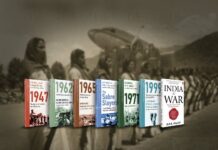
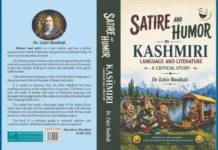
Yousf presented himself the next morning and was taken to JIC. At the end of a series of informal conversations, Watali writes he sensed the man is revealing much less than he knows and might have two objectives – to mislead me, and to gather information about how the investigation is going on. “He seemed to be part of a bigger game, I thought,” the sleuth wrote in Guns Under My Chinar: Kashmir’s Covert Wars, more than half a century later. The book was published by Rupa last month. “Listen, you are a plant, a decoy and not a friend.” He was retained for sustained interrogation.
Searches and Codes
Taking the lone chowkidar of the GMC Srinagar’s Bemina hostel in confidence, Watali barged into Farooq’s room to search for any possible clue. He picked up a couple of diaries, notebooks and a bunch of his girlfriend’s love letters. An officer was entrusted to extract anything useful from that but he put his hands up. It was like a dead end, the sleuth wrote. Finally, he started scanning the seizure personally.
“While going through a pocket-sized notebook, my attention was caught by a list of seven names with a code consisting of five to six numbers and two letters at the end of each,” Watali writes. “Each number and letter was different from the other. I tried my best to concentrate and guess the identities but could not.” Mohammad Yusuf Mir of Verinag was identified but the sleuth thought to not summon him.
Initially, the cryptic codes were taken as lottery ticket numbers but even that proved wrong. In desperate to crack the code, Watali remembers reframing the list of Farooq’s relatives using the seven numbers. When the list was produced before Farooq’s brother, he picked one name – Abdul Gafar Bhat, a pharmacist in Hajin Sonwari.
Plot Exposes
As Gaffar comfortably sat with Watali, he opened up very quickly. “Sir, I will speak the truth and the whole truth as per my knowledge,” Gaffar said, insisting that he should not be told that he withheld anything. “I do not know anything beyond what I am going to tell you.”
Gaffar’s long tale started as a student of the Government Degree College Sopore where he would stay with a relative and frequently interact with Farooq, his relative and batch mate. In their weekend interactions, Farooq would talk about “slavery” and “subjugation” and a “plan” that he would think about. While Gaffar forgot those interactions, another classmate, Ghulam Nabi Mir of Dardpora Kupwara, one day, told Gaffar about an unnamed outfit that would work for this. On his insistence, Gaffar agreed to become a member and “Signed an Oath Form with his blood”.
The story fast forwards to Farooq’s admission at GMC Srinagar where, he, once summoned Gaffar and slapped him for signing the form: “That man could be an intelligence agency’s contact and the existence of the whole organisation could be jeopardised because of your foolishness.” After normality was restored among the relatives, Gaffar was asked to stay back at the hostel where a guest would meet him in the morning: “just listen to him carefully”.
Well before he would wake up, the guest had arrived in his room. Introducing himself as Rehman, a code name, he talked about the outfit’s objectives and modus operandi. He told him the guerrilla war would envisage kidnappings and VIP assassinations. Gaffar was terrified. Soon after the guest left, Gaffer fled home, established his business and tried to forget everything. “Gaffar’s disclosure changed the discourse about the nature of the case, as it was now established to be the work of a guerrilla organisation with a bigger goal,” Watali wrote.
Mir Gives In
On the night of January 16, 1971, panwala’s son, Yusuf was summoned without being told about Gaffar’s disclosure. Watali said he was overjoyed when he started writing the names of the bank looters. Then, he said these are code names as he does not know real names.
Routine police interrogation eventually zeroed on one fundamental thing: “Now tell me where is Farooq at this point of time?”
“In the safe house,” he dropped another bomb very calmly.
“What safe house? Where?” I asked hurriedly.
“At Barsoo,” he said.
Yusuf revealed that the money they had looted from the District Education Officer, Pulwama in April 1970, was used to procure a safe house at Barsoo, on the Srinagar-Anatnag highway.
The Operation
Guided by Yusuf, a platoon of armed cops left for Barsoo and located the isolated house on the slopes of the Jhelum, almost 100 yards away from the village. “We laid a cordon around the boundary wall of the house and carefully approached its from rear without arousing the suspicion of the occupants,” Watali wrote. “As soon as we approached the rear wall, the occupants, who may have noticed us from inside, opened fire; we cautiously retaliated using the boundary wall as our shield. Our plan was to get them alive.”
Watlai writes, that he shouted at them: “You have no chance to escape. No harm will come to you. Your safety is guaranteed. Come out.” It worked. “The rear door of the house opened slowly and two individuals came out with their hands up, without any weapons”. It was Farooq and Nazir Ahmad Wani, an agriculture assistant in the government. Recoveries included Rs 8600 and some important documents including a microfilm and highly classified Indian army manuals.
Arrests helped solve the codes: Nazir was known as Assad; Farooq was called Suhail and Yusuf whose revelations led to the undoing of the outfit was Tariq.
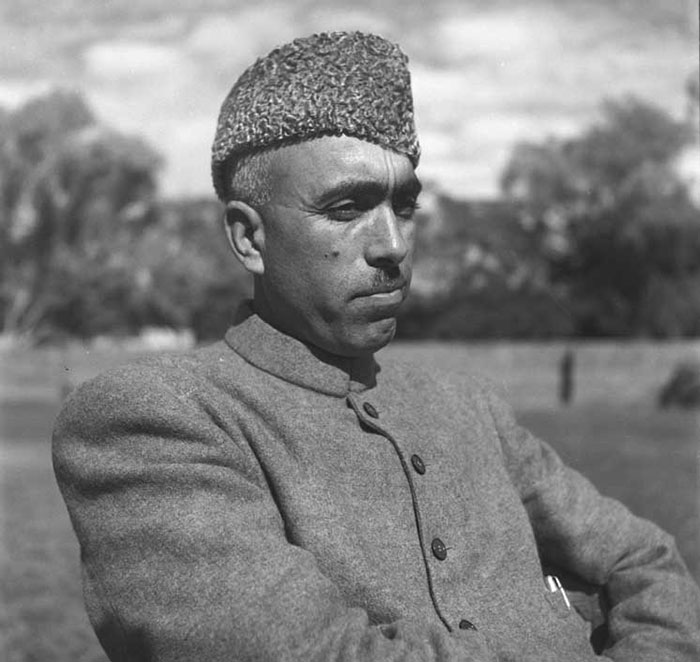
While arresting the duo from the house, a tarp was laid, and officers disguised as villagers were retained on the premises. By midday, a young man landed in the trap. He was Fazl Haq Qureshi, codenamed Abdullah, one of the founding members of the outfit. Another person who walked into the trap was Abdul Hai, aka Aslam, a Doda resident, who had come to the safe house with ghee.
Dismantling al-Fatah
With too many foot soldiers in the net, the police started now looking for the master, the leader of the outfit – Ghulam Rasool Zahgir, who operated under the code name, Rehman. Police had already an eye on him as they believed he was the person responsible for the killing of BSF constable, Charan Dass, who was guarding the Nawa Kadal Bridge, on February 3, 1967. His recruits had disclosed the safe house he was in. Zahgir, a resident of Dabtal, was a college drop-out, who was arrested first time as a clerk of the University of Kashmir in October 1965 for putting up Jehad posters.
Watali writes that he led the operation and the team scaled up the 3-storey house to reach his top floor room. They broke the door and found him calmly sitting on his bed. “I quickly grabbed both his hands,” Watali wrote. “I do not have a weapon with me, he said, pointing to his loaded revolver in his jacket hanging from a peg on the wall above his head.” Recoveries included Rs 12000.
“Zahgir did not resist arrest and accompanied us with a smile,” the memoir reveals, and later in the car, he told Watali that when he heard “feeble sounds”, he guessed a police raid and concluded that all the members had been arrested because my location was known to Abdullah only. Relaxed as the car moved, he asked Watali: “Which of the two operations was better planned – Pulwama or Hazratbal?” The sleuth responded that it was Pulwama as no trace or a clue was left behind. “Pulwama was planned by me and Hazratbal by Nazir Ahmad Wani,” he revealed.
The looted money was still missing. When Farooq was asked, be broke down, lamented over his fate and finally said: “Did not Tariq tell you?” It was yet another shock for the police because the panwala’s son, who was with them for 16 days, was keeping the money. When Yusuf was asked, the response was shocking: “Jenab, yeh ghar ki baat hai. Main kabhi bhi aap ko cash dey sakta tha (Sir, this is a family matter. I could have given you the cash anytime.)”
DIG Kashmir led a police team and recovered Rs 70,000 concealed in the ceiling of the attic of his father’s house. Of Rs 97175.75 robbed Rs 91321 was recovered. The money looted from Pulwama, the investigation revealed, was used to purchase land and build the Barsoo house; fund a tea stall for Abdul Hai in Doda as a cover; and set up a poultry farm at Bijbehara to create resources. The group owned safe houses at Anantnag, Shaheed Gunaj, Buchwara and Kohna Khan Dalgate in Srinagar. Quoting from Surinder Nath’s “secret report”, Watali has recorded: “It is highly significant that the large amount that had been procured in this dacoity was utilized entirely for the purposes of the underground organisation and was not distributed among the members of the gang as personal booty. This reveals a sense of dedication on the part of the members of the organisation to their cause. It also provides a reason why it was not possible to get any clue regarding this crime.”
Within 16 days of the robbery, the Police announced the wiping out of al-Fatah and the arrest of almost all its members. Of its 200 members only 40 were “indoctrinated”, according to Watali. Zahgir’s diary offered the entire list and it was also revealed that the group was named al-Fatah after Zahgir’s and Fazl Haq’s Pakistan visit in January 1969, during which they received training as well.
The Kashmir police officer links the genesis of the al-Fatah with Jahangir Khan, a Bagh-e-Mehtab resident and a staunch pro-Pakistan farmer, who had voluntarily guided the tribal raiders in Budgam in 1947. Watali believes that despite being in the line of fire of the police and on the perpetual watch list, Khan was involved in espionage, smuggling loads of arms into Kashmir in 1948, and was also a proclaimed offender in the historic Kashmir Conspiracy Case against Sheikh Abdullah. He was arrested in Poonch in 1961 and faced trial before a special court until the case was withdrawn after 1965. However, he was re-arrested in the Srinagar Bomb Case of 1948 but no evidence was available so he eventually moved out of jail in 1968. He settled in Haka Khal Beerwa where he started a poultry farm, apparently a cover.
Khan had met Zahgir and Fazl Haq in jail. Later, he had organised training sessions with dummy weapons in Haka Khal forests near Arizal, the book reveals. He had assured Zahgir that “sufficient weapons would be provided to al-Fatah at the proper time”.
An Arms Hunt
When Zahgir was asked about arms, he admitted to having been advised by Mufti Ziauddin, an erstwhile resident of Kreeri who migrated to the other side after 1947 and had visited Kashmir on his passport after the Pulwama robbery, that weapons would come at the right time. He also told his interrogators that when he pressurised Khan on the arms issue, he was told to get in touch – after authorisation from Pakistan – with Haji Jalaluddin, an aged respectable from Chrar-e-Sharief. Zahgir said he never approached him.
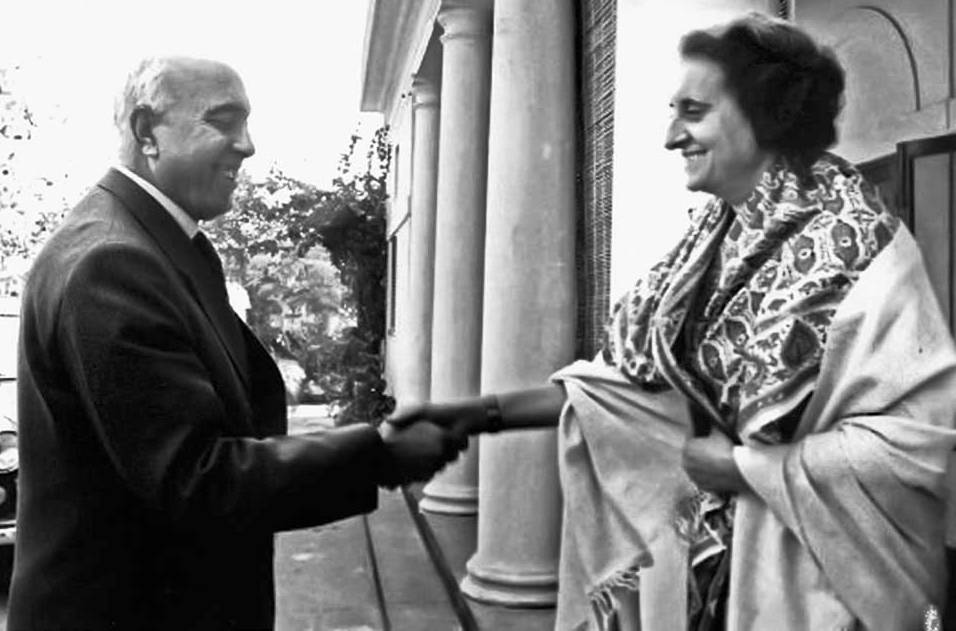
At 80, Haji was frail and it was difficult to question him. Interestingly, his son was serving the police and was oblivious of his father’s past. He was taken to JIC, which extended the best facilities, a Sikh officer was washing his feet every evening with hot water as was the common custom in Kashmir, and tactfully quizzed. Finally, he revealed that pony loads of arms smuggled into Kashmir in 1948 were in his safekeeping. He had been repeatedly interrogated in Red Fort Delhi in the 1950s, he retained the secret.
Politely refusing his offer of personally handing over the arms, police drafted a site plan of the spot in his own house – “top end of the wall in the attic of his four-storey palatial house, covered with the mud plaster just under the sloping roof”. As a police team reached the town, Haji’s son was accompanied and the recovery was made – 12 carbine sten-guns, 38 revolvers, 24 magazines and 390 rounds of ammunition. “Haji’s family members were shocked as they had no knowledge of such a huge consignment of arms cached in their house,” Watali recorded in his book. “His police officer son told us that his father used to discourage family members, including children, from going up to the attic, warning them that the place was haunted and inhabited by a jinn (tasrufdar in Kashmiri) who may harm them.” Hang grenades were buried in the kitchen garden.
Many Cases Solved
In a quick follow-up, the Jammu Kashmir Police submitted a detailed report to the Prime Minister, Indira Gandhi. After it was revealed that the group was handled by Zafar Iqbal Rathore at the Pakistan High Commission, the government declared the intelligence officer as persona non grata.
The Pulwama dacoity was instantly solved. It was a group of 10 people led by Zahgir that executed the plan – Farooq Ahmad Bhat, Nissar Hussain, Bashir Ahmad, Ghulam Hassan Shakhsaz, Hamidullah, and Mohammad Sayeed Khan. Iqbal Beg a law student from Doda and Iqbal Hashia and Mohammad Iqbal from Kishtwar were also part of the loot operation. The roles were assigned. Saleem Gilkar was tasked to oversee how much cash was dispensed. Farooq stole Abdul Aziz Haroon (Barbnarshah) jeep from Srinagar Lal Chowk to drive it to Anantnag and later to Pulwama. Zahgir and Farooq had revolvers and others were armed with daggers.
Three chowkidars were silenced by threat and show of arms. A defiant one was silenced by using a chloroform-soaked hankie as was supplied by Mohammad Sayeed Khan. They took the huge locked chest and loaded it in their jeep, drove it to Srigufwara where they kept it under a culvert. The jeep was abandoned in Danter. The next day, they got a mechanic from Anantnag Gul Mohammad – now NC politician Gul Rafiqui who was elected a lawmaker in 1996, who opened the chest and the group took Rs 71,847.60.
No trace was left. SP Anantnag, Badri Nath Kotru was investigating the case. “CM Ghulam Mohammad Sadiq was so concerned about this unprecedented crime that he would inquire about its progress whenever the IGP and DIG met him, much to their embarrassment,” Watali has written. “Driven up the wall, Kotru reportedly proposed a solution to the IGP. He told him that all the burglars, criminals, and known bad characters of the district were fed up with repeated calls, questioning and harassment by the police for almost a year. As a compromise they had offered to collectively contribute the stolen amount to be shown as recovered from a few of them. They had also assured him that they would confess their ‘crime’ before the court and accept the sentence.”
However, Watali has regretted that certain central security agencies were “hell-bent on creating doubts” as part of the “game they were trying to play”. The top sleuth, however, suggested a Supreme Court probe. There were even suggestions that the al-Fatah ringleaders should be “deported to PoK through CFL”.
Apart from guerrilla war, the police investigations revealed that the idea was to have a political wing, which was set up as the Young Men’s League and Students’ Federation in 1970, which was launched by al-Fatah members –Abdul Rashid Dar, Mohammad Saleem Baig and Mohammad Yusuf Mir. Mirza Afzal Beg was in the loop too.
The Trial
The police filed a charge sheet against 22 al-Fatah members including Abdul Rashid Dar, M Saleem Beg, Mohammad Yusuf Mir, Zahgir, Fazl Haq, Nazir Wani and many others. The trial started in Central Jail Jammu where a special judge was appointed. The court later shifted to Srinagar. Witnesses were examined by the defence including veteran NC leaders Mirza Afzal Baig and P L Handoo. After the 1975 Indira Abdullah Accord in 1975, the government withdrew the case and all the accused were set free and rehabilitated.
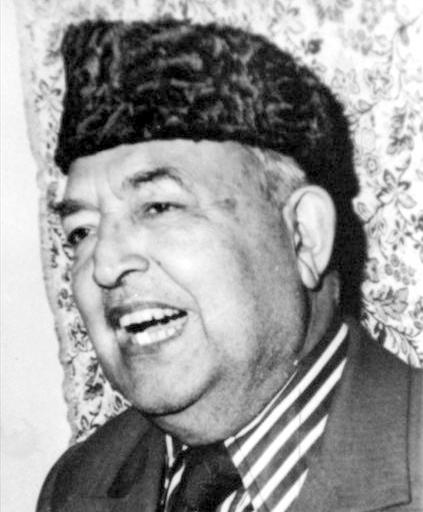
Abdul Rashid Dar was permitted to study law and he eventually became the chairman of the Legislative Council. Saleem Beg was appointed by Afzal Beg as part of his staff and he eventually retired as Director General of Tourism Jammu and Kashmir. Iqbal Beg was appointed to the revenue department and retired as a senior revenue officer. Fazl Haq also rejoined his service. Watali told Kashmir Life that withdrawing the case and rehabilitating the accused was “most probably” an unwritten part of the accord.
A Shocking Revelation
The outfit was dismantled well before it could become a crisis. Its plans, however, were terrifying. One plan was the assassination of Prime Minister Indira Gandhi when she visited Srinagar in September 1966. A visit that happened after the 1965 war, the Congress wanted to show it big by getting her in an open-hooded jeep from the airport to the city and had mobilised too many people from the periphery. The underground outfit was a threat so were the angry members of the Plebiscite Front.
It was an incident-free visit. Six years later in 1972, the police got to know what was to happen but did not happen just by chance. “I volunteered for the high profile assassination,” Watali writes Zahgir telling him. “After examining the whole route, we selected Shaheen Restaurant situated on the first floor of the arched building at the trisection of the eastern row of buildings along the Hari Singh High Street at the head of the link road leading to Hanuman Mandir.”
Two al-Fatah guys got into the restaurant and occupied a window table where they oversaw everything as the table was hardly about 20 feet above the road.
“With the motorcade only about 50 yards away, we pulled ourselves together and prepared to strike,” the book quotes Zahgir further. “Suddenly, to our utter shock and fear,a Kashmir Police constable in uniform with a baton, in his hand entered the restaurant and sat down, keeping both of us under his gaze. We were so shell-shocked by his mere presence that we could not even breathe properly, let alone make a move.”
The plan was almost akin to one that Watali reports was revealed with the arrest of a very popular spy and militant guide in the 1990s known as ‘Captain’ Rashid, a resident of a border village. Rashid migrated to the other side after “allegedly double-crossed some Indian agency.” He was a guide helping youth to crossover and returned with arms training. In a border village, he developed intimacy with a woman that the police came to know about. The woman agreed to help the police and it led to Rashid’s arrest. It was a big catch and Chief Minister Dr Abdullah was requested to meet the team that arrested him at Dak Bungalow Sopore. As he was presented before Dr Abdullah, he made a shocking revelation.
In 1988, the ISI, he said assigned him to assassinate Dr Abdullah. “To execute the plan, he had selected a spot in Srinagar-Gulmarg Road – to target Farooq when he was informed about his scheduled visit to Gulmarg,” the book reveals. “He had taken his position in a strategically suitable sport on the roadside well before the arrival of CM’s motorcade. While waiting there, his local collaborator, who was with him to identify Dr Farooq, casually mentioned to Rashid that Dr Farooq’s mother belonged to the Gujjar tribe of Tangmarg.” Rashid abandoned the plan. He told Dr Abdullah: “Once I heard that, I instantly abandoned the plan to assassinate you as I was also a Gujjar. I deliberated why I should kill one of my Gujar bhai.” Adds Watali: “The CM’s face went pale but he listened to the whole story with a smile.”
Rashid escaped from Srinagar Central Jail in a “manipulated jailbreak” and was later killed by Hizb ul Mujahideen and his body was never found.
“Had al-Fatah not been cracked, the insurgency, which the Indian state is still battling in 2023, would have engulfed the state in early 1971,” Watali’s book records, “with a stronger and more formidable organisational set-up.”