by Dr Mehak Majeed and Dr Sabreen
Habba Khatoon’s poetry reflects her life, mystic influences and imagery, blending human longing, social experience and Kashmiri Sufi spirituality in verses understood by common people and philosophers alike
Following in the footsteps of Lal Ded and Shaikh-ul-Alam, Habba Khatoon took over the responsibility of shaping the Sufi mystic discourse of Kashmir in the 16th century. Being a witness to the end of the Shahmiri and Chak dynasties, her understanding and poetic discourse were shaped uniquely.
The life of Habba Khatoon is analysed in three phases. During her early childhood, she was known as Zoon (Moon). This was a jolly and progressive part of her life in terms of learning and understanding the socio-cultural context she was born into. The second stage is when she was agonised over by her in-laws as a child bride married to Aziz Lone. Soon after, she became the queen of Yusuf Shah Chak and eventually ended up being a wandering mystic poetess.
Being married to Yusuf Shah Chak, a part of her life was spent as a queen. She became a first-hand witness to the advent of the Mughals in Kashmir, which personally challenged her as Akbar, the then Mughal ruler of India, sent her husband into exile. This phase is considered crucial to the depth of her poetry as it deepened her mystic self, reflected in Sufi thought.
Poetry for Habba Khatoon was something very innate and a part of her soul. Over time, she slowly and steadily discovered it in a better manner and in different forms. Initially, she was influenced by the folklore and traditions of her time. Slowly, as she began exploring her inner self, she combined it with the learning of the order of the day and introduced a new poetic style, Vatsun.
While carrying forward the legacy of Lal Ded and Shaikh-ul-Alam, Habba Khatoon began expressing her inner self in all expressions of love. Her poems increasingly spoke of love in both its visible and supreme forms. In a famous couplet, she says:
Gooshan manzha wathravai
Walu mania poshai madno
(I shall bestow the meadows with flowers for there;
Come, my love of flowers!)
A point of digression from her predecessors has been identified in some of her themes that centre around longing for a human beloved, unfaithfulness in worldly love, anguish over multiple issues faced by an average human being, pain in its multiple forms tormenting human existence, nostalgia for childhood in one’s own home and the thorned pathways tread by women to settle within the social system of in-laws. Habba Khatoon’s poetry around these themes is the most popular among the common masses of the region.
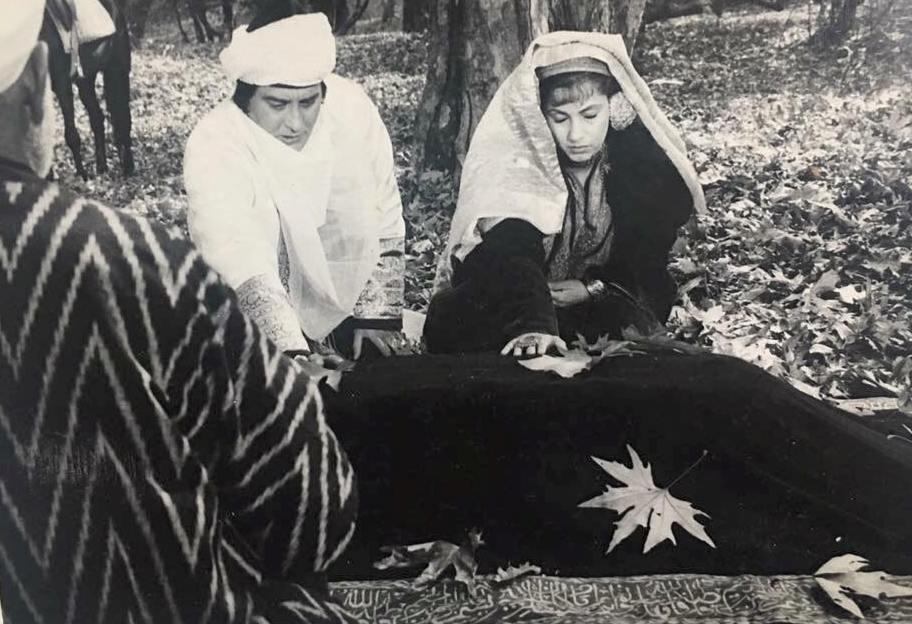
However, a considerable part of her work is woven around themes of multiple approaches to death and unity with divinity, hope and despair as forms of connecting an ordinary soul with the divine, and the interwoven nature of human instances with universal experiences. It is this part of Habba Khatoon’s work that reflects her spirit of oneness with the two forebears. Speaking in the language of the people, she calls for the divinity of Sufi mysticism as the pathway to liberation for all.
Of all the poets of Kashmir, Habba Khatoon’s impact has been the greatest on the local populace and common people. Her distinct style of Vatsuns, her portrayal of the common person, and her discussion of day-to-day sufferings worked magic in helping common people understand divinity better. During her days as queen, Habba Khatoon’s poetry was well received by the court. Trilok Nath Raina suggests that both Shahmiris and Chaks were admirers of music and poetry. Habba Khatoon’s husband especially admired her for her poetry.
Local historians opine that Habba Khatoon’s contemporaries were people of rich and sophisticated temperament. Her fluency in Persian and Kashmiri verse was well-received during her lifetime. Her songs were metrical, and she would sing them herself. People would hear them from her and hum and sing the same. It was mostly through word of mouth during her lifetime that her verses became famous. Habba Khatoon is considered the pioneer of lyricism in the region. She was later followed by Arnimaal in the tradition.
Imagery is commonly used in Habba Khatoon’s poetry. In one of her famous poems, Pompury Gath (The Moth and Flame), she expresses:
Ishabara bihith sheesha chhas braan
Kesh chhas paaraan yoory vaatyam yar
Yaaras kits poshan maala chhas karaan
Baal chhas karaan kosman kraav…
(I fill goblets in Ishbar,
Braid my tresses and weave garlands
Of flowers for him who is coming,
I’m a maiden gathering violets…)

Habba Khatoon’s poetry, on the one hand, seems simple enough to be comprehended as a discussion of human interactions, love and longing. On the other hand, if analysed deeply, the interpretation can extend towards an understanding of divinity and the larger self, reflecting the thoughts of Lal Ded and Shaikh-ul-Alam.
Picking imagery and metaphors from local parlance, in one of her poems, Habba Khatoon uses the sensual imagery of pomegranate blossoms. She says:
Me kary tsey kity posh dasvaanai
Chhav mynaany daanai posh…
(I have made posies for you, my love,
Enjoy my pomegranate blossoms…)
Using images and instances from common daily life made her poetry popular among the masses. The unique feature of Habba Khatoon’s poetry is that a common person understands it in a basic human sense, while a philosopher interprets it in an absolute and divine context. Another similar example using natural imagery from the local environment can be quoted as:
Path naiyan aasus bu hai
Totuy votum tabardaar…
(I was a happy greenwood pine
Till this callous woodsman chopped me down…)
Quite similar to Lal Ded, Habba Khatoon also faced ill-will and resistance from her in-laws. Both poetesses of the land eventually gave up ordinary domestic life. Following the footsteps of Lal Ded, Habba Khatoon also wandered from place to place after her husband was imprisoned by the Mughals. Both poetesses lived in times of complete patriarchal dominance, when women were expected to accept any brutality thrown their way in silence. Habba Khatoon’s resilience manifested in verses like:
Vwola vesy gatshavai kreyshe
Luka maty tujnas retshe
Timn tem yon hyoo gatshe’
Vwolo myaani poshe mmadano
(Let’s go gather sweet wild leaves,
I suffer the taunts of the madding crowd…
Would they jeer if they shared my fate?
Come back, my lover of flowers!)
Inspired by Lal Ded at every turn of life, elements like fire are often quoted in Habba Khatoon’s verses. She compares mortal human suffering to clay burnt in an oven. It is the outcome of these sufferings, according to her belief, that helps a person unite with the divine. In the following verses, she speaks of the absence of her beloved—interpretable both as human and divine—and compares the experience to human flesh being burnt in a fiery oven:
Aandre ha zeaj nasai,
Tondras bi leaj nasai…
(With a steady fire within me,
I feel baked in an oven…)
Being married at a very young age, Habba Khatoon was placed in a system that expected too much of her when she knew too little. She felt helpless in an alien environment. She agonised in her first marriage to such an extent that the trauma continues to live in her verses to this day. She was born at a time when women were not expected to speak, read, write or, in extreme cases, sing. The bifurcation of her verses into domestic and divine contexts reflects this reality. Many literary historians believe that had she not been traumatised at such a young age, much of her poetic contribution might have moved more directly toward extending the frontiers of Kashmiri Sufi mysticism.
Habba Khatoon’s discourse requires further research and in-depth analysis to reveal the hidden aspects of Kashmiri Sufi mysticism.
(The authors are affiliated with the Islamic University of Science and Technology and work at the intersection of gender, region and feminist discourse. Ideas are personal.)