by Ruqaya Akhter
Health spending in Jammu and Kashmir has risen but remains insufficient, with structural gaps in tertiary care driving medical migration, high costs, and the need for targeted investment.
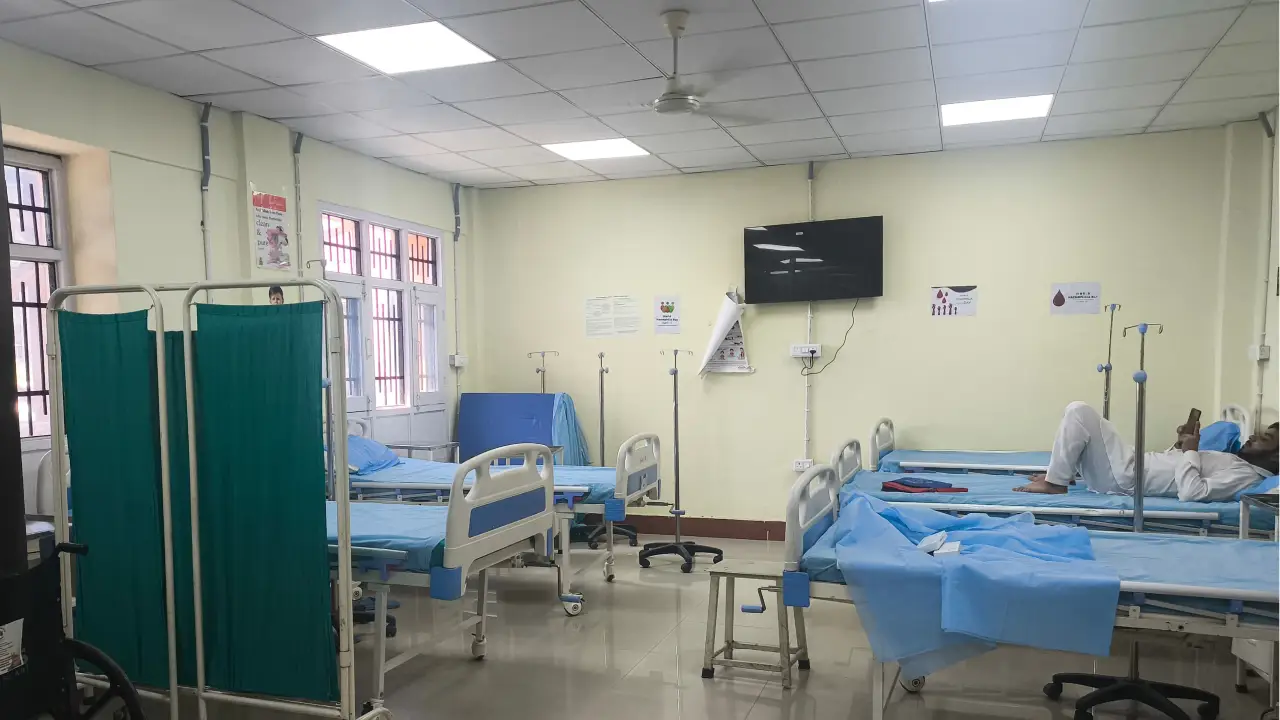
Public expenditure on health in Jammu and Kashmir has increased over the past decade, yet its pace, structure, and outcomes raise important policy concerns. Between 2012–13 and 2019–20, health expenditure rose from about Rs 1,205 crore to nearly Rs 1,883 crore. The allocation peaked at around Rs 2,109 crore in 2017–18 before witnessing a marginal decline in the subsequent two years.
The decline in expenditure after 2017–18 deserves attention. Spending fell from about Rs 2,109 crore in 2017–18 to around Rs 1,904 crore in 2018–19 and further to approximately Rs 1,883 crore in 2019–20. This stagnation contrasts with the upward trajectory observed in many other states during the same period. Several structural issues shape the health financing framework in Jammu and Kashmir. For example, the composition of expenditure requires reassessment. A substantial portion of the health budget is devoted to salaries and routine operational costs. Capital investment in diagnostics, district hospital upgradation, and emergency services needs greater emphasis.
Although the long-term direction is upward, the growth trajectory has been modest compared to many other Indian states. During the same period, states such as Punjab, Haryana, Rajasthan, and Tamil Nadu recorded stronger and more consistent expansion. Even smaller hill states like Himachal Pradesh maintained relatively higher expenditure levels when adjusted for population size and geographic constraints.
In terms of overall budgetary priority, health expenditure in Jammu and Kashmir has generally remained within the range of about 4 to 5 per cent of total budget expenditure during these years. This share has not undergone a major structural increase despite rising healthcare needs. In contrast, some better-performing states have gradually increased the relative importance of health in their fiscal framework.
The implications of this are visible in service delivery outcomes, particularly in tertiary and super-speciality care.
A significant number of patients from Jammu and Kashmir continue to travel to cities such as Delhi, Chandigarh, Amritsar, and Mumbai for treatment of serious and life-threatening conditions. These include advanced cardiac procedures, oncology treatment, neurosurgery, organ transplants, and complex trauma care. While referral systems and insurance coverage under public schemes provide some financial protection, the economic and social costs remain substantial.
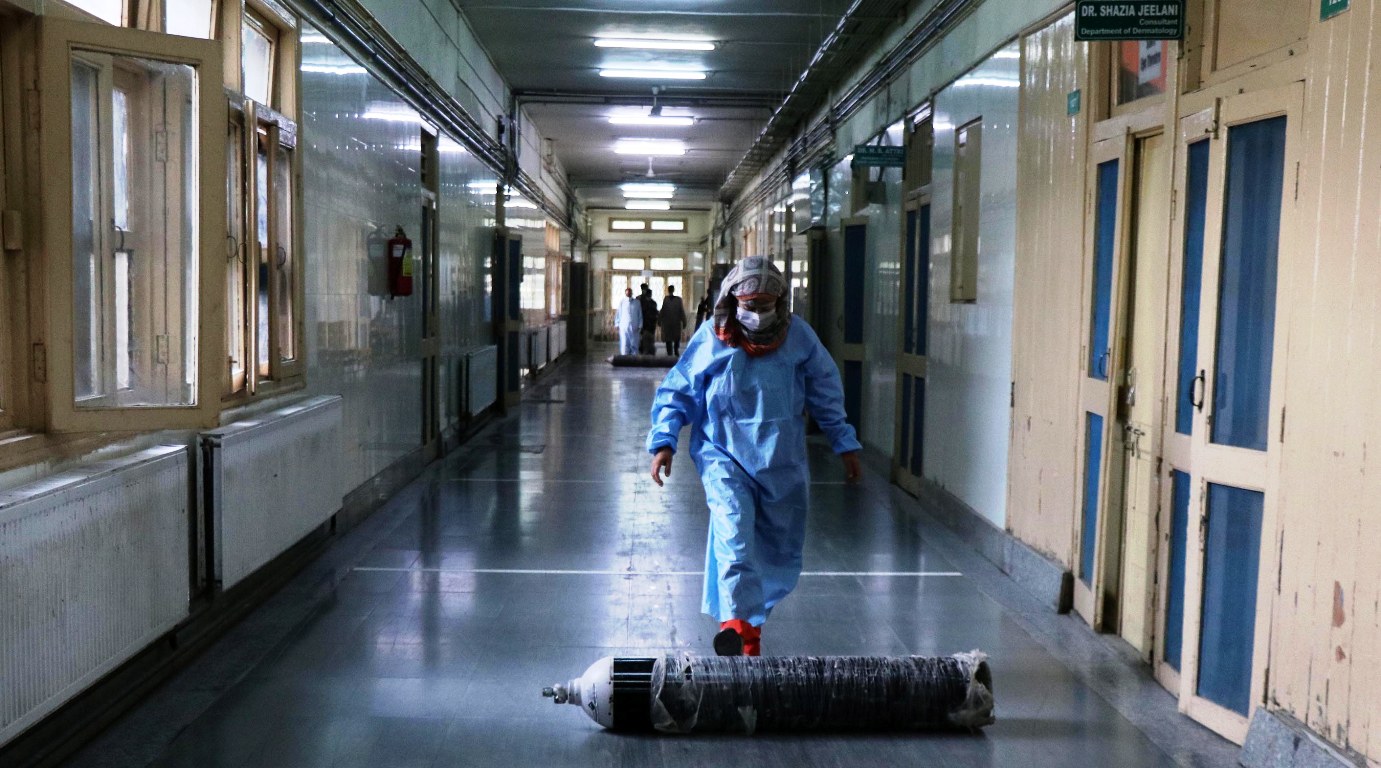
Families incur high out-of-pocket expenses related to travel, accommodation, and prolonged stays. For economically weaker households, this can result in distress borrowing or asset liquidation. Beyond financial costs, medical migration also causes emotional strain and delays in treatment, particularly for patients from remote districts who must first travel within the Union Territory before being referred outside.
This outward flow of patients is not merely a clinical issue but a structural indicator of gaps in tertiary infrastructure and specialist availability within the region.
Three structural constraints shape this situation.
First, capital expenditure on advanced medical infrastructure has been limited relative to need. While primary and secondary facilities have expanded over time, super-speciality capacity remains concentrated in a few institutions.
Second, specialist shortages persist. Recruiting and retaining highly trained professionals in cardiology, oncology, neurosurgery, and critical care has been difficult, partly due to limited research opportunities, career progression pathways, and infrastructural support.
Third, diagnostic capacity in district hospitals remains uneven. Late detection of diseases often leads to referrals at advanced stages, increasing dependence on external centres.
Addressing this challenge requires a targeted and phased strategy rather than incremental budget increases.
First, a dedicated tertiary care strengthening plan should be formulated for Jammu and Kashmir. This must prioritise the establishment and expansion of super-speciality wings in existing tertiary institutions in both the Kashmir and Jammu divisions. Investment in oncology centres, cardiac institutes, and trauma facilities should be treated as strategic capital expenditure rather than routine departmental expansion.
Second, public-private partnership models can be selectively introduced for high-end diagnostic services such as PET scans, advanced radiology, and specialised laboratory testing. Structured contracts with regulatory oversight can improve access without placing the full fiscal burden on the exchequer.
Third, specialist retention policies must be strengthened. Competitive salary structures, research grants, housing support, and transparent promotion mechanisms can improve long-term retention. Collaboration agreements with national institutions for visiting faculty programmes and skill transfer may also bridge short-term gaps.
Fourth, telemedicine should be expanded beyond primary consultations to specialist networks. Virtual tumour boards, remote cardiology reviews, and digital critical care monitoring can reduce unnecessary referrals and support district-level doctors in managing complex cases.
Fifth, a region-specific health infrastructure equalisation formula should guide intra-territorial allocation. Districts with high remoteness and limited access must receive greater capital support to reduce geographic disparities.
Finally, data-driven planning is essential. A systematic audit of out-of-state referrals, categorised by disease type and district of origin, can identify priority investment areas. If a substantial proportion of referrals is concentrated in oncology or cardiac care, targeted infrastructure expansion can be designed accordingly.
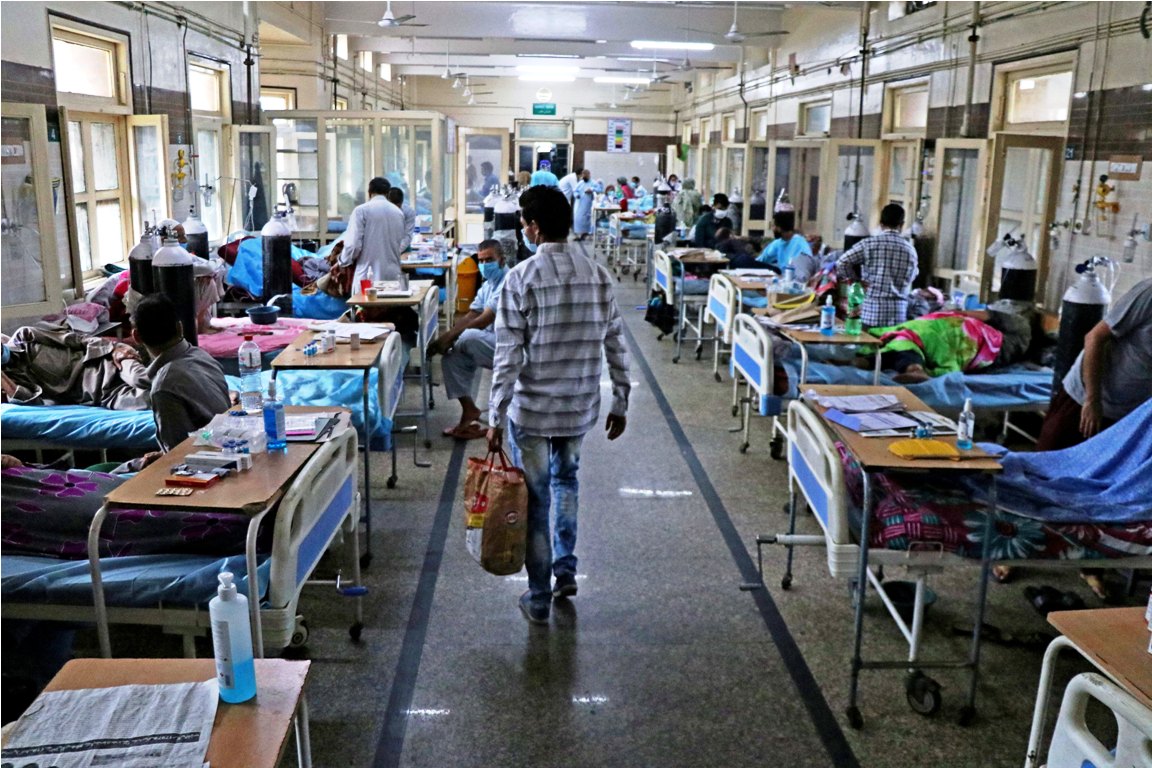
Jammu and Kashmir has made progress in expanding public health expenditure over the decade. However, when compared with many other states and Union Territories, the scale and composition of spending remain insufficient to meet evolving health needs. The continued dependence on external states for treatment of serious diseases reflects structural gaps that require focused policy attention.
A strategic shift toward tertiary capacity building, specialist retention, and evidence-based capital investment can reduce medical migration and strengthen regional self-reliance. Health expenditure must not only increase in absolute terms but also realign toward high-impact areas that directly reduce vulnerability and financial distress among households.
(The author is a Research Scholar at the Department of Economics, University of Kashmir. Ideas are personal.)