by Iqbal Ahmad
Kashur’s historical status is examined, questioning its absence from official records while affirming its cultural richness, literary strength, and enduring role as Kashmir’s mother tongue.
Kashmiri, literally meaning Koshur, is the most popular spoken dialect of Jammu and Kashmir. In fact, it is also literarily very rich and has wonderful treasures of knowledge preserved in its literature. But still, one is unable to understand that if this language served as the most popular spoken language of this land, why it could not serve as the written language, and why official business was not carried out in this language.
Is Koshur an ancient dialect? Did it ever serve as the official language of this land? Is any ancient document written in this language? Have any epigraphs of this language ever been found anywhere? Did any series of ancient coins of this land carry legends in this language? Did this language ever serve as the written language of its people? These are a few of the queries often raised in literary circles.
Indeed, we all know that, like all other dialects, Koshur is also an ancient and popularly spoken dialect of this beautiful land and its people, who have adopted their name from this dialect and are known as Kashier. Obviously, there are certain other dialects like Dogri, Punjabi, Pahari, Gojjri, Shina, and Balti spoken in the high reaches around this glorious valley, but the majority of its people are Koshur-speaking, which mostly includes people of all religions, sects, and communities.
Surprisingly, despite being the most popular spoken dialect of this land, I do not think it ever enjoyed any official status or served as the official language of this land at any time. I do know and have read that Sanskrit and Persian have been the official languages of ancient Kashmir, and most of the documents about this land are written in these two languages in Sharda and Arabic characters. Being a senior local archaeologist, I have never come across any such ancient paleographic evidence of this language, nor is any ancient Koshur epigraphic evidence recorded anywhere in this land. Indeed, several epigraphs have been discovered and preserved in museums and at monuments here, but those are either in the Sharda or in Persian and Arabic alphabets. I have also never come across any legends in the Koshur dialect in any ancient coin series of this land; most of the legends on the ancient coins of this land are in Kharoshti, Brahmi, Sharda, Persian, and Arabic letters.
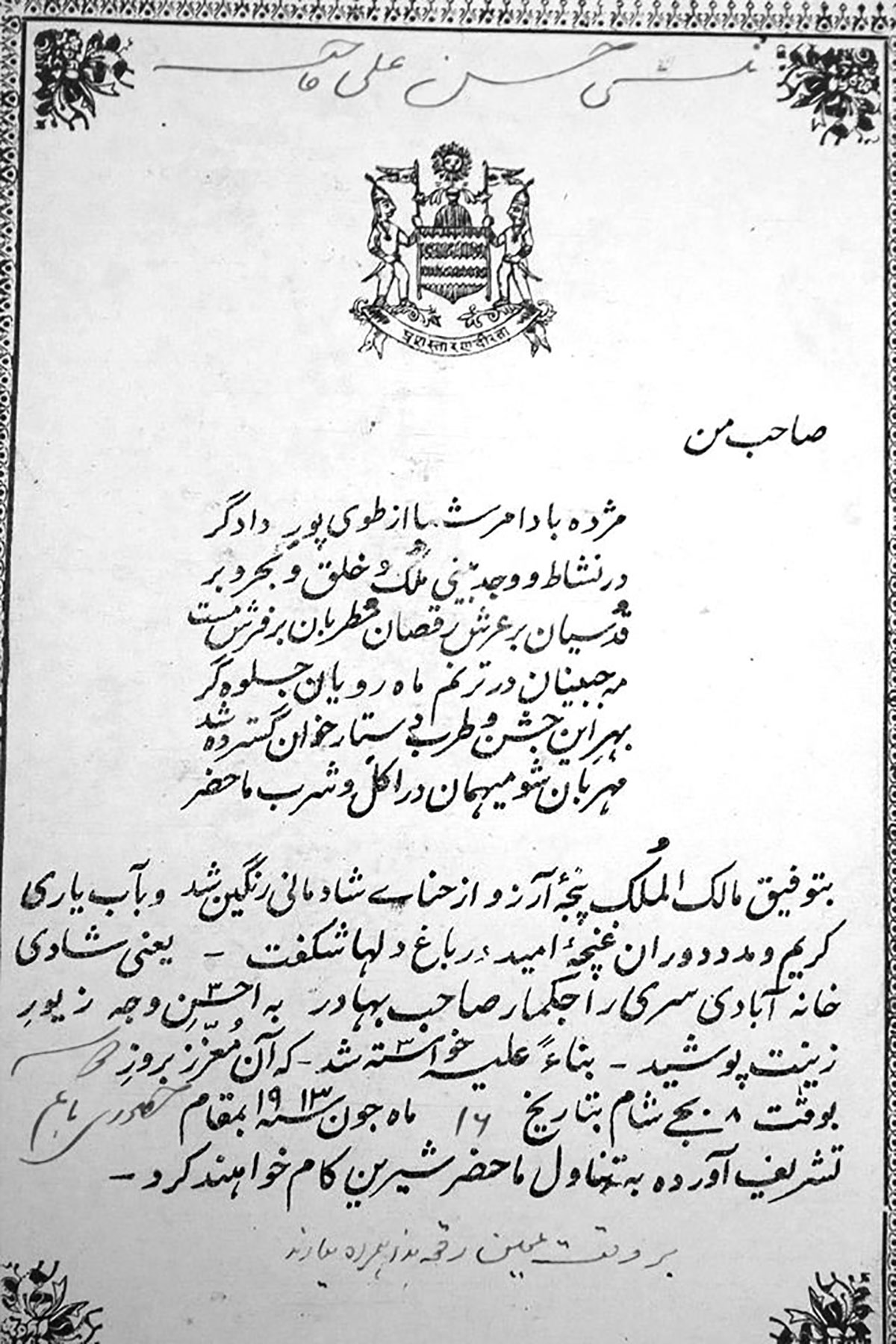
Almost all the ancient documents about this land are written either in Sharda, Sanskrit, or in the Persian alphabet, while no such ancient documents of this land are known in the Koshur alphabet. In fact, the Koshur dialect is very rich in terms of its literature, and thousands of books have been written in prose and poetry in this dialect. Besides, it is also incorporated into the education sector and is taught in various universities and colleges. I know that this language is rich in modern literature; it is my local dialect, which has almost always served as the spoken dialect of my land. It is our mother tongue, which will never die. Nobody needs to be worried about it.
For instance, how odd would it sound if a mother told you that she teaches her baby how to suck milk from her breast? It is but a natural process; mothers only offer their breasts to their newborn babies, while babies themselves reach for it. Similarly, how irrelevant it looks when one talks of teaching people their very own mother tongue, because it is also naturally transmitted to these tiny souls, and mothers help enable babies in the delivery of dialogue.
I do not think that the introduction of local dialects as subjects at school and college levels has helped these dialects to flourish beyond their spoken communities; indeed, it has helped a few of their students secure employment opportunities in local colleges and universities, besides helping to enrich their literary treasure.
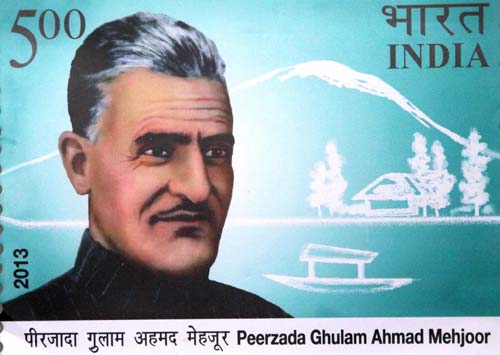
Local schools before the eighties did take care of this language by introducing it as a medium of instruction and by encouraging children to sing Kashmiri songs in morning prayers and at other cultural events. Several songs of Shair-e-Kashmir Mahjoor and Azad were popularly sung by schoolchildren in melodious voices during their morning prayers. Those songs not only promoted this local dialect but also cultivated love and brotherhood among students belonging to different faiths, sects, and communities. I still remember a few of those songs which we used to sing in the morning prayers at school. I would like to mention the following couplet from one of the most famous lyrics of Mahjoor, wherein the poet seeks the righteous way of life, full of love and brotherhood, and distances himself from hatred:
Sahibu sath chum ma chhani wath ma asslich hawtum
Keut kala rouz baizan zian hud mas chavtum
Yeum sukhan paida karun khalkun ander ulfat te loul
Dour yemseith ghachhi nufrat te wanun hichh natum
(Oh God, you are my succour; show me the right path. I do not want to remain ignorant; please enlighten me. Teach me to deliver those words which cultivate love and brotherhood and remove hatred from society.)
Another song of this poet was very popular during the morning prayers of my schooling days. It started with these lines:
Neia treyiv mai thyiv panne wain
Puz muhabet bagriviv, panne wain
Hend chhu shaker doud chhu mulim saaf saaf
Doud te bie shaker ralaviv pan vain
(Leave conflicts aside; cultivate real love. Hindus and Muslims are like sugar and milk—mix them.)

The administrative system and educationists of that time had a good sense of promoting local languages. They knew that the local dialect could be promoted when it served as the medium of instruction in schools and colleges. That is why they made it the main medium of instruction, which helped students understand other subjects more easily as well. A local dialect cannot be promoted merely by introducing it in schools as a subject; it can be promoted only if it is introduced as a medium of instruction.
Of course, the role of certain institutions in its promotion cannot be ruled out. In this context, mention may be made of literary, music, and cultural institutions. Musicians did a wonderful job in promoting its musical aspect, while poets and dramatists promoted its content. Indeed, AIR and Doordarshan Kendra also played a significant role in promoting its spoken dialect, while JKAACL did commendable work in composing, documenting, and publishing its literary treasures. But the reality is that it could never become a popular written language.
(Author is a senior archeologist. Ideas are personal.)