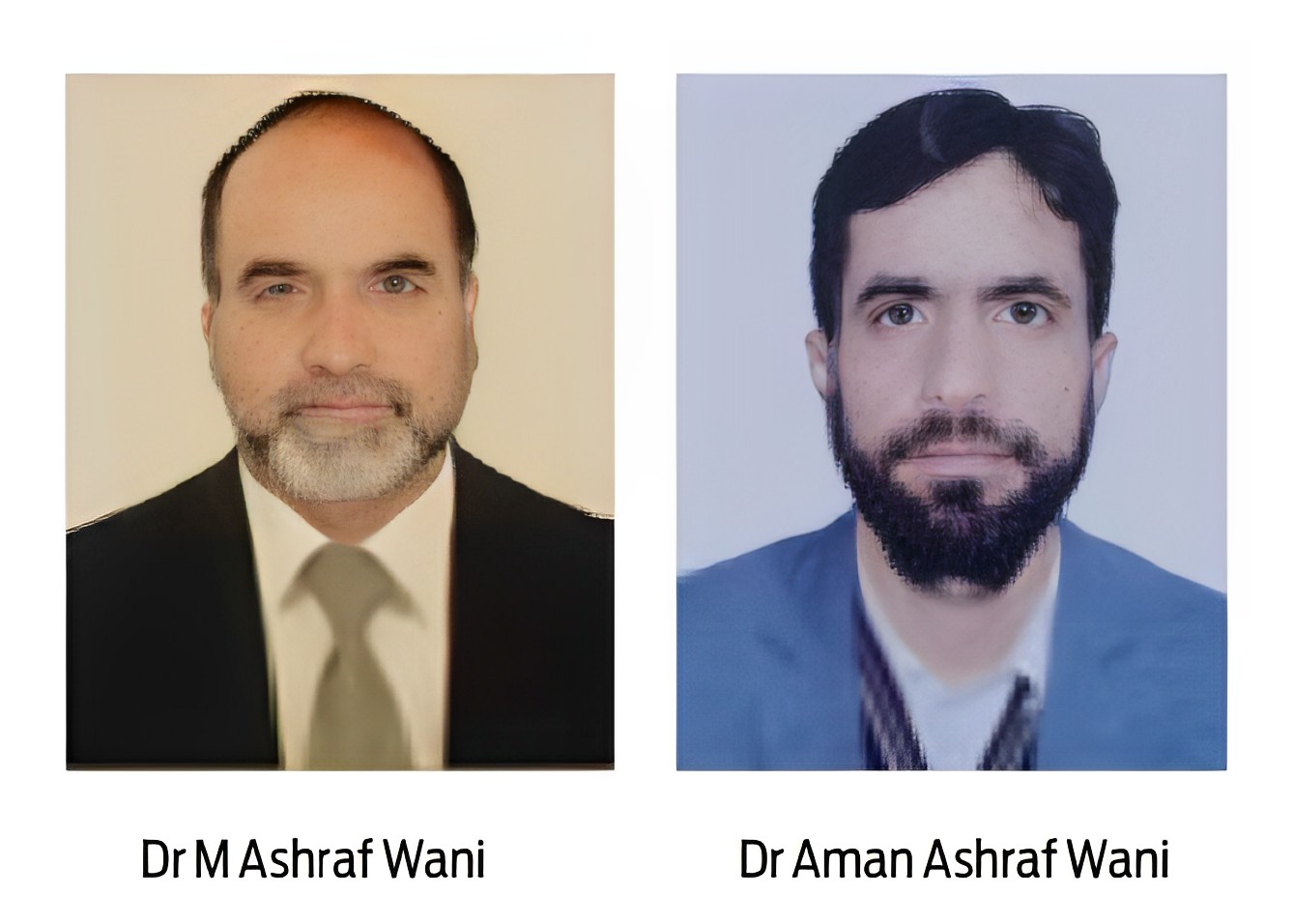
Kashmir’s transition to Islam was neither the outcome of a forced conversion nor an abrupt miracle by any saint. It was a gradual process of interaction and understanding that spanned more than 400 years when a Muslim started ruling Kashmir, scholars Mohammad Ashraf Wani and Aman Ashraf Wani write
Around 883 CE, the Arab amir of Sind, Abd Allah received a letter from the then ruler of Kashmir requesting to arrange for him a hindiyah (Hindavi or Sanskrit) version of exegesis (tafsir) of the law of Islam. It is not surprising should we consider that right from the Arab control of Sind and Multan in the beginning of eighth century Kashmir was face to face with Islam.
Initially, the Kashmiri rulers were under great threat of Arab incursions forcing them to enter into alliances with the powers in the neighbourhood to checkmate the Arab advancement. As Kashmiri rulers had matrimonial and diplomatic relations with the ruling family of Sind, Kashmir became a safe place for asylum seekers including a fugitive Arab commander and his corps.
However, once the fear of invasion was allayed, the Kashmiri rulers realised the significance of being pragmatic and sent the feelers of befriending the Arabs who were occupying the borderlands of Kashmir, the most crucial lifeline of the valley.
The Kashmiri rajas did not only throw the borders open to Muslims but they also gave them all the facilities to conduct hassle-free trade between Kashmir and the neighbouring world. In this regard, it may be mentioned that Arab and Persian merchants, both Muslims and Jews, operated in the coastal areas of Sind. By the early eighth century, the northern and western regions of what today is Afghanistan also came under the control of Arabs.
Persian Traders
Meanwhile, the evidence of significant Persianate-Islamic influences in the neighbouring Multan has come down to us. We are told that in addition to Arabic, comprehensible Persian (farsiyyati mafhumat) was spoken in Multan in the tenth century obviously because of its position as a terminal of the Khurasan trade. According to contemporary sources, tenth-century Kabul was populated by Muslims, Jews and Hinduwān (Hindus). The Muslim traders operating in Sind and Kabul were both Arabs and Persians. That they, alongside Jews, traded in Kashmir is borne out by Al-Biruni who says that no one, not even a Jew or Hindu, was allowed to enter Kashmir during the Ghaznavid incursions on Hindu Śhahi kingdom, which extended from Kabul to Punjab.
However, when the Ghaznavids of Afghanistan established their empire on the north and western borders of Kashmir, the Kashmiri rajas, while taking a cue from their predecessors, realised the significance of being pragmatic in their relations with a formidable neighbour, and thus whole-heartedly owned the Muslim Turks leading to an unprecedented influx of the Persianate-Islamic background Muslims into the valley. Given that from the beginning of the eleventh century, the balance of power shifted in favour of the Persianate background Ghaznavids making Persian and the Persianate-Islamic culture “prestigious imitation” in the Ghaznavid Indian empire influencing Kashmir too, it comes as no surprise to see a learned Kashmiri, Tilak proficient in Hindavi and Persian which enabled him to get entry at the court of Ghaznavid ruler, Sultan Mas’ud (1031–1041) as a translator (mutarjim).
Impressive Turk Presence
There is no doubt that with the Ghaznavid control over the west and north-west borderlands of Kashmir at the beginning of the eleventh century Kashmir’s encounter with Persianate-Islamic culture increased exponentially to the extent that we find Muslim Turks holding commanding positions in the armies of Ananta (1028–1063), Harśa (1089–1101), Biksukara (1120–1121) and Jayasimha (1128–1149).
The impressive presence of Muslim Turks in the courts of the Hindu rajas of Kashmir presupposes the impact of Persianate-Islamic culture on the courtly milieus, a glimpse of which we have in Kalhana’s description of the cultural project of the connoisseur King Harśa.
In the preceding pages, we have discussed that following his disposition for glamour and aesthetics, Harśa introduced into Kashmir, especially in his courtly life, the salient attributes of exotic cultures which satisfied his special tastes. He was also perhaps impressed by the stories of the grandeur of the Sassanian courts which had also impressed the Muslim rulers. Indeed, the Sasanian courts had become imitable models for the Muslims since the “Abbasid caliphs who modelled much of their court culture on that of the Sassanian kings” whose territories they had inherited.
The Ghaznavids, who ruled just on the other side of Kashmir’s western and north-western borders, faithfully followed this tradition of their predecessors. And as the Kashmiri rajas had intimate relations with the Ghaznavid courtly milieu through the Turuśka captains and artisans they recruited and the
Turuśka concubines they had in their seraglio, it is no surprise that Harśa modelled much of his court culture on that of the Sasanian kings creating a common bond rooted in the etiquette and rituals of kingship. This is what one can gather from the information we have about his splendid palaces, pleasure gardens and, more so, about “the lustre of his new sovereignty” which he displayed by issuing a dress code and other related instructions to his courtiers.
Aural Stein notes the likelihood that the “change of fashion here referred to have had something to do with the customs (of the Muslim Sultanates to the west).” Finbarr Flood shows a firm inclination to agree with Stein because during “the eleventh and twelfth centuries the Turkic amirs and Sultans who dominated the eastern Islamic world provided the models for court cultures from Armenia to Afghanistan.” Also, the Hindu rajas of Kashmir showed no qualms to emulate the Turks as is shown by the employment of a Turk Muslim artisan to gild the parasol (chatr) covering the central icon of a Śiva temple. Flood even believes that the artists who painted Alchi frescoes showing inter alai Muslim robes hailed from Kashmir.
Harśa was also probably influenced by the much-circulated stories of proverbial justice of some Sasanian and Muslim rulers, especially Khusrau Anu Shirwan (531–578 CE) and Harun al-Rashid (786–809 CE). While the circulation of the stories of justice of Harun al-Rashid by Muslims is understandable, what is more significant is that they played an important role in propagating the just rule of Anu Shirwan by telling and retelling these stories in their Arabic and Persian works perhaps to use it as one more tool in an overwhelmingly Persianate environment to realise the Islamic ideals of kingship in which the dispensation of justice features prominently. After all, it is the Muslims who popularised him by the title of Naushirwān-i-Adil – Naushirwan, the just—the popularity which perhaps also travelled to Kashmir through contacts with the Muslims both inside and outside the valley and impressed Harśa who was known for emulating the exotic.
Thus, to ensure that justice is done to the victims, especially to the powerless who had no access to the court, Harśa, like Anu Shirwan, introduced a novelty of putting up bells (at his palace gate) the ringing of which would facilitate the speedy delivery of justice by the king himself.
Inter-Region Relations
Apart from employing people regardless of their ethnic/religious/spatial backgrounds by the two neighbours – Ghaznavids and Kashmiri rajas, there was a continuous movement of people between Kashmir and the Muslim-ruled neighbourhoods for political, commercial and religious purposes.
Even many Kashmiris settled in the Muslim-ruled neighbourhood, and a good number of Muslims from proximate neighbourhoods made Kashmir as their permanent abode giving birth to a colony of Muslims in Srinagar.
The intimate encounter with the Islamic culture was pregnant with making a vital impact on Kashmir, but we have only a few fleeting references in the sources as it was not the subject of interest for Kalhana to whom everything non-Brahmanic was abominable; nor did it arouse the curiosity of other contemporary Sanskrit writers of Kashmir.
Yet a glimpse of this impact can be had from the usage of a few Sanskritised Persian terms by Kalhana, namely, divara (Pr. dabir), ganja (Pr. ganj), ganjawara (Pr. gangwar) and Hammira (Pr. Amir). The appropriation of the terms of the “other” sets the process of “internalization” of the other or “othering” of the self, a movement of accommodation of the culture that it represents. Moreover, it points to a long history of contact Kashmir had with the Persianate-Islamic culture.
Mleechas in Kashmir
Kalhana refers to a powerful faction of kingmakers, Lavanyas “taking cow’s meat in the lands of Mleechas” testifying to their not mere outward public self-representation but a thorough absorption into the dominant Persianate-Islamic culture of the neighbourhood with which the prestigious sections of Kashmir—rulers, nobles, elite and the traders—had intimate relations.
Indeed, cosmopolitan of all sorts was considered an asset for the state. That is why we find the borders being left open to religious preachers.
Kśemandra, the famous polymath of eleventh-century Kashmir, makes a casual but intriguing mention of the presence of “Muslim singers” (mleccha gayānah) in Kashmir. It is intriguing because the writer refers to the “Muslim singers” in the context of a courtesan who refuses to accept fee from her clients “for fear of mleccha gayānah who wandered the streets.”
These Mleccha singers were in all probability the manāqib khawāns or fadā’il khawāns, who besides singing in praise of Allāh extolled the virtues of ‘Ali (in case of being Shi‘is) and other companions of the Prophet (in case of being Sunnis) in the streets and bazaars of Iran and Central Asia as a propaganda technique to spread their belief and influence. The manāqib khawāns, it may be noted, existed in “Iraq” since the Būyid period (932–1055 CE).
These Mleccha singers of the Sanskrit scholar had gained so much prestige and influence because of their exemplary piety that the courtesans (who otherwise freely indulged in prostitution under the very nose of local religious gurus and state authorities) refused to entertain the clients at their sight.
That by the beginning of the thirteenth century Muslims formed an important section of the Kashmiri population and that Persianate Islamic culture had made great strides are further borne out by a recently discovered copy of the Qur’ān written by one Fateh Allāh Kashmiri in 1237 CE. It is written in such a fine style and form that according to Muhammad Yūsuf Teng, “it would have taken hundreds of years to the Kashmiri Muslims to attain such a proficiency in Arabic script.” What is more significant about this copy of the Qur’ān is that it also contains a Persian translation. The Qur’ān with Persian translation, inter alia, unmistakably proves the increasing presence of Muslim preachers and their activities in the valley many centuries before the establishment of the Muslim Sultanate.
Marco Polo Records
Significantly enough, of the very few facts, which Marco Polo chose worth recording about Kashmir, is the existence of a section of Muslims in Kashmir who worked as butchers for Kashmiri non-Muslims.
It is puzzling to notice only Muslims playing butchers for Kashmiri non-Muslims, especially when we know that animal sacrifice (pasu-yaga) and eating of meat (mamsa) were among the main rituals of Tantricism – the popular religious philosophy of Kashmir much before the birth of the Prophet of Islam – which left a deep imprint upon Kashmiri Brāhmanism.
The veracity of Marco Polo’s evidence cannot be questioned because it still holds good. The Kashmiri brāhmanas are meat eaters all and sundry; but they do not kill animals themselves; instead, they employ Muslims for the purpose. Then the question arises as to who acted as butchers before the saracens (Muslims). There can be no other answer save the one that some local group performed this job. It is, therefore, irresistible to conclude that probably the entire section of the local butchers had embraced Islam by the end of the thirteenth century. They had a socio-psychological temptation to embrace Islam as they belonged to some lower social group—the stigma that they could not live down, particularly after the revival of Brāhmanism in Kashmir.
Bublbul Shah and Rinchna
Although there is evidence to suggest that the Muslim preachers continued to be present in Kashmir, only the name of a Suhrawardi saint, Sayyid Sharaf al-Dīn commonly known as Bulbul Shah, has survived to us. He came to Kashmir during the reign of Suhadeva. His name was rescued from falling into oblivion by one of his most extraordinary achievements.
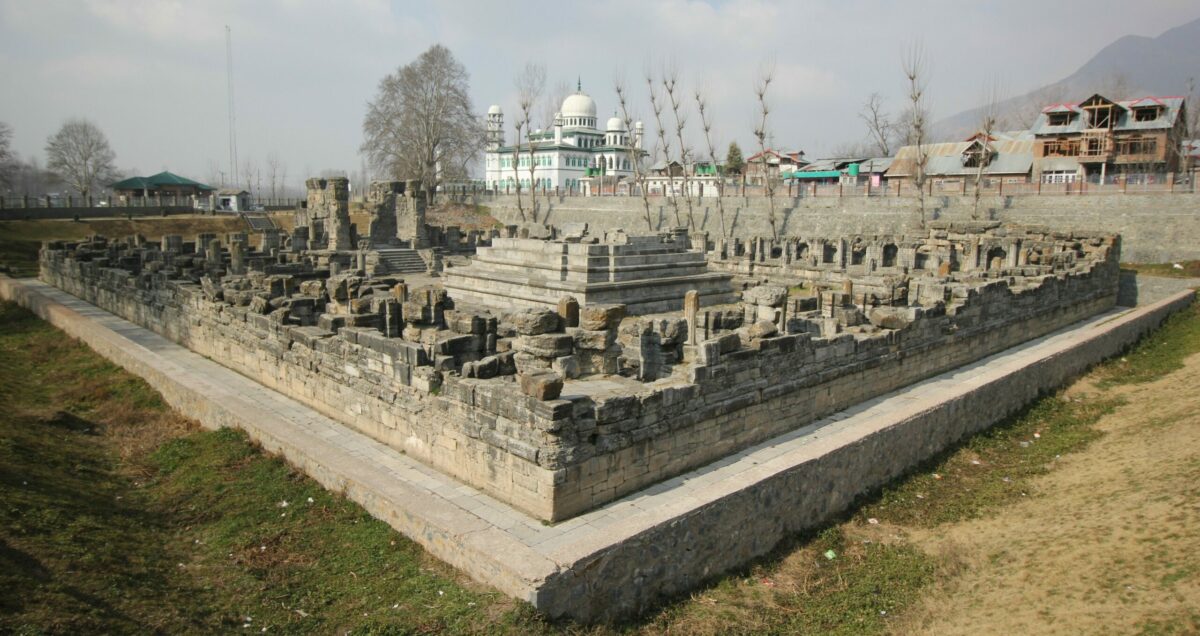
He was instrumental in converting the reigning Buddhist ruler of Kashmir, Rinchana (1320–1323 CE) to Islam. And in order to pay tribute to his memory, Rinchana (now Sadr al-Dīn) constructed a khānaqāh after his name and endowed it with a rent-free land grant. The khānaqāh, which is the first known khānaqāh of Kashmir, became so famous that the muhalla, where it was built came to be known as Bulbul Langar. Besides the khānaqāh, Sultān Sadar al-Dīn also constructed a Jami Mosque in his newly built capital Rinchanpura (Srinagar).
Considering that Sayyid Sharaf al-Dīn came all the way from Turkistan trekking through the difficult and inhospitable mountainous terrain to propagate Islam in an alien and non-Muslim land, and also bearing in mind that he belonged to the institutional phase of Sūfism characterised by pīr-murīd relationship, it can be safely inferred that the Suhrawardī saint would have been accompanied by a big group of murīds (disciples) and khudām (ancillary staff) as was commonplace with every religious mission of the time.
The conversion of the ruler to Islam marked a turning point in the history of Islam in Kashmir. Not only did Islam now receive political patronage but also became a “reference group culture”—a status-improving way of life, as the Muslim was elevated from a mleccha to a monarch. This is besides the fact that the conversion of the ruler would have validated the religious superiority of Islam vis-à-vis other religions of the period with obvious consequences.
In this connection, it should be borne in mind that Rinchana embraced Islam after having discussions with the Hindu, Buddhist and Muslim religious personages of the period. All in all, therefore, Rinchana’s conversion to Islam was followed by the conversion of a large number of people including his Hindu prime minister, Rāwanchandra, who also happens to be the predecessor of a very influential noble family of Chandān, famous as Rainas in our sources.
The streaming of Muslims into Kashmir continued unabated till the Muslim Sultanate was finally established in 1339. One among the lately arrived immigrants was Shah Mir, the future founder of the Muslim Sultanate in Kashmir. Coming from the royal family of Swāt, he along with his tribe entered Kashmir around 1313 and was bestowed with a land grant and an important position in the administration by the then ruler, Suhadeva (1301–1320). Thus the Muslim Sultanate, which finally came into existence in 1339, was not the result of any military conquest of Kashmir by the Muslims but was founded by a Muslim immigrant, Shah Mir, who, along with many other Muslim settlers from the neighbouring Muslim-ruled territories, had settled in the valley and shown exemplary qualities of leadership to bail the people out of centuries of misrule and recurrent foreign invasions prompted by the internal chaotic conditions of Kashmir.
(The passages were excerpted from the book The Making of Early Kashmir: Intercultural Networks and Identity Formation, which Routledge published in early 2023. Historian, Prof Ashraf retired as head of the history department at the University of Kashmir. Aman is serving the education department. The excerpt republishing was permitted by the publisher.)