Jammu and Kashmir’s education overhaul reveals mixed results. While funding has increased and infrastructure has improved, learning outcomes remain uneven. Key schemes lag, and rural disparities persist across districts, reports Maleeha Sofi
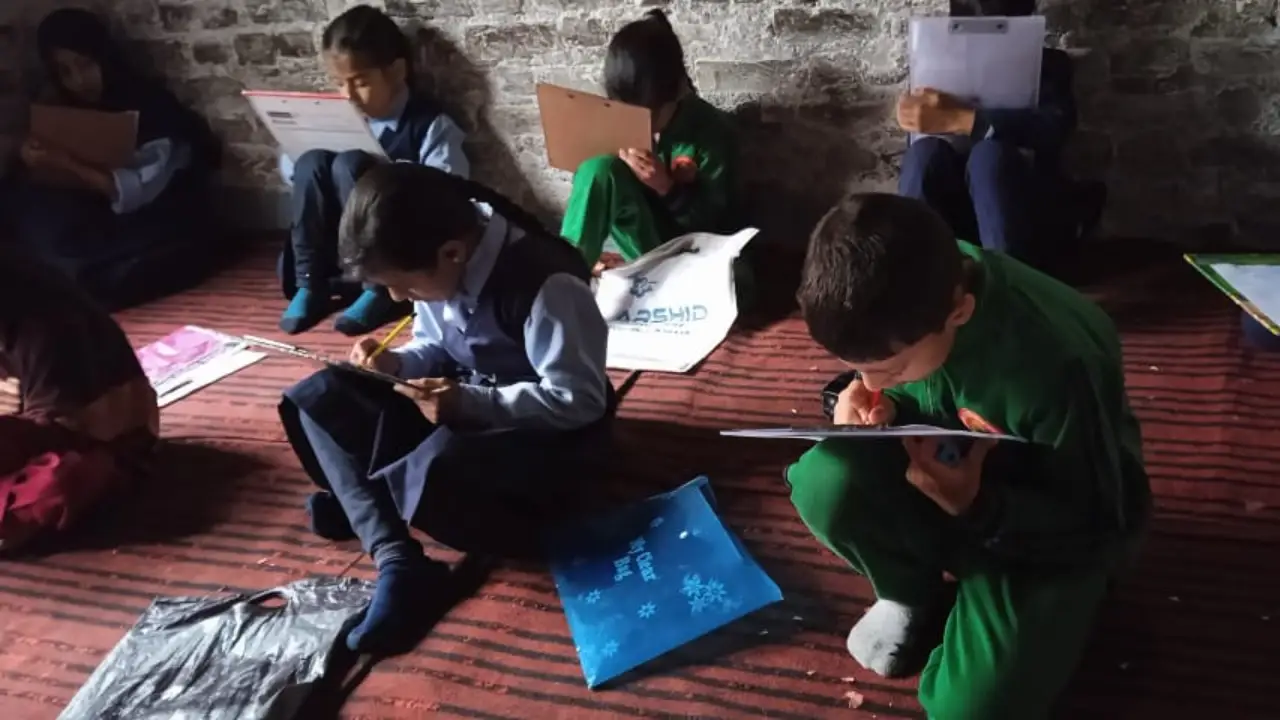
In a possible assertive policy shift that could redefine the dynamics of public education in Jammu and Kashmir, Chief Secretary Atal Dulloo has set in motion a results-driven framework for the School Education Department (SED), making it unequivocally clear that public funds must translate into measurable academic outcomes, and that teacher salaries could soon be linked directly to their performance.
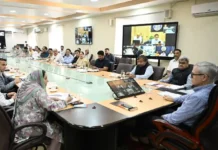
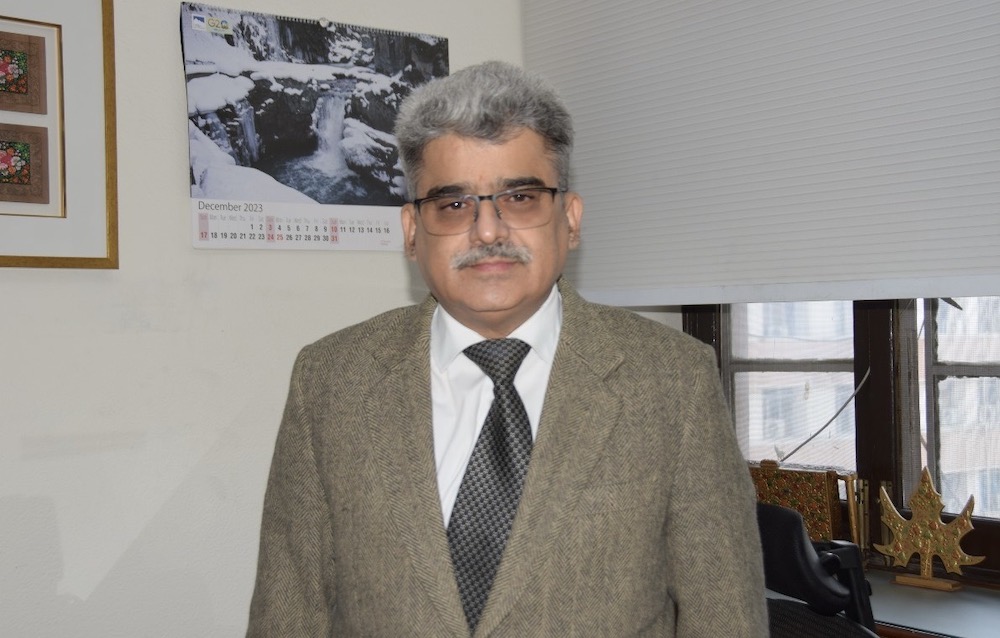
Chairing a comprehensive review of the SED, Dulloo foregrounded a core concern: If the government is spending more than Rs 11,000 crore annually on school education, the outcomes must justify the investment. He emphasised that infrastructure and technology, while critical, were secondary to the human element, the teacher in the classroom.
“There is no substitute for a committed teacher,” Dulloo remarked, stressing that the state’s financial outlay must result in visible improvements in student learning, punctuality, discipline, and classroom engagement. The warning was implicit but unmistakable: if the outcomes don’t improve, the salary structures could be recalibrated, a first-of-its-kind proposition in the region.
Digital Discipline
The government has already begun implementing a geo-tagged facial recognition attendance system through the JK Attendance App. At present, 1.14 lakh education department employees mark their daily presence through this mechanism. The government has directed that salaries must now be linked to regular attendance and lawfully sanctioned leave, not simply entitlements assumed by tenure.
The system is being bolstered through the Vidya Samiksha Kendra (VSK) in Jammu, a centralised data monitoring centre that now tracks not just attendance but also infrastructure utilisation, student performance, and teacher deployment. Surprise inspections, both physical and virtual, are being intensified, with senior officials asked to frequently drop in on schools, particularly in remote and underperforming zones.
The department is also rolling out a dashboard that will monitor daily usage of the ICT labs, smart classrooms, and Computer-Aided Learning (CAL) centres. These assets have been set up at considerable public expense — 2036 ICT labs, 4272 smart classrooms, and 1420 CAL centres are currently operational — but feedback from the field indicates uneven utilisation. Dulloo stressed that IT infrastructure should not become a mere “showpiece” but a functioning tool of instruction and innovation.
Massive Budget, Mixed Outcomes
The financial footprint of the department has grown exponentially. For 2025–26, the budget allocation stands at Rs 11,356.43 crore, with an overall approved outlay of Rs 13,492.27 crore, including capex and centrally sponsored schemes. This makes education one of the top recipients of public funds in Jammu and Kashmir.
And yet, learning outcomes and teaching effectiveness remain under scrutiny.
The literacy rate, while improving, stands at 77.3 per cent, still shy of the national average. More worryingly, the government estimates that it spends nearly Rs 1 lakh per student per year in its schools, a figure much higher than national benchmarks, yet without proportionate improvement in outcomes.
Jammu and Kashmir operates a vast schooling network of 24,137 institutions, 18,724 of them run by the government. Over 13.5 lakh students are enrolled in public schools, but a steady shift towards private institutions (currently educating over 12.6 lakh students) suggests rising public dissatisfaction with government education.
Dulloo’s argument is stark: without measurable improvement in classroom learning, the entire public investment is undermined. This is why the government is now prepared to go beyond exhortations and build a system of incentives and penalties tied to school-level performance indicators.
Workforce Woes
One of the key challenges facing the department is human resource management. Of the sanctioned 1,28,386 teaching positions (including Rehbar-e-Taleem teachers), only 1,16,643 are currently filled, leaving a deficit of over 11,700 posts. This shortfall affects continuity, especially in subjects like science and mathematics.
To address this, the department has fast-tracked promotions and appointments. Over 1600 lecturer posts are being filled on an officiating basis, and 480 headmaster positions have been opened for permanent appointments. Additionally, 594 subject-specific lecturer posts have been referred to the Public Service Commission.
Promotions have also been unlocked: 551 masters were recently elevated to headmaster status, while DPCs cleared promotions for over 2000 teaching and non-teaching staff across Jammu and Kashmir in the past two years.
Despite these moves, the government insists that promotions and placements must not be treated as automatic entitlements. “Performance is the new metric,” Dulloo said during the review, making it clear that the culture of passive employment must be dismantled.
An additional concern flagged during the review is the presence of over 28,000 supernumerary posts still tied to ReT adjustments, a legacy issue that continues to distort manpower deployment. The government is working with the Finance Department to rationalise these positions in line with contemporary service norms.
From VSK to AI Bots
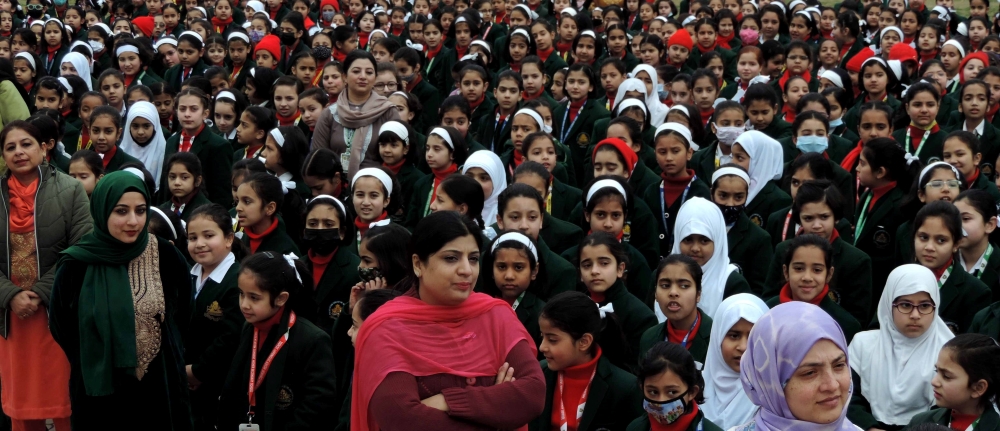
The technological transformation of the department is being steered through the Vidya Samiksha Kendra, a real-time education analytics hub. From tracking dropout rates and class performance to monitoring electricity supply and IT lab usage, the VSK offers granular oversight.
Four AI-enabled bots have already been integrated: Smart Attendance J&K, Study Buddy, Field Monitoring Bot, and Parent Pulse Bot. These tools ensure direct feedback loops between students, parents, administrators, and teachers.
Monthly virtual tours of schools by senior officials are also being introduced to expand visibility. The aim is to develop a new culture of digital accountability, one where both absence and excellence are documented in real time.
Dulloo has also endorsed the use of Aadhaar-linked student IDs to track learning outcomes post-Class 12. This will allow policymakers to assess whether school interventions are actually preparing students for college or vocational life, or simply inflating enrolment figures.
Early Learning
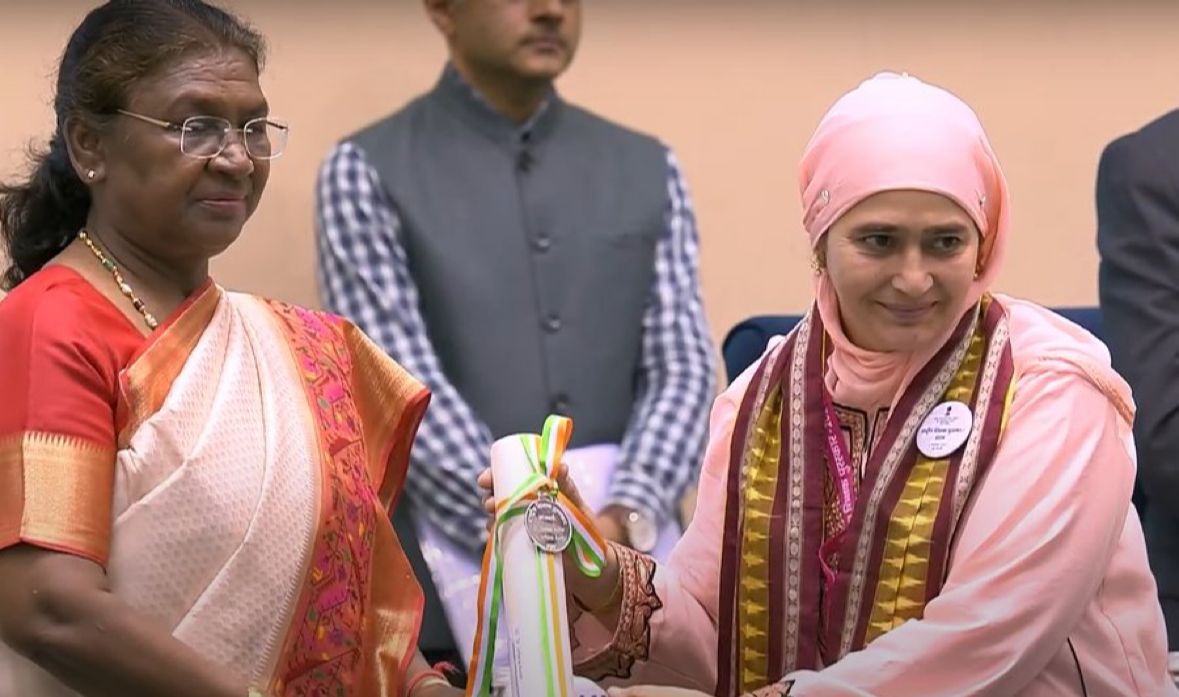
Dulloo’s review gave considerable focus to foundational learning and employability. Under the Early Childhood Care and Education (ECCE) component of the NEP 2020, pre-primary classes have been initiated in 15,550 schools. Over 13,800 helpers or AAYAs have been hired for child care, and 16,000 teachers have been trained in NCERT’s Vidya Pravesh module.
Vocational education is another major thrust. Currently, 141,000 students are enrolled in vocational streams across 1,350 schools. With the support of 2187 vocational trainers and thousands of guest lectures and industrial visits, students are being introduced to 15 trades. By 2026, the number of vocational labs is expected to touch 2355, offering career pathways well beyond traditional academic streams.
The Chief Secretary has asked the department to ensure handholding of vocational students until they are placed in jobs, linking the skill-building mission to real-world employment. “A trade is not a subject. It is a career path,” Dulloo observed, asking officials to ensure follow-up even after students leave school.
Migrant and Special Needs Focus
Inclusivity is central to the J&K government’s education strategy. For nomadic and migratory children, often among the most marginalised, over 32,000 have been brought into seasonal learning centres. More than 2000 Seasonal Educational Volunteers have been engaged to ensure learning continuity.
For children with special needs, 20,407 students are currently enrolled. The government has created 64 resource rooms, appointed 148 special educators, and built nearly 470 disabled-friendly toilets. Over 4990 assistive devices were distributed in 2023–24 alone, and more than 7000 teachers are being trained in inclusive methodologies.
The effort to mainstream marginalised learners is also being supported through “bridge courses,” free textbooks, uniforms, and regular health checkups. The department is also mapping disability-specific needs to customise interventions.
Nutrition and Oversight
Under the PM POSHAN scheme, over 9 lakh children received hot cooked meals in 2024–25. An impressive 93 per cent of enrolled children underwent health checkups and Aadhaar seeding. Community participation through the Matri Bhojan Yojana has deepened monitoring, with nearly 11,000 mothers joining lunch hours in schools as supervisory volunteers.
By June 2025, the scheme had already served meals to 8.82 lakh students, consuming 5,480 metric tonnes of foodgrain. The expenditure reached 98 percent of the sanctioned Rs 168 crore, showcasing robust financial planning and execution.
Efforts are now underway to begin Community Kitchens in two districts, Jammu and Reasi, in partnership with the Akshay Patra Foundation. These kitchens will serve model midday meals and act as nutrition education centres as well.
Hostels, Smart Schools
Civil infrastructure remains a pillar of reform. A total of 396 schools have been designated as PM SHRI Schools, institutions meant to serve as model campuses. Each receives annual grants, STEM labs, robotics labs, smart classrooms, and other innovations under the PM SHRI umbrella.
In 2025–26, Rs 3.15 crore was provided as Annual Grant to these schools, with Rs 6.82 crore spent on green initiatives like vermicomposting, kitchen gardens, and solar lighting.
For girls’ education, 85 hostels have been sanctioned under the Kasturba Gandhi Balika Vidyalaya (KGBV) and EBB initiatives. Of these, 46 are completed, four are functional, and 18 more will open by December 2025. The KGBVs currently host over 5000 girls in residential facilities.
Future Roadmap
Dulloo’s review was also a stocktaking of the National Education Policy’s implementation. Bagless days, multilingual handbooks like Jaadui Pitara, and foundational playbooks in regional languages like Urdu, Dogri, and Gojri are all part of the shift towards holistic, experiential learning.
Jammu and Kashmir will soon begin tracking student outcomes post-Class 12 using AAPAR IDs, linking schooling to higher education and workforce integration. District-level officers will adopt model schools for transformation, and mega parent-teacher meetings are scheduled across all zones this August.
A New Contract
Chief Secretary Dulloo’s insistence on linking salaries to performance, not just attendance, signals a paradigm shift. Government jobs in the education sector are now being framed as service contracts with clear deliverables. From geo-tagged attendance to AI-backed monitoring, the system is shedding its bureaucratic inertia.
If successful, Jammu and Kashmir’s education reforms, with their blend of equity, digital tools, grassroots inclusion, and fiscal accountability, could become a model not just for the Himalayan region but for much of rural and underserved India. As Dulloo said during the review, “We are not running schools to maintain buildings. We are building futures. And for that, every rupee must count.”