Jammu and Kashmir’s Planning Department has unveiled a Data Management Strategy seeking to harmonise fragmented government records. But will it address the 2019 bifurcation’s data disruption that threatens integration goals, writes Masood Hussain
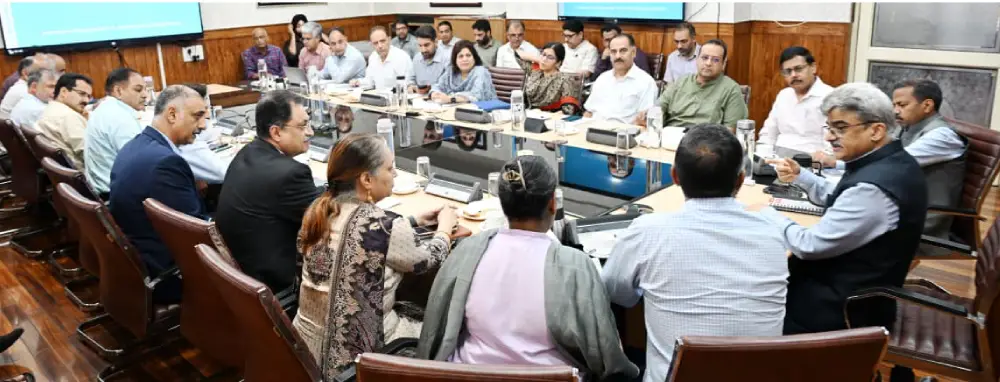
In a move that officials describe as an attempt to end decades of fragmented record-keeping, the Planning, Development and Monitoring Department (PDMD) of the Jammu and Kashmir government has finalised a Data Management Strategy and Action Plan. They said they are laying out a roadmap to build what it calls “an integrated, secure, real-time data ecosystem” spanning every department of the administration. The strategy was recently reviewed at a high-level meeting of Administrative Secretaries and technical agencies, where the government directed all departments to standardise their datasets and prepare a time-bound implementation roadmap with defined milestones. It is also being seen as a signal that the plan is moving from a Planning Department document toward a whole-of-government mandate.
The strategy arrives at a moment when governments across India are being pushed by the Ministry of Statistics and Programme Implementation (MoSPI) to adopt uniform metadata and data-quality standards. For Jammu and Kashmir, however, the exercise carries an added urgency: seven years after the erstwhile state was bifurcated into two Union Territories in 2019, successive administrative reorganisations have left departmental datasets scattered across incompatible formats, competing jurisdictional boundaries, and disconnected registries, a problem the new strategy must explicitly set out to fix.
The Strategy
At its core, officials say, the strategy is built around a single idea: that a citizen’s data, once generated by any one department, should not have to be re-entered, re-verified or re-collected by another. The document identifies five “strategic pillars” meant to anchor this shift: data governance and standards; base registries and unique identifiers; interoperability and harmonisation; data security, privacy and audit; and institutional capacity and coordination.
Officials associated with the rollout describe the second and third pillars as the most consequential for ordinary citizens. Under the base registries pillar, identifiers such as the Civil Registration System (CRS) ID, Aadhaar, the Ration Card Number and the APAAR ID are proposed as anchor references for every citizen record, meant to be recognised uniformly across health, education, welfare and financial institutions. The interoperability pillar, flagged in official communication as the “priority pillar for immediate roll-out,” envisages API-based, real-time exchange of data between departments and institutions, including banks.
The stated ambition, as conveyed by officials familiar with the strategy’s framing, is to move governance in the Union Territory from a reactive posture, where problems are identified after the fact, to what the document terms “evidence-based governance,” where real-time dashboards and automated alerts are meant to flag gaps in service delivery before they compound.
Twin Initiatives
Two pilot initiatives have already been identified for phased implementation, according to officials aware of the matter. The first links the CRS Portal with the JK Bank: when a death certificate is issued through the CRS system, an automated alert is meant to trigger processing of insurance claims under the Pradhan Mantri Jeevan Jyoti Bima Yojana and Pradhan Mantri Suraksha Bima Yojana, without the bereaved family having to file a manual application. Officials said consent from stakeholders has been secured, an Aadhaar Data Vault has been developed by the National Informatics Centre (NIC), and encrypted data has been shared by the Office of the Registrar General of India, though a technical issue in retrieving that data is still being resolved.
The second pilot proposes linking birth registration on the CRS Portal to a cascading sequence of welfare triggers, nutritional support under Poshan Abhiyaan, immunisation scheduling, and the Ladli Beti Scheme immediately after birth, followed by automatic generation of an APAAR ID at age three that is meant to trigger school-admission alerts to the Education Department.
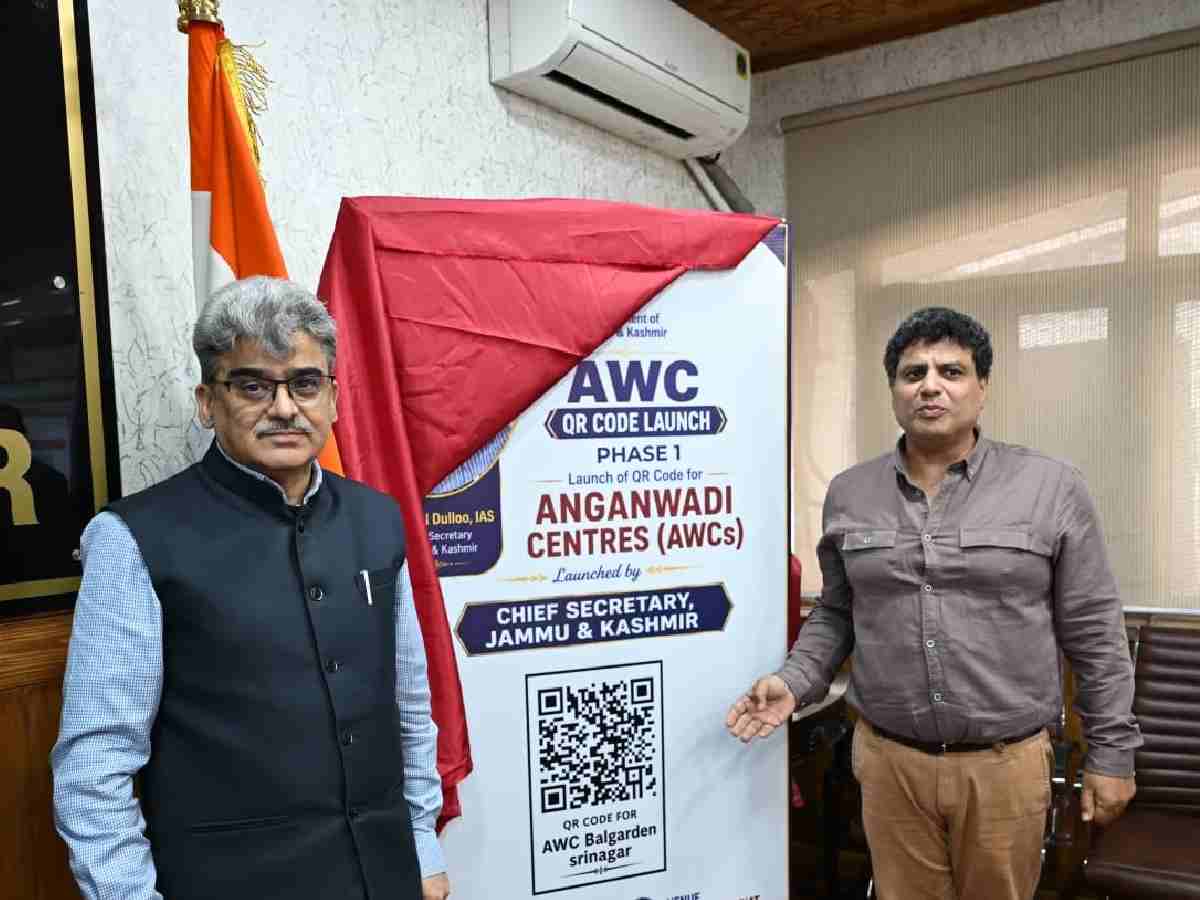
A third proposal, still at an earlier stage, seeks to build a single integrated database of schools, hospitals and Anganwadi centres. These facilities are currently mapped under inconsistent local units like Education Zones, medical blocks, tehsils and Community Development blocks. The proposal aims to align them all to the Local Government Directory (LGD) code.
To institutionalise the effort, officials say the strategy recommends setting up Data Strategy Units in every administrative department, each headed by a nominated Chief Data Officer, with the Directorate of Economics and Statistics functioning as the nodal agency and the Information Technology Department providing technical backing for dashboards and interoperability.
The Merits
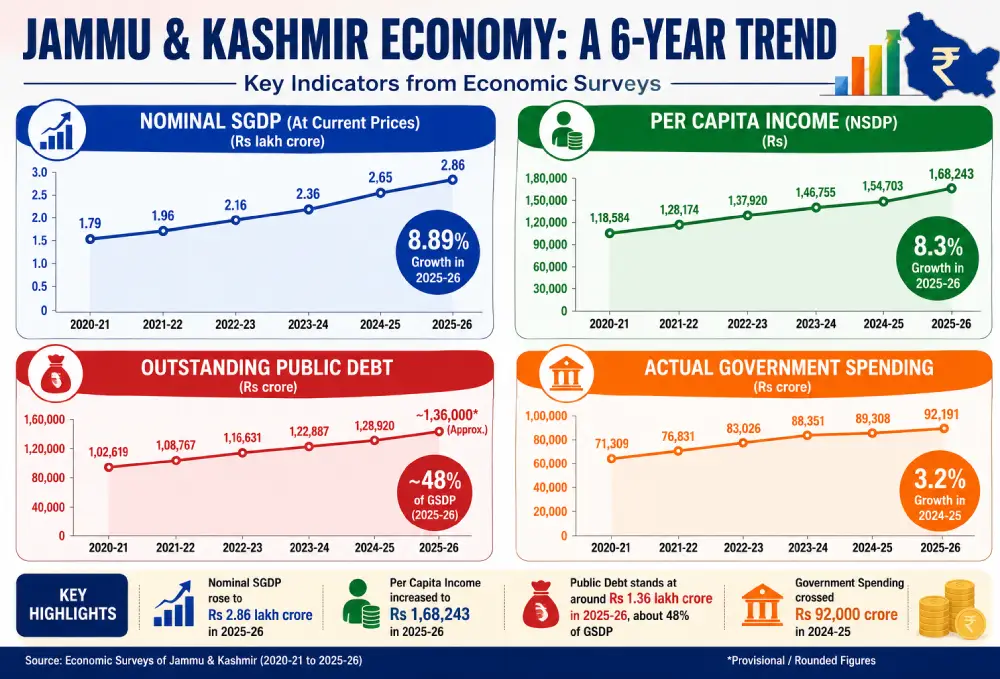
Officials backing the plan argue its logic is straightforward: a resident who registers a birth, applies for a ration card, or loses a family member should not have to prove the same facts to five different departments. By tying welfare activation directly to life events recorded once at source – a birth or a death certificate – the strategy promises to cut delays, reduce duplicate enrolment, and close entitlement gaps that currently go undetected because no department can see what another is doing.
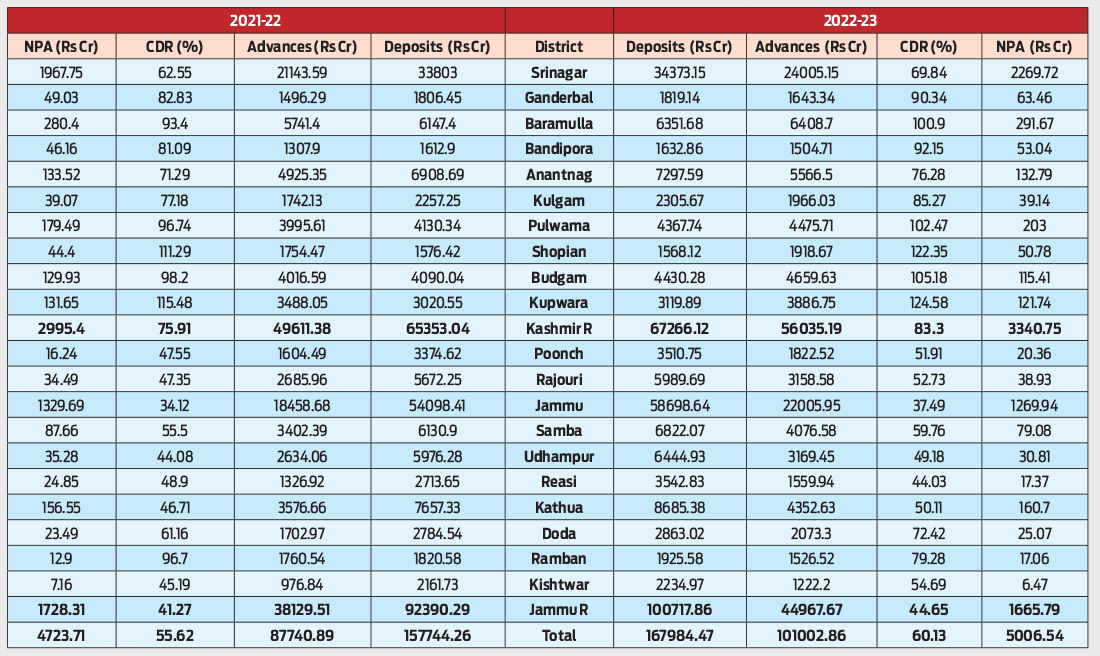
There is also a fiscal argument embedded in the proposal. Officials note that fragmented classifications- schools mapped to Education Zones, Anganwadi centres to tehsils, hospitals to medical blocks- make it difficult for planners to identify where infrastructure is genuinely lacking versus where it merely appears so because of mismatched administrative boundaries. A harmonised database, tied to a common geographic identifier, is projected to sharpen resource allocation and reveal genuine service gaps rather than statistical artefacts of poor classification.
For citizens, particularly in remote areas where multiple visits to government offices are often the biggest barrier to accessing welfare, automation of the kind proposed in the CRS-linked pilots could, if it works as designed, mean faster claim settlements and fewer bureaucratic dead ends.
The Flip Side
Yet the ambition of the strategy runs up against a problem no dashboard can retroactively fix: the historical discontinuity in Jammu and Kashmir’s own data record. The bifurcation of the erstwhile state into the Union Territories of Jammu and Kashmir and Ladakh in 2019 fundamentally altered administrative and statistical boundaries overnight.
Datasets compiled before that date, census enumerations, departmental surveys, socio-economic indicators– were built around units and jurisdictions that, in many cases, no longer correspond to anything on the ground today. For a strategy whose entire premise rests on comparability and coherence across time, this is not a peripheral concern: without a reconciled baseline, “evidence-based governance” risks being built on evidence that cannot honestly be compared to what came before.
The strategy’s own quality framework, drawn from MoSPI’s National Statistical Quality Assurance Framework, lists “coherence and comparability” as a core dimension of good data. Officials familiar with the process concede, even if only implicitly through the plan’s silence on the issue, that no explicit mechanism has yet been proposed to reconcile pre- and post-2019 datasets, or to flag for future users of the harmonised system where continuity has been broken.
Inter-Dependence
Beyond the comparability question, the plan depends on an unusually large number of moving institutional parts working in near-perfect coordination: NIC, the Registrar General of India, JK Bank, and multiple state departments each holding a piece of the technical and administrative puzzle. The CRS-Bank pilot’s own documented status, where a “technical issue in retrieving data” remains unresolved months into implementation, is illustrative of how slowly even a single, relatively contained use case has moved. Scaling that coordination across dozens of departments, officials acknowledge, will be a considerably harder test.
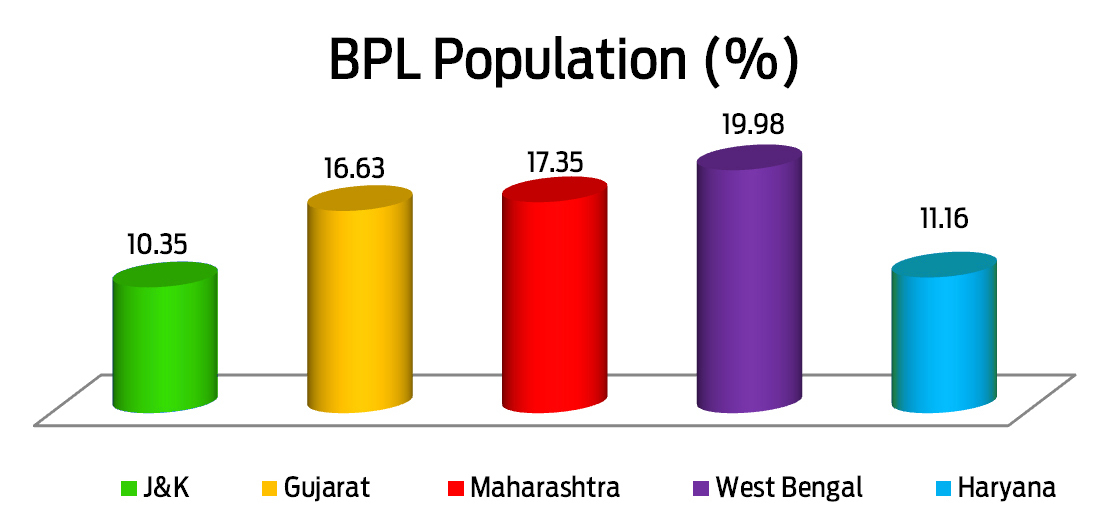
In the not-so-distant past, Jammu and Kashmir’s last finance minister Haseeb Drabu had suggested that a lot of resources are being abused in the name of creating a BPL list by all departments. In Jammu and Kashmir, every department had its own BPL list: the Consumer Affairs Department, the Social Welfare Department, the power department and the Rural Development Department. “The tragedy is that they do not match with each other,” he once said. “A person is in the BPL list in CAPD but in APL in the Rural Development Department.” Why, he argued, all these lists cannot be reconciled by a third party and all departments follow the same list, and it will help improve the life of the BPL population better.
Then, Aadhaar was in the initial phase of evolution, and digitisation was still in spade work; this is possible now.
Privacy and consent present a further concern. The strategy proposes tying an expanding set of personal identifiers- Aadhaar, CRS ID, APAAR ID, Ration Card Number- into a single interoperable web accessible to multiple departments and a commercial bank. While the document commits to role-based access, encryption and audit trails, the actual safeguards will depend on implementation choices yet to be finalised, and on whether newly constituted Data Strategy Units are adequately staffed and empowered to enforce them, rather than existing as a compliance formality.
Finally, the institutional architecture itself- Data Strategy Units in every department, a Project Management Unit within the Directorate of Economics and Statistics, and a network of nodal officers- will require sustained political and administrative will to function beyond an initial launch phase. It is a challenge that has historically undermined similar cross-departmental initiatives elsewhere in the country.
What Next?
Officials say the interoperability pillar is expected to be the first tested at scale, with the CRS-Bank pilot targeted for state-wide rollout within six months of its sandbox testing phase. The birth-to-school welfare pipeline is expected to follow a similar timeline pending data-sharing agreements with the Health, Social Welfare and School Education departments. At the recent review, departments were directed to translate these timelines into a time-bound roadmap with clearly defined milestones. Seemingly, this is an attempt, at least on paper, to address the coordination concerns the plan has yet to be tested against.
Whether the strategy achieves its promised “single source of truth” will depend less on its technical design than on its implementation. The bigger challenges are reconciling Jammu and Kashmir’s fragmented statistical records since 2019 and ensuring consistent coordination across departments. Without sustained institutional discipline, the plan’s ambitious goals may remain difficult to realise.