As part of the continued interventions in the laws and rules regulating the land resource in Jammu Kashmir, the government proposed sweeping amendments to the Unified Building Byelaws, lifting restrictions on building heights and ground coverage, reports Humaira Nabi
On January 15, 2025, news organisations across Jammu and Kashmir reported widespread public outrage over the proposed amendments to the Jammu and Kashmir Unified Building Byelaws (UBBL)-2021. In the following weeks, criticism intensified, experts scrutinised its provisions, and opposition to the proposal gained momentum. Yet one crucial detail was missing from every report: no one knew when the amendments had been introduced. Not a single news organisation could trace its origin, because, officially, they had none.
The document, available on the website of the Housing and Urban Development Department, bears no date, no official stamp, and no record of issuance, an anomaly among the otherwise properly dated files on the site. Its sudden appearance raised questions about whether it was intended to slip through unnoticed.
When the news finally broke, residents of Jammu and Kashmir were taken aback. The Housing and Urban Development Department invited public suggestions and comments on the proposed amendments by January 18, allowing a consultation window of just four days.
The amendments propose significant changes to the 2021 Unified Building Byelaws, particularly lifting restrictions on ground coverage and height limits for buildings. These revisions, which apply to both residential and commercial structures, have triggered serious concerns about urban planning, infrastructure strain, and environmental consequences. The debate continues to escalate, with many questioning the long-term impact on the region’s landscape and sustainability.
Public awareness of the proposed changes has been limited. The amendments were not widely publicised through mass media, restricting the ability of citizens, researchers, industry professionals, and environmental stakeholders to engage meaningfully in the consultation process.
“I received a call at midnight on January 15, asking if I had seen the proposal,” said Faiz Bakhshi, an executive at the Kashmir Chamber of Commerce and Industry. “I was shocked to learn that such a document even existed—and that it had already been in circulation for days.”
Controversial Overhaul
The day after learning of the amendments, Bakhshi scrutinised the proposal and reached out to colleagues. None had been aware of it. The most pressing concern was the short consultation period. “Only four days were left for public suggestions,” he said. “The first thing we decided to do was push for a deadline extension. Fortunately, we succeeded.”
The proposed changes to the Jammu and Kashmir Unified Building Bye-Laws, 2021 introduce sweeping modifications to regulations governing land use, zoning, and construction. They primarily relax restrictions on ground coverage, Floor Area Ratio (FAR), building height, and setback requirements across different categories of development. While such laws are intended to provide a structured framework for urban growth, their ability to address the region’s environmental and socio-economic complexities remains in question.
Critics argue that instead of promoting sustainable urban planning, these amendments could fuel unregulated construction, leading to long-term infrastructural and environmental consequences. A key concern is the likely expansion of large-scale commercial projects driven by corporate interests, potentially prioritising real estate development over land conservation and ecological stability.
The revisions cover crucial areas such as building permissions, fire safety norms, and FAR limitations—factors that directly affect urban density and the resilience of the built environment. Many fear that easing these regulations could accelerate urban sprawl, strain public infrastructure, and heighten seismic risks, given Jammu and Kashmir’s location in a high-risk earthquake zone.
Concerns also persist over the absence of a comprehensive public consultation process. Environmentalists, urban planners, and local communities question whether due diligence has been exercised in drafting the amendments or whether they reflect broader, undisclosed priorities.
The Expansion Risks
Despite Jammu and Kashmir’s classification under Seismic Zone V, the highest-risk category for earthquakes, the government has proposed lifting all restrictions on building height and area for residential and commercial construction.
A key element of the proposed amendments to the Jammu and Kashmir Unified Building Bye-Laws, 2021 is the removal of Floor Area Ratio (FAR) or Floor Space Index (FSI) limits. If implemented, this would apply to all categories of plots, including residential and commercial complexes, cinemas, malls, community centres, and banquet halls. Property owners and developers would be permitted to build as many floors as they wish, with no restrictions on ground coverage.
At present, regulations limit structures to three storeys. The new amendments would allow unrestricted vertical expansion, raising concerns about its implications, particularly in a region highly prone to seismic activity. The existing restrictions were introduced in 2021 by the administration led by the Lt Governor, intended to maintain a cap on building height and bulk in line with safety considerations.
Legal experts warn that permitting unregulated high-rise construction in Seismic Zones IV and V could violate the National Building Code (NBC) 2016, the Bureau of Indian Standards (BIS), and the Disaster Management Act, 2005. Advocate Fiza Baba stated that such changes could expose municipal authorities to legal action for failing to ensure compliance with national seismic safety and disaster mitigation guidelines. The removal of regulatory safeguards, he added, could face judicial scrutiny.
The BIS has issued specific guidelines for earthquake-resistant construction, including IS 1893:2016 (Criteria for Earthquake-Resistant Design of Structures) and IS 4326:2013 (Earthquake-Resistant Design and Construction of Buildings). These impose restrictions on the height-to-base ratio, mandate seismic reinforcements, and require specialised structural designs for high-rise buildings in Seismic Zones IV and V.
Baba cautioned that if the revised FAR and height norms do not adhere to these BIS standards, municipal bodies could be held legally accountable under the Disaster Management Act, 2005, for approving non-compliant high-rise constructions. He also noted that the Supreme Court has consistently upheld the necessity of incorporating safety regulations into urban planning laws to prevent foreseeable disasters.
According to him, a Public Interest Litigation (PIL) could be filed challenging the legal validity of the amendments on the grounds of violating the constitutional right to life and safety under Article 21 of the Indian Constitution. “The judiciary may invoke the Precautionary Principle,” he explained, “to enforce stricter compliance with seismic safety regulations, ensuring public safety is not compromised.”
Environmental Stability
Environmentalists across Jammu and Kashmir have strongly opposed the proposed amendments to the Unified Building Bye-Laws, 2021, warning of severe consequences for the region’s fragile urban ecosystems.

Former Chief Town Planner Kashmir and Chairman of The Institution of Engineers’ Jammu and Kashmir State Centre, Engineer Iftikhar Ahmad Hakim, criticised the amendments for prioritising developer interests over public safety and urban equity. He warned that without urgent intervention, these changes would exacerbate infrastructure deficits, erode the region’s cultural and environmental heritage, and ultimately lead to urban disputes and degradation.
The Environmental Policy Group (EPG), a key environmental advocacy organisation in the region, has also raised objections. Faiz Bakhshi, who serves as EPG’s convener, highlighted the broad environmental risks posed by the amendments. He argued that if implemented, these changes would have far-reaching consequences, affecting green building standards, rainwater harvesting, solar energy initiatives, waste management, and the preservation of ecologically sensitive zones. He emphasised that environmental organisations must be given sufficient time to evaluate whether the amendments align with sustainable development goals and climate resilience strategies.
Legal experts have echoed these concerns. Advocate Fiza Baba argued that the proposed removal of restrictions on ground coverage, Floor Area Ratio (FAR), and building height contradicts fundamental urban planning principles. He cautioned that such changes could facilitate unregulated, high-density construction, which, while appearing to promote real estate growth, would neglect essential safeguards for environmental sustainability and structural integrity.
Baba further warned that the removal of these restrictions must be assessed in the context of existing legislation, including the Environment Protection Act, 1986, and the National Building Code (NBC) of India, 2016. Both impose FAR and density limits to prevent excessive pressure on public infrastructure, traffic congestion, and environmental degradation. He stated that if the amendments were found to violate statutory provisions on planned development and environmental protection, judicial intervention could become necessary.
With growing opposition from urban planners, legal experts, and environmentalists, the proposed amendments have come under intense scrutiny, raising significant concerns about their long-term impact on Jammu and Kashmir’s urban and ecological landscape.
Redefinition Urban Planning
The Jammu and Kashmir Unified Building Bye-Laws (UBBL)-2021, originally intended to guide urban development for at least five years, is now set to undergo significant amendments less than four years after its approval. The sudden push for these changes has raised concerns about the motivations behind the government’s shifting approach to urban planning.

The introduction of the UBBL-2021 closely followed the Jammu and Kashmir administration’s ambitious plan to develop satellite townships across the Kashmir Valley. These townships, overseen by the Jammu and Kashmir Housing Board, are being planned along the newly constructed Ring Road, which stretches across six districts from Pulwama to Ganderbal. Built by the National Highway Authority of India (NHAI), the road bypasses Budgam before reaching Ganderbal, where it connects to the Leh-Srinagar Highway.
As part of this large-scale urban expansion, the administration has proposed the construction of 30 satellite townships, each covering 200 hectares (4,000 kanals) of land. These developments will be situated within a 500-metre radius on both sides of the Ring Road, representing a major shift in land use policy.
Anticipating these changes, the divisional administration of Kashmir has imposed strict restrictions on land transactions and construction activities in affected areas. A formal ban has been placed on the sale, purchase, and any new construction across 55 revenue villages in the districts of Srinagar, Budgam, Baramulla, Bandipora, Ganderbal, and Pulwama.
A legal notice issued under Section 10 of the Jammu and Kashmir Development Act prohibits any construction, modification, or new developments within 500 metres of the Ring Road’s boundary for two years. It also bars any land transaction agreements during this period. The government’s decision to freeze development in these areas has unsettled landowners, urban planners, and legal experts, prompting concerns that the proposed amendments to the UBBL-2021 may be less about structured urban growth and more about facilitating large-scale commercial interests.
A Precarious Balance
Faiz Bakhshi, convener of the Environmental Policy Group, warned that the proposed amendments would pave the way for large-scale real estate expansion, easing restrictions on land use and creating an environment favourable to high-density residential and commercial projects. He argued that while such policies might be necessary in cities like Mumbai or Delhi, where land scarcity demands vertical expansion, they would have detrimental consequences in Jammu and Kashmir.
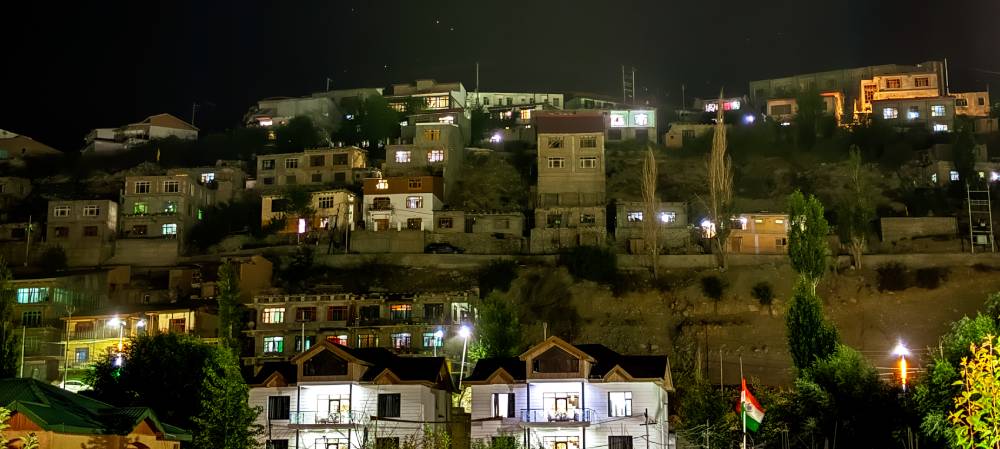
Bakhshi stressed that Kashmir’s natural beauty was its most valuable asset and that unchecked urbanisation could cause irreversible damage. “Our wealth lies in our meadows, green spaces, and breathtaking landscapes,” he said, adding that once these were replaced by concrete, there would be no way to restore them.
He questioned the long-term consequences of permitting unregulated high-rise construction under the pretext of development. “If we move in this direction, what legacy will we leave for future generations? Are we prepared to sacrifice our environment and cultural identity merely to serve large real estate interests?”
Opening Land Resource
The change in building bylaws is part of a continuity which started with the opening of the land as a resource. Under various interventions over the last few years, the complete statute book on land has undergone a complete shift.
A year after the fall of the last elected BJPDP government and the subsequent reading down of Article 370, Jammu and Kashmir witnessed the repealing of as many as 12 laws related to land resources and amendments in another 14 laws.
The repealed laws included The Jammu and Kashmir Alienation of Land Act, 1938; The Big Landed Estates Abolition Act, 1950; The Jammu and Kashmir Common Lands (Regulation) Act, 1956; The Jammu and Kashmir Land Grants Act, 1960; The Jammu and Kashmir Agricultural Produce Markets Act, 1972; The Jammu and Kashmir Land Revenue Act, 1996; The Jammu and Kashmir Land Reforms Act, 1976; The Jammu and Kashmir Tenancy Act, 1980; The Jammu and Kashmir Land (Vesting of Ownership to the Occupants) Act, 2001; The Jammu and Kashmir State Subject Laws (Adaptation) Order, 2020; The Jammu and Kashmir Urban Land (Ceiling and Regulation) Act, 1976; and The Jammu and Kashmir (Transfer of Property) Act, 1920.
Two of these laws were crucial to Kashmir’s history and economy. The Jammu and Kashmir Alienation of Land Act, 1938 prohibited non-residents from purchasing agricultural land and the Big Landed Estates Abolition Act, of 1950 was a historic land-to-tiller law that redistributed large estates from autocracy days to local farmers, who were the real owners but reduced to serfs. Its repeal could lead to consolidation of landholdings by wealthier individuals or corporations in future.
The reorganisation law amended various laws. In Jammu and Kashmir Development Act, 1970, the intervention removed the requirement for land ownership to be restricted to “permanent residents,” allowing non-natives to purchase land.
By amending the Jammu and Kashmir Land Revenue Act, 1996, adjustments were made to facilitate easier land use conversions, which was very difficult under the earlier avatar of the law.
In the Agrarian Reforms Act, 1976, the permanent resident clause was removed, impacting land ceiling regulations. The same intervention was done in the Jammu and Kashmir Land Grants Act, 1960 and the Jammu and Kashmir Land Grants Act, 1960.
Those retained on the statute books were normal laws of routine use. These included legislation related to land use regulations, forest rights and other things.
A New Framework
On July 27, 2024, the Administrative Council of Jammu and Kashmir approved the Land Pooling Policy and Transferable Development Rights (TDR) Policy, measures aimed at facilitating structured urban growth. The land pooling policy allows private landowners and developers to voluntarily contribute land, which is then reorganised to accommodate roads, parks, and public amenities. The remaining plots are proportionally redistributed among original owners, ensuring a balanced development model.
The TDR policy, meanwhile, offers non-financial compensation to landowners who surrender land for public projects such as road widening, heritage conservation, and infrastructure development. In exchange, they receive TDR certificates, which grant additional Built-Up Area (BUA) or Floor Area Ratio (FAR) on their remaining land. These certificates can also be applied to other locations or sold to developers, effectively encouraging high-density construction in designated areas and expediting Master Plan proposals.
Initially, the policy will be implemented under the jurisdictions of the Jammu Development Authority (JDA) and the Srinagar Development Authority (SDA), setting the stage for broader urban expansion. However, concerns persist over its practical impact. A lawyer cautioned that while large developers and investors may capitalise on TDRs, smaller landowners could struggle with the complexities of the system. He noted that despite being framed as voluntary, land pooling might, in reality, pressure landowners to participate, particularly if adjacent plots are consolidated into larger developments.
A Real Estate Agency
Invoking the Real Estate (Regulation and Development) Act, 2016, the government constituted the Jammu and Kashmir Real Estate Regulatory Authority (JKRERA) to regulate and promote the real estate sector.
The roles assigned to the JKRERA include protecting consumers by enforcing strict adherence to project timelines and quality standards. Developers are supposed to register their projects, particularly those exceeding 500 square meters or comprising eight or more apartments.
The authority is mandated to play a role in regulating residential and commercial projects, ensuring compliance with legal requirements. It actively monitors adherence to regulations and takes action against developers failing to meet prescribed standards. Its recently appointed chairperson has had visits to various upcoming buildings in Srinagar and Jammu. Its establishment is expected to bolster investor confidence in Jammu and Kashmir’s real estate market, officials said.