As forest evictions surge across Jammu and Kashmir, thousands of rights claims lie rejected, exposing a gap between promise and ground reality, reports Mir Rameez Raja
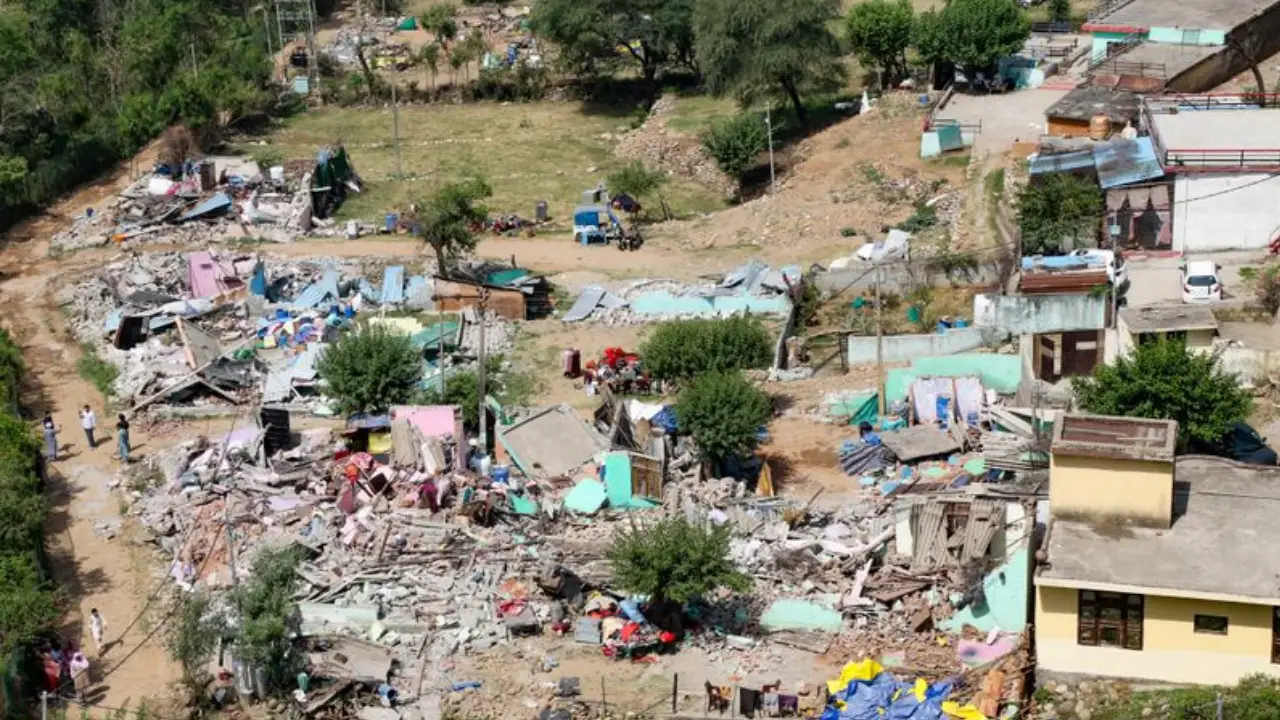
Even as bulldozers levelled homes on the forest edges of Jammu through the summer of 2026, the government’s own numbers tell a second, quieter story. The law meant to protect the people living in and around those forests has, in practice, protected almost none of them.
Between 2023 and 2026, forest-dwelling and pastoral families in Jammu and Kashmir filed 46,090 claims under the Forest Rights Act (FRA), 2006. Just 6,020, barely one in eight, were converted into titles. Nearly 40,000 were rejected outright, according to data placed before the Parliament last week.
The contrast is not accidental; it runs through the record. While the machinery for recognising rights has moved at a crawl, the machinery for removing people from forest land has moved with unusual speed and precision. Officials admit they have targets fixed circle-wise, division-wise, range-wise and block-wise, and the work done is reviewed personally by the Chief Secretary, and reported back within weeks. The two tracks, rights recognition and eviction, were set up to run in parallel under the same law. In Jammu and Kashmir this year, only one of them delivered.
Mass Rejections
Nationally, the average of claims rejected under forest rights is 36.4 per cent. In Jammu and Kashmir, the rejection rate has run more than twice as high. Of the 46,090 individual and community claims filed since 2023, 39,924, roughly 87 per cent, were turned down, leaving only 146 claims still pending and 6,020 titles issued, government data shows. Jammu and Kashmir’s share of the 25.4 lakh titles distributed nationwide under the FRA stands at a fraction of one per cent.
The Forest Rights Act was extended to Jammu and Kashmir in 2019, more than a decade after it began being implemented elsewhere in the country. Forest, Ecology and Environment Minister Javed Ahmed Rana told media on August 1 that the law “had failed to benefit many deserving people because it was not implemented effectively,” and that the Omar Abdullah government had decided to enforce it “in its true spirit.” He said the Tribal Affairs Department had been made the nodal agency for the Act, replacing the Forest Department, whose earlier handling of FRA matters he said had “created impediments.”
At a consultation organised in Srinagar on August 14 by the Jammu and Kashmir Forest Rights Coalition (JKFRC) and the Gujjar-Bakerwal Youth Welfare Conference, activists pressed the Minister for a “transparent and time-bound review of rejected claims,” greater powers for Gram Sabhas, and a UT-level Advisory Committee to oversee implementation. They pointed out that forest-dwelling and pastoral communities were being treated as encroachers rather than rights-holders. They said forest dwellers are the oldest custodians of the landscape.
The Evictions
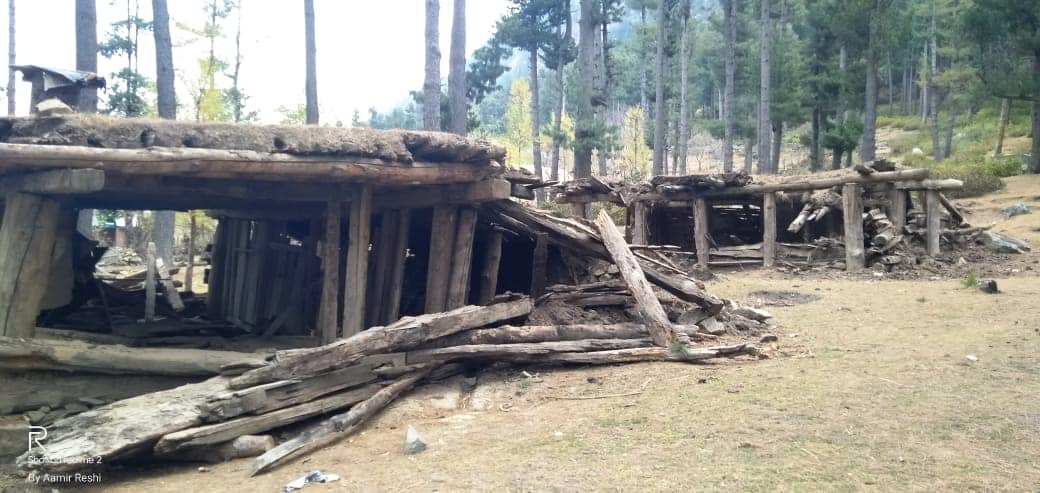
Set against this is a parallel record of evictions that has accelerated sharply in the fiscal 2026-27. Forest Department data shows that between 2021-22 and 2025-26, evictions across Kashmir and Jammu regions ranged between roughly 400 and 1,700 cases a year. In 2026-27, that number jumped to 12,871 cases covering 3,554 hectares, more than the total for the previous five years combined.
Much of this came from an 80-Day Special Drive run in the Jammu province between April 21 and July 10, 2026. The drive set a target of 15,000 eviction cases, broken down by circle, division, range and block, and standardised through a formal Standard Operating Procedure and daily reporting. By its close, 10,899 of a revised target of 13,312 cases had been cleared, an 82 per cent achievement rate, retrieving 3,028 hectares of forest land. That is, by the department’s own reckoning, three-and-a-half times the area reclaimed in the preceding five years put together. Notices had also been served in a further 6,627 cases still under process.
The Sidhra Case
On May 19, a joint team of the Forest Department, Forest Protection Force, Revenue Department and police demolished around 30 structures in the Raika Bandi forest belt near Sidhra, reclaiming nearly 60 kanals. Most affected families belonged to the Gujjar-Bakarwal community; several said they had lived there for generations and received little or no notice.
The demolition triggered a political storm. Rana called the drive “illegal and unjust”, ordered two inquiries and said Raj Bhawan and the Chief Secretary had told him they had issued no such direction. He blamed “some black sheep” exploiting a “dual power system”. A two-member committee was later constituted under Government Order No. 18-JK(TAD) of 2026.
Yet the department’s own status report suggests the drive was planned at range and block levels. How Sidhra occurred without political authorisation remains unresolved. The inquiries have not reported publicly.
Interesting Find
Officials have recently flagged a new category of encroachers: forest land occupied by government employees themselves. Available data shows 2,009 government employees in Jammu were found to have encroached on nearly 180 hectares of forest land. Of these, only 205 were served eviction notices, and just 28 were actually evicted from 3.6 hectares.
In the Kashmir region, 1,515 employees had encroached on 320 hectares; 699 were served notices, and 50 were evicted, covering 5.75 hectares. Across both regions, less than one in ten of the roughly 3,500 employee-encroachers identified had been evicted so far. It is markedly slower pace than thousands of cases processed against ordinary claimants during the same period.