Kashmir’s native snow trout is disappearing from rivers and lakes. Scientists at SKUAST are breeding fish to release into the wild, reports Babra Wani
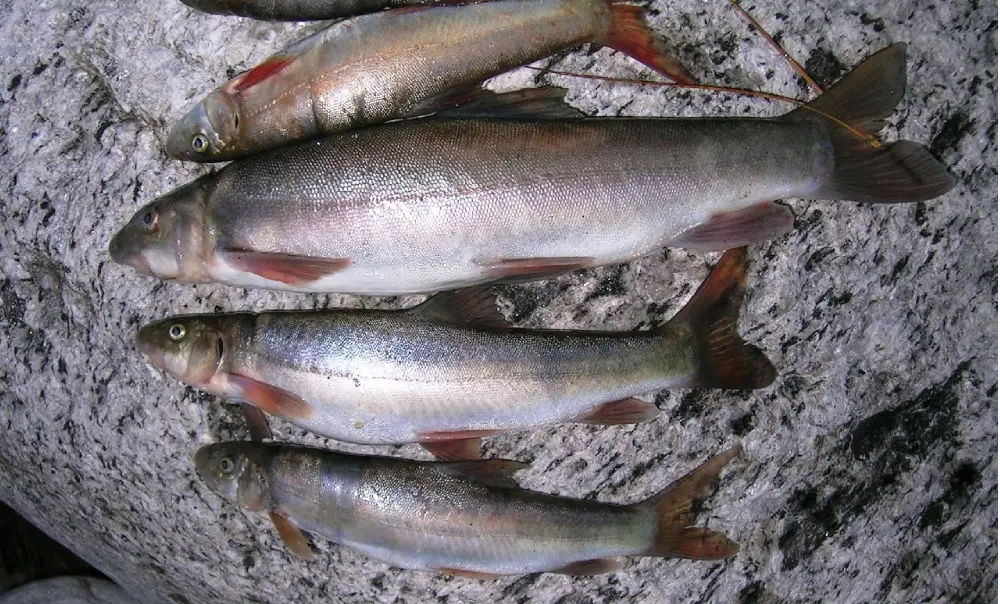
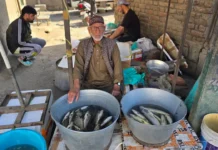
For generations, Kashmir’s water bodies have sustained a fish that is as much part of the region’s natural heritage as its mountains and springs. Fishermen remember catching it. Fish sellers recall selling it. Locally known as Khont, the snow trout is an indigenous freshwater species found across the valley’s river systems, including tributaries and clean stretches linked to the Jhelum. Once a major share of fishermen’s catches, it is now becoming scarce in several water bodies.
At the Fisheries College in Rangil, Ganderbal, researchers from the Sher e Kashmir University of Agricultural Sciences and Technology are attempting to reverse that decline through artificial seed production and the release of young fish into natural waters.
Dr Farooz A Bhat Ahmed, Dean of the Faculty of Fisheries, calls snow trout one of Kashmir’s important indigenous species and a commercially significant part of the region’s capture fisheries. “It is our local indigenous fish,” he said, distinguishing it from brown trout, an introduced Atlantic species now widely associated with Kashmir’s trout culture. Brown trout and common carp can be farmed. Snow trout cannot. Its survival depends largely on the natural ecosystems where it has evolved, and those ecosystems are changing.
Falling Numbers
The shift shows most clearly in what fishermen bring home. Three or four decades ago, Ahmed said, snow trout made up 70 to 80 per cent of the catch in certain waters, sometimes nearing 90 per cent. Now, the picture has almost reversed. Exotic common carp now dominates catches in several water bodies, while native snow trout accounts for only around 10 to 15 per cent. For Ahmed, this points to wider ecological change across Kashmir’s freshwater systems.
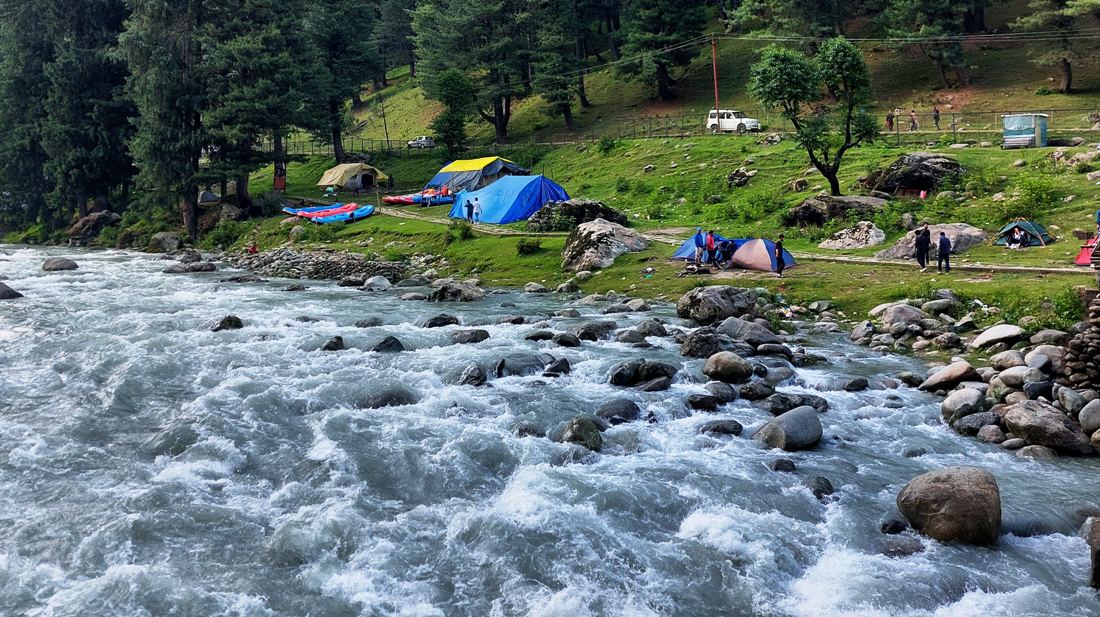
The decline has several causes, he said, including pollution, encroachment, habitat degradation and climate change, with pollution and habitat loss the most significant. “Snow trout is a sensitive fish, dependent on specific environmental conditions. It is associated with cold, clear and clean water and is found in Kashmir’s rivers and tributaries, particularly in suitable stretches of the Jhelum system,” Ahmad said, insisting on every single word. The species occurs in tributaries on both banks of the Jhelum, including Madhumati, Arin and the Sindh, wherever water remains clean.
Even these habitats are under pressure. The fish feeds on biological growth attached to submerged stones and pebbles, so when a river changes, its food supply changes too.
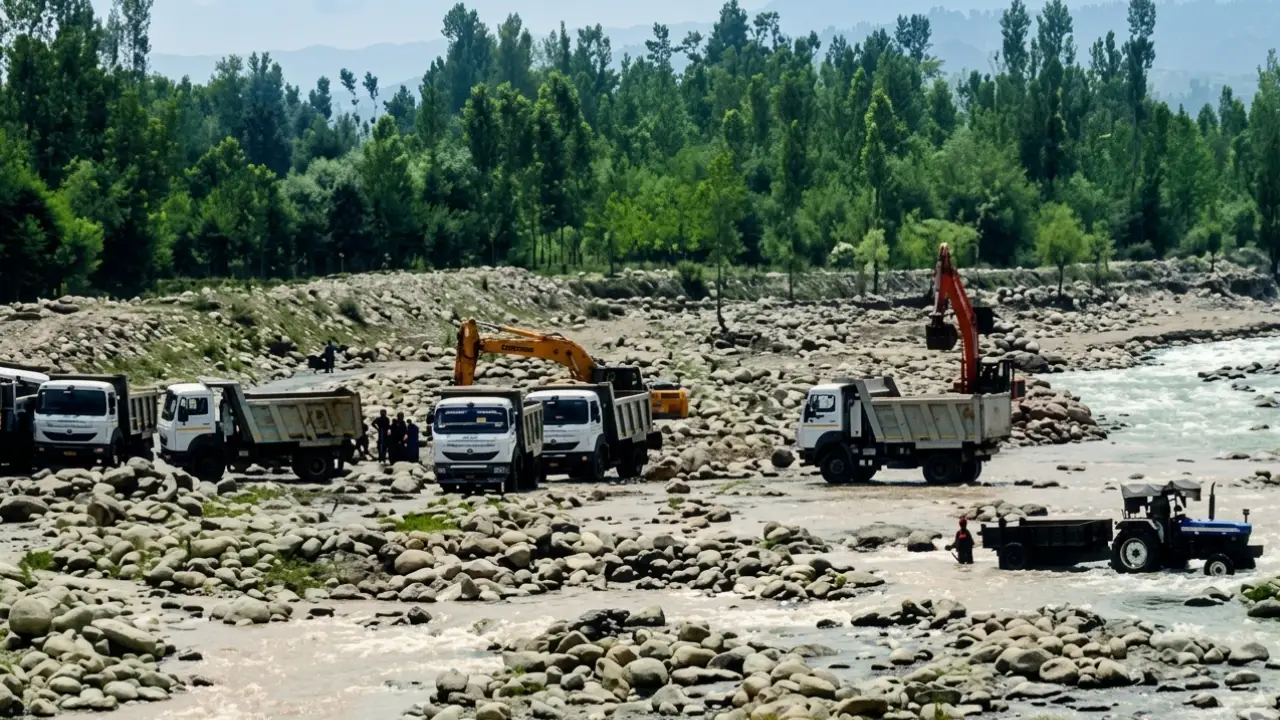
Breeding is equally vulnerable. Snow trout lays its eggs among pebbles, stones and sand, and any disturbance to riverbeds can interfere with reproduction. Ahmed pointed to sand mining and the use of bulldozers in tributaries as activities that altered the habitat. The real question, he suggested, is not simply whether fish are released into rivers, but whether those rivers are protected enough for fish to survive at all.
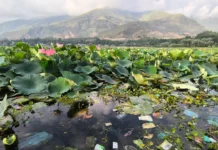
The problem is most visible in slow moving stretches and in water bodies such as Dal Lake, where populations have declined considerably even as the species persists in cleaner streams and tributaries. A fish suited to particular conditions, he said, cannot be expected to survive once those conditions vanish.
Breeding Effort
At Rangil, scientists are working on artificial seed production, obtaining eggs, fertilising them and rearing the young under controlled conditions. Using a hormonal breeding protocol, the team has produced 10,000 snow trout eggs so far and believes the programme is yielding positive results. Fry and advanced fry are then released into natural waters such as the Jhelum.
Ahmed gave an example: releasing 10,000 to 100,000 fry into a water body, where even a 10 per cent survival rate could meaningfully strengthen the wild population. The aim, he stressed, is not to farm the species commercially but to help it rebuild self-sustaining populations in its own habitat.
The approach has a clear limitation. Artificial replenishment cannot make up for a habitat that keeps deteriorating. “If pollution increases,” Ahmed said, the purpose of producing and releasing a sensitive fish becomes questionable. A river can be stocked with thousands of young fish, but if the water stays polluted or the habitat keeps being destroyed, their chances of survival remain poor. For his research team, the work therefore has two sides: the scientific task of producing seed and rearing fish, and the ecological task of ensuring the rivers, streams and lakes they are released into can still support them.
Shared Duty
Ahmed believes both government and the public have a role to play. Agencies must protect water bodies from pollution and degrading activities, he said, while communities need to recognise the value of native aquatic life. Kashmir’s fish are natural assets, he argues, and they are being progressively damaged by human activity. The snow trout’s decline, in that sense, is also a warning about the state of the region’s water bodies.
The changing distribution tells its own story. Snow trout persists in cleaner tributaries and running waters even as it fades from slow flowing and standing waters such as Dal Lake and Manasbal, where other native species once common have also grown scarce. Running and standing waters demand different conditions, and as Kashmir’s water bodies change, so does the distribution of the fish within them. For conservationists, protecting individual habitats now matters as much as producing more fish.