Women in Kashmir face distress and delayed care due to scarce female diagnosticians, forcing uncomfortable scans, triggering trauma, avoidance behaviours, and exposing gaps in healthcare, reports Babra Wani
Early 2025, one lazy Sunday, Basima, 28, woke up with a sharp pain in her right breast. On inspection, she found a lump. Panicked, she threw away her blanket and dashed downstairs to reveal it to her mother. In the next few minutes, they were on their way to a doctor for a check-up.
The mother-daughter duo went to Iqbal Market Complex and met a gynaecologist. She suggested that they go for a breast scan and referred her to a diagnostic centre above her clinic. In the centre, they were in shock as a male professional was supposed to check her.
Sceptical, Basima asked the doctor if there was a female radiologist around, instead. The doctor thought for a moment and had no options in mind. “Trust me, he is good. His diagnosis and handling of scans are better,” Basima remembers the doctor telling her, “But I will feel more comfortable with a woman,” Basima responded. The thought of removing her clothes in front of a male stranger kept bothering her.
Stories of Struggle
“Then there is one near LD Hospital, you can go and check there,” the gynaecologist finally located an alternative.
In utmost hurry, the mother-daughter left and boarded an auto-rickshaw to look for the lady doctor. Upon reaching the destination, they were disappointed. The diagnostic centre was closed. Upon enquiring, they learnt that the centre remains closed twice a week. They were suggested to go to other centres, but none of the clinics had a female sonologist.
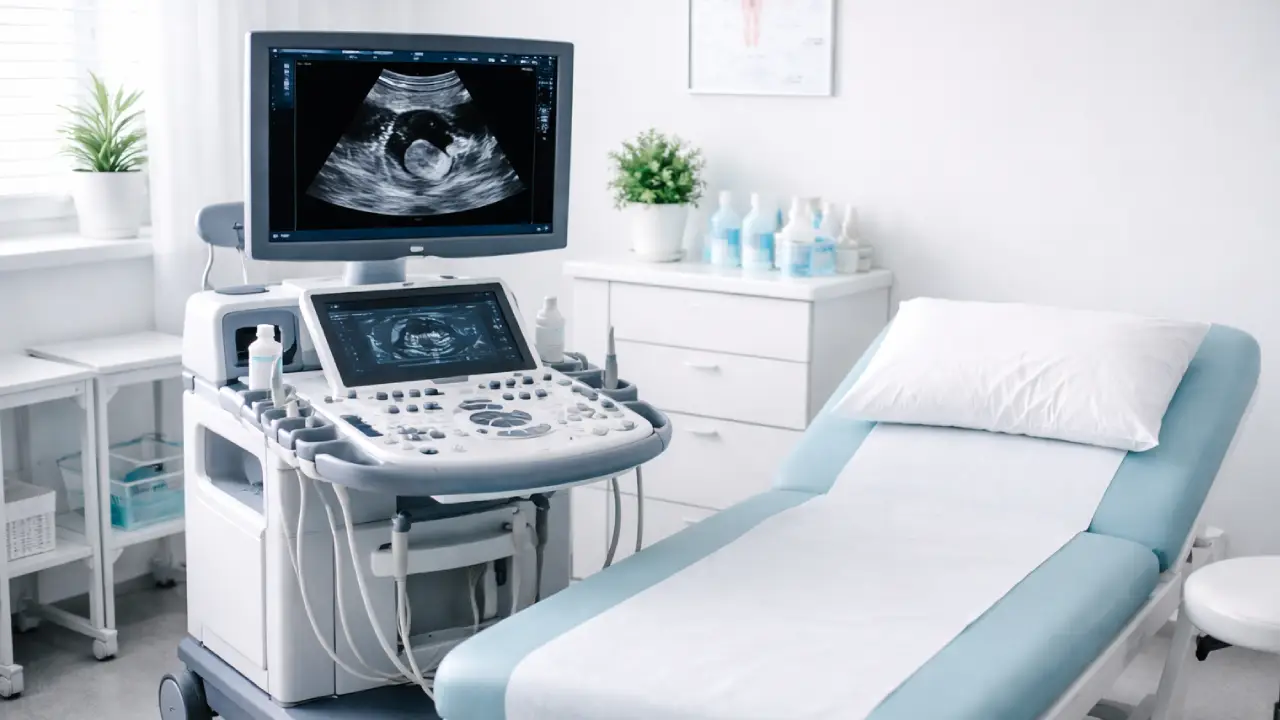
Having no choice, they took the same transport and reported to the same centre that the doctor had initially suggested. “We had no choice. We were worried and desperate,”, Basima’s mother said, “We went there, sought the appointment and queued up for our turn.”
As they waited in the tightly-packed hall, they saw the space overflowing with women, but none of them had come for a breast scan.
“Do I need to remove my shirt?” Basima questioned her mother, who looked equally worried. Soon her name was called. She left the waiting room. Her mother was asked to wait outside.
“As soon as I entered the diagnostic room, I was asked to remove my shirt and innerwear,” Basima said, insisting that she was shocked. “It was a middle-aged doctor, but I still asked if my mother could be with me.”
A practitioner for a long time, the doctor understood Basima. He called in his assistant, a female, and asked her to talk to Basima and make her feel at ease.
“He did not look at me even once while he scanned my chest thoroughly,” Basima recalled, “He made me comfortable, but I would still prefer a female sonographer.”
Zaira, 25, had similar experiences. She was diagnosed with PCOD in 2025. Her condition required her to go for ultrasounds every month. But her issue was the same.
“It is really embarrassing at times to remove clothes in front of a male,” Zaira said. “Sometimes I feel like crying and beseeching Allah to heal me so that I need to get nude before strangers.”
Demand Supply Issue
Women may or may not talk; this is a mass complaint in Srinagar. A lady doctor said that women patients with gynaecological issues often prefer female sonographers.
“I always get enquiries about the availability of female sonographers,” she said. “I guess it is due to the social and religious structure that females feel more comfortable with females.”
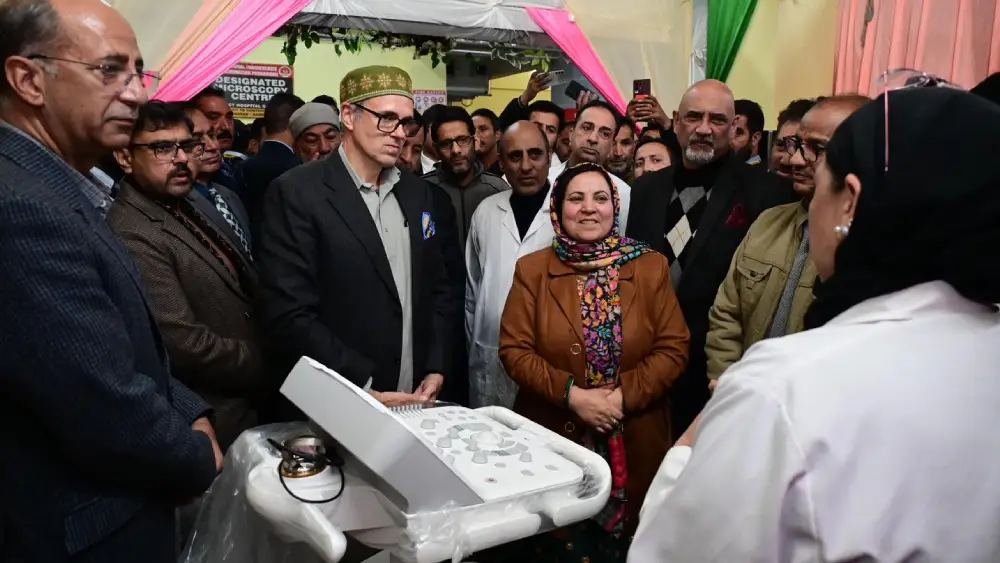
Initially, all the technologies linked to medical science were managed by women. It is changing gradually but surely. Many young women are now getting into radiology. “And it is not just sonography or breast scans but ECG and even X-rays.” It is helping diagnostic centre promoters because they do not have to hire male professionals for male patients.
“Medical tests like USG, Mammography, ECG, scans are mostly uncomfortable,” a woman patient said. “It is just very unfortunate and disheartening when we have to remove our clothes to get checked in front of strangers.”
Sharing her own experience, Shabnam, 23, a resident of Anantnag, said that whenever she had to undergo medical procedures, she had always preferred female diagnosticians. “For a PCOS patient like me, the accessibility to female diagnosticians is limited,” she said, insisting she has always made extra efforts to get females to handle her tests.
Once, after suffering an anxiety attack, her parents took her to a hospital where no female attendants were available. She was required to undergo both an echocardiogram and an ECG that day, an experience she describes as deeply traumatic.
The male attendant asked her to uncover her chest and physically adjusted her to place the leads. “I knew it was a medical procedure,” she said, “but it was still extremely difficult for me to go through it with a male diagnostician.”
For days afterwards, Shabnam wrestled with her own response, questioning whether her discomfort stemmed from the attendant being male or whether she was overreacting, repeatedly scrutinising her feelings through the lens of gender bias.
The Reasons
An industry insider said Kashmir has a shortage of female-led diagnostic centres and a lack of female diagnostic staff in hospitals in Kashmir is linked to “limited recruitment, contractual hiring practices in government hospitals, and the concentration of female radiologists in a few urban private centres, making access uneven and often unaffordable.”
Speaking anonymously, a radiologist explained that, as far as the ultrasound scans are concerned, they are performed by radiologists. “Radiology is considered a top medical branch, and it is usually male doctors who choose this speciality,” she observed.
Another reason she explained is that many women tend to avoid radiology because it involves night shifts; “women generally prefer roles with regular 9-to-5 working hours. As for other tests like blood tests, you will mostly see female staff there.”
“The persistent shortage of female-led diagnostic centres in Kashmir continues to pose a serious obstacle to women’s access to healthcare, particularly for reproductive and gynaecological services,” a sociology student noted.
A 2024 study by researchers Faizan Bashir and Dr Bikashdev Chhura, which examined healthcare utilisation among women in Srinagar, found that women’s access to medical services is frequently constrained by distance, cost and inadequate facilities. The study observed that “access to health facilities is continually hampered by distance”, and noted that women often underutilise healthcare services even when they are unwell because of persistent structural barriers.
A Psychological Factor
Nadia Ishfaq Nahvi, a licensed Clinical Psychologist, who founded Sukoon, explained that across many cultures, regions and religions, where it has always taught to protect one’s body and modesty, it often comes as a sense of disgrace when any person, irrespective of their genders are asked to pull up or pull down their clothes.
“For many, this may not seem like a serious concern, but there is a particularly vulnerable section of the population for whom it carries deep significance. Some may have experienced situations in the past in which their bodies were seen or touched without consent,” she said.
“Procedures such as undergoing scans without a same-gender attendant present can trigger those traumatic memories all over again. That is why some scan centres keep the lighting extremely low in areas where patients lie during such procedures. It is also why many patients choose to cover their faces while being scanned. They may feel judged or exposed, and hiding the face becomes an instinctive way to cope.”
Such vulnerability often leads to the development of avoidance behaviours, further reducing the likelihood of timely treatment and recovery. “In these medical settings, patients often feel powerless, as though they have lost control over their own bodies.
Even when they give technicians the benefit of the doubt and recognise that the procedures are part of the job, the experience can still generate a sense of mistrust and a perceived emotional and physical threat for the patient,” she concluded, explaining why many women prefer the presence of a female technician during scans.
It is not the story of a few women but a crisis for a vast section of the female population in Kashmir. For them, scans do not end when machines are switched. These scans infact trigger serious psychological issues,s leading them not to report their health issues to their families. This crisis could be a huge business opportunity at the same time.
(Names mentioned in the story have been changed on request.)