A family-run trout farm in South Kashmir lets visitors catch, clean and grill their own rainbow trout, turning a fisheries venture into a rural tourism success story, reports Afreen Ashraf
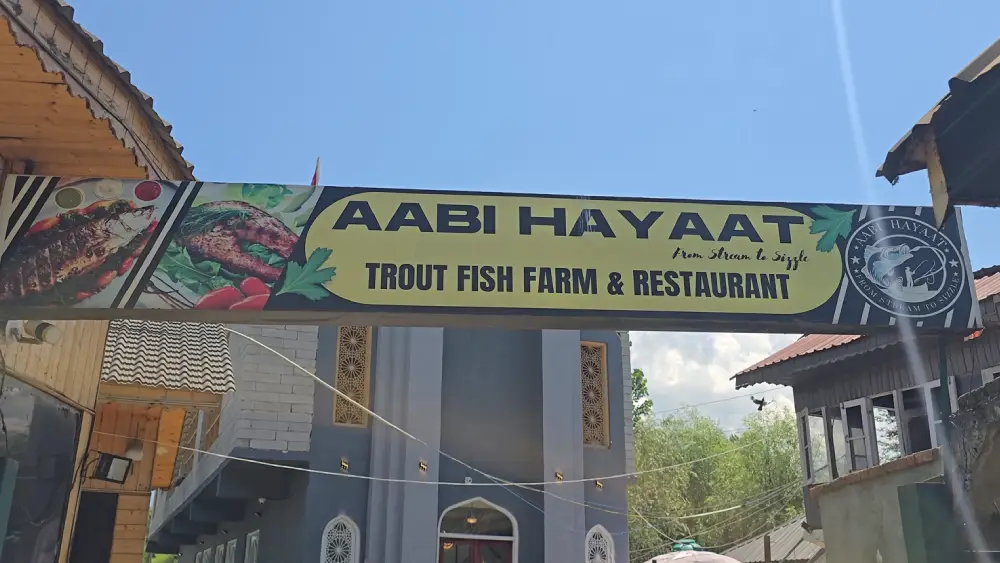
The drive to Akad village in south Kashmir’s Anantnag district runs alongside the Lidder River. The water crashes against rocks for much of the way. The road winds through lush, mountain-framed valleys. Just before Akad Park, the scenery changes character. The river and mountains remain. But the eye is now drawn to bright red and yellow signboards. They advertise fish farms and restaurants. Among them is Aab-e-Hayat, a family-run trout farm-cum-restaurant. It is built around a simple idea: catch, clean and cook.
A Meal with a Head Start
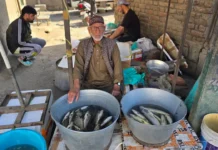
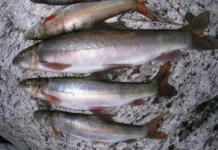
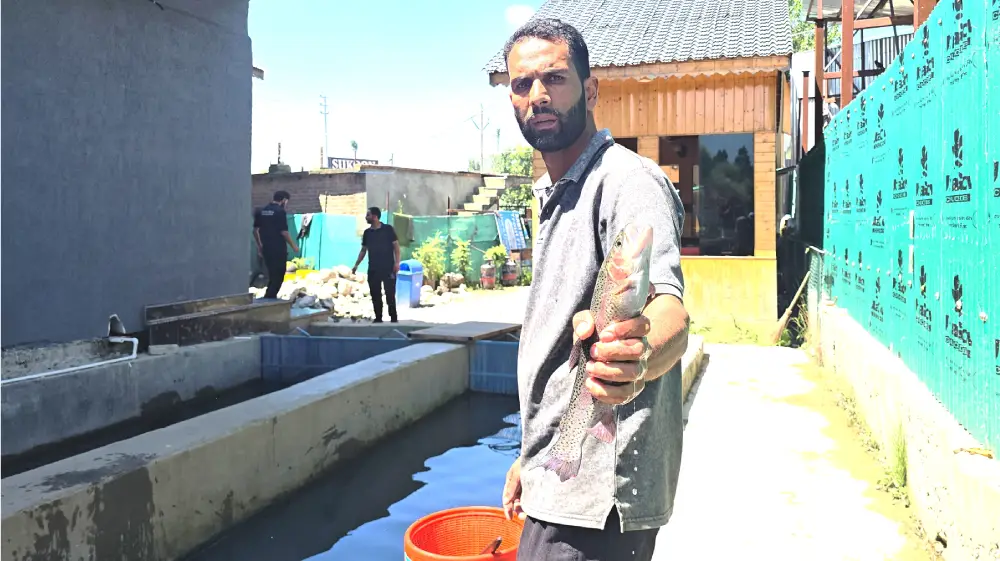
Unlike most restaurants, the experience at Aab-e-Hayat begins well before the food reaches the table. Visitors catch a live rainbow trout themselves. It is caught from the farm’s raceways. The fish is then cleaned and grilled in front of them.
The moment one enters the property, grilling stations come into view. They are busy with freshly caught trout. Nearby are long raceways carrying the cold waters of the Lidder River. Hundreds of live fish swim in them. Beside the raceways sits an open-air seating area. A two-storey restaurant stands next to it.
Diners eat their meal to the sound of running water. By combining fish farming with dining, Aab-e-Hayat has become something more than a roadside eatery. It now draws both natives and tourists. They come in search of trout served straight from the water.
Left A Job
Behind the venture is Naveed Ahmed Dar. He traces the idea back to his father. His father worked for the Fisheries Department. He recognised the potential of the Lidder River for trout farming.
“Since we lived close to the river, my father believed we should make use of this opportunity instead of letting it go,” Naveed recalled. The family entered trout culture in 2019. Naveed himself held a stable government job at the time. He eventually resigned to join the business full-time. “I realised there was more scope in business than in my job. It was a difficult decision, but I knew this had the potential to grow.”
Naveed decided early on not to limit the venture to fish farming alone. The “catch, clean and cook” concept followed. Visitors pull a live rainbow trout from the raceways. They watch it cleaned and grilled on the spot.
The idea grew out of a simple concern. Fish loses its freshness on the way to market. It passes through many stages of handling and transport. “Here, people know exactly what they are eating because they see the fish being caught and cooked in front of them,” he said. The model also helped rebuild customer confidence, he added. That confidence had suffered after Kashmir’s rotten meat scandal.
The restaurant draws a steady stream of tourists too. “Many tourists come here because they have heard about Kashmir trout. Since it is rare outside Kashmir, they want to experience catching it and eating it fresh,” said one of Naveed’s chefs. He grills trout for a group of visitors who stopped by for the delicacy.
Running the Business
As the venture grew, its demands extended beyond the family alone. “Smooth working of such a property demands complicated management,” Naveed revealed. The family now operates two raceways in Akad. They also maintain a hatchery at another location. Trout survive only in cold, oxygen-rich flowing water, he said. explains. A steady water supply is essential. “Fresh water is the lifeline of trout farming.”
The raceways are cleaned every week to clear mud and waste. Water channels are monitored year-round. During recent heavy rainfall, staff kept close watch on the pipes. Blockages can restrict flow. Restricted flow can quickly prove fatal for the fish. The farm’s location near apple orchards brings its own risk. “We have to make sure that chemicals used in nearby orchards do not contaminate the water,” Naveed asserted.
Running the farm and restaurant together requires a sizeable workforce. Aab-e-Hayat now employs more than 15 young men from surrounding villages. They work across fish farming, restaurant operations and customer service.
A Successful Model
The venture’s success has encouraged others to take up trout farming as a livelihood. Many have set up their own farms, and a few have partnered with restaurants offering freshly prepared fish.
Naveed said the pairing of fish farming with dining has steadily gained popularity. It has also boosted tourism in the area. “We are happy that others have also started similar ventures. It creates employment and benefits the entire area,” he said.
Growth has not come without challenges. A continuous supply of clean, cold water remains essential. Even minor disruptions can threaten the fish. Naveed advises anyone considering a trout farm to consult the Fisheries Department first. Water quality, flow and site selection determine whether a venture will succeed, he said.
The family now plans to introduce new trout varieties. They will keep the popular model intact.