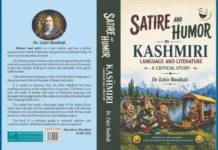
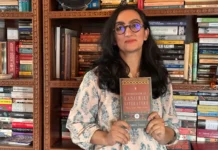
In her debut, Loal Kashmir: Love and Longing in a Torn Land, Kashmir filmmaker Mehak Jamal explores the power of love as an act of defiance, hope, survival and life using the living characters to weave a long story of a turmoil-hit society, writes Muhammad Nadeem
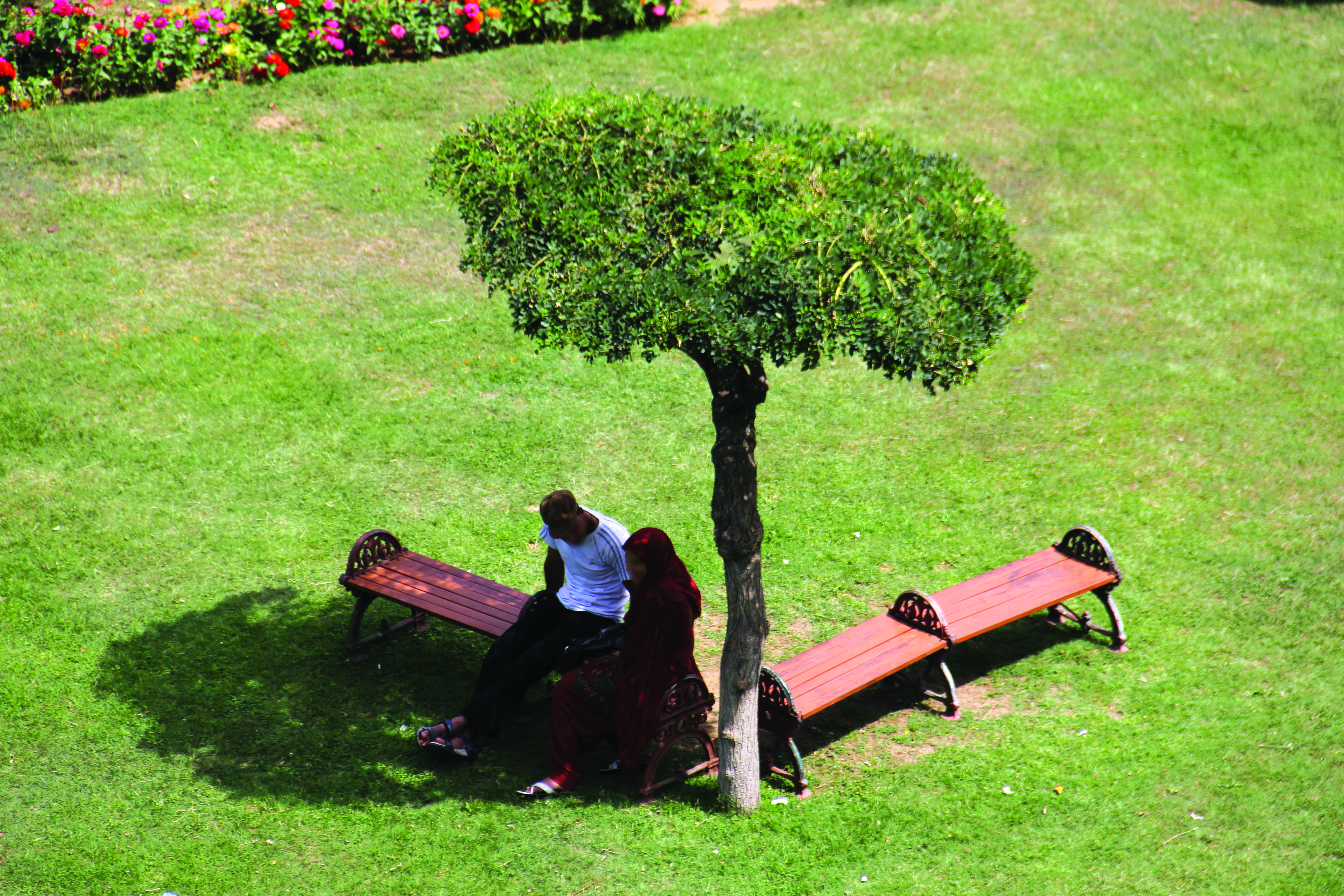
= Love, in its purest form, is a universal emotion, sometimes an act of defiance and sometimes a ray of hope that transcends boundaries and barriers. When this tender emotion is placed within a landscape of perpetual conflict, it becomes a combat zone of its own, requiring extraordinary resilience and courage.
In a world where the political circumstances often overshadow the personal, love is an act of quiet rebellion. Nowhere is this more evident than in Kashmir, a region where the beauty of its landscapes often belies the intensity of its turmoil. Loal Kashmir explores this intersection of love and conflict, offering an intimate look at how relationships persevere and evolve amid ceaseless strife.
This is the second book on Loal (love) revolving around Kashmir. A few years back Gulshan Publications published Loal – Connecting Threads of Wistful Longing, an introduction to the institution of love in Kashmir culture and poetry.
Mehak Jamal, a filmmaker and writer born in Srinagar to a Kashmiri Muslim father and a Maharashtrian Hindu mother, brings a personal lens to her storytelling. Identity and belonging reflect the larger narrative of Kashmir itself—a region perpetually torn between competing ideologies and allegiances. Mehak’s anthology foregrounds the human experiences of its people—their loves, losses, and longings—creating a nuanced and multifaceted portrait of the region. The book mixes the narrative of political conflict and personal resilience, capturing the stories that rarely make headlines but are essential to understanding Kashmir.
Love as Defiance
Mehak Jamal’s motivations for writing Loal Kashmir stem from her desire to document the lived experiences of Kashmiris. As a self-proclaimed “secret keeper,” she gathers intimate and honest stories that might otherwise remain untold. Her connection to Kashmir informs her narratives, adding authenticity and depth.
Jamal’s hope for the book is to foster empathy among readers, encouraging them to see Kashmir beyond its conflict. By highlighting universal themes of love and resilience, she aims to bridge the gap between Kashmir and the rest of the world, creating a narrative that resonates globally.
For decades, Kashmir has been a flashpoint of tension between India and Pakistan, a theatre of armed conflict, and a site of human rights violations. Yet, amidst this backdrop of unrest, life continues, and so does love. Jamal’s decision to focus on these personal narratives challenges the dominant discourse, emphasising that Kashmiris are, primarily, survivors of conflict, but, also, they are dreamers, lovers, and storytellers.
A Storyteller’s Perspective
The anthology is divided into three sections—Otru: Day Before Yesterday, Rath: Yesterday, and Az: Today—a structure that reflects the passage of time and the evolving dynamics of love in Kashmir.
The stories are as diverse as the region’s cultural and social fabric. Jamal brings together voices from various identities and perspectives. By doing so, she creates a landscape of experiences that reflects the complexity of life in the region. Each narrative is rooted in real-life accounts, adding an authenticity that is both moving and haunting. From young lovers separated by curfews to families grappling with the loss of loved ones.
Mehak’s inspiration for the book came during the communication lockdown that followed the abrogation of Articles 370 and 35A in August 2019. This period of enforced silence, when phone and internet services were suspended for months, brought to light stories of connection and ingenuity. As Mehak notes in her introduction, the lockdown revealed the extraordinary lengths to which people went to stay connected with their loved ones. Her decision to collect and preserve these narratives is a testament to the enduring power of love. “To make something undeniable in history,” she writes, “we must share our lives, our stories, our laughter, our sadness.”
A Timeline of Love and Loss
Mehak invites readers to see the region through the eyes of its people. The anthology encapsulates diverse stories of love, spanning decades of Kashmir’s tumultuous history. Mehak crafts narratives that delve into themes of resilience, identity, and cultural intersections.

In Matador, Sagar’s fascination with Aalmeen evolves into a forbidden romance, reflecting interfaith tensions and societal pressures in Kashmir. Their story intertwines personal longing with the overarching conflict, showcasing how love endures yet struggles to thrive amid adversity.
Kashmiri in Gaza shifts the perspective to Laila and Mahdi, whose cross-cultural romance juxtaposes the conflicts of Kashmir and Palestine. The narrative explores the challenges of love across borders, societal judgments, and the sacrifices made in pursuit of unity.
In Paper Maps, the innocent camaraderie between Ahmad and Zulfi blossoms into unspoken affection. The story’s tender moments, from shared notes to nostalgic keepsakes, resonate universally, even as political and familial pressures separate them.
The collection extends to global narratives, such as Zara’s tale in Visa, where love faces the hurdles of bureaucracy and political unrest. Her long-distance relationship with Rehan captures the endurance of human connections amid prolonged separations.
Her characters are relatable, their stories tinged with a mix of hope, heartbreak, and resilience. The dialogue is natural and engaging, reflecting the nuances of Kashmiri life and language.
From Bushra’s struggles as a displaced woman yearning to return to her homeland, to the tale of Khawar and Iqra—two doctors navigating love during the abrogation of Article 370—the book delves into the extraordinary within the ordinary. Asad and Haika’s tale highlights the intersection of love and gender identity in a society marked by ethical and religious norms, while Mahak’s narrative captures the universal struggles of growing up amidst restrictions.
Preservation
These stories offer a panoramic view of love’s various facets—its joys, trials, and bittersweet resolutions—while remaining rooted in the cultural and historical ethos of Kashmir.
Love as a unifying force emerges as the central theme of the anthology. Memory serves as a powerful motif, with characters often preserving love through keepsakes or recollections, symbolising resilience against the erasure of personal histories. Identity, both individual and collective, is another recurring theme. Mehak also emphasises storytelling as an act of preservation, ensuring that the lived experiences of Kashmiris, often overshadowed by global narratives of conflict, find their rightful place in literature.
Mehak’s decision to structure the stories chronologically enriches the reader’s understanding of Kashmir’s evolving social and political landscape.
Memory, Identity, and Politics
At the heart of Loal Kashmir, the interplay between personal and political lives illustrates how individual connections persist despite external upheavals. Love becomes a sanctuary, a source of strength, and occasionally, a battleground.
The motif of memory is woven into the fabric of the stories. Mehak uses storytelling to preserve one aspect of the lived experiences of Kashmiris, ensuring that their voices are not forgotten. Memory serves as a bridge between the past and the present, connecting readers to the enduring spirit of Kashmir’s people.
Identity is another central theme, explored both through the characters and the author herself. Her characters are relatable, their stories tinged with a mix of hope, heartbreak, and resilience. The diversity of voices and settings enhances the richness of the collection.
Loal Kashmir delves also into the historical and cultural context of the region. By covering different periods—from the 1990s to the post-abrogation era—Mehak sheds light on lesser-known aspects of Kashmiri life.
Illusion of Normalcy
While Loal Kashmir offers a moving and multifaceted exploration of love within a conflict zone, it is important to view these stories as fragments of a much larger and more complex reality. The anthology, though rich in its depiction of resilience and human connection, does not encapsulate the entirety of Kashmir’s lived experience. These tales of love and survival must not be misconstrued as evidence of normalcy in a land perpetually scarred by violence. They serve as a testament to the capacity for love, not as an erasure of the pain and injustices that define the region’s historical and political narrative.
No amount of storytelling can replace the stark truth of life in a conflict zone. Love, while an act of rebellion and a beacon of hope, exists alongside profound grief and unhealed wounds. Kashmir remains a land where longing and resistance intertwine, and the veneer of normalcy often serves as a facade over deep-seated struggles. The anthology captures moments of human connection, but the underlying yearning for justice, much like the unspoken pain of abandonment and betrayal, is a silence that echoes through its pages. Readers should look beyond the stories and confront the realities they are rooted in—a land of beauty, resilience, and unyielding resistance.
Visual Narrative
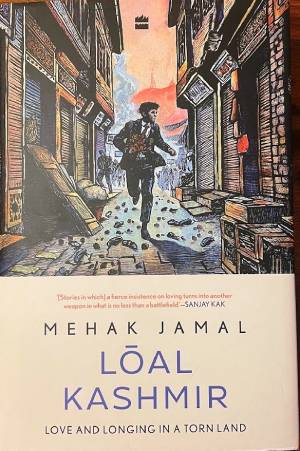
The book’s cover art, designed by Basita Shah, a young and dynamic artist from Kashmir mirrors the layered narrative within. The front cover depicts a student running through a cluttered alley, a bouquet in hand, his expression fraught with urgency. The scene, bathed in warm sunset hues clashing with the muted tones of the alley, reflects the tension between beauty and desolation—much like life in Kashmir. The alley, with its debris and closed shutters, suggests secrecy and constraint, while the act of running evokes themes of escape, pursuit, or emotional turmoil. The flowers add a fragile hope, underscoring the delicate balance between love and survival.

In contrast, the back cover portrays a quieter moment: a general store and an STD/ISD booth, nostalgic symbols of Kashmiri life. A shopkeeper sipping tea and a young woman writing in a notebook offer a glimpse of calm amidst the communication blockade. The muted earth tones interspersed with vibrant details evoke a sense of warmth and familiarity, highlighting the resilience of everyday life in a fractured region.
Together, the covers encapsulate the book’s duality—moments of personal introspection against a backdrop of collective struggle. This juxtaposition of chaos and calm, urgency and stillness, beautifully frames the stories within, where love, survival, and resistance intertwine in a torn yet resilient land.
Basita Shah’s illustrations for Loal Kashmir are not just visually appealing but are deeply symbolic, reflecting the themes of love, longing, and conflict in a nuanced manner. They invite the reader into the world Mehak Jamal has crafted, promising a story that is both intimate and expansive, personal and political.