Kashmir’s Wazwan is losing Mawal, its natural red flower, to synthetic dyes. Farmers face losses, while researchers and Unani physicians point to real health benefits worth protecting for future generations, Asrar Syed reports
Kashmir must sustain its Wazwan in its original form. That means no chemical colours, and no shortcuts that strip the feast of its soul.
For decades, Wazwan has brought people together across background, caste, religion and ideology. The multi-course platter is famous for its many dishes, largely non-vegetarian. Everyone has a favourite. Four people sit in a circle and share the meal, a ritual that reflects Kashmir’s rich cultural heritage. It is also at the top of the priorities of thousands of tourists visiting Kashmir. All major hotels serve Wazwan.
Rogan Josh, mirchi wangan korma and rista add a red, spicy note to the platter. These dishes get their bright colour from a special ingredient known as Mawal.
An Impressive Colour
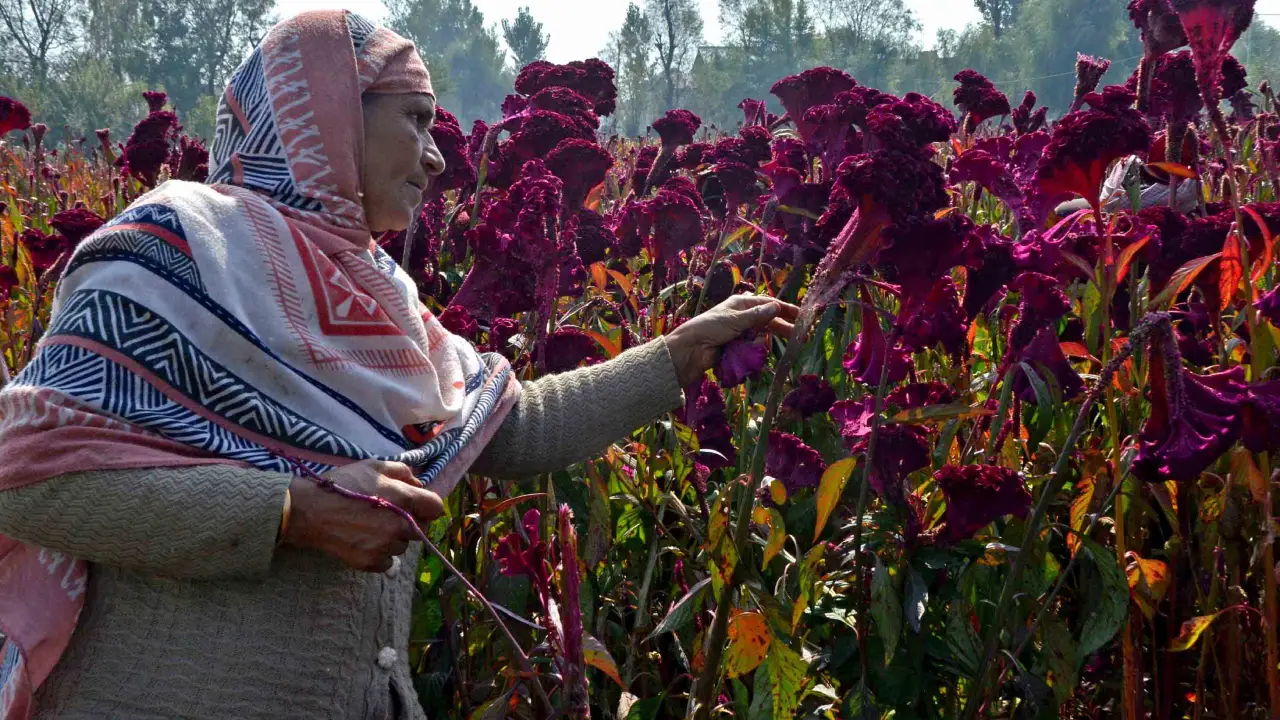
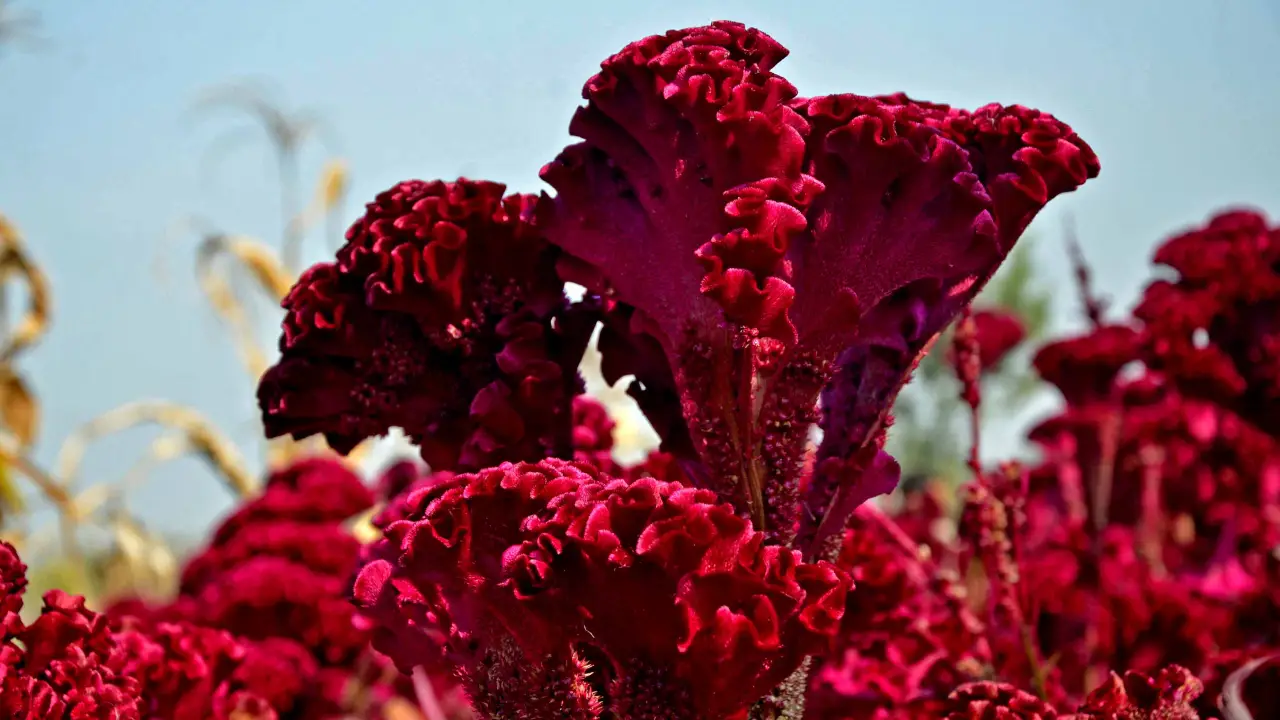
Locally called Mawal, Celosia cristata is an herbaceous plant of the family Amaranthaceae (Caryophyllales). Kashmir’s traditional healers, the Hakeems, have used this edible flower for decades. Cockscomb flower has distinctive velvety, crimson-coloured blooms and that is where certain items in the seven-course meal would draw its colour from.
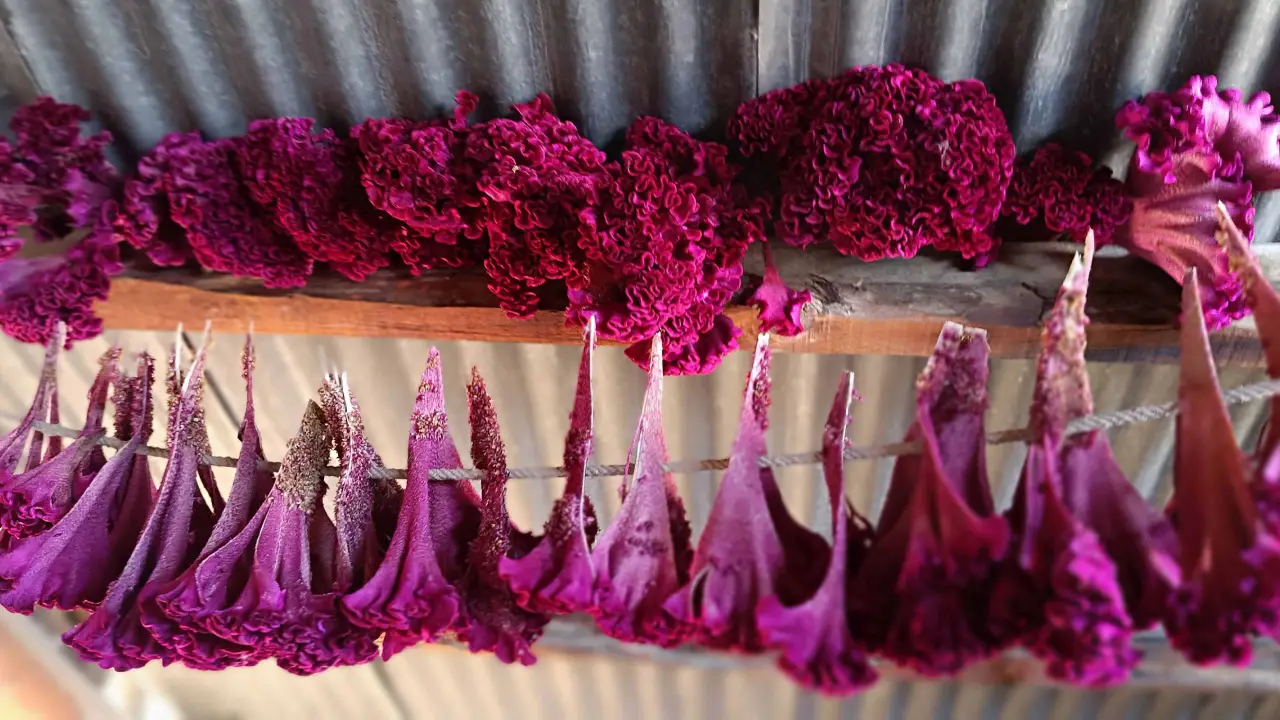
Locals also use it in a few Wazwan dishes. It gives gravies a fiery colour without affecting taste or aroma. It is organic and beneficial to health. The tradition is that the dried Mawal flowers are soaked or steeped in hot water and the resulting crimson infusion is added to gravies. It imparts a subtle, earthy flavour to the dish.
What is interesting is that the use of Mawal in Kashmir wazwan is a Muslim-only practice. In non-Muslim Wazwan, other ingredients, including yoghurt, to achieve colour, body and flavour.
Tense Farmers
Farmers who have grown Mawal for decades, however, have watched demand fall sharply. Many blame the rising use of synthetic food colours, especially in Wazwan and in the hotel kitchens. These are man-made chemical dyes produced in laboratories to add, enhance or restore the visual appeal of food. They are often cited as a reason for “loss of taste” and “rising health problems”.
Food habits have changed too. Spices are no longer prepared a year before weddings. Searching several markets for the perfect spices is no longer practised. Packed spices are now common. Tragically, Mawal sits on the quietest shelves of shops that sell Wazwan spices.
The number of Mawal growing farmers has also dropped. Many have switched to other natural cash crops. Some have left farming altogether.
In Srinagar’s Waniyar area, the family of Mohammad Maqbool Bangroo has grown Mawal for more than six decades. Bangroo said the demand for his crop has almost vanished.
“My family has been into Mawal farming for decades, I myself have been growing this plant for more than four decades,” Banfroo said. “Although times have changed, people nowadays, especially the Waza’s, (traditional Kashmiri chefs) have switched to synthetic food powder or liquids. Which is not only harmful to health but also, it can never match the taste of Mawal.”
The season starts in May. After proper climatic conditions, the flower is ready for harvest in October. Bangroo, almost seventy, grew up watching his father work the field. One day he learned the art, and there has been no going back.
“There was a time, when Mawal was in such a demand, people used to travel entire city for few Kilograms of this flower,” remembers Bangroo. “Back in those days, it was used by Hakeems for treatment of different diseases and imagining Wazwan without Mawal was off the table.”
In Noorbagh, Bashir Ahmad Pampori describes the losses. Farmers had to sell at prices that earned no profit, or quit the profession.
“See over the past decade, the use of Mawal has slowed down to a great extent, houses and waza’s which couldn’t even think of cooking their special dishes without this edible plant switched to artificial food colours,” said Pampori looking at the vast Mawal produce at his house. “Farmers who used to invest their sweat and money while preparing this plant often had to sell it on a very low margin or even at a price without earning any profit. This led to the decline of both production and use of this medicinal plant, which has several health benefits also.”
Over the years, the Mawal had created its own eco-system. There are quite a few traders who are the major buyers of this flower from the farmers and they are keeping the main supply line intact for the consumers. “It had actually disappeared but in last two years I see its return,” Shabir Ahmad, one Mawal trader said, insisting that he has enough stock to supply up to one ton at a time. “In market it sells upward of Rs 800 to Rs 1100 a kilogram.”
Young Hope
Ziyaan, 18, has recently learned the art of growing Mawal from his father. He refuses to back down.
“There is no harm in doing any kind of business despite its odds, until it doesn’t harm a society, one should not back down,” he said.
The young man, a twelfth class student, regretted that the Kashmir society has lately started judging people on materialistic possessions, which will lead us to a dangerous time. “We should not judge people based on such things rather how much one contributes towards the society he or she lives in should be appreciated.”
Expert Speaks
Little research exists on Mawal. A few researchers have highlighted its nutritional and health benefits.
A study Celosia cristata Linn flowers as a new source of nutraceuticals appeared in Heliyon, a Cell Press journal. Researchers Rukhsaar Sayeed, Monika Thakhur and Adil Gani found the Mawal flower contains vitamins A, B complex, C and E. Vitamin E (tocopherol) showed the highest concentration. Potassium was present in significant amounts among minerals. The amino acid and fatty acid profile was also satisfactory.
“Flowers are a source of biologically active and nutra-ceutical components with important pharmacological and antioxidant effects,” the study revealed. “Our findings suggest that CCF extract can strongly quench free radicals, inhibit the peroxidation of lipids, and preserve the aesthetics of food by chelating metal ions. In the present investigation, the major antioxidant components were phenols, flavonoids, and alpha tocopherol. Ascorbic acid and secondary metabolites like saponins, and alkaloids found in CCF are also known to exhibit antioxidant activities.”
Another study, Sarwali (Celosia cristata): Medicinal Importance in Perspective of Unani Medicine and Pharmacological Studies, appeared in the Journal of Complementary and Alternative Medical Research. It found that “this plant has a high potential as a healing agent, potential regenerator capacity of various cells, anti-proliferative activity, antimicrobial potentiality, adipogenic potentiality, and cytotoxic activities.”
Healing Roots
Farmers say Mawal does more than add taste and colour. Hakeems used it extensively. A Noorbagh farmer, who has grown the flower for about a decade, explains.
“Mawal has very large scale health benefits; it helps people with kidney ailments. Many Unani shops buy this edible plant from us and later use it in different kind of Unani drinks, the water in which this medicinal plant is kept for days, later on becomes highly enriched with of vitamins (A, B complex, C and E) with Vitamin E (tocopherol),” the farmer said, asserting his knowledge is part of the conventional wisdom. “Also, it becomes highly enriched with minerals which are beneficial for a human being in different aspects.”
Dr Altaf Hussain Shah, Senior Unani Physician with the AYUSH Department, District Hospital Pulwama, points to wider traditions: “Apart from its usage in food delicacies in Kashmir, its usage is well documented in Traditional Chinese Medicine (TCM) and Traditional Indian Medicine (Unani and Ayurveda). It is digestive and a stringent, able to stop a cut from bleeding, as per Indian Traditional medicine. It also supports various plant decoctions, specially made from the flower heads and seeds, and exhibit natural astringent properties used in herbal traditions to relieve diarrhoea, dysentery, and gastrointestinal spasms.”
Besides, he said the Mawal also has anti-inflammatory and wound healing role. “Traditional medicine uses crushed leaves and poultices applied topically to calm skin eruptions, burns, boils, and minor cuts.”
Future Prospect
Consumers across the world are becoming increasingly health-conscious, with growing preference for natural and organic food colourants. Mawal fits perfectly into this emerging market. However, stakeholders believe scientific intervention is essential to help Kashmir’s traditional flower-based colour industry realise its commercial potential.
Kashmir currently produces around two tonnes of Mawal annually. “A kanal of land usually yields about 500 kg of flowers, but once dried, the quantity comes down to nearly 80 kg,” a farmer said.
The biggest challenge, however, is the flower’s limited shelf life as a natural colouring agent. “On average, Mawal retains its colouring properties for no more than a year. There are seasons when production is good but demand is low. Whatever remains unsold eventually goes to waste, adding to our losses,” the farmer said.
He believes Sher-e-Kashmir University of Agricultural Sciences and Technology (SKUAST) must step in to develop a long-term preservation solution. “We know that Mawal can be processed into powder or liquid colour. The challenge is to ensure that these products remain equally effective even after five years, just as they are in the first year,” he said.
Such an intervention, the farmer argued, could give Kashmir another export-worthy product and transform the economic prospects of Mawal growers. While this would require infrastructure for processing the flowers into powder or liquid colourants, he believes the investment is achievable through government support. Organic vegetable colours are in a huge demand in food and pharmaceutical sectors across the world.
“Policymakers can take this forward under the Holistic Agriculture Development Programme (HADP) or the Medicinal and Aromatic Plants component. Both have adequate funds to support such an initiative,” he said.