After a major outbreak in 2022, Lumpy Skin Disease has returned and swept many villages in Ganderbal, Kupwara and Bandipora. Farmers face cattle deaths, unsafe carcass disposal and lost incomes as the milk supply chain is disrupted, reports Babra Wani
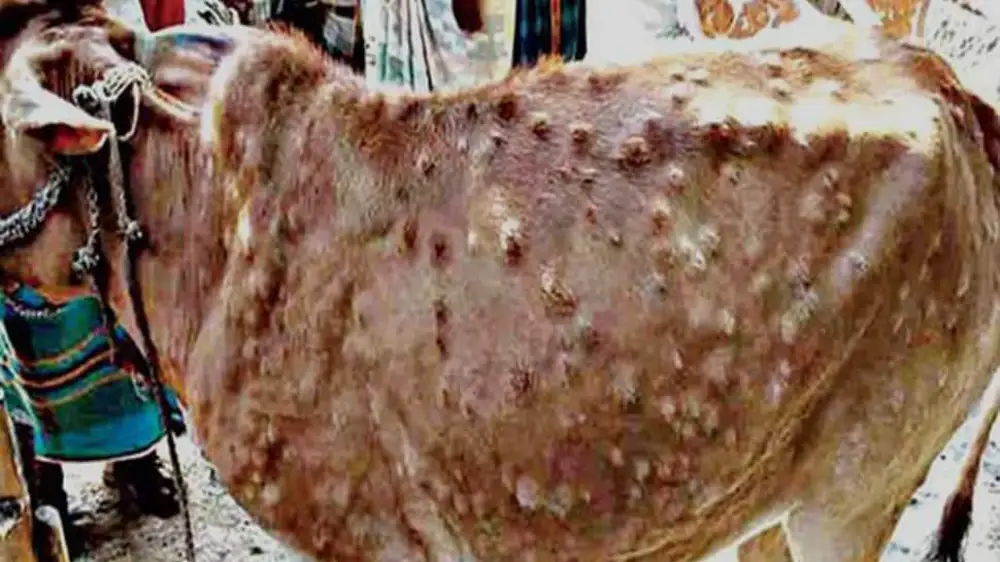
It was a Sunday morning when Ghulam Nabi, a smallholder dairy farmer from Tulamulla (Ganderbal), stepped into his cattle shed. His cows were covered in painful, erupting nodules. Within days, high fevers and rotting lesions gave way to acute distress. Facing their unbearable suffering, Nabi made a devastating choice.
“Since they were suffering and it was worse than death, we had to butcher them to free them of their agony,” Nabi recalled, his voice dropping. Nabi was not alone. Across the village, farming households watched helplessly as their livestock broke out in full-thickness dermal lumps. These ulcerated into necrotic tissue. In a rural pocket where cattle ownership forms the bedrock of household survival, mercy killing became an act of desperate resignation.
“Tulamulla has vast grazing belts, and almost every family relies on cattle for their daily livelihood and economic sustainability,” said Bilal Bhat, a resident and social worker.
Bhat noted that villagers initially learned of the contagion through televised advertisements. “When we noticed high fevers and skin lumps spreading, we approached the nearby Animal Husbandry Department Tullamulla and veterinarians on duty suggested some important instructions and provided first aid medicine, but the infection outran containment. It started in one household where the cattle caught the disease. Later on the cattle died, and upon realising that it was an outbreak, the residents started isolating other healthy animals to save them, but the disease was spreading really fast in the village.”
Following the outbreak, more than 60 per cent of livestock rearing families in the immediate belt lost their primary source of income. Milk yields plummeted overnight. Household finances were crippled. Supply chains running from local households to bulk suppliers and commercial distributors were severed.
“It was after cattle began dying that the Animal Husbandry Department team, led by Dr Abrar from Ganderbal and Tullamulla, visited the area to raise awareness and conduct check-ups,” Bhat said.
Field veterinary teams distributed initial ointments and antiseptic sprays. Residents said follow up monitoring and medical replenishments never materialised.
“No authority or official visited the ground to review the crisis; the only consistent administrative presence was Dr Abrar, who made regular inspection rounds,” said another resident.
Disposal Crisis
The immediate crisis rapidly morphed into an environmental and civic emergency. No state machinery was deployed for safe biological disposal. Desperate farmers discarded carcasses directly into nearby streams and irrigation canals. Public outrage followed over tainted water bodies.
“Scientific disposal protocols were entirely absent,” Bhat revealed. “Owing to a severe crunch in designated public land and official machinery, a few villagers pooled their own resources and hired private earthmovers (JCBs) under community self-help arrangements to dig trenches for burial.”
Official Tallies
Tulamulla’s plight is not an isolated story. Between July and November 2026, the resurgence of Lumpy Skin Disease (LSD) across Jammu and Kashmir exposed a significant gulf between field realities and administrative ledgers.
The official baseline was outlined in July 2026. The Union Ministry of Fisheries, Animal Husbandry and Dairying informed the Rajya Sabha that 18,61,098 cattle had been vaccinated across the Union Territory between 2023 and June 2026. Nationally, 29,444 cattle deaths were documented over that period. A March 2025 scientific study projected broader economic losses from the 2022–2023 outbreaks at Rs 20,254.407 crore, nationally.
By September 2, however, rural communities were reporting a different reality. In Shalbugh and neighbouring villages of Ganderbal’s Sherpathri belt, residents reported more than 350 cattle infected and roughly 20 dead.
Three days later, on September 5, Agriculture Minister Javid Ahmad Dar convened a departmental review meeting. Official figures recorded nine active epicentres across Kashmir. They involved 59 affected cattle, 55 of them active, with zero official mortalities. Ganderbal was identified as the epicentre with 52 cases across seven clusters. Three cases were in Bandipora and the remainder in Srinagar.
Deaths Persist
Despite state advisories, field mortalities continued through late autumn. By September 26, Tulamulla residents reported around six cattle deaths. Veterinary teams sampled dozens of animals.
By mid-October, active clusters surfaced in Kastigarh, Doda. Officials noted active cases had dropped from roughly 300 to 25. Five to six deaths were recorded, within an estimated 1 to 2 per cent mortality rate.
On October 16, the Ganderbal administration issued a formal advisory. It acknowledged the September cluster of 350 cases, detailed biosecurity guidelines and promoted helpline 1962.
Yet on November 5, Nawabagh village reported at least four fresh cattle deaths. Two were owned by Ghulam Mohammad Yatoo, and one each by Bashir Ahmad Mir and Ghulam Nabi Mir. The outbreak had gone uncontained for over a fortnight.
This is the second major outbreak of the LSD in Jammu and Kashmir. In 2022, nearly 75000 cattle were infected by the disease and as many as 2698 of them died. An infected animal’s treatment usually costs Rs 7000.
Disease Profile
Lumpy Skin Disease is an infectious poxvirus. It is primarily transmitted by blood feeding insects, including mosquitoes, stable flies, biting midges and ticks. Buffaloes can contract the pathogen, but cattle bear the brunt of severe illness.
The crisis in Kashmir is profoundly acute, explained a senior veterinarian based in Srinagar. More than 90 per cent of the region’s dairy population consists of exotic crossbred animals, predominantly Jersey and Holstein Friesian.
The disease typically incubates over one to two weeks. It begins with acute fever exceeding 40°C, lethargy, salivation and a severe crash in milk production. Soon after, firm nodules erupt across the body, the vet explained.
On the hallmark necrotic damage, the veterinarian said: “This is one of the most characteristic pathological features. The central portion of the nodules undergoes necrosis. The affected tissue becomes hard and dry. A firm, cone shaped necrotic structure called a sit fast develops. The dead tissue eventually separates from the surrounding healthy tissue.”
When these plugs detach, deep ulcers remain. They invite secondary bacterial infections, maggot infestations (myiasis), mastitis and severe lameness.
The expert emphasised that the nominal mortality rate remains low, but the economic impact is crushing. “The economic significance of LSD is much greater than its mortality rate. There is sharp decline in milk production. This is one of the most important consequences in dairy cattle. In some animals, milk production may fall dramatically and take several weeks or months to recover.”
He added that surviving cattle frequently suffer permanent udder damage, emaciation and reproductive complications such as abortions and sterility.
Myths Busted
Public health misconceptions have added another layer of panic. Dispelling rumours about transmission to humans, the veterinarian affirmed: “Lumpy Skin Disease is not considered a zoonotic disease. There is no established evidence that LSDV infects humans.”
He clarified that the virus does not represent a foodborne infection. Even so, raw milk should never be consumed. “Proper pasteurisation or boiling provides an important food safety barrier and milk containing antibiotic residues must not enter the food chain until the prescribed withdrawal period is completed,” he stated. He reiterated that meat from severely ill animals must never enter the food supply.
Treatment Limits
On clinical management, the vet cautioned that “there is currently no established specific antiviral treatment that reliably eliminates LSDV from infected cattle.” Care therefore remains strictly supportive. It includes antipyretics, fluid therapy, antibiotics for secondary infections and antiseptic wound washes.
On the live attenuated Goat Pox Vaccine (Uttarkashi strain), he said: “Vaccination is a preventive intervention, not a treatment for an established infection. Animals already showing fever, skin nodules or other signs of LSD should not be vaccinated as a substitute for treatment.”
He stressed that prophylactic ring vaccination must be restricted to clinically healthy herds in surrounding perimeters.
Burial Rules
The vet strongly condemned the unscientific dumping of carcasses into rivers and canals. Citing the statutory procedure, he said: “An animal dying from suspected or confirmed LSD must never be dumped into a river, stream, irrigation canal, open field or roadside.”
Under animal disease control rules, burial requires a dedicated pit away from water bodies. The pit must be lined with “a layer of approximately five cm of lime at the bottom.” The carcass is covered with another layer of lime and salt, and capped with “at least one metre of soil.”
(Some names have been changed on request to protect identity. The identity of the vet has not been used due to official protocols.)