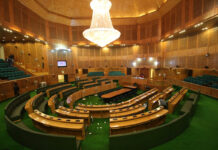
The Jammu and Kashmir’s dwarfed Assembly’s inaugural session was a pandemonium that consumed most of the brief 5-day session and exhibited a clear divide of the 90-berth House. Marred by physical altercations and heated protests, the session saw the passage of a resolution seeking the restoration of special status, the text of which also became yet another controversy, reports Syed Shadab Ali Gillani
The desperation with which the Jammu and Kashmir political class sought restoration of a representative government since the 2018 summer had an awkward curtain-raiser when a dwarfed assembly resumed its inaugural session. Four of the five days evaporated in pandemonium, barring Lt Governor Manoj Sinha’s speech. Almost anticipated, the story session was rooted in the happenings since 2018 when the BJPDP government collapsed under its own weight and a year later Jammu and Kashmir’s special status and the state status went away.
The assembly remained divided throughout on party and ideology lines. At the face of it, it was the treasury bench (JKNC) and the opposition (BJP). While the Congress remained a passive participant the entire rainbow of grey was a group of lawmakers from PDP, Peoples Conference, Shabir A Kullay (Shopian) and an erstwhile school teacher, Engineer Rashid’s brother, who acted, interrupted and took the barbs from both sides.
The outcome of the session remained the larger reality that the house did not put a stamp of approval on the August 5, 2019 decision-making that bifurcated the erstwhile state into two federally run Union Territories and binned the special status that Jammu and Kashmir enjoyed since 1947. There were differences over the text of the resolution but the JKNC piloted and passed it. A day later, Chief Minister Omar Abdullah drove to his Ganderbal constituency to tell people that they had kept the promise.
A Chaotic Start
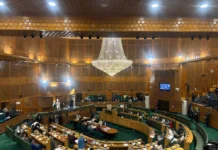
The assembly that existed in Jammu and Kashmir in 2018 has completely changed in the last more than five years. It was a bicameral house and now the legislative council does not exist. On November 4, 2024, the tensions were visible when the 88 lawmakers of the 90-seat house met for the first time and elected veteran politician and seven-time lawmaker, Abdul Rahim Rather as Speaker. While speaking in praise of Rather, PDP’s Waheed Parra sent a piece of paper to the Speaker and read out the same. It triggered a din. The treasury benches wanted the rules to be followed and were peeved at the members attempting to pre-empt the ruling party initiative. The opposition BJP was all fire for the bid as it believes any talk in support of Article 370 is anti-national.
Day 2 of the inaugural session was incident-free as the house having 51 first-time members was supposed to pay homage to the abnormally huge – 54 members of the assembly, who had passed away since early 2018.
Day Three
The real issue cropped up on November 6, 2024, when Deputy Chief Minister, Surinder Choudhary brought the resolution, which Sakina Itoo seconded.
“That this Legislative Assembly reaffirms the importance of the special status and constitutional guarantees, which safeguarded the identity, culture, and rights of the people of Jammu and Kashmir, and expresses concern over their unilateral removal,” the three-paragraph resolution read. “The Assembly calls upon the Government of India to initiate dialogue with the elected representatives of the people of Jammu and Kashmir for the restoration of special status, constitutional guarantees, and to work out constitutional mechanisms for restoring these provisions.”
It concludes with the passage: “This Assembly emphasises that any process for restoration must safeguard both national unity and the legitimate aspirations of the people of Jammu and Kashmir.”
It triggered a lot of heat and dust. Tensions escalated when BJP legislators vehemently opposed the resolution, calling for its immediate withdrawal. Tearing copies of the resolution and accusing the ruling JKNC of promoting an “anti-national agenda”, the BJP alleged the move was unscheduled and not listed. “We reject this resolution. Today’s business was to discuss the Lieutenant Governor’s address, not this,” BJP leader, Sunil Sharma said.
Rather asked the members to discuss the motion aimed at the passage of the resolution. He insisted that if the opposition benches oppose it without discussion, he will go for the vote. NC members chanted, “Pass the resolution,” while AAP MLA Mehraj Malik urged the BJP to read the resolution before disrupting it further. Repeated warnings fell top deaf ears and Rather sought the voice vote and the resolution was passed.
As the pandemonium followed, the Speaker adjourned the House. When the session resumed, protests escalated, with BJP members chanting slogans and demanding his resignation. Faced with the continued uproar, the Speaker adjourned the session again. Upon reconvening, the BJP intensified their opposition, accusing Rather of advancing the JKNC agenda and calling for his removal.
Congress MLA Nizamuddin Bhat condemned the BJP’s actions, asserting that every member had the right to voice their opinion and criticising the party’s disregard for House protocols.
BJP’s Sunil Sharma questioned whether the Assembly considered itself “above the Indian Parliament or the Supreme Court,” which had upheld Article 370’s revocation. While BJP legislators condemned the resolution as promoting an “anti-national agenda,” the ruling coalition framed it as a step toward restoring the region’s special status. The speaker stressed its importance, stating it would remain central to future debates. The House was adjourned.
Outside, a visibly satisfied Omar Abdullah said the House fulfilled its duty by passing the resolution. MP Aga Syed Ruhullah Mehdi expressed confidence in majority support, criticising the BJP’s approach. PDP President Mehbooba Mufti welcomed the resolution but called it “half-hearted” and lacking conviction.
The Jammu and Kashmir BJP held a protest, led by party chief Sat Sharma, who dismissed the resolution as an “anti-India” initiative and ineffective in reversing Article 370’s revocation.
On BJP’s demands for a retraction of the resolution, the Speaker clarified that only the Assembly, not the Speaker, could undo a passed resolution. “Anything passed by the House can only be undone by the House itself,” he ruled.
Quick Reactions
No party with any support in the majority of Jammu of Kashmir – except the BJP, opposed the move. Those who put their weight behind the move included the PDP (3 MLAs), the Peoples Conference and Engineer Rasheed’s party with one member each. Congress said they supported the constitutional guarantees and safeguarding the identity, culture and rights of the people of Jammu and Kashmir. Unlike all others, they were not hurt by Article 370 or 35A not being mentioned.
Within hours after the passage of the resolution, even the resolution supporters started locating the “loopholes”. PDP’s Mehbooba Mufti said it was half-hearted. “The language, which it should have, has not been used,” she told a presser. “Neither has it been mentioned that Article 370 should be restored. But it is only mentioned that our ‘concern’ is that there should be dialogue over the issue. With whom should there be dialogue? With BJP representatives? Should there be with those who even today opposed it?”
Mufti asserted: “It could have been mentioned that we oppose the decision of 2019 and condemn that. It could have been mentioned that the house resolves that J&K’s special status, Art 370 and 35-A should be restored to its original position rather than saying that concern over dialogue. And what is the connection of this with the Nation’s unity? The country is known for its diversity. And that is why J&K people had joined it in 1947.”
“This is not the same assembly that we had. But this is the only institution that will accept or reject the 2019 decision-making because it reflects the will of the people,” Sajad Lone said, after supporting the resolution. “In coming days, we will require a stronger resolution that lacks ambiguity, a clear-cut condemnation of what happened to us on August 5, 2019.” He said the use of “constitutional guarantees” is vague and requires a more direct reference.
Congress supported the move but it read the development in the backdrop of its resolution that its Working Committee passed way back in 2018 in which statehood was the top priority. “We want the restoration of the rights that were snatched away from us arbitrarily and undemocratically,” Karra said.
Continuous Disruptions
The Jammu and Kashmir Assembly saw violent disruptions on November 7, 2024, the fourth day of proceedings, with lawmakers clashing on the floor. The conflict began when Awami Ittehad Party MLA Khurshid Ahmad Sheikh, exhibited a banner calling for the restoration of Article 370 and the release of political prisoners. It infuriated the opposition benches.
Sunil Sharma objected, sparking a confrontation as BJP MLAs tried to seize the banner. Sajad Lone of the People’s Conference and Waheed Para of PDP rushed to protect Sheikh. The situation escalated as NC MLA Hilal Akbar Lone joined in defending the protest, backed by another NC member, Saifuddin. Assembly marshals intervened, removing several BJP MLAs. BJP leaders accused the Speaker of bias, claiming he sided with Sheikh.
After a brief adjournment, the session resumed but was soon interrupted again, with three BJP MLAs escorted out by marshals. The resistance led to more clashes, prompting the Speaker to adjourn the session for 15 minutes. BJP members maintained their protest against the resolution.
When proceedings resumed, the Speaker addressed Sunil Sharma, warning, “You are not above the rules.” Sharma responded by calling for an end to the NC’s “drama over special status,” which provoked further shouting. Nearly all MLAs stood, with BJP members chanting,“balidaan avay jahan mukherjee, woh Kashmir hamara hai,” and NC members retorting, Jis Kashmir ko khoon se sencha, woh Kashmir hamara hai.”
The Speaker then ordered no recording or reporting of the session, directing marshals to remove BJP members from the well of the House. During a scuffle, BJP MLA Shagun Parihar climbed onto a table, prompting intervention from female marshals. Three BJP MLAs were removed amid protests, with NC members chanting, “Jammu Kashmir ki awaaz kya, (Article) 370 aur kya,” and BJP responding with “Bharat Mata ki Jai.”
Minister Satish Sharma condemned the BJP’s actions, accusing them of “playing divide and rule” and disrespecting the Constitution. Despite the Speaker’s repeated efforts to restore order, disruptions continued, echoing the protests from the previous day.
An Alternative Resolution
JKPDP presented a new resolution, seeking amendments to the November 6 resolution introduced by JKNC. Signed by Waheed Para, Sajad Lone, Sheikh Khurshid, Shabir Kullay, Fayaz Mir, and Rafiq Naik, it aimed to, what it said, clarify and strengthen the Assembly’s position.
“This House strongly condemns the unconstitutional and unilateral abrogation of Article 370 and Article 35A, along with the enactment of the Jammu & Kashmir Reorganisation Act, 2019, by the Government of India. These actions stripped Jammu & Kashmir of its special status and statehood, undermining the foundational guarantees and protections originally accorded to the region and its people by the Constitution of India,” their resolution read. “This House unequivocally demands the immediate restoration of Article 370 and Article 35A in their original, unaltered form, and calls for the reversal of all changes introduced by the Jammu & Kashmir Reorganisation Act, 2019. We further urge the Government of India to respect the constitutional and democratic sanctity of Jammu & Kashmir by reinstating all special provisions and guarantees intended to preserve its distinct identity, culture, and political autonomy.”
Sajad Lone described the resolution as the People’s Resolution, stating it was introduced to unconditionally condemn the events of August 5, 2019, and demand the restoration of Articles 370 and 35A, rejecting the reorganisation acts.
“While we supported the National Conference’s resolution yesterday, further reflection and public feedback have made it clear that it does not adequately address the gravity of the situation,” Lone told reporters. He called this assembly session, the first since 2019, “a unique opportunity” for a definitive statement on Jammu & Kashmir’s special status. “If the NC holds a different view, they should clarify what sets their resolution apart from ours,” he added.
Lone expressed frustration over recent exchanges, noting, “Yesterday, we voted for the NC resolution sincerely, but today, NC’s top spokesperson disparaged our alliance, calling it BJP-supported.” He referenced a tweet by BJP spokesperson Amit Malviya, who praised NC’s stance on Article 370 before deleting the post, raising questions about the sincerity of NC’s position. “We reject diluted resolutions that appease external political interests while betraying the people of Jammu and Kashmir,” he said.
PDP MLA Waheed Para reiterated his party’s support for any initiative that rejects the August 5 decision. “We presented the first resolution, but it was never tabled. Despite this, we supported the NC’s resolution,” he said. However, Para criticised the NC’s resolution for not fully reflecting public sentiment, which demands a clear condemnation of August 5 and the restoration of Article 370, 35A, and special status.
Para also questioned NC’s motives, suggesting their resolution might be an attempt to appease both BJP and Congress. “Failure to condemn August 5 would be a betrayal—a surrender to the BJP,” he said. “The people of Jammu and Kashmir deserve clarity, not political games.”
In defence of the NC’s resolution, JKNC spokesman Tanvir Sadiq dismissed critics, calling their opposition “drama.” He emphasised, “We will do everything possible to restore Jammu and Kashmir’s lost status.”
The Last Day
Nothing much happened in the four of the five days as the opposition benches prevented any serious business being transacted with exceptions to the LG address and the obituary references. By now, the Speaker had made up his mind because it would look like a bad start not to conclude the motion of thanks on LG’s address. He started with a warning – do not disrupted the proceedings and avoid getting into the well of the House. “I have passed strict orders so avoid violating it,” he ruled.
BJP members decorated with the tricolours around their necks were on their feet from the very start. As the Speaker asked Javed Beg to start his speech, they started getting into the well. “Throw them out,” ruled the Speaker and within the next three minutes the entire BJP was either marshalled out or moved out on their own as a symbolic walk-out. Outside they did mock assembly for very limited TV cameras but the House for the first time exhibited some order without a din or a mess.
The BJP-triggered pandemonium had annoyed lawmakers to the extent that Congressman Nizamuddin suggested the MPs from Jammu and Kashmir that they should tell the Lok Sabha that the assembly which Jammu and Kashmir got through the Supreme Court intervention is being frozen by the BJP politics. It was only the BJP’s absence that eventually offered the reason why the opposition was not permitting the house to run. Speaker ruled that since too many lawmakers have to speak, the House will operate for two sitting.
As member after member started speaking on the motion of thanks to LG Sinha’s address, the situation started getting clear. They talked about the long history of accession and the association that Jammu and Kashmir had. “My father survived an assassination bid, my relative was a soldier and lost his life in Kokernag, my relative served at a top position in the army and my 12 relatives were killed over the years,” Rafiq Naik, son of JKNC veteran and former Speaker Ali Mohammad Naik told the assembly. He represents PDP from Tral. “MY only problem is that they are habitual of accusing the other side of being anti-national, Pakistani, it hurts me. We have issues with Delhi but we are Indians, they must understand this.”
“Now it is being said that Kashmir has been integrated,” Communist leader M Yousuf Traigami said. “What was the relationship we had with Delhi for all these 70 years? Was there no Nikkah, were we living together outside the marriage?” His speech was a telling commentary on the last five years of suffocation and mess. “I would have been happy had LG sahib told about what happened in five years. If he had no data for the people he recruited, he could have told the house about the number of employees he sacked without notice.”
“Ask the media people,” Tarigami said, referring to the media gallery. “Newspapers were instructed on the exact size of photographs to be published on the front page, and even colours were dictated.” The Communist leader remarked that for five years, Kashmir was suffocated (daum pheat aeasikh karmeat), adding, “I would have appreciated it if (in his address) there had been a few lines acknowledging that.”
A number of members talked about the abuse of service verification rules put in operation in Jammu and Kashmir that kills merit and prevents people from earning their livelihoods.
In his speech, Congress lawmaker Nizamuddin Bhat brought up the case of a young woman, Sabia Mushtaq, noting that she is an orphan and a scholar of English literature. “She was selected twice as a lecturer on open merit,” Bhat said. “Both times, her appointment was cancelled because her younger brother had once been accused of stone-pelting. She was not allowed to join the service despite the fact that the court had absolved her minor brother of all charges.”
Bhat also mentioned the case of journalist Sajad, imprisoned under the Public Safety Act for a news story he had covered. “His brother is a PhD scholar who was denied his right to join the service due to current service verification rules.”
The Congressman urged the Chief Minister to personally review these cases. He said there were days when gunmen were allowed to represent the people in this House, yet now those with merit and simple job seekers are being denied the chance to earn their livelihoods.
Speaking on the same issue, Peoples Conference’s Sajad Lone said that the verification rules are a barrier for the youth in Kashmir. He noted there are numerous instances in which qualified individuals were denied jobs because a family member had something in police records. He said that across India, only the person being appointed is investigated for their personal integrity and character. “In Jammu and Kashmir, the entire clan is being investigated,” Lone stated. “I strongly demand that the system used in the rest of the country be implemented here. Investigate the person who is to be appointed, not their family or clan.”
Lone added that the same approach applies to passport issuance as well. “I was personally denied a passport for five years, but that is another story,” he said, adding that these policies contribute to frustration and tension among the youth. The issue was acknowledged by the Chief Minister later, while winding the discussion, admitting that the verification has been “weaponised” and he will make all efforts to make it easy.
Chief Minister’s Speech
Concluding the discussion on the Motion of Thanks, Leader of the House and Jammu and Kashmir Chief Minister, Omar Abdullah, made an impressive speech. He reflected on the political and constitutional losses Jammu and Kashmir has endured over the past six years but stated that, despite these setbacks, his government remains committed to building a better future for the people of the region.
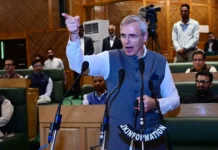
“We have lost much in these six years. When I last sat in this House, we were a state; we had our own constitution and our own flag. All of that was taken away from us. This loss will stay with me, but I won’t waste a single day in this chair. I will work tirelessly for the people of this Union Territory,” Omar said in his speech.
While recognising that his government does not control security matters, Abdullah reiterated his commitment to peace in Jammu and Kashmir. “Peace is essential for everything, and we seek it through cooperation, not suppression,” he stated, assuring security forces of the government’s support in restoring peace across the region.
What was important in his speech was his response to the scathing criticism he faced over the resolution with almost everybody taking a strong exception to the word “concern”. Even some JKNC lawmakers admit the “mistake” in private conversations. The resolution was termed ambiguous, half-hearted with some even dubbing it “betrayal”.
“This resolution was no compromise,” Omar shouted, asserting that the same people thumped tables and met him in his chamber and termed it historic. Everything, he said, changed in 15 minutes. He explained his position.
“Getting a resolution that the centre will bin in a moment can be done by any stupid person. You need not to be wise for that,” Omar said. “A resolution for passage in the House that will represent people’s emotions and convey to the world that we were neither on board nor had any participation on August 5, 2019, needed to convey that Jammu Kashmir needs its special status.” He said the text was deliberately chosen so that it paves the way for a future interaction with a new government because there is no possibility of any productive outcome from this regime. “We did not want to use words that would shut doors on us, restrict our options so we deliberately used the word special status,” he said. “Had it been a compromised or a weak resolution, why should the Prime Minister or Home Minister target us on that? Their reference towards it indicates it is important and historic.” He said it a roadmap for future engagement on this issue.
“We wanted every member to remain here and engage in meaningful discussions, especially on issues like the restoration of statehood and constitutional guarantees. But the opposition turned this into a drama, abandoning the session midway,” Omar said. He firmly rejected any suggestion that the resolution on this issue was a compromise. “The resolution we put forward is not a compromise – it is a legitimate effort to restore what was taken from us,” he asserted.
Omar also criticised the central government’s dismissive attitude towards the region’s demands, stating that while immediate change may not be expected, he remains hopeful that one day the region will reclaim its lost autonomy.
“We want Jammu and Kashmir to be restored to its rightful status as a state, as promised by the Centre and the Prime Minister. I remain hopeful this will happen soon,” he declared. He made a detailed mention of his meetings in Delhi with the Prime Minister, Home Minister and Highway Minister. “There would be no compromise on the region’s assets. He asserted that there are no tensions between his office and the Raj Bhawan.
Conclusion
The inaugural session of the dwarfed assembly was historic for the reasons. As Omar mentioned in his speech there were times when people felt that everything is gone and the assembly premises (in Jammu) was used as sets for a TV serial but times changed so the lawmakers are back. He asserted that while in his speech he mentioned the humiliation in 2019 like others (he mentioned Sajad Lone), he would not be repeating it in future.
Omar asserted: meri nazar agay ki taraf hai, peachay kee taraf nahin (I look towards the future not the past). It is indicative of a new thought process and a new chain of engagement, if and when it happens. Wait and watch.