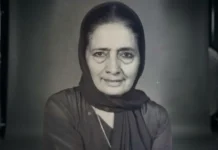
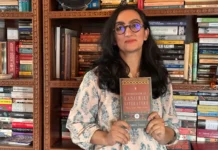
Journalist and commentator, Humra Quraishi passed away at 70. Muhammad Nadeem reviews her Kashmir book that is based on her first-hand reportage during the 1990s

Humra Quraishi ( April 24, 1955 – January 17, 2025) was a distinguished Delhi-based writer, journalist, and columnist, renowned for her insightful reporting and literary contributions. She authored several notable books, including Kashmir: The Untold Story, which delves into the complexities of life in turmoil.
Beyond her book, Quraishi, in her interviews highlighted the profound disconnect between Kashmir and Delhi, expressing concern over the alienation felt by Kashmiris. She would assert that the discrimination faced by Kashmiris was a key factor.
The Kashmir Book
Her Kashmir book, published by Penguin Books India in 2004, explores the human cost of the Kashmir conflict. Drawing from her decades-long experience as a journalist frequently visiting the region since 1990, Quraishi endeavoured to document the everyday struggles of Kashmiris amidst political and social upheaval. This book seeks to illuminate the human stories that often get overshadowed by the larger geopolitical narratives, focusing on those whose lives have been profoundly altered by the turmoil—mothers of disappeared sons, families fractured by violence, and communities grappling with the erosion of trust and stability.
Her commitment to truth and immersion in Kashmiris’ lived realities provide the book with authenticity and emotional depth. However, as the title suggests, the book ambitiously claims to uncover an “untold story,” a task that invites scrutiny.
Kashmir, the Untold Story unfolds as a mosaic of personal anecdotes, interviews, and historical commentary. The book begins with Quraishi’s recollections of her initial visits to Kashmir in the 1990s, marked by fear and alienation. Through vivid descriptions, she portrays a region transformed into a militarised zone, where curfews, crackdowns, and encounters punctuate ordinary life.
The book’s structure is thematic rather than chronological, divided into chapters such as The Valley of Fear, The Lost Generation, and Communities: Old Harmonies, New Divisions. Each chapter delves into specific dimensions of the conflict’s impact. Quraishi recounts stories of mothers searching for their disappeared sons, highlighting the pervasive sense of loss and uncertainty. She also documents the psychological toll of the conflict, citing the prevalence of trauma among Kashmiris, from children playing war games in graveyards to adults struggling with depression and anxiety.
Quraishi’s narrative captures the erosion of communal harmony, with once-cohesive communities splintered along religious and political lines. The displacement of Kashmiri Pandits and the resulting cultural void are examined alongside the struggles of Muslims who stayed put in Kashmir. Additionally, the book sheds light on the changing dynamics of family structures, with young people forced to leave the region for education or safety.
Interspersed with these personal narratives are critiques of institutional failures. Quraishi scrutinises the government’s policies and the conduct of the security grid, as well as the exploitation of the conflict by various political actors. Her encounters with Kashmiris’ day-to-day indignities—humiliating security checks, arbitrary detentions, and economic hardships—paint a harrowing picture of a society under siege.
While the book focuses on the human stories, it does not shy away from contextualising these within the larger historical and political framework, such as the legacy of the 1947 Partition, the 1987 elections, and the rise of militancy.
The Human Cost
One of the book’s central themes is the human cost of the Kashmir conflict. Quraishi excels in depicting how violence and instability permeate every aspect of life in the Valley. Through firsthand accounts, she illustrates the emotional toll on families, particularly those of the “disappeared.” The chapter, The Valley of Fear is particularly compelling, showcasing the pervasive atmosphere of dread and the normalisation of indignities, such as public frisking and unwarranted house searches. These narratives humanise the conflict, moving beyond abstract statistics to reveal the lived experiences of those caught in the crossfire.
Another theme is the breakdown of trust within and between communities. Quraishi’s account of communal fissures, particularly the fleeing of Kashmiri Pandits, reveals the devastating impact of the conflict on social cohesion. She demonstrates how fear and suspicion have seeped into everyday interactions, with neighbours turning into strangers and communities retreating into silos. This erosion of trust extends to institutions as well, with Kashmiris expressing deep cynicism toward the state and its promises of reconciliation.
Quraishi delves into the generational impact of the conflict, exploring how decades of violence have shaped the psyche of Kashmiri youth. She observes that for many young Kashmiris, memories of normalcy are either faint or nonexistent. The book’s anecdotes of children mimicking militants and security forces in their games poignantly capture the normalisation of violence. This theme is further explored through the narratives of families who send their children away to escape the Valley’s stifling environment, only to encounter alienation and discrimination elsewhere.
Another recurring theme is the interplay between the political, social, and personal dimensions of the conflict. Quraishi critiques the Indian state’s heavy-handed approach, highlighting the role of the security grid in perpetuating a cycle of violence and alienation. Her nuanced portrayal avoids oversimplification, acknowledging the multiplicity of actors and agendas that have shaped the conflict.
First Hand Accounts
Humra’s background as a journalist lends the book an air of authenticity. Her firsthand accounts and direct interactions with Kashmiris form the backbone of her narrative.
Quraishi’s perspective is empathetic, prioritising the voices of ordinary Kashmiris. The book’s greatest strength lies in its ability to humanise the Kashmir conflict. By centring the experiences of ordinary Kashmiris, Quraishi provides a counter-narrative to the dominant political and military discourses. Her vivid storytelling and evocative language bring Kashmir’s struggles to life, making the book accessible to a broad audience.
Her book remains relevant to contemporary discussions on Kashmir. Its focus on human stories provides a much-needed counterpoint to the often dehumanising rhetoric in political and media discourses. For policymakers and scholars, the book serves as a reminder of the conflict’s human dimension, underscoring the need for empathy in any resolution process.