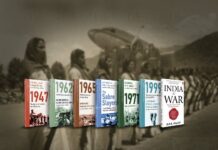
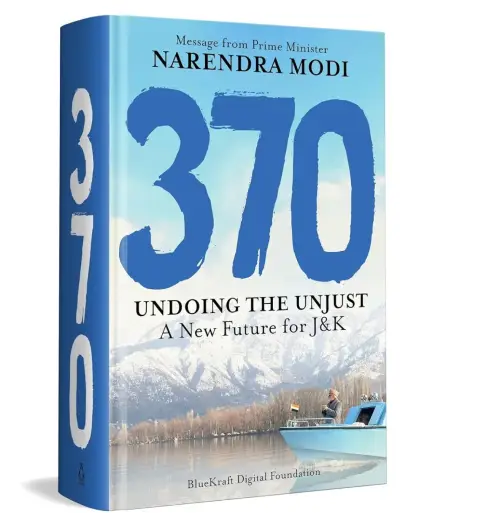
The BlueKraft Digital Foundation book 370: Undoing the Unjust: A New Future for J&K, gives an insider’s account of the planning and execution of the abrogation of Articles 370, 35A and reorganisation of the erstwhile state of Jammu and Kashmir into two federally governed Union territories, writes Syed Shadab Ali Gillani

During his early stages of political career, Prime Minister Narendra Modi, a new book 370: Undoing the Unjust: A New Future for J&K reveals, “initiated mini-pilot tests that would later shape his approach” in Jammu and Kashmir. As Gujarat Chief Minister, he recounts an encounter with a young NSS volunteer from Jammu and Kashmir visiting Gujarat. “One of the girl students curiously asks Modi, ‘don’t you have police here?’ Initially, perplexed at this seemingly innocent question, Modi realised that the child bearing being from conflict-ridden J&K was accustomed to seeing police or other security forces around all the time and that defined normality for her,” the book reveals. “The incident left a deep imprint on Modi and strengthened his resolve to bring about comprehensive change in the region.”
In the period “spanning from 2016 to 2018”, Modi deployed multiple individuals to visit J&K and ascertain the prevailing public mood and ground-level sentiment. Modi personally tasked Harshdeep Singh Puri, YC Modi, Musa Raza, and others to engage directly with citizens and officials, providing first-hand insight into local conditions and sentiment in J&K.
Interestingly, the book notes that the purpose behind Modi’s request “remained undisclosed” to those involved. Alongside engaging these unofficial ambassadors, he regularly sought insights from two key figures: former governors Jagmohan and Lt Gen (retd) SK Sinha. Modi had cultivated his relationship with Sinha since the 1990s, meeting him frequently to benefit from his deep knowledge of Kashmir
The Process Starts
Discussing the post-Pulwama attack situation, the book talks about the review meeting in which “the top echelons of the government presented to Modi a wide range of options for responding to the situation”. On his nighttime return to Delhi, he was presented with standard, mostly plausible statements, interviews, or so-called media responses. “PM let his team prepare the groundwork for each of these options, while he himself was clear on what option he would choose,” the book reveals. “The first option was extending all provisions of the constitution to Jammu and Kashmir; however, Article 370 itself would remain on the books, and any future provision of law would need to go through it in the same manner. Second, removal of 35A, third, reorganisation of Jammu and Kashmir into different entities, and finally the military option.”

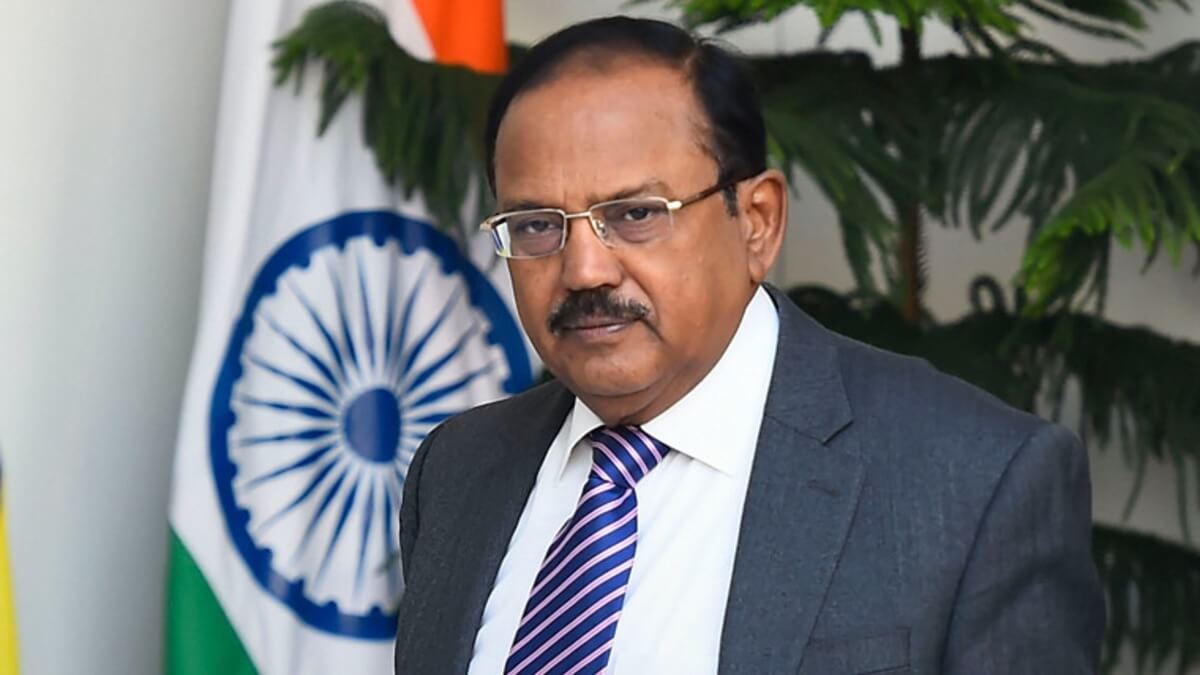
The 2019 Lok Sabha elections proved to be a watershed moment as the BJP secured a thumping majority and broke many previous records. On May 30, 2019, Modi took again the oath of Prime Minister. His team included Amit Shah as Home Minister and Rajnath Singh as the Defence Minister. Soon, he “decided to initiate the actual process for the nullification of Article 370 in preparation for preventing any loss of life and curtailing any international activities after the decision was taken.” Amit Shah and Ajit Doval played quite a pivotal role, the book recorded. “While Shah became the principal focal point for executing all decisions taken by Modi and oversaw the micro-planning and execution of the entire process, Doval played a tactical role and checked the security preparations to make them watertight.”
On June 1, 2019, the book reveals, Modi met Amit Shah at his residence on Lok Kalyan Marg and engaged him in the process. “This meeting was the first occasion when Home Minister Amit Shah was formally informed about the plan and the various steps undertaken since 2014 for creating a base,” the book reveals. “Modi mentioned that the first big decision would be the notification of Article 370 and the reorganisation of J&K. Shah was pleasantly surprised that Modi intended to pursue this immediately rather than identifying it as a broad objective for the second term.”
The meeting lasted for hours, delving deep into several issues. On his first day as Home Minister, Amit Shah was entrusted with a landmark project, with Modi telling him he would play a pivotal role in its legal, constitutional, administrative, and political execution.
A four-part process was chalked out as Modi set a tentative timeline for execution. At the end of the monsoon session of the parliament, Modi gave Shah a PPE (plan, prepare and execute) formulation. Each limb of PPE was for each available month before the actual date was set for August. Planning was to be completed by June, preparation for eventualities had to be undertaken by the end of July, and the month of August was an execution of the plans, according to the book. “Till 5th August and indeed thereafter, Modi and Shah spoke every day and discussed daily updates.”
Before Elections
The process had started much earlier, in the first term itself. “Right after Amit Shah took charge of his home ministry, Modi brought him up to speed with legal preparations that had already been made in the first term itself. Then Home Secretary Rajiv Gauba had conducted some preliminary groundwork for the legal and constitutional process even before the Lok Sabha elections. Among those options discussed in response to Modi to Pulwama terrorist attack was annulling Article 35A, which was among the active options considered by the operational team in the home ministry,” the book reveals. “After the Pulwama attack, when the issue of Article 35A came up again in informal discussions, this time couched politically. This was when Modi decided to use this opportunity for a tactical play. Just a few days after the Pulwama attack on 17th Feb, Modi met selected people where he entertained the possibility of removing Article 35A.”
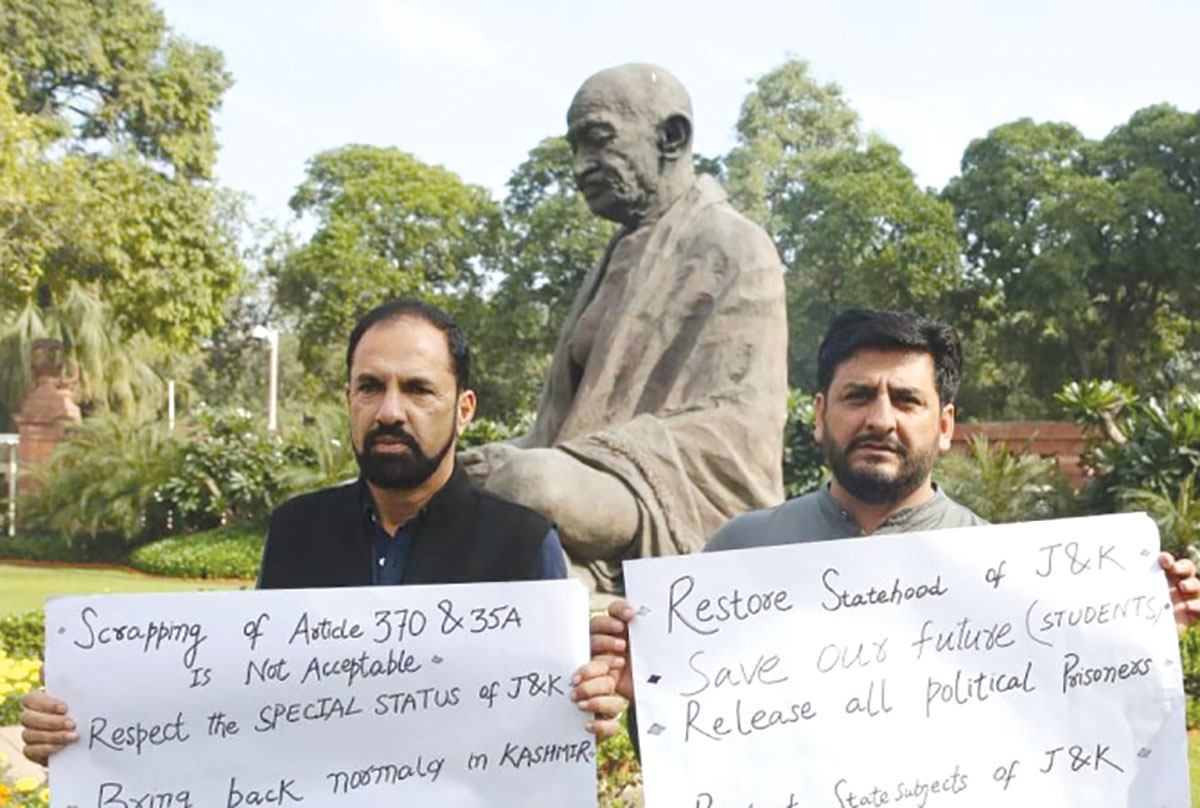
The book notes that on February 19, before leaving for Varanasi, Modi held an early morning meeting at his residence with Home Secretary Rajiv Gauba. It was during this meeting, held privately to avoid any speculation, that Modi first gave a clear directive on Article 370, telling Gauba that “something must be done about Kashmir.” When Gauba suggested routine measures like tightening security, Modi said those would not suffice and that “unprecedented decisions” were needed. He outlined three possible steps- removing Article 370, removing Article 35A, and reorganising the state- and asked Gauba to prepare for all, focusing first on the removal of Article 35A.
The book adds that Gauba, realising the historic weight of Modi’s instruction, immediately began forming a small, leak-proof team. He picked two trusted officers – Gyanesh Kumar, the Additional Secretary handling the Kashmir desk, known for his meticulous approach, and T Shrikant, Director in the Home Ministry, to assist in the historic project.
On June 4, Gauba and other MHA officials gave a detailed presentation to Amit Shah. When the discussion came to the Kashmir and various options as well as their respective pros and cons, the Home Minister gave a faint smile and merrily mentioned, Baad mein baat karenge is ke upar. Neither Gauba nor Gyanesh Kumar knew that Modi had already directed Shah to kick-start the process for taking the decision and that they would end up playing a crucial role in it.
On June 5, first, Amit Shah met Gauba and informed him that Modi wanted them to start their meticulous planning on various possible actions in Jammu and Kashmir. BVR Subrahmanyan, the Chief Secretary of Jammu and Kashmir, had also been asked to visit Delhi and meet Prime Minister Modi. In the meeting, Modi told BVR Subrahmanyan that the government was preparing to shortly undertake a historic decision and as the current Chief Secretary, he was expected to play an important role in the planning, preparation and execution.
In this meeting, Modi highlighted the four dimensions of the planning and directed him to ensure all groundwork with precision. Besides, Modi also told Subrahmanyan that he was going to be the primary point of contact for both Amit Shah and the MHA team led by Gauba when it came to handling ground operations in the Kashmir region, the tell-tale books reveal.
Despite being an ardent supporter of this much-needed change, the book writes, Subrahmanyan considered it his duty to also mention some of the apprehensions. “Modi advised BVR Subrahmanyan to list each of these and plan for each contingency in consultation with Gauba and Amit Shah.”
The plan, according to the book, envisaged that most of the planning and preparation had to be done in June and July, while execution had to be carried out in August, a period when Kashmir often witnessed unrest. “This made the formidable challenge of maintaining law and order stiffer”. The security-related issues were highlighted earlier, and the Prime Minister had stressed the “his required detail-oriented planning, comprehensive preparation, and seamless execution.”
In the very first meeting, the Prime Minister had told the Home Minister that, along with the abrogation of Article 370, he also wanted to reorganise the state. “Within the core team, there were extensive discussions on different options for reorganisation, some even supported the idea of trifurcation. But Modi was absolutely clear that he did not want Jammu and Kashmir to be separated,” the book reveals.
HM Visit
Before the decision was implemented, Amit Shah decided to personally discuss various aspects of security planning with the concerned officials. So, he decided to visit Jammu and Kashmir and discreetly inform a few key individuals, and the official pretext was the Amarnath Yatra meeting of the regular Unified Command.
On June 26, 2019, Shah flew to Kashmir for a two-day visit, chaired an important meeting at SKICC, attended by top government officials and senior officers from the security grid. “At the time, the team didn’t realise it, but Shah’s primary purpose wasn’t just to review Amarnath Yatra arrangements, but he had gone to Srinagar to initiate groundwork for managing the law-and-order fallout of nullifying Article 370,” the book reveals.
Later, that night, according to the book, another round of meetings took place at the Nehru Guest House. “Locals who noticed the lights on late into the night may have assumed he was just working, but inside, closed-door discussions were underway with key police and paramilitary officials,” the book reveals. “The focus was on creating a comprehensive plan to maintain law and order in the wake of the upcoming decision, and to assess the associated challenges.” Back home, Shah briefed the Prime Minister. “Shah assured Modi that everything was progressing according to the pre-decided timeline finalised during their June 1st meeting.”
Politicians Detention
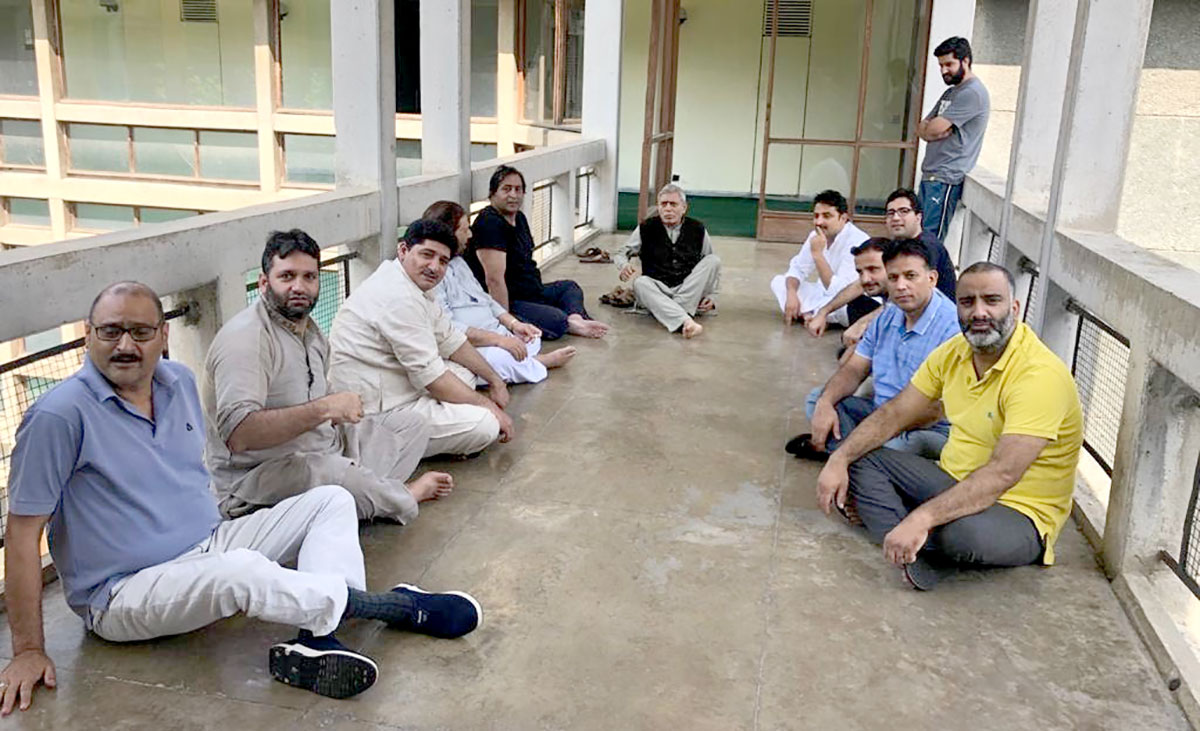
The book then moves into the planning of the actual day. It mentions that “as early as June, it had been decided that prominent political leaders would also be arrested to prevent them from leading protests or inciting violence. Separate lists were prepared identifying influential mainstream politicians who needed to be detained. In total, around 550 political figures from various parties across Kashmir were marked for detention – including three former chief ministers, several MPs, and MLAs.
Not just the list of those to be detained, but even the exact locations where they would be held were planned, according to the book. “Separate plans were drawn up for each district in the region. In one private meeting, Lt General Dhillon reportedly assured Swayam Prakash Pani that the army would provide support in areas where local authorities might face difficulties during arrests. Because of the massive scale of planned detentions, existing jails were found to be insufficient. New detention facilities were created, including open-air setups with tents for accommodation. Some public institutions, like the Centaur Hotel near SKICC in Srinagar, were also repurposed for housing detainees.”
Communication Blockade
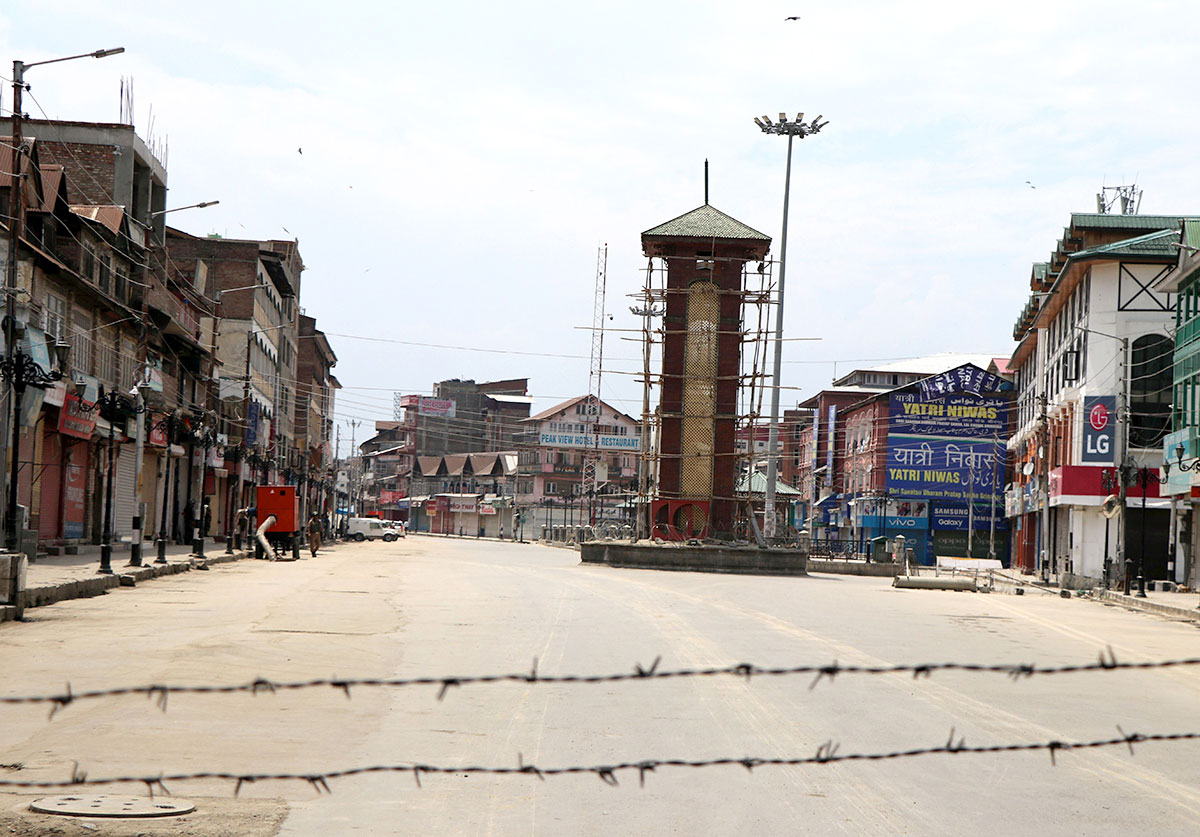
During one of the meetings on June 26, Amit Shah discussed with the then DGP of Jammu and Kashmir Police the potential for rumour-mongering once the decision was announced. The DGP agreed that misinformation could spread rapidly and suggested a complete communication blackout, which could later be eased depending on how the situation evolved.

However, when Shah discussed this proposal with the Prime Minister, the latter was initially hesitant. The book says Modi agreed that communication should be restricted but was not in favour of a complete shutdown, emphasising that both the police and the civil administration needed functioning communication channels to operate effectively. Eventually, it was decided that communications would be cut, but with alternative systems and proper legal documentation in place. The book adds that all necessary paperwork and procedural formalities were completed before implementing the blackout.
NSA Visit
The book further recounts that “during a General Review meeting in Delhi with Home Secretary Rajiv Gauba, Amit Shah once again reviewed the security planning for Jammu and Kashmir. Meanwhile, National Security Advisor Ajit Doval expressed his desire to personally visit the Valley to assess the ground situation.”
By mid-July, the book reveals, there were credible intelligence inputs suggesting the threat of a major attack in Kashmir. “Following this, Doval visited the Valley from 24th to 28th July to review the security scenario and oversee preparations for maintaining law and order. During his visit, he held meetings with senior officials and helped finalise the overall security plan. Discussions also touched on how to counter potential political opposition, manage any adverse media coverage, and handle the likely reactions from the Jammu region,” according to the book.
The NSA, the book points out, wanted to meet Lt Gen Dhillon to discuss the final operational details, but the meeting had to be kept strictly confidential. To ensure secrecy, the General suggested devising a discreet strategy. It was decided that Doval would first visit the Amarnath Yatra route early in the morning, giving the impression that his visit was purely for pilgrimage. However, even at the Yatra site, their planned breakfast meeting could not take place due to the presence of numerous dignitaries. “Both men then flew separately to the Sonmarg base camp in their respective helicopters, but even there they couldn’t find a secure spot for a private discussion,” the book reveals. “Eventually, it was decided that they would travel together by road to Srinagar in an army vehicle.”
From Sonmarg, they drove to a location roughly 10 kilometres short of Srinagar, where they finally managed to talk in complete privacy for nearly two hours. After concluding their discussions, both quietly returned to their respective vehicles, stepping out into the rain as it poured heavily outside.”
The Raj Bhawan
The book explains that since Jammu and Kashmir was under President’s Rule, all powers of the State Council of Ministers rested with the State Administrative Council (SAC). Under Article 370(1)(b), the “State Government” referred to the Governor acting on the advice of this council. In this case, the SAC, formed after the imposition of Governor’s Rule, served as the advisory body, with its advisors appointed directly by the Governor rather than the Union Home Ministry. Therefore, the Presidential Order to abrogate Article 370 required the concurrence of the SAC, with the Governor presenting the final view of the government.
Beyond meticulous planning and coordination, the book claims that an element of fortune also played a role in the final decision-making process. It notes that it was purely coincidental that one of the SAC members, Governor’s Advisor Khurshid Ahmed Ganai, a 1982-batch IAS officer from Anantnag, was away on a Hajj pilgrimage and therefore did not attend the crucial meeting.
Following Prime Minister Modi’s formal approval on August 3, an SAC note was drafted by then Chief Secretary Subrahmanyam and the Law Secretary. At 11 am on August 4, this note was presented at an SAC meeting where the approval of the Governor and the advisors was obtained. “The book mentions that the SAC had been given only limited details about the decision itself. Nonetheless, all advisors present, including Farooq Khan, a local Kashmiri member, supported the proposal,” the book reveals. “Once the approvals were signed, the accompanying letters and draft documents were immediately sent to Delhi. A Jammu and Kashmir government official personally carried the documents by flight and handed them over to Gyanesh Kumar for the final pronouncement.”
In the Upper House
The book then goes on to write that between June and August 2019, the BJP significantly bolstered its presence in the Rajya Sabha through a series of calculated moves, with 10 members either joining the party or resigning from the House. “This tactical manoeuvring not only fortified the BJP’s strength in the House but also aided in adjusting the effective majority required,” the book reveals. “Four out of six TDP Rajya Sabha MPs merged with the BJP. One Rajya Sabha MP from the Indian National Lok Dal joined the BJP. On 28th June, by-elections were conducted for the Rajya Sabha seats from Odisha held by the BJD. The party won two seats unopposed and extended support to the BJP’s candidate for the third seat. On 15th July, the two Rajya Sabha MPs from the Samajwadi Party and the son of former Prime Minister Chandra Shekhar resigned from the Rajya Sabha and announced that he would join the BJP.”
However, the most critical of it was the August 5, 2019, morning, when the Congress Chief Whip in Rajya Sabha, Bhubaneswar Kalita, and Samajwadi Party MP Sanjay Seth resigned from the Rajya Sabha. The Congress Whip Katila’s case is most instructive of the manoeuvres deployed by Amit Shah, the book claims. The book goes on to explain that “informally, Shah had broached the idea of supporting a government move in national interest with some Congress MPs. These MPs indicated that they could do so, but if Kalita issued a whip against the government’s will, they would have no choice but to obey it.”
So, as the book writes, “Shah came up with an ingenious solution. Kalita offered to resign. If the Chief Whip of Congress himself resigned, the issue of the operationality of the whip would come into question.
As per the book, “Kalita met Vice President Naidu early in the morning of August 5th to officially submit his resignation. His resignation was announced and accepted only when the Rajya Sabha session began at 11 am on 5th August. The Congress, as the book writes, had no time to react.”
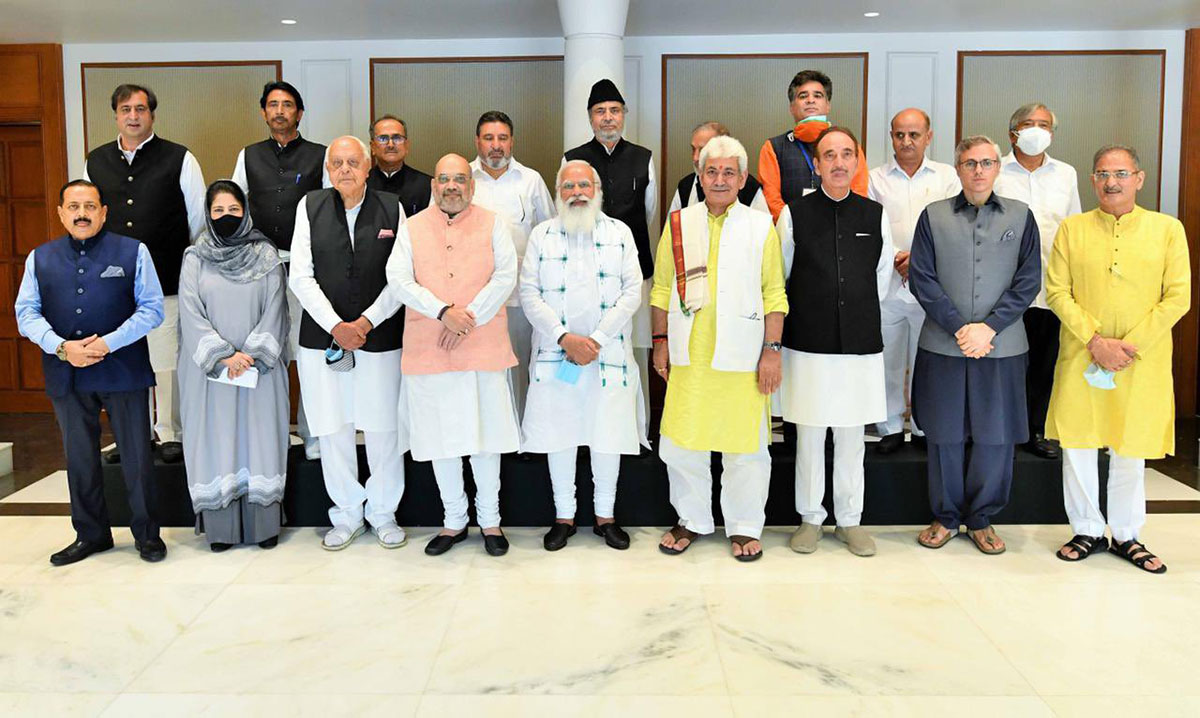
It further goes on to write that, “putting political differences aside for the larger cause of the nation, the Prime Minister and the Home Minister had taken prominent opposition leaders such as Mayawati, K Chandrasekhar Rao, and Arvind Kejriwal into confidence. These leaders, too, had agreed to support the resolutions and legislation. Naveen Patnaik’s BJD, known for supporting nationalistic causes irrespective of political differences, was also requested to come on board, and they happily complied, the book reveals.
Soon after the introduction of the Bill and Resolutions, Congress MPs came to the well of the House and began creating an uproar to disrupt the proceedings. Modi, who was monitoring the session from his office in Parliament, called the Leader of the Opposition in the Rajya Sabha, Ghulam Nabi Azad, to discuss the disruption. The book writes that he told Azad that the entire country was extremely pleased with the government’s decision, and that people were watching Congress leaders create a ruckus to stall the House. The book further notes that the Prime Minister specifically warned him that citizens would be unlikely to forgive the Congress Party for such disruption for decades to come.
A worried Azad realised that Modi was not wrong and discussed the matter with Sonia Gandhi. An immediate decision was taken to stop the disruption. The Congress, the book writes, realised that Modi had outsmarted and checkmated them.