by Mehvish Nazir
What is needed is a shift in perspective. Simple weddings must be publicly normalised through media, education, and religious instruction. Families navigating this terrain could benefit from support groups and awareness campaigns, offering both guidance and solidarity.
Kashmir, long celebrated for its poetry, hospitality, and enduring cultural heritage, has remained a region rooted in tradition and collective values. Weddings, once modest and spiritual gatherings, reflected the principles of simplicity, unity, and religious significance. These events, particularly in Srinagar and other urban centres, have over time undergone a notable transformation. Social expectations and overt displays of wealth have begun to eclipse the values on which these ceremonies were founded.
Photograph: Special arrangement
This change carries more than cultural weight. It has significant psychological and financial repercussions, especially for families belonging to middle and lower-income groups. From the perspective of clinical psychology, it becomes important to examine how these shifting norms affect emotional well-being. The impact is most visible in the stress and pressure experienced by women and their families as they attempt to navigate an increasingly demanding social landscape.
From Ritual to Spectacle
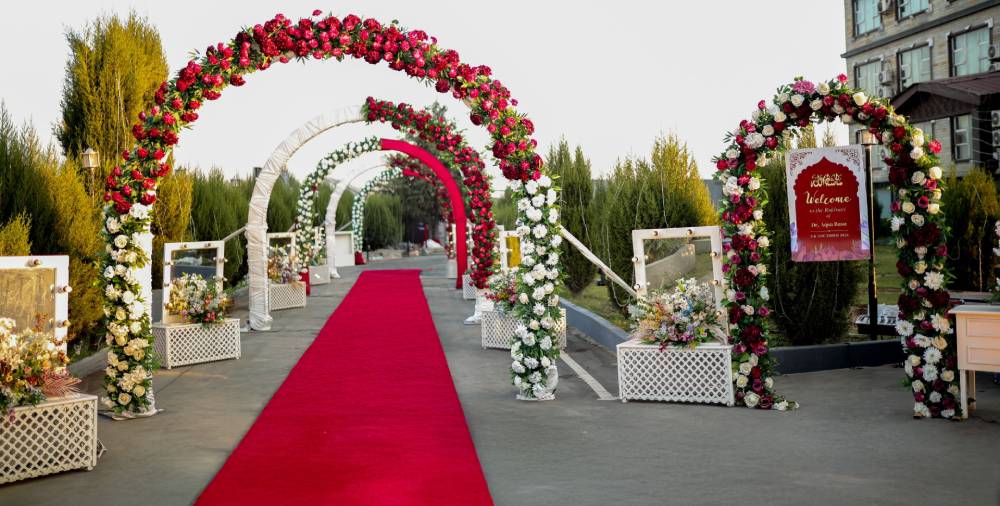
Traditionally, Kashmiri weddings were simple, community-centred occasions. Meals were prepared by neighbours, rituals took place in the local masjid, and blessings were exchanged under open skies. Over time, however, consumerism, urbanisation, and the pursuit of social status have reshaped these customs. The number of dishes served, the decoration of the mehndi stage, the expense of the bridal attire, and professionally managed photoshoots are now used to gauge a wedding’s success.
In Srinagar, this culture of comparison is particularly stark. Families may spend between Rs 20 to Rs 40 lakhs or more on multi-day celebrations. These costs typically include designer clothing, luxury cars, elaborate venue décor, extensive guest lists, drone photography, and most prominently, the wazwan. While the wazwan remains a valued cultural marker, its elaborate presentation has, for many, become a source of financial strain and increasing unease.
The Psychological Toll
The rising extravagance of weddings exerts clear psychosocial pressure on families. This pressure contributes to heightened anxiety, depressive symptoms, and conflict within households. The burden is especially severe in families with daughters, where matrimonial expectations often lead to deep emotional and financial distress.
Parents frequently speak of guilt, helplessness, and a diminished sense of agency when they are unable to meet prevailing cultural standards. Women from economically disadvantaged backgrounds may internalise the stigma that follows a perceived lack of grandeur, resulting in lowered self-worth and social isolation. This has contributed to a growing trend of delayed marriage in urban areas such as Srinagar, driven in part by the unaffordability of expected wedding norms. Clinical reports have recorded increased presentations of performance anxiety, adjustment difficulties, and low-grade depressive states linked to matrimonial pressures.
The fear of social judgement and stigma may also lead to decision paralysis and persistent psychosomatic symptoms. These effects, in turn, disturb relationships and disrupt the internal dynamics of families.
The Wazwan Dilemma
Wazwan, once the centrepiece of communal hospitality and culinary pride, has increasingly become a site of cultural competition. Wedding feasts now feature between 30 to 40 dishes, many of which remain uneaten. The recent shift from sharing a trami among four guests to serving it to just two has led to substantial food wastage and escalated the pressure to conform and impress.
Zareef Ahmad Zareef, a respected cultural critic and veteran Kashmiri poet, has consistently spoken out against this growing excess. He recalls a time when weddings were centred on joy and spiritual contentment, rather than financial hardship:
“Aaj se kuch daihai pehle, shadiyon mein sirf khushi hoti thi, aaj unmein musibat chhupi hoti hai.”
(A few decades ago, weddings were filled with happiness; now they often conceal hardship.)
His words lay bare the emotional contradiction behind these ceremonies, where families with limited means may incur debt to provide a lavish meal, even as they struggle to meet essential needs such as medical care.
Simplicity is Sunnah
The Prophet Muhammad (peace be upon him) placed particular emphasis on simplicity in marriage, describing it as a source of divine blessing. He is reported to have said that the most blessed marriage is the one involving the least expense. In another narration, he advised believers to make marriage easy and not burdensome.
Islam issues a clear warning against extravagance, identifying wastefulness as spiritually corrosive. The Quran states that the wasteful are the brothers of devils, linking excess directly with moral failing.
Despite these teachings, the prevailing reality in Kashmir suggests a marked departure. Marriages have become complex undertakings, often delayed or dreaded, especially among women and families facing economic constraints.
Religious figures, including Mirwaiz Umar Farooq, chairman of the Mutahida Majlis-e-Ulema, have repeatedly addressed this issue. In his sermons, he has drawn attention to the contradiction of lavish weddings being rationalised as a religious practice. He has reminded the community that marriage is a Sunnah, not a measure of status, and that it ought to remain simple, accessible, and dignified, particularly for daughters. His appeal combines theological reasoning with a broader humanitarian concern, urging a return to the foundational ethics of the faith.
Baramulla’s Example
In 2023, the Masjid Committee of Bangdara in Baramulla adopted a set of practical guidelines aimed at curbing wedding expenses. The directives placed limits on food items served at wedding feasts, with the intent of reducing waste and promoting restraint. Though modest in scope, the initiative was welcomed and is now viewed as a rare but valuable intervention in public life. It stands as an example of how community action, grounded in religious and ethical values, can offer relief from escalating social pressures.
If similar efforts were replicated across the Valley, particularly in Srinagar, they might alter the wider cultural script surrounding marriage. Local imams, masjid committees, and civil society actors have the potential to lead such reform, creating frameworks that support simplicity without coercion. The intent is not to impose uniformity, but to make modesty socially viable and free from shame.
Breaking the Cycle
The task ahead demands cultural candour as well as psychological insight. Certain questions remain urgent. Are weddings still a cause for celebration, or have they become financially ruinous events? Are daughters entering unions grounded in affection, or burdened with lifelong debt? Can simplicity regain its stature as a source of communal pride rather than embarrassment?
Clinical psychology identifies persistent social stress as a trigger for long-term trauma, particularly when it touches on identity, self-worth, and social validation. The pressure to stage elaborate weddings falls squarely into this category. Though avoidable, it has become deeply entrenched.
What is needed is a shift in perspective. Simple weddings must be publicly normalised through media, education, and religious instruction. Families navigating this terrain could benefit from support groups and awareness campaigns, offering both guidance and solidarity. Premarital counselling may help young couples align their expectations with reality, establishing foundations based on mutual understanding rather than public spectacle. Above all, faith-based teachings that elevate modesty over material display must be revived and reinforced.
A Quiet Emergency
From a clinical standpoint, Kashmir’s current wedding culture may be seen as a form of collective performance anxiety, where the fear of social judgement surpasses personal well-being. It is a psychological burden disguised as tradition.
Yet tradition is not fixed. It responds to the pressures of time, and it can evolve.
The nikah was never intended to be an exhibition. It is a sacred agreement, a civic responsibility, and a moment of shared joy. Mental health must take precedence over public opinion, dignity over display, sincerity over extravagance.
If left unchecked, this culture threatens to turn what should be moments of joy into lifelong scars. If addressed, it offers a chance to reclaim not only a lost tradition but also the emotional health of the generations to come.
(The author is currently pursuing postgraduate studies in Clinical Psychology. Ideas are personal.)