Kashmir’s Rs 1,500 crore poultry industry, once largely self-reliant, is sliding into crisis as unregulated imports surge and local production nosedives. Policy gaps have exposed farmers to unfair competition, leaving them with just 24 per cent control of the sector and accelerating the erosion of livelihoods, reports Babra Wani
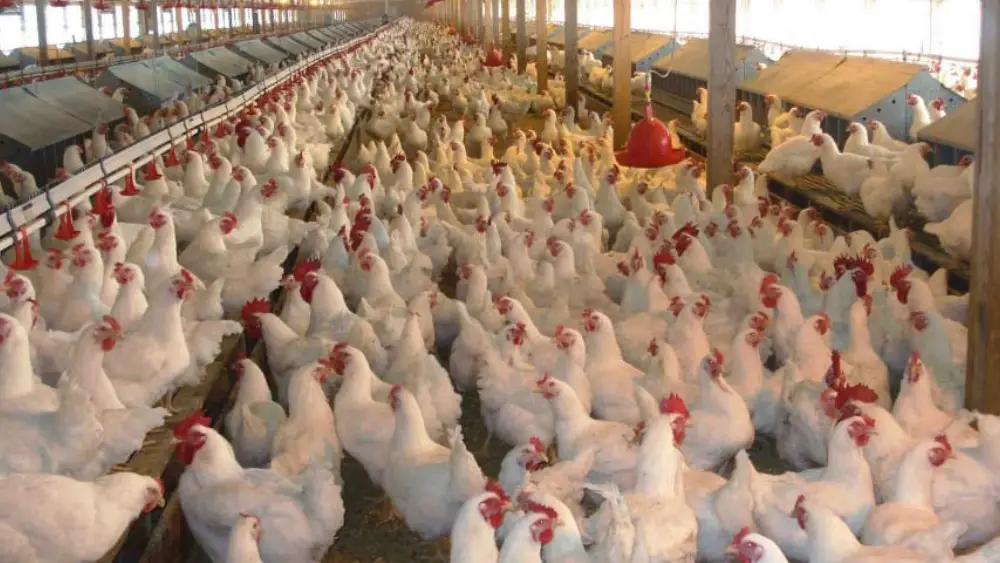
Twenty years ago, after completing his master’s degree in education, Mukhtar Ahmad’s foremost ambition was to secure a job. He applied widely, but fortune did not favour him. After a period of uncertainty and reflection about his future, and with opportunities steadily slipping away, Ahmad, driven by necessity rather than choice, decided to open a small chicken dressing shop.
For most of the last two decades, he was doing well. Recently, however, things are changing, albeit gradually.
Poultry farming has remained a key livelihood sector. Since chicken and eggs are a source of accessible protein, they have always been in high demand. For a place like Kashmir, where a floating population comprising seasonal labour, tourists and security grid is adding to the consumption figures, the sector has always exhibited an appetite.
Mukhtar is among an estimated 550 thousand people in Kashmir whose livelihood is dependent on the poultry industry both directly and indirectly. They have invested their huge resources and earned well. Now they regret that the sector is on the verge of collapse.
Collapse Calls
According to a memorandum submitted to the Chief Minister by the Kashmir Valley Poultry Farmers Association, the industry is facing a severe crisis and seeks urgent government intervention.
The sector, GM Bhat, the leader of the Poultry Farmers, said, was largely self-reliant, with local production meeting an estimated 80–85 per cent of demand. Poultry farming had emerged as a significant source of income and employment, sustaining thousands of small and medium farmers and supporting a wider network of allied activities, he added.
That situation has changed sharply in recent years, Bhat said. The local production, according to the memorandum, has now nosedived to just 15–20 per cent of the local consumption, leaving a large gap in demand. This shortfall is increasingly being sourced from imports, fundamentally altering the structure of the local market and weakening domestic producers.
Official Details
In December, authorities said that nearly 3.5 crore poultry birds have reached Kashmir through road transportation in 2025-26, so far, with an average of 50 to 60 truckloads carrying poultry and bovine livestock entering Kashmir daily.
In less than 10 months, from April to December, they said around 3.50 crore poultry birds have entered Kashmir. “Out of these, 1.8 crore were broilers and 1.1 crore were day-old chicks,” Dr Mohammad Ashraf Dar, Livestock Officer (Liver Flu Control), Kashmir, told the reporters. “Besides, around 4 lakh culled birds were also transported into the Valley.”
While mature birds are sent directly to the market for consumption, day-old chicks are sold to local poultry farmers, who rear them before supplying them to the market.
Livelihoods Lost
The overdependence on imports has led to a decline in the sector, according to the association, and poses a serious threat to livelihoods. “Small and medium poultry farmers are struggling to survive in the face of cheaper imports, while educated youth who invested in poultry farming under various government-promoted schemes are finding themselves trapped in debt and uncertainty,” The memorandum reads.
The impact extends beyond the farms, affecting workers across the entire poultry value chain, including those engaged in feed supply, transportation, slaughtering, and retail, raising fears of widespread unemployment and economic distress.
A poultry farm owner noted that after the recent rotten meat controversy that shook Kashmir to its core, the demand for chickens had reduced considerably as well. “And the recent egg controversy was the cherry on the top,” the shopkeeper said. “We have huge unemployment already; if this business suffers as well, a lot of people will be affected.

Crisis-Ridden Sector
The poultry sector in Kashmir has too many issues.
Kashmir lacks layer farms as well as a hatchery. These two are fundamental to the supply of day-old chicken that the farms require. “We could get layer eggs from outside, but we lack hatcheries, so we import day-old chicks,” one industry insider said. “This means that the sector is under the control of non natives from day one.”
In order to protect the local farmers, the government earlier imposed a toll on imports, and the suppliers added the toll costs to the price, thus nullifying the impact.
“Once the farmers start raising the chicks, they require feeds and most of the poultry feeds are imported as Kashmir has only a thin supply base,” another sector insider said. “Kashmir has enough maize production, but has not been able to use this raw material for creating the poultry feed.”
The final stage is marketing. “Once the crop is ready, the farmer goes to the market and finds that the price is decided by the poultry dresser, the person responsible for slaughtering the bird, bleeding, de-feathering, eviscerating, and cleaning it for the sale to the consumer,” a farmer said. “You may not be ready to sell at that cost, but he has alternatives, and that essentially leads to a situation in which the farmer either loses money or sells at marginal profits with the dresser making the best of the deal.”
A Survival Story
Despite all those structural issues, the sector would compete and survive. Of late, however, the stakeholders feel a systemic and systematic crisis against which they lack cushions.
The key factor they flag is the unregulated poultry imports from outside the erstwhile state of Jammu and Kashmir. “Large quantities of dressed chicken are entering Jammu and Kashmir,” the association alleged, and most of it is of poor quality, “it is outdated stock and poses hygiene and public health risks.” These imports, they point out, distort prices and crowd out local producers.
According to a 2025 report published in Bio Vet Innovator Magazine by Dr Smruti Smita Mohapatra, Dr Ravia Gupta, and Mukhtar Dar, Jammu and Kashmir faces a 69 per cent shortfall in poultry meat production and a staggering 97 per cent shortfall in egg production, a gap that is bridged almost entirely through external procurement.
The report further notes that Jammu and Kashmir imports poultry meat, eggs, and feed worth approximately Rs 2,000 crore annually, placing a sustained drain on the region’s economy. Kashmir alone imports around 5.5 crore chickens every year, mainly from Punjab and Haryana. Daily, traders from Punjab supply over half a million eggs and 40,000–50,000 chickens, costing nearly five crore rupees per day, underscoring the scale of dependency on outside markets.
Shocking Statistics
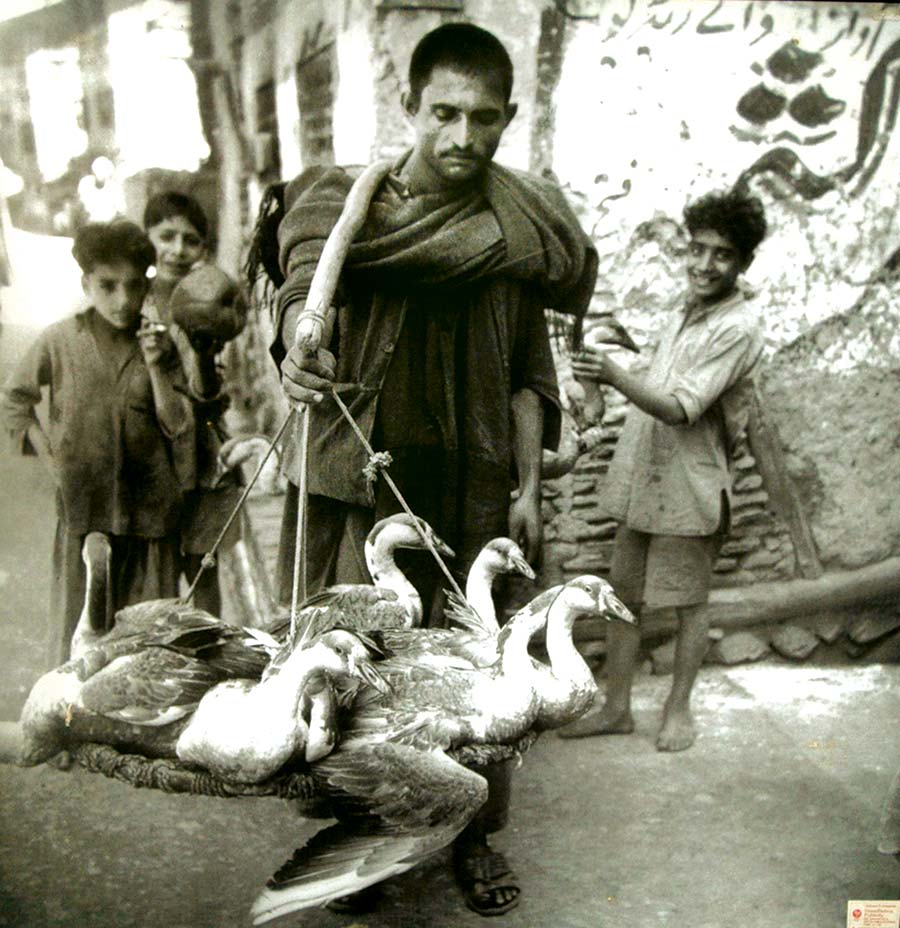
Data accessed by Kashmir Life confirmed what people already know: Kashmir is structurally dependent on imports, despite a sizeable local farming base and substantial rearing infrastructure. As local production falls short of nutritional requirements, Kashmir imports large quantities of eggs, day-old chicks, broiler birds and culled birds. No poultry products are exported from Kashmir, as the region operates under a persistent net deficit.
Import data over the last five financial years reveals sharp fluctuations, with a clear upward trend in recent years. Eggs are in massive demand. ICMR suggests a person must have at least 180 eggs a year, almost one every second day.
The egg imports declined from 23.289 crore in 2020-21 to 11.656 crore in 2021-22, before rising steadily to 30.161 crore in 2024-25. This was even though the local egg production remained steady, barring one year. Official data suggests that Kashmir produced 20.013 crore eggs in 2020-21, and then the numbers fell. It reached 14.613 crore in 2021-22; 15.358 crore in 2022-23; 15.830 crore in 2023-24, and 16.566 crore in 2024-25. It is yet to hit the 2020 target.
Kashmir’s backyard poultry produces eggs that sell for Rs 10 to Rs 15 apiece. But presuming that the local and imported eggs are sold at the same cost (Rs 8 apiece), eggs alone had a turnover of Rs 373.816 crore in 2024-25 when they consumed a total of 46.727 crore eggs. Of this, Rs 241 crore was the capital flight, funds used to source eggs produced and marketed by neighbouring states. This is despite the statistics have credibility limitations: while the imports are counted, the local production is estimated.
The broiler story is not very different.
Over the five financial years from 2020-21 to 2024-25, the import of broiler birds has shown a clear and uninterrupted upward trend. Imports stood at 1.913458 crore in 2020-21 and rose to 2.030861 crore in 2021-22, marking the beginning of steady growth. This increase gathered pace in 2022-23, when imports climbed to 2.274884 crore, followed by a sharper rise to 2.597165 crore in 2023-24. The upward trajectory continued into 2024-25, with imports reaching 2.884432 crore. Overall, broiler bird imports expanded by nearly one crore over the five years, reflecting sustained and growing reliance on imported broilers year after year.
Local broiler production in Kashmir, measured in kilograms, shows a markedly different trend from imports over the same period, characterised by an early peak followed by a sustained downturn. Production reached its highest level at 359.10 lakh kilograms in 2020-21, but this was followed by a sharp contraction to 282.52 lakh kilograms in 2021-22. In the subsequent years, output failed to recover meaningfully, recording only marginal fluctuations rather than a clear rebound. Production edged up to 301.24 lakh kilograms in 2022-23, before slipping again to 284.30 lakh kilograms in 2023-24 and further down to 281 lakh kilograms in 2024-25. Overall, the data points to a post-2020-21 decline in local production, with volumes stabilising at a significantly lower level than the peak, indicating persistent structural or market pressures on domestic poultry output.
The data makes it slightly difficult to map the deficit in the demand and supply chain network, as imports are in the number of birds and local production is in kilograms. Presuming that a chicken sold to a poultry dresser is 1500 grams on average, it means Kashmir consumed 6.14 crore kilograms of poultry meat in 2024-25, which at current market rates means a sale turnover of Rs 982.4 crore at Rs 160 a kilogram. Of this, Rs 692.8 crore is the amount that moves out of Kashmir.
Kashmir has started consuming the culled and ready-to-take-home dressed chicken. Though the trend in the last five years is going marginally down, the fact remains that it is a player in the game, and this all is imported from slaughterhouses in UP. Imports stood at 15.0277 lakh birds in 2020–21 and declined to 13.4714 lakh in 2021–22, indicating an early contraction. This was followed by a temporary rebound in 2022–23, when imports rose to 15.3998 lakh, the highest level in the five years. However, the increase was not sustained, as imports fell again to 13.1517 lakh in 2023–24 and further declined to 11.5223 lakh in 2024–25. Overall, despite the mid-period spike, the trend points to a steady reduction in the import of culled birds over the five-year span.
It sells at a slightly higher price than the live poultry, but presuming it also values Rs 160 per kilogram, it means a sale turnover of Rs 18.43 crore, of which nothing is retained in Kashmir, barring the sale commission.
A day-old chick is entirely imported. And it is not a petty order. Over the five years from 2020–21 to 2024–25, the import of day-old chicks shows an uneven but broadly declining trend. Imports were highest in 2020–21 at 2.647854 crore, after which they dropped sharply to 2.145289 crore in 2021–22. In 2022–23, volumes remained largely stagnant at 2.151145 crore, indicating only a marginal recovery. This was followed by a moderate increase to 2.302068 crore in 2023–24, suggesting a short-lived rebound. However, the upward movement did not sustain, as imports fell again to 2.001969 crore in 2024–25.
The data reflects volatility with a net decline over five years, pointing to a fall in demand. In real terms, the fall in demand for day-old chicken means the farmers have either given up or have reduced their flock size.
Market sources claim a day-old chicken costs them Rs 55, but officials assert it is only Rs 35. For the sake of calculations, let it be at Rs 40 only. That means Kashmir purchased day-old chicks worth Rs 80 crore in 2024-25. With the local product’s sale turnover at Rs 289.6 crore, the day-old chicken costs, which move out of the erstwhile state, reduce the turnover to Rs 209.6 crore.
A Year’s Arithmetic
Offering a clear image of the entire sector, the data of 2024-25 can be explained in simple terms. Eggs, broilers, culled chicken and day-old chicken have a cumulative sale turnover of Rs 1454.24 crore.
Of this huge turnover, Rs 1032.23 crore moved out of the erstwhile state to the poultry farmers in Punjab and Haryana. The farmers within Jammu and Kashmir are left with Rs 422.01 crore minus Rs 80 crore, which they pay for the purchase of the day-old chicken.
Poultry Infra
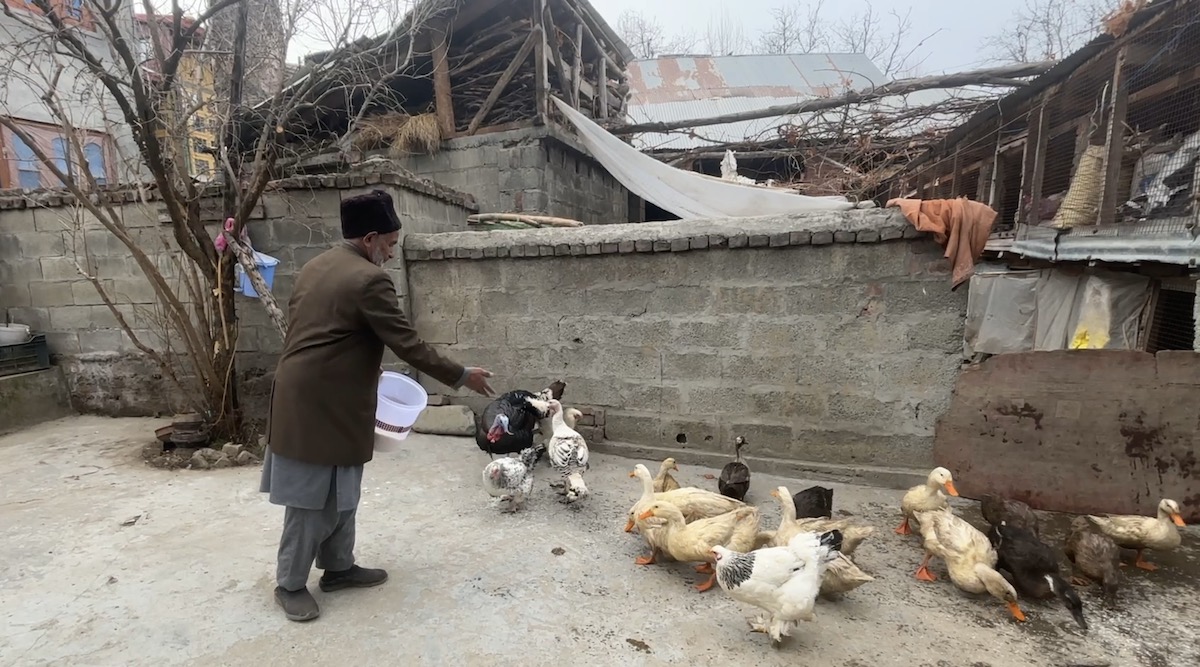
Kashmir, officials said, currently has 2,466 registered commercial broiler farms, with a combined rearing space of 65.71 lakh square feet. During 2024-25, these farms reared approximately two crore birds, producing 281 lakh kilograms of poultry meat.
The figures indicate significant under-utilisation of existing capacity. Based on minimum scientific standards of six rearing cycles per year, the registered space could accommodate nearly 3.94 crore day-old chicks annually, far more than what is presently achieved. Why it is not happening is the worry that the lopsided market is dictating on the sector, according to insiders.
This situation is vindicated by the fact that there is a steady decline in the proportion of imported birds being reared locally. The day-old chicken measured only 40 per cent of the requirements in 2024-25. Reduce the five per cent mortality, and the actual figures go down.
The Layer and Backyard Farming
The layer farming segment remains virtually non-existent in Kashmir. Barring one composite broiler parent farm producing hatching eggs for commercial broiler chicks, Kashmir has no commercial layer farms. As a result, egg production depends overwhelmingly on backyard and free-range poultry rearing, which lacks the scale required to meet demand.
For the unversed, layer farming is the commercial rearing of egg-laying birds. The purpose is simple: egg production. Kashmir requires more than 27 lakh eggs daily.
The official numbers reveal that the egg production showed various fluctuations but remained critically low.
When measured against national nutritional benchmarks, in Kashmir, the gap becomes stark. According to ICMR recommendations, each person should consume 4.32 kg of chicken meat and 180 eggs annually. For Kashmir’s population of 82.38 lakh, this translates into a requirement of 355.91 lakh kilograms of poultry meat and 1,48.295 crore eggs per year. On eggs alone, the deficit is more than 80 per cent.
The HADP Interventions
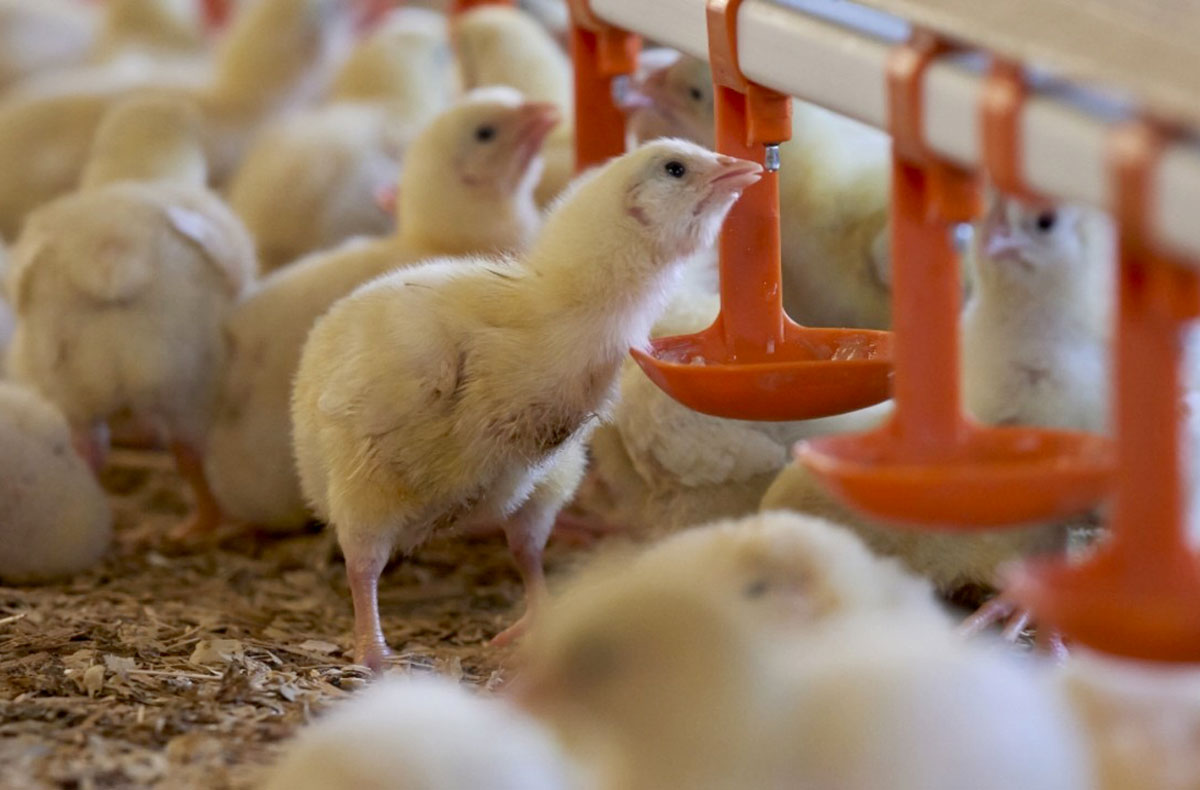
Backyard poultry continues to play a supplementary but insufficient role. As per the 20th Livestock Census, Kashmir has 11.15 lakh backyard birds, which together produced 16.567 crore eggs during 2024–25. Under the Holistic Agriculture Development Programme (HADP), 650 free-range poultry units of 500-bird capacity each have been established so far. While these initiatives contribute to livelihood support, their impact on overall food security remains limited.
“Under the HADP, we have introduced free-range poultry units,” an official said. “These are registered only when they have a minimum capacity of around 500 birds. Our target was 2,000 such units, and while approvals were given accordingly.”
“Backyard poultry farming is a luxury which people practice for their liking or for interest. (It remains a small-scale, hobby-driven activity rather than a proper commercial enterprise,)” a poultry sector insider said. “I do both commercial and backyard poultry farming, and I know how it works.”
A top functionary at the policy-making level told the Kashmir Life that the government has drawn an elaborate plan to revive the poultry sector. For five years, the government intends to set up 2446 units for diverse activities. These would include 2000 backyard poultry units; 200 commercial layer farms; 125 composite broiler paret farm cum hatcheries; 66 units for day-old Low Input Technology (LIT) chicks; and 35 feed manufacturing units. “1116 units have been established so far,” he said. “We are raising 5.63 lakh birds in 1125 backyard poultry units, producing 6.08 crore eggs. We are raising 1.10 lakh hens in 11-layer farms producing 3.35 crore eggs. We have also produced 40 lakh day-old broiler chicks in 10 composite broiler parent farms and reared 8.32 lakh DOCs in eight LIT units, but only 2400 MTs of feeds have been produced in the only feed manufacturing units that have been set up.”
Livelihood Issues
The impact of the mess is spread across. Mushafiq Mushtaq runs Darsons Poultry at Batamaloo. His enterprise, he says, is a one-day stock unit, where live birds are dressed and supplied mainly to hotels and wedding functions.
“All our poultry comes from outside Jammu and Kashmir, mainly from Punjab. The birds arrive live, and we dress and sell them locally,” Mushtaq said.
Most of the demand is seasonal, he said. “When the wedding season slows down, demand drops sharply. At present, most of the demand is coming from hotels, not events,” he said.
“Earlier, we used to handle 200 to 300 chickens in an order. Now, it has come down to around 100 to 70 chickens per order. Even hotels are buying less than before,” he said, “We sell chicken live and then dress it. Our dressed chicken rate is around Rs 200.”
“We never dealt in frozen chicken. In fact, during that controversy, demand for our fresh chicken increased because people trusted what we were selling,” he said.
Mushafiq is employing eight to ten more people. “This business supports multiple families.” For him, it is his family’s legacy that both he and his brother are taking forward. “Our father started this business in 1988 till his death in 2019.”
From 2019, it was his uncle who then looked after the business until 2023, when Mushafiq and his brother officially took over.
In Anantnag, Tanveer Ahmad Rah has been running his poultry dressing unit since 1974. He operates from my own premises in a five-room set-up. His employees are from Ramban and Kokernag.
“It is not just about me; their livelihoods also depend on this unit. That is why I ensure they are paid well. They assist with dressing, cleaning, and feeding the birds, “Ahmad said. “I do not rely on outside drivers. I operate my own vehicles, all driven by Kashmiri drivers. At present, I have three cars and three drivers working with me.”
For decades, Tanveer’s chicken supplies have come from Punjab and Pathankot.

Mortality Mess
In Bandipore, Imtiyaz has been in poultry farming for 20 years. He believes that mortality rates play the biggest role in the decline of the poultry industry.
“People say the industry is declining, and that is true, especially during winter. Mortality increases and operational costs rise due to the need for constant heating, firewood, and other arrangements. That is when expenses peak,” Imtiyaz said.
The increasing mortality rates further expose disparities within the sector, an official noted. In scientifically managed farms, where protocols like vaccination, ventilation, temperature regulation and biosecurity are followed, mortality remains below 5 per cent.
“Where these standards are neglected, mortality can rise sharply and, in extreme cases, reach 100 per cent, wiping out entire flocks and discouraging small farmers from expanding,” the poultry expert said on condition of anonymity. “Vaccination is a critical preventive measure with significant economic impact. We regularly advise farmers to follow vaccination schedules, but some skip them to cut costs or because they have not faced outbreaks before. This often leads to disease outbreaks later.”
Raising the day-old chick in the harsh winter is chilling. Imtiaz said they use machine wood waste and firewood for heating to retain the temperature at 37 to 37 degrees Celsius, because the chicks are very small.
“We lay newspapers over the bedding to prevent foot injuries. After seven to ten days, once their feet harden, the paper is removed. Space is kept limited initially to avoid heating the entire room and is gradually increased as the birds grow,” he explained. “We start with pre-starter feed and then shift to concentrate feed. Earlier, we relied more on medicines, but now we keep medication to a minimum unless there is flu or an infection.”
Imtiyaz has employed three additional workers to help manage between 2,000 and 4,000 chickens.
Despite all this, Imtiaz’s arithmetic is clear. “The fact is that income more or less balances the expenses. We are not making big profits, but we simply manage,” Imtiyaz said.
Apart from meat and eggs, even poultry waste has value. “The droppings, known locally as rek, are sold as manure. We sell about 40 kilos for around Rs 50. It brings in some income, but it is not a major source,” he said.
After accounting for transport and processing costs, the profit from manure is usually between Rs 2,000 and Rs 3,000. “It helps, but it does not alter the overall economics of the business.”
Rising Competition
Even competition is increasing. They compete for a smaller piece of Kashmir’s poultry plate.
“Yes, the industry is under pressure. The market is down. It is not just about mortality; competition has intensified, and demand has declined,” Mushafiq said.
Tanveer said the industry has become extremely competitive. “I am not the only dealer in Anantnag. At least ten to twelve poultry dealers are operating in the town.”
Meanwhile, like many others, Imtiyaz imports the chicks he rears. “They come from outside, mainly from Punjab. We do not deal in local Kashmiri breeds.”
On the recent rotten meat controversy and its impact on business, the veteran poultry farmer said, “We sell only live chicken. When it is live, people trust it is clean. Frozen chicken coming from outside always raises doubts about how fresh it really is.”
He added that demand for live chickens rarely drops. “The market does not fall for live chicken. People prefer buying it live rather than frozen, so demand remains steady.”
Poultry farmers such as Imtiyaz, Mukhtar, Mushafiq, and Tanveer, along with several others, supply chicken to restaurants, eateries, events, and marriage functions.
An eatery owner from a Srinagar locality said he sources live chicken in bulk for his outlet, which sells chicken-based snacks. “We buy according to demand, usually 20 to 30 kgs a day. Purchasing in bulk also helps with costs,” he said.

The Biggest Challenge
The single major factor behind the decline of the industry, GM Bhat believes, is the abolition of the Lakhanpur toll tax post. Till the post and the system were abolished as part of the market integration, Jammu and Kashmir would levy a tax of Rs 9 per kilogram. “It was acting as both a regulatory and protective barrier for local producers,” Bhat said. “With its abolishing, floodgates have opened for cheap mass-produced poultry from other states.”
“The abolition of the Lakhanpur toll tax has emerged as a major factor behind the crisis in Jammu and Kashmir’s poultry industry,” the memorandum that the sector has submitted to the Chief Minister reads. “Earlier, a toll of Rs 9 per kilogram at Lakhanpur functioned as a regulatory and protective mechanism, limiting the inflow of low-cost poultry from outside the Union Territory.”
With trade barriers removed, a marginal farmer in Kupwara now competes directly with large poultry companies from Haryana and Punjab. Despite long transport journeys that leave flocks without feed and water for 12 to 24 hours, and for days during winter, consumers often see no difference between imported and locally produced chicken.
Besides, the memorandum has also flagged serious public health, biosecurity, and environmental concerns, including long-distance transport of live or dressed birds, higher carbon emissions, packaging waste, and increased risks of disease transmission.
What emerges is not a failing farmer but a failing system. Without regulatory safeguards, local hatcheries, feed integration, and market correction, Kashmir’s poultry sector will continue to haemorrhage livelihoods, capital, and food security. A once-viable local economy risks sliding into permanent dependence.