Egg contamination fears in Kashmir have triggered widespread panic, collapsing demand, drawing political intervention, exposing heavy import dependence, and reviving concerns over weak food safety surveillance despite scientific assurances downplaying health risks, reports Babra Wani
Bisma woke with a frown. Her lips tightened, and her eyes clouded with discomfort as a single thought pressed in on her mind: she had to eat eggs. The idea filled her with quiet revulsion.
In the kitchen, however, she was met with a pleasant surprise. Her mother, who usually prepared eggs for breakfast, had changed the course. She had prepared halwa roti instead. “No more eggs from now on,” Bisma’s mother declared.
It confused Bisma and her little sister. She looked at her mother in disbelief. Then she heard her mother murmuring, “News said eggs can cause cancer.”
Still in disbelief, she looked up online. There was only one trending topic: eggs.
This, however, was not just in Bisma’s home. Many other families gave up eating eggs.
“Not for the time being,” said Ahmad Khan, a resident of Anantnag, “This year the food really has become very suspicious. First it was meat, chicken, fish, now it is eggs.”
Lawmakers Concern
Pertinently, it was earlier December that landed in controversy, especially because of a premium brand of eggs, Eggoz. Soon after, NC spokesperson and Zadibal MLA Tanvir Sadiq took to social media, raising the alarm over eggs being sold across Jammu and Kashmir. He called on authorities to immediately investigate, trace the sources, and take strict action against those responsible. “Deeply concerned by reports of nitrofuran and nitroimidazole residues being detected in eggs, drugs that are strictly banned in food-producing animals because of their carcinogenic and toxic effects,” Sadiq said in a series of tweets. “This issue becomes even more serious because eggs are consumed heavily by children, senior citizens, and patients.”
Doctors, he added, often prescribe eggs as a primary source of protein, making this a direct public-health risk. He urged the Health Minister and the Food and Supplies Minister to immediately investigate, conduct residue testing across markets, trace the source, and take strict action against violators. “For the safety of our people, there can be no compromise. This must be treated with utmost urgency.”

Huge Consumption
Most of Jammu and Kashmir is non-vegetarian, and the consumption of poultry and mutton is also huge. In 2015‑16, Jammu and Kashmir’s annual egg requirement stood at a staggering 1,540.4 million, and with population growth since then, the figure is likely even higher today. At prevailing market rates, this translates to an expenditure of approximately Rs 770.20 crore annually on eggs alone. Almost eighty per cent of the consumption is managed by non-native poultry farmers, especially from Punjab and Haryana. Some major companies have a huge captive market in Kashmir.
Of late, the Jammu and Kashmir government has been trying to address the deficit. Under HADP, it is said that 1125 free-range farms have been established that have sent almost 60 million eggs to the market. Besides, 11commercial layer farms are selling more than 90 million eggs. “With an investment of Rs 172 crore,” a senior functionary of the government said, “the idea is to produce nearly 600 million within Jammu and Kashmir.”
A poultry industry insider in Kashmir said the region requires more than 27 lakh eggs daily. Data released by the Department of Animal Husbandry and Dairying and compiled by CEIC Data, Jammu and Kashmir, produced 194.252 million eggs in 2025, up from 183.200 million eggs in 2024.
Consumption needs significantly exceed local production. A January 2025 study titled Challenges and Opportunities in the Poultry Sector in Jammu and Kashmir, published in Bio Vet Innovator, estimates a 97 per cent gap between egg production and consumption, forcing heavy reliance on imports.
The Cancer Concerns
Till Jammu and Kashmir managers hit the egg production target, the consumer will remain in distress. Sadiq’s tweet referred to a report, Cancer-Causing Eggs by Eggoz? The Lab Report That Sparked a Nationwide Food Safety Panic. It did trigger a crisis.
The Food Safety teams conducted market checks and collected 28 samples for laboratory analysis. “No physical inspection can confirm contamination,” Yameen ul Nabi, an Assistant Commissioner of Food Safety Srinagar, told reporters, insisting not to panic. “Reports are expected soon, and only then can the situation be clarified.”
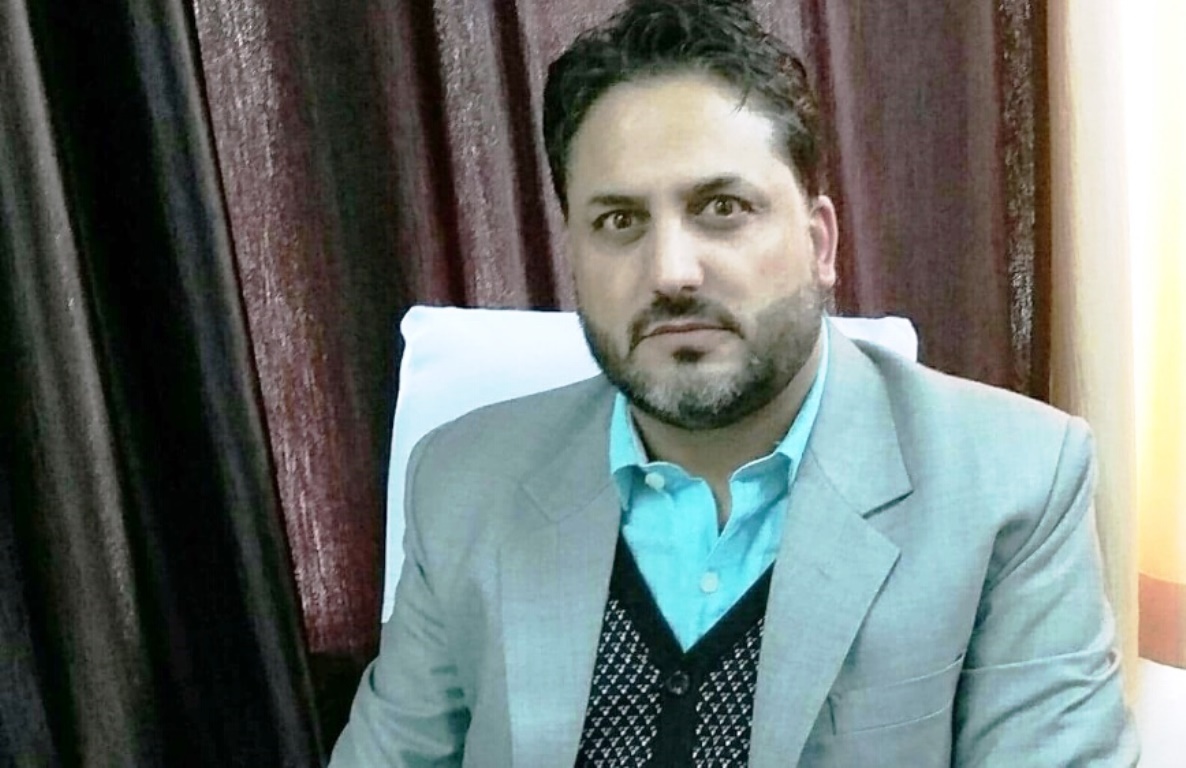
Dr Suhail Naik, Senior Consultant Paediatrician and Assistant Professor, Department of Paediatrics, GMC Srinagar, said Nitrofurans are antibiotics that are banned in food animals in India, the EU and the USA. “Because they are banned, no acceptable daily intake (ADI) is officially fixed,” he said. “This ban is a precautionary measure and does not mean that any tiny or trace amount automatically causes harm.”
In everyday life, humans encounter numerous chemicals in minute quantities, and the body is well equipped to manage them, much like it can safely neutralise trace amounts of substances such as cyanide. Scientific studies indicate that the harmful effects of nitrofurans arise only at very high, repeatedly administered doses, measured in milligrams per kilogram of body weight, thousands to millions of times greater than the trace amounts recently found in some eggs.
“In the reported case, the amount found was about 0.7 micrograms per kilogram of egg. One egg weighs around 60 grams, so a child eating one egg would consume about 40 nanograms of nitrofuran,” the paediatrician said. “For a 15-kg child, this works out to roughly 0.0027 micrograms per kilogram body weight, an amount far below any level known to cause harm.”
At such extremely low levels, he said the liver rapidly breaks down these substances, the kidneys excrete them efficiently, and no accumulation occurs in the body. This, however, does not mean that such chemicals should be allowed in food.
The Panic Continues
Scientific interventions have not been able to erase the panic.
Tahoor’s family has also given up their regular breakfast item. Every day, as she left for work, her mother would hand her an egg. But for nearly a week, that routine had changed. “People are panicking,” she said. “Everyone is confused about the eggs.”
A city shopkeeper revealed that since the news about the eggs broke, the demand has fallen. “I used to get customers buying eggs in bulk,” he said. “Now there are none. In fact, I ask customers to buy eggs, but they do not.”
Raids and checks added to the panic. Tariq Ahmad, who deals with eggs and is part of a larger importing traders’ group, told the media that their families also consume the eggs. “We fully support the department’s drive. We want complete transparency,” he said. “Results should be made public.”
Officials said clarity will come only after laboratory results are received, yet the episode has once again revived criticism about the department’s inability to detect adulterated food on its own.
Regulators Target
The public mood, however, points to a growing perception that the department remains passive until a complaint, viral video or public outrage forces it to act. Recent cases of rotten meat, suspected adulterated eggs, and poor-quality food items have reinforced the belief that routine surveillance is missing and enforcement mechanisms remain largely reactive.
According to the Food Safety and Standards Act 2006 and the Rules of 2011, the department is required to ensure safe and wholesome food for the public by conducting regular inspections, lifting samples of all categories of food items for analytical examination and initiating legal action against violators. Traders and consumers assert that these responsibilities appear to be carried out only in isolated bursts rather than through consistent year-round vigilance.
The recurring failures have raised concerns about public health safeguards in Kashmir’s food supply chain. Many believe that unless the department strengthens routine checks and builds a credible surveillance mechanism, markets will continue to see cyclical outbreaks of adulteration scares that could have been prevented through early detection.
It, however, was not just eggs.
The Office of the Assistant Commissioner/DO Food Safety Anantna,g prohibited the sale of Priyagold Butter Delite biscuits (Batch No. E25KPO2FB). “Laboratory tests conducted by the National Food Laboratory, Ghaziabad, confirmed that the biscuits contained sulphite levels above permissible limits, posing a health risk to consumers. The sale ban will remain in effect until further orders,” the official order reads.
 Pertinently, a packaged water brand faced the ban too, as one of its batches was found to be contaminated. The Food Safety Department prohibited the sale, storage, distribution and display of Ajwa packaged drinking water within Srinagar district after samples tested at the National Food Testing Laboratory in Ghaziabad were found contaminated with E. coli and coliform bacteria. An order by the Food Safety Department, Srinagar, said the ban would remain in force with immediate effect and until further directions.
Food business operators, wholesalers and retailers had been directed to immediately stop selling the product and submit details of the existing stock of the affected batch to the department within 48 hours. Officials said the presence of E. coli and coliform bacteria renders the water unfit for human consumption and poses a serious public health risk.
Earlier, another packaged drinking water brand, Snowdrop, was banned after tests reportedly detected arsenic contamination, raising wider questions about quality control and monitoring in the bottled water sector in the region.
The crises followed the rotten meat scandal that had shocked Kashmir, after the Department of Drug and Food Administration reported the seizure of more than 11,668 kilograms of meat products, including poultry, mutton, chicken, packed meats and fish. With dairy items added, the total seizure crossed 12 tons, plunging the region into widespread anxiety as people questioned not only the freshness of the meat but also its very nature. Now, with eggs under scrutiny, public unease has deepened further, reinforcing fears about the safety of everyday food items and raising urgent questions about what people are consuming.
Post Script
After a series of checks and tests, the official agencies have ruled out the possibility of the eggs carrying anything that can cause cancer.