From matchmaking to prayer, trade to childhood folklore, Kashmir’s centuries-old yarbals once shaped everyday life along the Jhelum. As tap water arrived, these yarbals quietly vanished, Mehreen Firdous reports
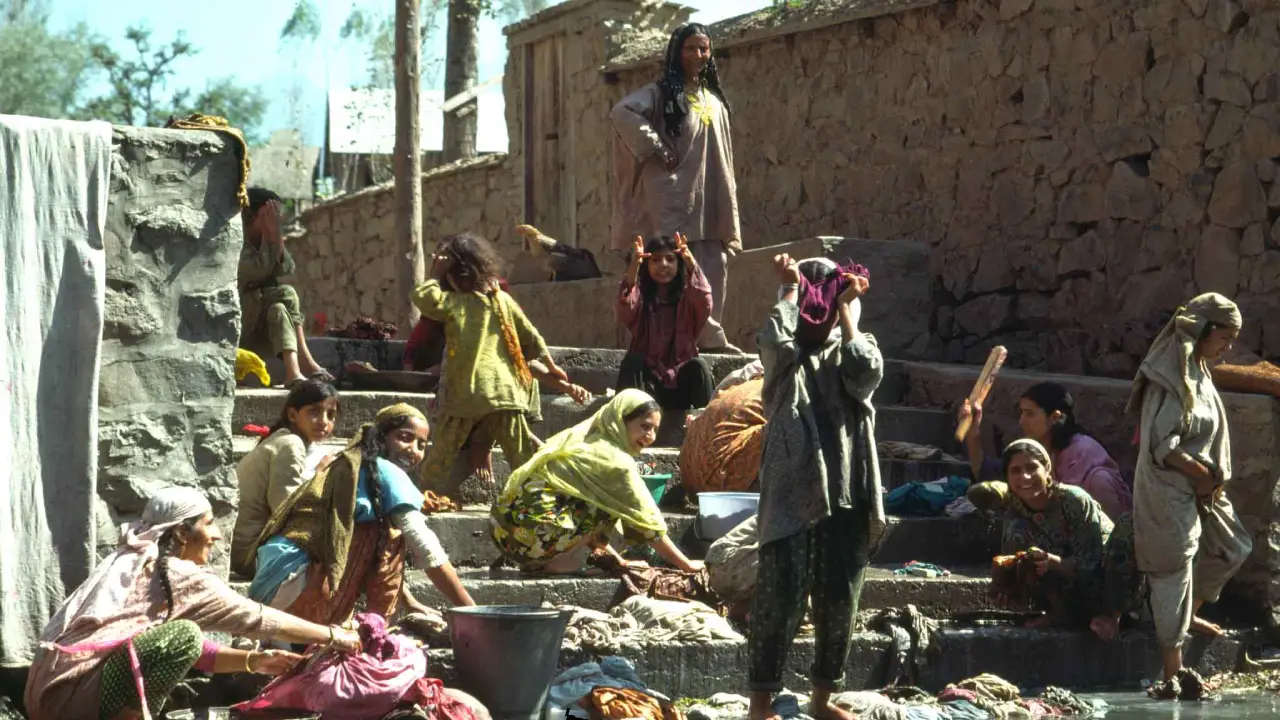
Zeba Begum, 75, began remembering the yarbal near her home in Kupwara, and the memory still made her smile. Every morning, she said, women gathered there not just to fill their pitchers but to talk, laugh and support each other through the day.
One such morning, she remembers, a family scouting a bride for their son noticed a young woman drawing water at the yarbal, and by evening word had reached her house. The proposal was discussed right there on the stone steps, among the same women who gathered every day to fill their pitchers and pass the time. The couple married and lived, by all accounts, a happy life.
It is a small story, but Begum tells it as proof of something larger: the yarbal was never just a place to fetch water. “It was the heart of the neighbourhood,” she said. “Relationships were built there, and memories were made.”
Stone Steps
The word yarbal comes from two languages meeting at a riverbank: yaar, Persian for friend, and bal, Kashmiri for landing place or ghat. Together, yarbal means the place where friends meet.
The tradition is very old. Given their significance over the centuries, the kings and the courts started investing in these spaces. Shahmirs’ (1339-1561) built various yarbals in Srinagar city.
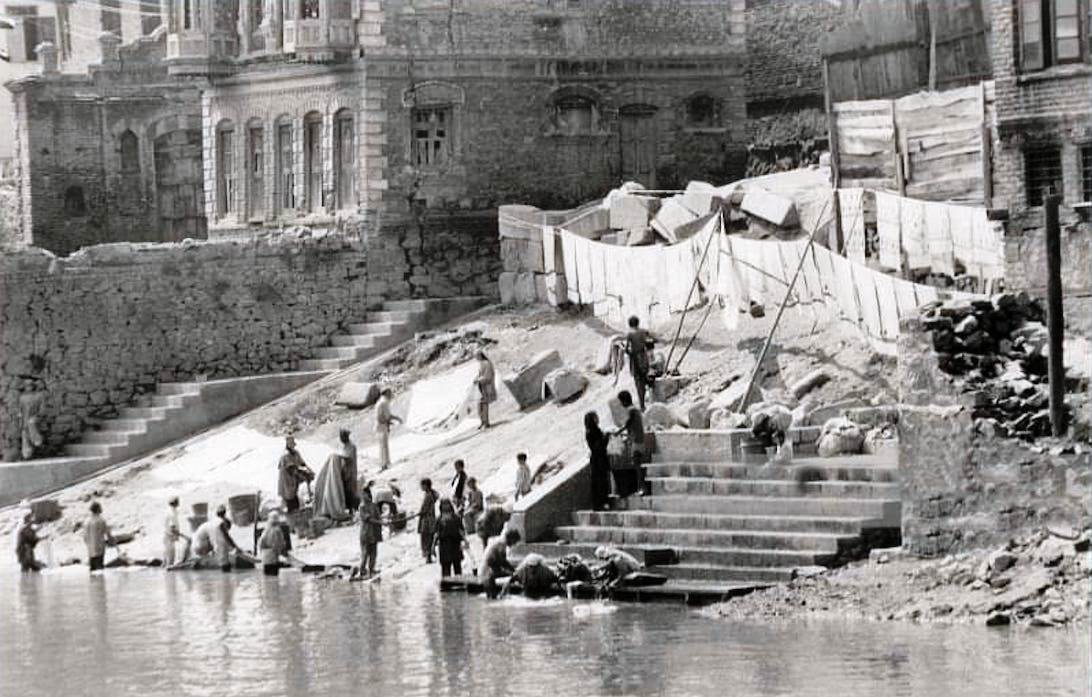
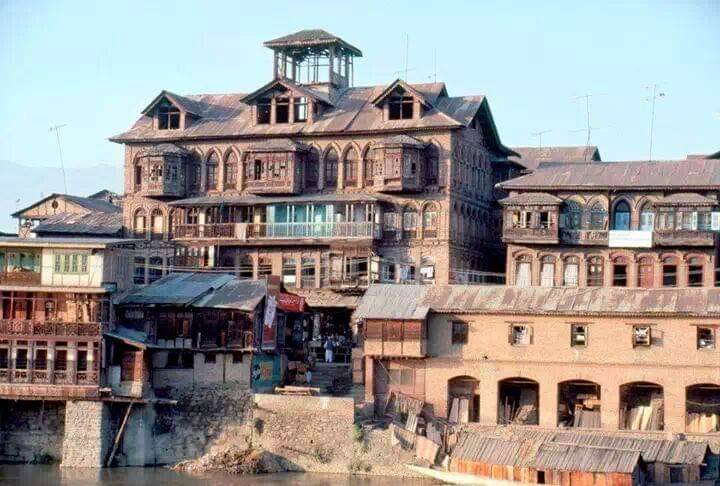
Under the Mughals and in the periods that followed, yarbals became fixtures of everyday Kashmiri life. Before piped water reached homes in the early twentieth century, rivers and lakes were the only source, and wide stone steps were laid into the riverbanks so people could reach the water safely through every season, whatever the depth. Homes, temples, mosques, markets and shrines grew up around them.
For generations, the yarbal was where Kashmir did its housework and its living. Families visited every day to collect drinking water, wash clothes and utensils, bathe, and perform ablutions before prayer. Neighbours traded news there, official and unofficial, and leaned on each other through their troubles.
Weddings, festivals, and the rites before and after funerals all drew people to the water’s edge. It was not a place built for anything beautiful, only for use, but use of that kind, repeated daily by an entire neighbourhood, is what gave it its warmth.
Once families began relying on the yarbal for water, homes naturally clustered close by, and over time the riverbank stopped being just a utility and became a shared address, the place a whole lane of a locality could be found at any given hour of the morning.
Sacred Waters
Kashmiri poet and raconteur, Zareef Ahmed Zareef said many yarbals sat beside mosques, shrines and temples along the Jhelum. Speaking with visible emotion, he recalled performing wazu in the river before prayers. The Jhelum held the same weight for Hindu residents, who regarded it as sacred and used its water for rituals, prayer and ceremonial bathing.
“Yarbal was a blood flowing through our veins,” Zareef said, a line that captured how thoroughly the river ran through the region’s faith, its traditions and its community bonds.
Zareef also pointed to an older thread in this history: the ninth-century king Avantivarman (855- 883 CE) would routinely stroll along the Jhelum to meet his subjects and hear their grievances. To make the riverbanks safer, his engineer Suyya undertook works to control flooding and smooth the river’s flow.
Childhood Fears
History explains how the yarbal came to be. But its memory survives mostly in what people were told as children. Kulsuma, 40, from Ganderbal, grew up on her grandmother’s stories of rantas, jal pari or water spirits, mysterious springs, djinn and fairies, passed down the way such stories are.
One warning stayed with her longer than the rest: never visit the yarbal after sunset, her grandmother told her, because djinn or pari might appear near the water. As a child of five or six, she believed every word. “When it started getting dark, my friends and I would run home like horses,” she said, laughing, “because we were frightened, and we never dared go near the yarbal after that.”
Now a mother, Kulsuma understands the stories differently. They were never just myths, she said, but a way of keeping children away from deep water and home before nightfall. She still misses her grandmother’s bedtime stories and knows those moments will not return, but she has begun telling the same tales to her own children, hoping they will hold onto them the way she has.
Kulsuma’s husband, Aijaz Ahmed, narrated a folk story that links the 14th-century mystic and poet Lal Ded to the Yarbal culture. The legend goes that her mother-in-law would keep a stone on her platter and then cover it with a layer of rice. Apparently, this would suggest that she was fed more, but the fact was that she was underfed. Lal Ded never complained about it ever.
Once, Lal’s family had a guest, and they started preparing a feast. At Yarbal, when the women started talking about the feast, Lal quipped:
Haa’nd Ma’rytan Kina Ha’th,
Lalli Nalavath Tsali Na Zanh
(Whether a sheep or a lamb is cooked, Lalla’s stone never leaves her plate.)
This was a piece of information that travelled in the locality and eventually reached her father-in-law. That evening, her father-in-law insisted that he would eat from Lalla’s plate, and the well-kept family secret got exposed.
“These are not just stories,” Aijaz said. “They are memories we have carried, and remembering them makes me feel as if the old yarbals are still alive in our hearts.”

Vital Spot
It was not a spot where women would assemble, fetch water, wash clothes, clean utensils and take baths only. It was key public infrastructure where washermen perpetually worked. The boats would stop there. Then, the Jhelum was the main highway between Khanbal and Khadanyar, and Srinagar depended mostly on this river transport system.
All supplies would reach the localities through this transport system, and the Yarbal was the place where all transactions would happen. Traders would pick materials from this spot in their load boats. Zareef remembers that the yarbal was vital for bringing goods into a neighbourhood, including the rice supplies, fruit, vegetables, firewood and timber. This made the yarbal a centre of both transport and trade in old Kashmir, long before roads and markets took over that role.
The Kashmir River has remained part of the identity of the people who remembered it in their own ways: it was Hydaspes for the Greeks, Vitasta for the Hindus and flows as Jhelum for centuries now. That is perhaps why everybody sang for it. Lal Ded often drew on rivers, springs and flowing water in her Vaakhs to carry spiritual lessons. Abdul Ahad Azad’s poem Daryav made the river a symbol of hope, life and struggle. Zareef wrote about the rivers of old Kashmir and the yarbals now disappearing from them.
When a soldier dubbed the Jhelum a Nadhi (a rivulet), Khalid Bashir Ahmad was angry and wrote a complete volume on the river.
Formal poetry apart, for centuries women have sung traditional wanwun wedding songs and rouf while working at the yarbal, keeping Kashmir’s culture and stories alive through everyday labour.
Conservation Push
Barring the dhobis, the yarbals have largely lost their social significance in Srinagar. The government, however, is attempting to revive these historic riverfront spaces. Nearly 40 ghats have been identified for restoration, and most have been rebuilt with stone steps and improved access to the waters of the Jhelum, reconnecting the city with its river.
The government policymakers believe the ghats will be natural stations for the upcoming River Cruise Transport project, which the Inland Waterways Authority of India (IWAI) is developing in collaboration with the Jammu and Kashmir government.
The ambitious Rs 100 crore project envisages developing river cruise tourism on three National Waterways – the Jhelum (NW-49), Chenab (NW-26) and Ravi (NW-84). Under a MoU, IWAI will create key waterside and landside infrastructure, including 10 floating jetties (seven on the Jhelum at Pantha Chowk, Zero Bridge, Amira Kadal, Shah-e-Hamdan, Safa Kadal/Chattabal Shrine, Sumbal Bridge and Gund Prang); two on the Chenab at Akhnoor and Reasi; and one on the Ravi at Sohar. The project also includes waiting halls and passenger amenities, dredging to maintain navigable channels, hydrographic surveys and navigational aids to ensure safe movement of vessels. The Jammu and Kashmir Government will provide land for terminals, secure statutory clearances and facilitate the appointment of cruise operators
Yarbal Lives
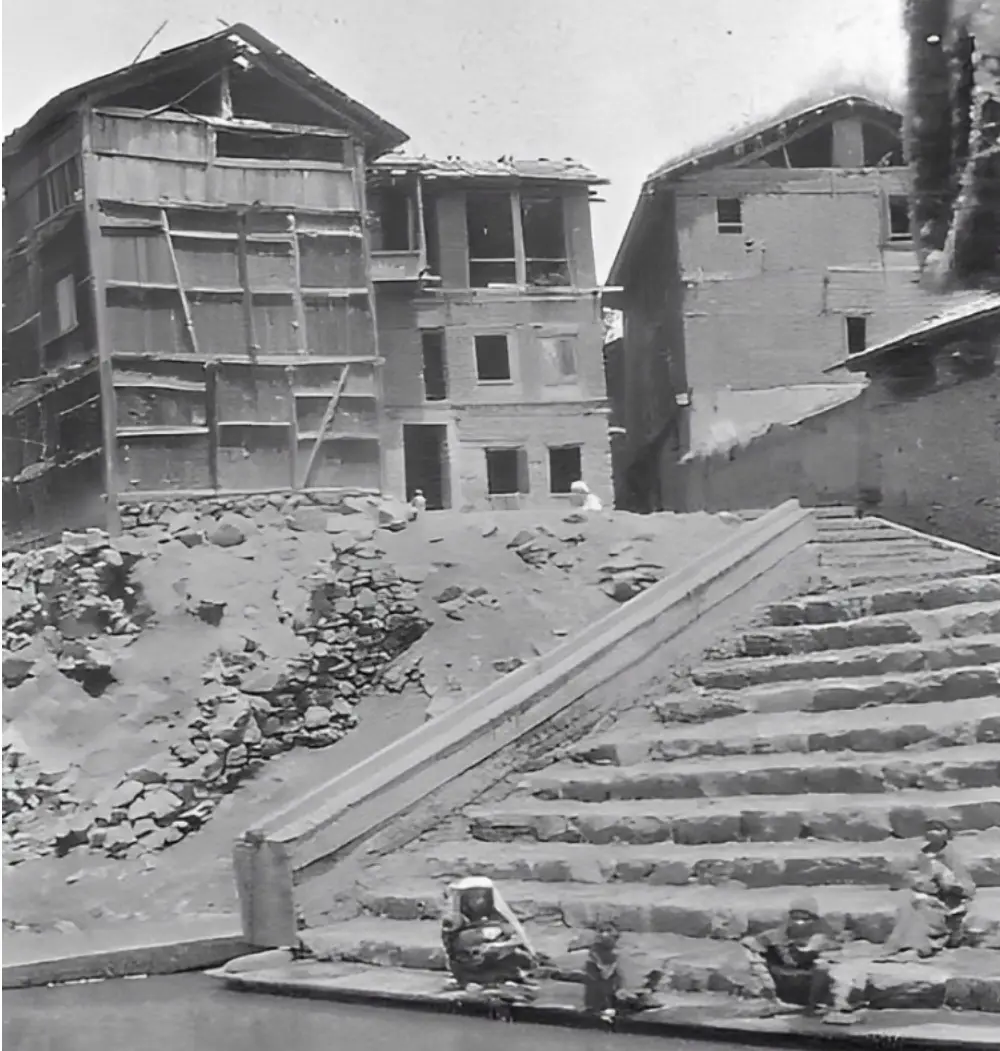
Beyond Srinagar, however, the yarbals continue to serve the purpose they were built for. Along the course of the Jhelum in towns and villages, these river ghats remain active, echoing with the rhythms of everyday life. People still gather here to wash clothes and utensils, bathe, collect water for household chores, and meet neighbours. While taps now supply drinking water to most homes, the yarbals continue to sustain a range of daily activities, preserving a tradition that has all but disappeared from the city.
The disappearance of these yarbal’s has triggered concern in the older generation. Retired headmaster Mohammad Gulzar Lone said many yarbals are disappearing through neglect, illegal construction, and rapid urbanisation and changing lifestyles.
“Once tap water arrived,” he said, “people stopped visiting the yarbals and stopped caring for them; the stone steps have since been damaged and overrun with plants and grass, while new buildings and roads have altered the old character of Srinagar and affected many historic sites.” For Lone, saving the yarbals is not only about the steps or the water; it is about preserving Kashmir’s history, culture and way of life.
The yarbal is so out of fashion that the new generation does not recognise the word. Raja Affan, 11, from Srinagar, said he did not know what a yarbal was all about. Aleem-ul-Aijaz, 13, laughed and guessed that yar meant friend and bal meant “big stone”. Both of them said they had never heard the word being used.
Once it was explained to them that a yarbal was where people once gathered to fetch water, wash clothes, bathe, meet neighbours, and receive goods brought by boat, both were surprised and full of questions. Later, they said it sounded more like a story.
A Change
Hamida Bano, 51, grew emotional talking about the yarbal of her youth. “It was the busiest place in our locality,” she said. “We met there every day, and it was the best part of our day, sitting, relaxing with friends.” She fell silent for a few seconds before adding, softly, in Kashmiri: suye zamam oos asal (those were the good days). Passing the same spot today, she said, its silence weighs on her heart.
A yarbal was never only a set of old stone steps by a river. It carried memories, tradition, stories, faith and the daily rhythm of Kashmiri life. As most of them fade or vanish altogether, the question they leave behind is not only about stone steps. It is about how much of Kashmir’s history, culture and identity is disappearing along with them.