For generations, Masaal Tchot has been one of Kashmir’s most cherished roadside breakfasts. Today, it is much more than a morning snack. Sold from humble carts outside shrines, schools and markets, it sustains hundreds of families, offers unemployed youth a path to self-employment and preserves a culinary tradition deeply woven into Kashmir’s social life, reports Asrar Syeed
In the early morning hours, Kashmir stirs to life. Office-goers, businessmen, street vendors, rickshaw drivers and students set off across the Valley’s districts.
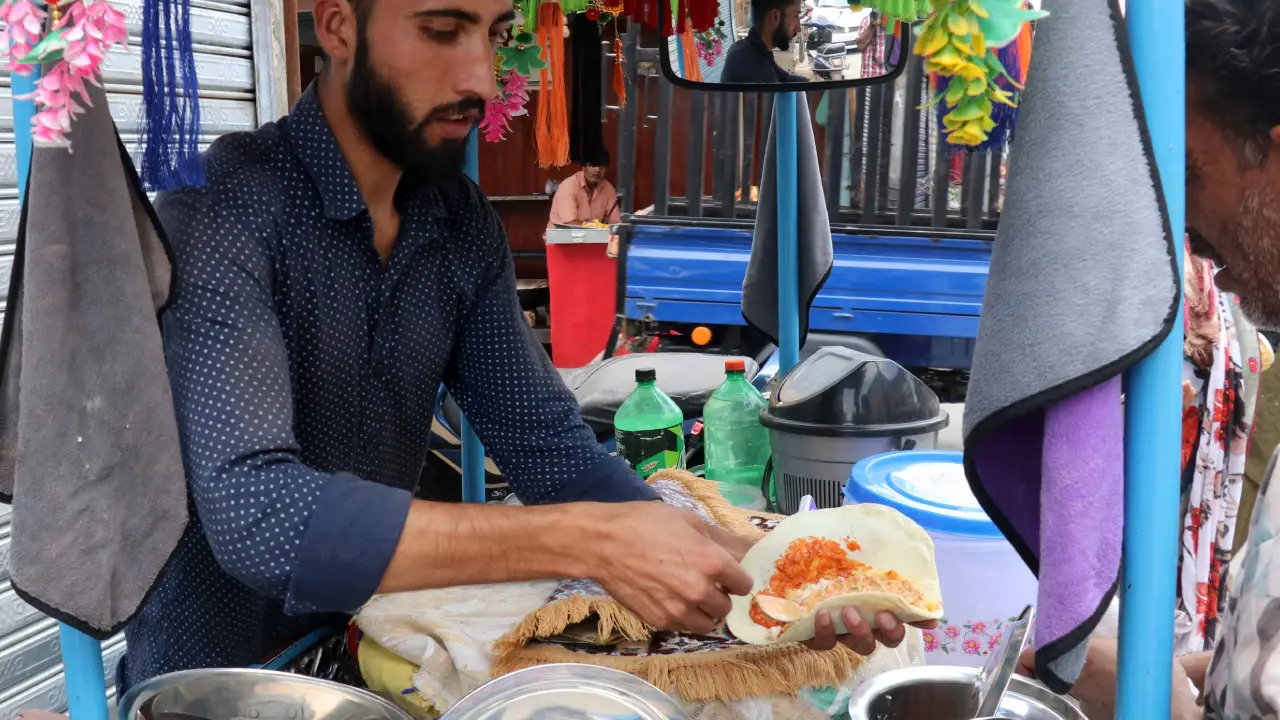
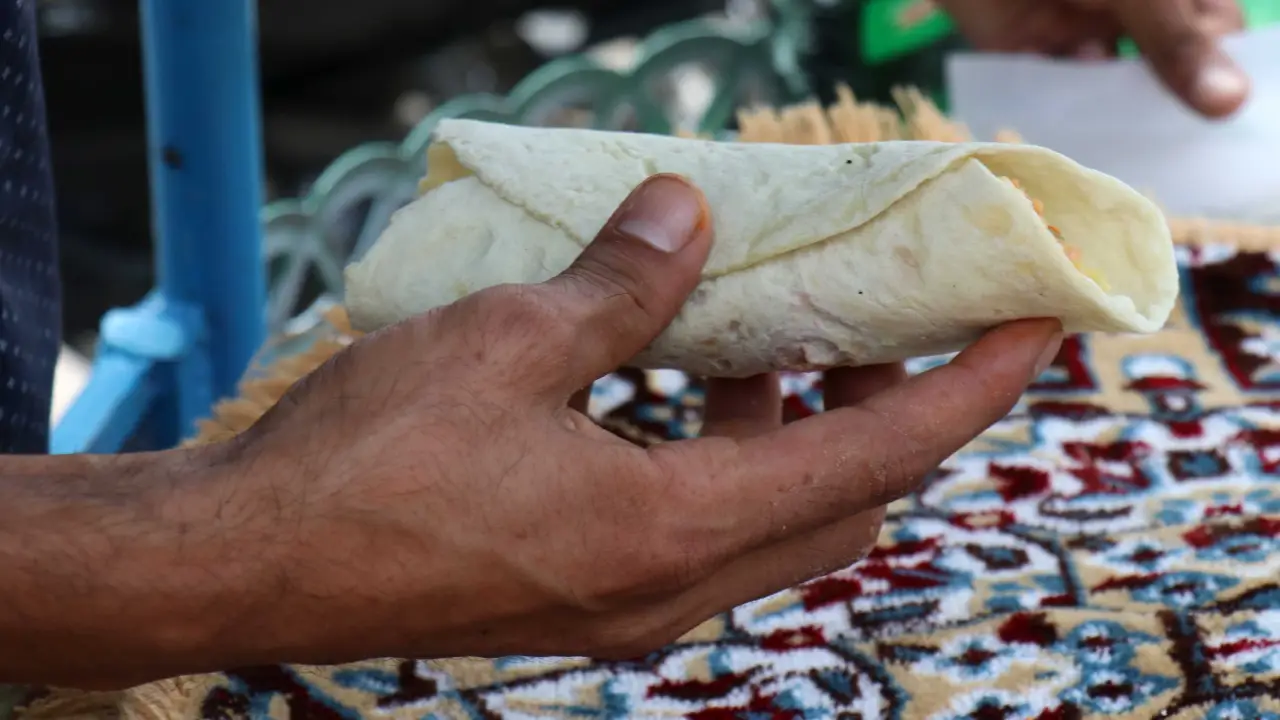
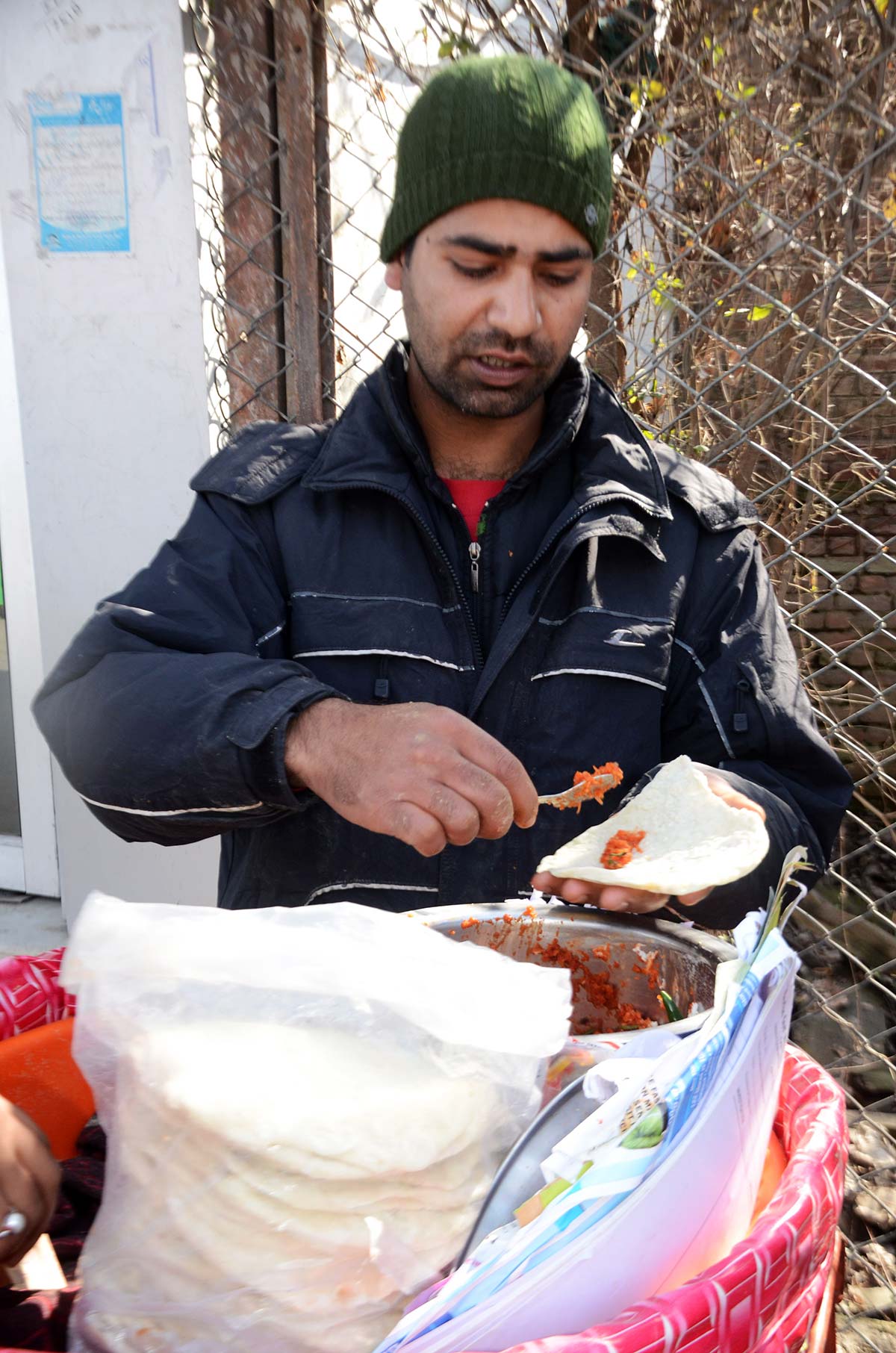
Among them, men like Abdul Majeed Rather are already at work. They are preparing Kashmir’s favourite roadside snack, locally known as Masaal Tchot. It comprises a dose of overnight-boiled Kabuli chana wrapped in thin bread laced with sauces made from onion, carrot and radish. Every morning, street corners across urban and suburban Kashmir turn into temporary stalls for these vendors. As demand has grown, so has the number of people selling it.
Majeed began selling Masaal Tchot back in 1987. In 2027, he will complete forty years in the business. Over the decades, he has witnessed both hardship and reward. Yet the daily morning ritual has continued. It is sustained by his determination to work hard and greet each day with a smile.
“I was 16 years old when the thought of earning prompted me to start something of my own,” Majeed recalled. He thinks back to those difficult early days. “After weighing up a lot of options that were beyond my budget, the idea of starting this Masaal business came to mind. Initially it was hard, as I knew nothing about how to cook or prepare the dish.”
The Struggle
Masaal Tchot is served on a thin Lavasa bread. This is a traditional Kashmiri bread made from flour by Kandur, the local bakers and is used mostly for breakfast. The essential component tucked inside the bread is the Masaal itself. It is a yellow-coloured mixture prepared by boiling Kabuli chana (white chickpeas) overnight. Turmeric, salt and oil are then added to achieve a texture that is soft without turning mushy. Some bite must remain with each mouthful.
Vendors each have their own style of preparation. But the basic recipe stays the same. Once the yellow mixture is ready, sourcing the thin Lavasa becomes the next challenge. Bakers are typically consumed with making the bread that Kashmiris require with their breakfast tea.
Majeed follows this routine without fail. He wakes at around 5am to check on the boiled chickpea mixture. “Every morning, after waking up and offering the Fajr prayers, I hurry home to check on the boiled mixture,” he explained. “I wash it carefully, taking care not to crush the little chickpeas, which would ruin the ingredient completely. Then I head to the Kandur. That in itself is a battle, given the rush these bakers see in the early hours. Only after both tasks are done do I return home to give the product its final touch.”
There is no documented history of how the snack came to be. Instead, a piece of local hearsay is repeated by most vendors, Majeed included.
“It was someone from the old city who first made this at home. Seeing how well people responded, he increased the quantity and began selling it outside one of the shrines in the old city,” Majeed said. He learned this account from a vendor who had been selling the snack since the 1970s. Most sellers tell a similar version of the story. Over time, it has hardened into the accepted origin of a snack that is now firmly a local favourite.
Masaal Tchot is typically sold from early morning until the afternoon. This makes time a precious commodity for vendors like Majeed. He must reach the market by 9 am to avoid missing what he calls a “decent earning” day. Setting up the cart after the preparation is itself no small task. “Every day, I must finish the final preparation of the product by 8 am. But there’s another job that follows – arranging everything properly on my cart,” he said.
Majeed’s journey has seen several transitions. When he started in 1987, he had no cart, no bicycle, not even the means to buy one.
“In 1987, when I began this business, I did not have enough money to buy even a cart,” he recalled. In those days, he used a Phout (willow wicker basket) to carry his goods. “I would fill the main yellow mixture inside the Phout, and on top of it there was barely enough space for the containers holding the different vegetable sauces like onion, tomato, along with sheets of newspaper on one side, and a small box for the cash.” Carrying the weight of a loaded Phout, he said, was never easy.
Over the years, Majeed’s business has grown. He went from carrying the Phout on his head, to a bicycle, and now to a blue-coloured load-carrier. He bought the load-carrier after a serious accident two years ago made the older methods impossible to sustain.
That carrier has become a familiar stop for regular customers. Among them is Saqib, who has been eating from Majeed’s cart for years. “I have been a customer of Majeed Uncle since he used to come to our area on a bicycle,” Saqib said. “His product was always full of flavour and served warm. And it is his hygiene, along with the respectful way he speaks to everyone, that keeps customers coming back.”
Inside the carrier, Majeed keeps photographs from his early days as a reminder of the journey. He also keeps a water purifier and a couple of dustbins, for cleanliness.
Historical accounts of Kashmiri households point to a certain simplicity in the kitchen. Earthenware, wood, copper and stone utensils dominated everyday cooking. The Phout, used to store the warm yellow mixture, follows that same tradition of simplicity. Its wooden build helped keep the mixture warm for longer. “Those were simple times, and people in Kashmir lived simply. Food options were few, and this Masaal Tchot was one of them,” Majeed believes.
Kashmir’s historical mosques and Sufi shrines have long provided vendors with reliable footfall. Outside nearly every major shrine or mosque, at least a few Masaal Tchot sellers can be found. They are called Masaalwoul, the Masala seller.
Rooted in Faith
At the foothills of the Hari Parbat fort stands one of Kashmir’s most revered shrines where Makhdoom Sahib lies buried. The Sufi saint buried within its main sanctum draws hundreds of worshippers daily. That number swells into the thousands during the annual Urs, days attributed to various events in the city saint’s history. Reaching the shrine means climbing more than fifty stairs. At the base of these stairs sits a busy market. It serves the many worshippers who travel from far-flung parts of the Valley.
Riyaz Ahmed has sold Masaal Tchot at the foot of these stairs for several years. “I used to run my cart in one of the old city areas, but the response was not as good as it has been here,” Riyaz said. “A large part of my earnings comes from the shrine, which sees hundreds of worshippers almost every day.” While he was talking to this reporter, he was serving the snack to a group of worshippers who had travelled all the way from Baramulla.
“I did not have the money to start a business that required much capital. So after speaking with a few friends, I settled on this one as it is affordable for both the seller and the customer,” he said. “By the grace of the Almighty, the early years were slow, and I struggled with the recipe myself. But things have improved with time. Today, I serve close to 100 customers a day. That gives me a decent income to manage my expenses.”
Livelihood
Jammu and Kashmir is currently grappling with one of its worst unemployment crises. According to official data as of November 2025, more than 3,57,328 registered unemployed youth exist across the erstwhile state. The Kashmir division alone accounts for 2.08 lakh of these. The Jammu division follows with 1.50 lakh. Experts believe the real figure is considerably higher than these official numbers suggest.
Amid this uncertainty, many young people in Kashmir have found an unlikely source of livelihood in selling Masaal Tchot. Nishad Khan is one of them, a young man from Srinagar’s old city. He runs his cart outside the Eidgah, an area popular with youngsters who gather to play sport. Footfall and earnings tend to rise on weekends.
Nishad holds a postgraduate degree in Urdu. He spent three consecutive years trying, unsuccessfully, to secure a government job. He eventually turned to the private sector.
“I did my Master’s in Urdu from the University of Kashmir. After completing it, I spent almost three years searching for a job, but the employment crisis in Kashmir has reached such a point that people now find little value in spending years at college or university,” he said. He recalled a period during which his mental health also suffered.
After failing to secure a government post, Nishad found work teaching in a private school. But the salary fell short of his household’s rising expenses. “I taught Urdu in a private school, but what I earned was not enough to put food on the table,” he said. After two years there, a cousin suggested he try selling Masaal Tchot instead. The cousin ran a similar cart outside a government college in Srinagar.
For others, like Awez Ahmed Khan, circumstance intervened long before career choices ever came into question. Awez was still in high school when he was struck down with a serious bout of typhoid. “I was studying in high school when I suddenly fell ill, and for months I was bedridden at home while my friends and classmates moved ahead with their studies,” he said. He stands beside his makeshift cart, mounted on a bicycle.
“After I recovered, going back to my studies was difficult. Financial strain at home made it hard, and I had also fallen behind my batchmates. Finding a job was hard too, given my limited qualifications. Even those with higher qualifications are struggling nowadays. Eventually, I found work at a private company and stayed there for several years. But managing rising household expenses grew harder with each passing day, so I left.”
In Awez’s hometown of Rafiabad, Baramulla, several young people have taken up Masaal Tchot carts in recent years. According to Awez, many of them earn between Rs 20, 000 and Rs 25,000 a month. “These young men earn well, and their schedule works in their favour too. They finish by the afternoon, and some even take up a second job afterwards.” It was this combination of independence and steady income that convinced Awez to start his own cart.
After consulting his parents, Awez moved to Srinagar. He rented a room in Parraypora, an area with a concentration of tuition centres and, consequently, a student-heavy customer base.
“I came to Srinagar and bought this bicycle, and I have been selling Masaal Tchot on it for a few months now. Sales have not quite matched my expectations yet, but I am hopeful things will pick up, because I do not see much scope left in the job market,” admitted Awez. He admits he wishes he had been able to finish his education.
The scale of the unemployment problem was underlined during a recent assembly session. It emerged that the two recruitment agencies of the Jammu and Kashmir government had collected Rs 48.88 crore in application fees from candidates between 2023 and 2025. Actual recruitment numbers, meanwhile, remained low. Healthcare professionals have separately flagged rising levels of mental health distress among young people, driven by prolonged unemployment.
For Tariq Chohan, selling Masaal Tchot has come to cover every household expense. Still, he hopes to eventually take the business further by opening a restaurant. “After finishing my studies, I did not spend much time job-hunting. Because I married early, I always wanted to build something of my own. It was a childhood friend who inspired me. He had started this business outside a college in my hometown of Baramulla. He was earning more than Rs 25,000 a month.”
Tariq did consider returning to his studies. But responsibility eventually pushed him towards steady work instead. “I thought about going back to my studies, but looking at how even qualified people were struggling to find work, government or private, I decided against it,” he admitted. Tariq now runs his cart from 9 am until 1 pm. By then, his entire stock is sold. “I am grateful for an opportunity like this, instead of running from pillar to post looking for a job. This venture gives me Rs 15,000 to Rs 20,000 a month.”
These vendors can be traced anywhere within the city, on the highways and in the Srinagar periphery. They are present around every office and educational institution. It is hygienic, clean and cheap, and many people use it as brunch as well. This tradition has created a chain of small success stories, some vendors now operate from different locations, own big cars and are making their product distinct by offering additional and tasty sauces. Some of them have upgraded their phout and carts and use better carriage systems. Most of them said the government has not intervened in upgrading their requirements even though street food is a focus of various schemes.
Health Benefits
Beyond its popularity, the snack also carries certain nutritional advantages. The boiled chickpeas are a strong source of plant-based protein. This is useful for maintaining muscle health, particularly for those who cannot consume enough meat. The same chickpeas, being rich in dietary fibre, also aid digestion. The thin white bread the snack is served on is made from wheat rich in complex carbohydrates. This offers a steady source of energy.
That said, medical professionals caution against making it a daily habit. “It is best to limit it to once a week, as the roti is maida-based. Create a variant using a whole-wheat or atta roti, and you would have a sure winner as a genuinely healthy snack,” nutritionist Mansi Choudhary said. She noted that while the snack offers a wholesome eating experience overall, consumption should still be kept in check to avoid potential health issues.
Vendors like Majeed and Nishad see it differently. They insist the snack carries no drawbacks at all. They maintain that the vitamins and energy drawn from the Kabuli chana make it, if anything, beneficial for bone health.
What Next
Across Srinagar and the wider Kashmir Valley, this modest snack has quietly become a source of livelihood. For older vendors like Majeed, it has sustained a life built over four decades. For younger sellers like Nishad, it has offered an alternative path. Despite holding a postgraduate degree, Nishad found it difficult to secure formal employment. He eventually turned to a Masaal Tchot cart that now earns him more than twenty thousand rupees a month. That figure, he said, is far better than “sitting idle at home.”
Majeed, for his part, hopes young people will reconsider their reluctance towards such small enterprises. Government and private jobs alike remain scarce. “Youngsters today are suffering because of the job scarcity, and instead of wasting their prime years in that struggle, they should consider small business ideas,” he said.
He also hopes the mindset around what counts as respectable work will shift with time. “Many young people would not accept sitting on the road like me as it feels awkward to them. But as long as you are earning your living through halal means, there is nothing to be ashamed of.”