Across urban Kashmir, families still gather each winter for gaade saal, an all-fish feast, especially for the families of their daughters, reports Babra Wani
In 2011, Tariq, a Srinagar resident, got married. Within a month, his wife’s family invited the couple and his relatives to a feast. It was all fish. It was gaade saal.
“It was fascinating,” Tariq recalled excitedly. “Now it has been more than 15 years, and it has become a family tradition for me as well.”
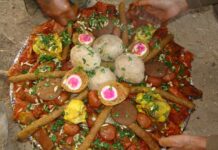
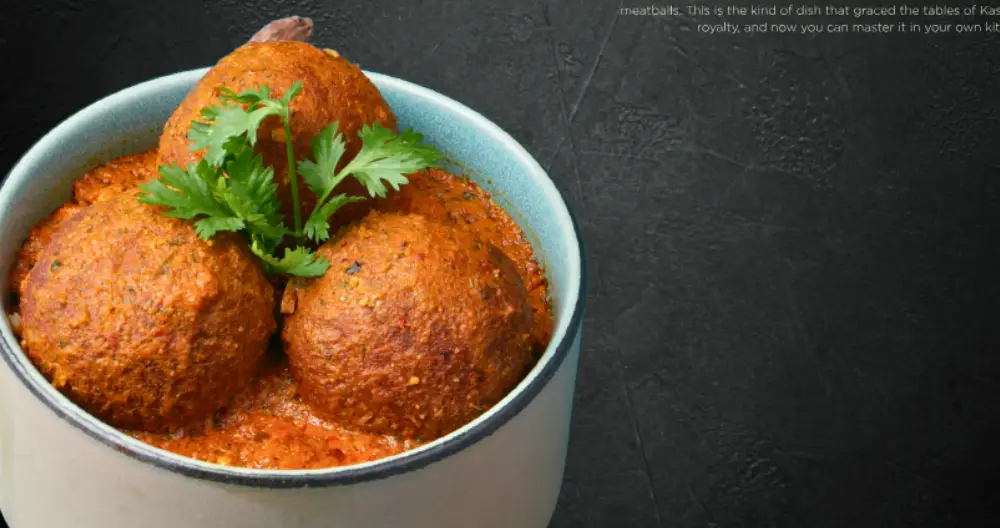
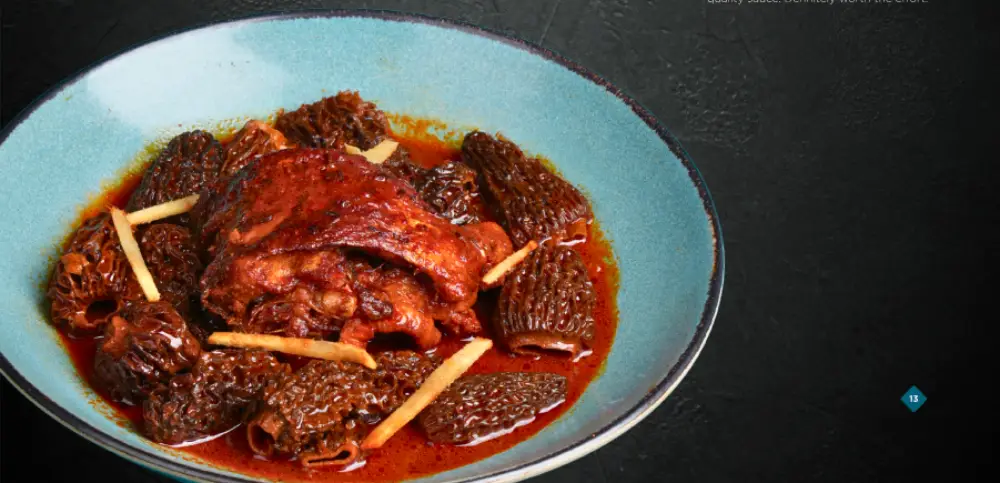
The feast featured eight to nine fish dishes. “There was fish kofta, fish with radish, fish with saag, fish kebabs, fish with monje, everything. It has always been a yummy tradition. And now we do it every year.”
Winter Rhythm
In Kashmiri households, winter carries a distinct culinary rhythm. Few traditions summon as much nostalgia, or quiet trepidation, as the communal fish feast known as gaade saal.
The centrepiece is gaad, freshly caught fish stewed with winter staples such as nadroo (lotus stem), haak (collard greens) or muj (radish). Tradition called for sizeable cuts left intact with bones, known as kaandewali. They demanded meticulous cleaning and patience over a slow, wood fired hearth.
Bride’s Burden
Aamina recounts it with fondness and sheer exhaustion. Shortly after her wedding, her husband’s family hosted one. “Nearly fifty people packed into the house, all gathered for a feast that revolved entirely around fish,” she said.
“I remember when I first witnessed it I was brought nearly to tears by the scale of it all,” Aamina recalled. “Dozens of mouths to feed, enormous pots bubbling away, and the relentless demand for fish. It felt overwhelming at the time, but it became one of the most vivid memories of those early winter days.”
The elaborate feasts of her grandmother’s generation have dwindled into simpler, smaller dinners. Yet the memory lingers, an aromatic, chaotic celebration of seasonal warmth amidst the Himalayan chill. The beauty of the gaad saal is that it is all being cooked in the family kitchen by the womenfolk and not the chefs of Wazwaan fame.
Living Custom
Bisma, a resident of old Srinagar, says gaade saal has been a tradition in her family for as long as she remembers. Every year, her family invites its married daughters and their families.
“Usually it happens around the winter months because in Kashmir fish is mostly consumed during the winter months. When I got married last summer, my parents invited me and my husband’s family, my elder sister and her family, and my paternal aunts. My family prepared three varieties of fish. We do this every year. Even in January last there will be a gaade saal.”
Maleeha, another Srinagar resident, has known it since childhood. “Fish is the whole point of it,” she explained. “It is cooked the traditional Kashmiri way, mixed with collard greens (haak), radish, and lotus stem (nadroo). Everyone who is invited comes over, maternal aunts, paternal aunts, the whole extended family. And it is almost always done during the winter.”
Water, Poverty
Professor Farooq Fayaz, a folk historian of Kashmir, says a few things determine the region’s dietary calendar. They include religious beliefs, geo-climatic settings and socioeconomic conditions.
Kashmir was once a huge water body, he said. “Right from the earliest times as proven by traditions, folklore and geological investigations, Kashmir has been the biggest waterbody. After the water was drained, there were some low lying areas where lakes, rivers, ponds and streams are still intact. One commonly found thing in all these waterbodies is fish. Because of its availability it was always a part of the dietary calendar here.”
Economics mattered too. “Having cash was not as common as it is now,” he said. “It has been some decades only that the economic conditions improved. There were only a few families a bit better economically. They were directly or indirectly associated with the Darbar. Otherwise the Kashmiris comprised of labourers, peasants, tillers without having any right on the land. They had nothing. They were impoverished, poor people.”
In those conditions, “they could not afford mutton or chicken, and they had fish, and water chestnuts in abundance. It was available for even a common person. Not just for consumption but for the income as well.” People caught fish and made a living from it.
Ritual Roots
“This makes the one side of the story,” he said. “Another side is that, seen through the lens of folklore, Brahmans used to perform multiple rituals in which fish was part and parcel. They used to cook gaade batte for their deity.”
Brahmanical tradition presented gaade batte to the deity to ward off evil energies. “That tradition travelled to Muslims as well,” he said. “Even after the 14th century, when the entire population of Kashmir adopted Islam, this tradition continued. The new Kashmiri Muslims retained these traditional patterns.”
Some Kashmiri Pandits still cook gaade batte on festivals. Among Muslims, it is tied to no single occasion. Fish was prepared for special guests, like sons-in-law, especially in winter. Vegetables were scarce then and roads were closed. “The easiest thing was to source fish and cook a feast out of it.”
Families held the feast once or twice each winter. They shared it with neighbours. “In old times there were no walls and walled compounds, so people shared amongst themselves.”
Family Bonds
Gaade saal has been more of an urban activity. “It was kind of a festivity,” Fayaz said. “The preparations, the cooking everything was like a festival.”
It was a chance to bond. Some families had two or three daughters, and they invited them for the feast. Sons-in-law got to know their wives’ families and their brothers in law. The feast may also bring greater warmth and intimacy to conjugal life.
“Gaade saal was the samanbal,” he lamented. “It provided an opportunity to know more of each other, to interact and hence the bonding used to get stronger. It was also a sweet message for the son of the family to let him know that he has to continue the tradition after the parents’ passing. It was a means of strengthening the familial ties.”