A completed museum honouring archaeologist Sir Aurel Stein at Mohand Marg remains non-functional three years on, despite the expenditure of Rs 1.36 crore, Idrees Ali reports
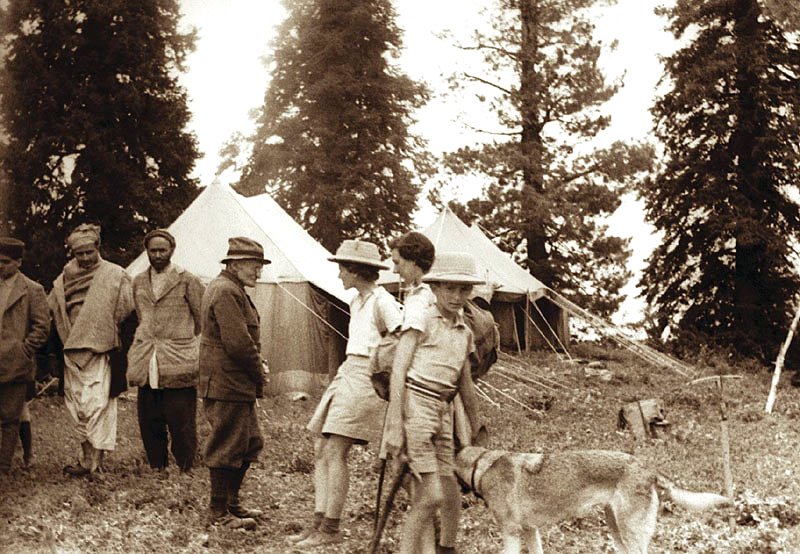
A museum dedicated to renowned archaeologist and explorer Sir Marc Aurel Stein is yet to see the light of day. The building meant to house it at Mohand Marg in Ganderbal district was completed nearly three years ago. Since then, nothing has moved forward.
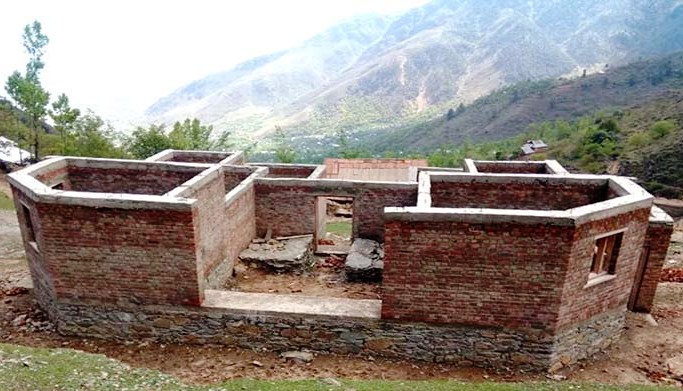
Waliwar village residents said the construction of the Sir Aurel Stein Museum-cum-Tourist Facilitation Centre was completed around three years ago. No further progress has been made towards operationalising the museum. The tourist facilitation centre remains undeveloped too.
Official records show the Tourism Department constructed buildings at the twin meadows of Mohand Marg and Laar Marg, each costing an estimated Rs 1.36 crore. The foundation stone was laid in 2017. Work halted following the developments of August 5, 2019, and the COVID-19 pandemic. It resumed in July 2020.
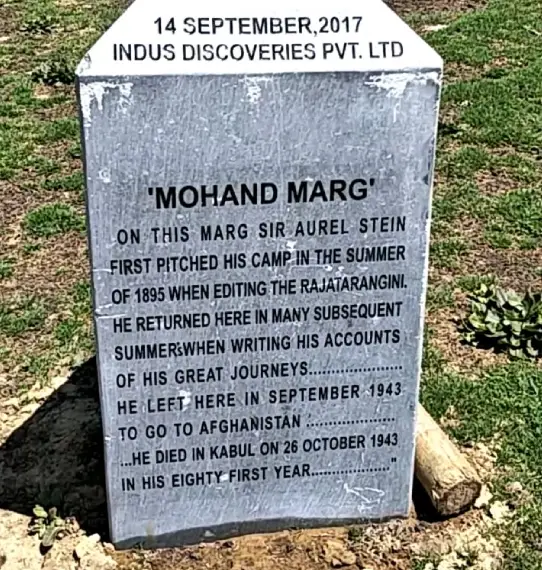
It was Yasin Zargar of Indus Discoveries, a UK based tour and travel group, which invested in the memorial state. Zargar said they worked with Stein historian SN Pandita, Himalayan geologist Professor Nigel Harris, and far-famed Susan Whitfield of the British Library, to hand carve a brand new, 350 kg Panjal Range memorial stone with inscriptions in English, Urdu, and Sanskrit. “The choice of words and languages pay homage to Stein’s own impressive linguistic skills, which are often overlooked in the list of his many accomplishments,” the Indus Discoveries said. People privy of the development said the costs that the stone required for taking it up to the hills cost more than one lakh rupees and it was paid by the tourism ministry.
Former MLA Ishfaq Jabbar called it unfortunate that the completed buildings had been left abandoned. “It was conceived as a heritage tourism project, and the museum had the potential to attract a large number of visitors to the area,” Ishfaq said. “The authorities must develop the necessary infrastructure, create the museum with appropriate collections and exhibits, and make it functional.”
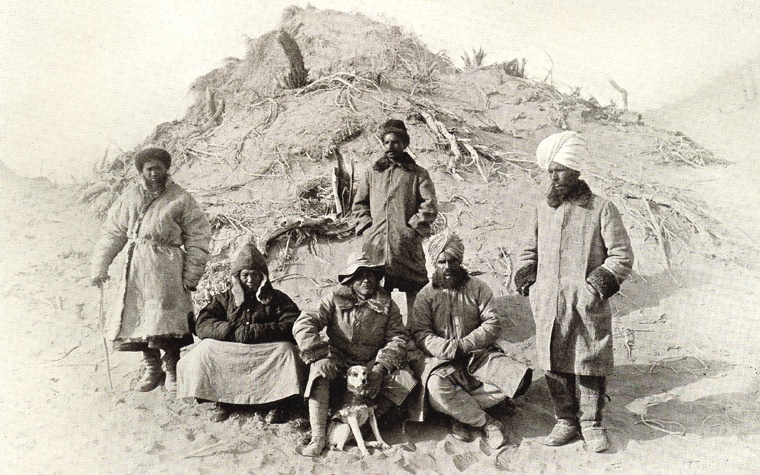
A Scholar’s Meadow
The proposed museum draws its significance from Stein’s deep historical association with Kashmir’s celebrated chronicle, the Rajatarangini. Kashmiri poet Kalhana wrote it in the 12th century. The Rajatarangini (River of Kings) is regarded as the only existing historical record of Kashmir. It offers a detailed account of the region’s rulers, political developments, and socio-cultural history.
Stein spent several summers in Kashmir during the late 19th and early 20th centuries. There, he prepared a critical English translation and scholarly edition of the text. He worked from multiple Sanskrit manuscripts. He enriched the translation with extensive annotations and commentary, making it accessible to scholars worldwide. Much of this work was carried out while he stayed at Mohand Marg. This association formed the basis for the government’s decision to establish the museum at the site.
“The first major step was completed several years ago with the construction of the museum building,” Convenor of INTACH’s Kashmir, Mohammad Saleem Beg, said. “However, the project has since been left in limbo.”
Beg stressed that the next phase should focus on building a repository. This would include Stein’s works, research material, photographs, archival documents, and other artefacts tied to his life and scholarship. “A museum is not merely a building; it requires curated collections and interpretation that can educate visitors and researchers alike,” he said, insisting the authorities must revive the project. “Operationalising the museum would not only preserve Stein’s contribution to Kashmir’s history but also strengthen heritage tourism and bring national and international attention to Mohand Marg.”
Beg regretted that the original memorial stone dedicated to Stein was vandalised. A new one was installed following a recommendation made at the International Conference on Aurel Stein and Central Asia at Kashmir University in September 2017. The replacement stone now stands at the exact spot in Mohand Marg. This is where Stein is believed to have pitched his tent during his visits.
Life and Legacy
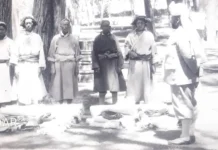
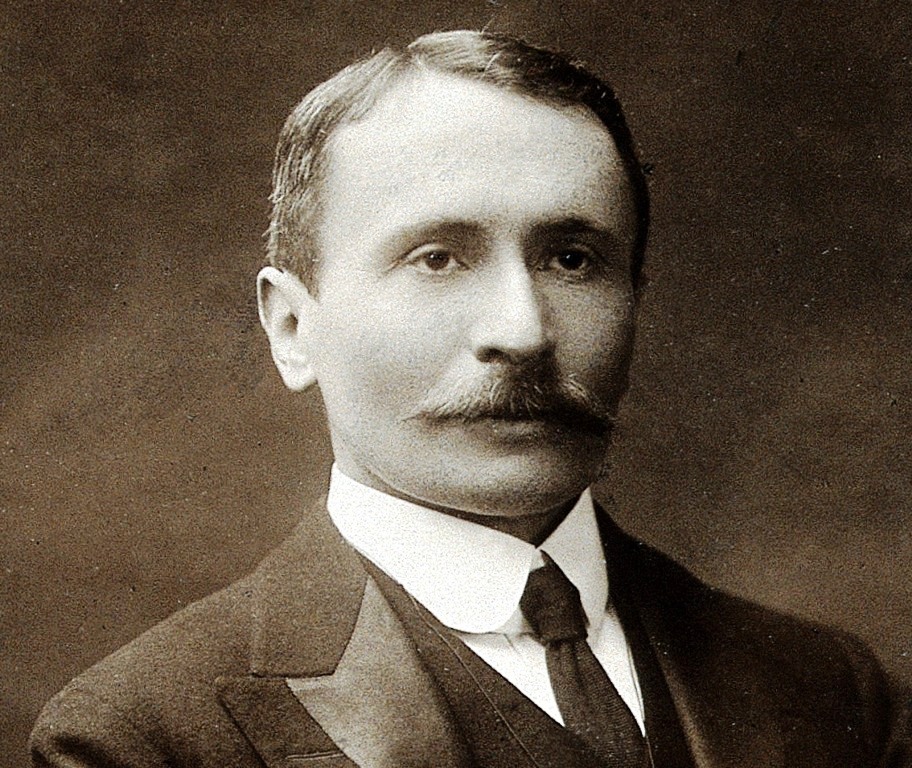
Stein was a Hungarian-born British archaeologist. He developed a deep association with Kashmir after his first visit in 1888. Mohand Marg became his preferred summer base. There, he worked on his translation of the Rajatarangini and prepared for his Central Asian expeditions. He is best known for producing the English translation of the Rajatarangini. This, he did, while working with Kashmiri scholar Pandit Govind Koul. Besides, he also documented Kashmiri folklore, preserving several traditional stories for future generations. Stein served briefly as Inspector of Education in Kashmir.
After 1901, his focus shifted to Central Asia. This took him to Khotan, Balochistan, and Dunhuang. His findings there significantly advanced understanding of the Silk Route and the region’s history. In 1915, he travelled through Russia, Samarkand, Khurasan, and Sistan. He also carried out surveys in Gilgit and Hunza. There, he studied rock inscriptions that shed light on the Kushan and Kidarite rulers. Stein died in Kabul in 1943.
Mohammad Shafi, a trekking guide from the area, said the project’s announcement had raised high hopes locally. “We were delighted when the project was announced,” he recalled. “The museum and the tourist facilitation centre had the potential to transform the tourism landscape of Mohand Marg. By combining the area’s rich historical heritage with its adventure tourism potential, the project could have attracted more visitors and created employment opportunities for local youth.”
Shafi expressed disappointment. Despite the building’s completion, the museum and facilitation centre remain non-functional. “The project has remained incomplete, and the expected benefits for the local community have not materialised. We hope the authorities will revive the initiative and make the facility functional at the earliest,” he added.
Despite repeated attempts to contact the Director of Tourism, Kashmir, by phone and email, no response was received as of the filing of this report.