Dr Reyaz Ahmad Ganaie details his journey to Ladakh with friends and brings home interesting anecdotes from a fascinating landscape
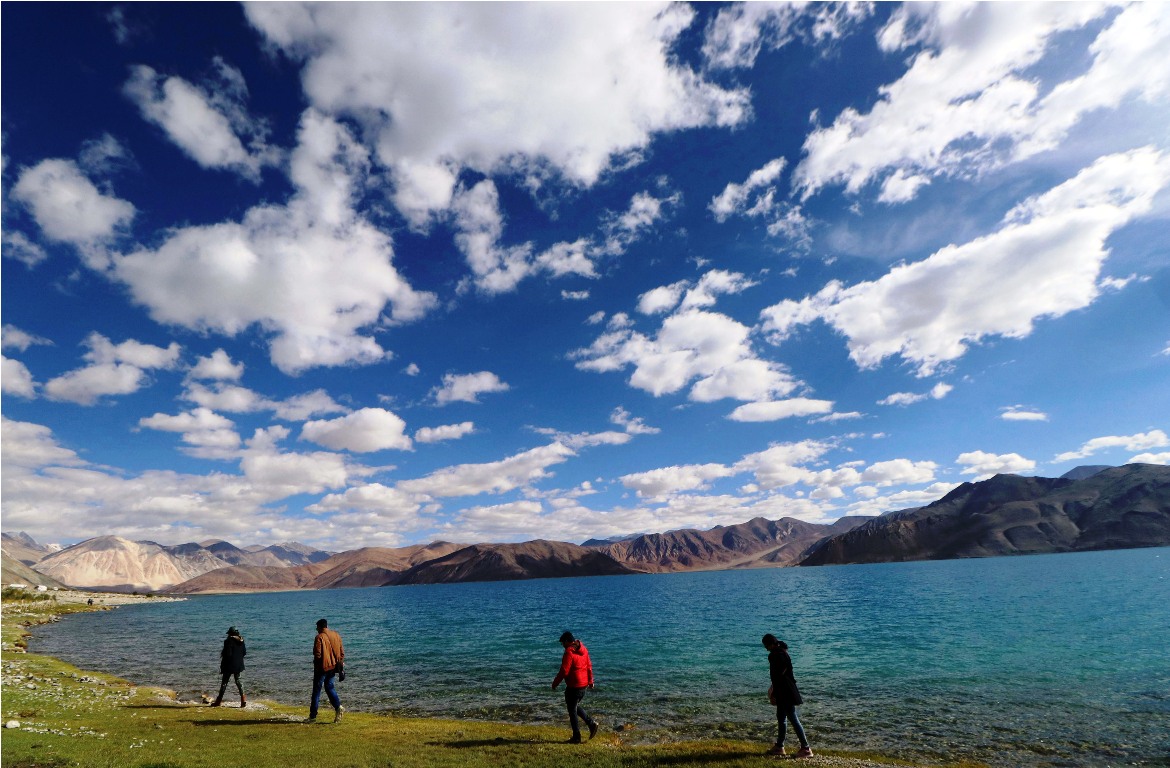
Travel is my passion, and it is an incredible way to learn about life. It is often said that a journey is best measured in friends, not miles. Exploring new places gives us insight into different cultures, languages, lifestyles, and people. Sometimes, travel is the best teacher.
For a long time, my friends and I had wanted to visit Ladakh. We finally found the opportunity to venture into the pristine Himalayas, surrounded by stunning mountains. On July 9, 2024, I set off with my friends Abdul Hamid Sofi, Inayat Ullah Dar, and Irfan Hamid Ganaie from Anantnag to explore the cold desert of Ladakh in our car.
We began our journey at 6:30 am, eager to cover the long distance. We passed through Srinagar, the capital city, by 7:30 am and reached the picturesque Sonamarg by 9:30 am. Located at an altitude of 2730 metres, Sonamarg is a breathtaking hill station in Jammu and Kashmir’s Ganderbal district.
The name Sonamarg translates to ‘meadow of gold’, nestled in the foothills of Zoji La pass, just a day’s journey from the Amarnath cave. This valley is the base camp for the Amarnath yatra and is home to the Sindh River. We stopped for an hour to enjoy tea and stock up on essentials like mineral water, medicine, and snacks.
After finishing our tea, we departed Sonamarg for the drive to Ladakh, crossing Zoji La, a significant pass in the Great Himalayan Range. Zoji La is a crucial pass, connecting the Kashmir Valley to the Suru and Drass valleys, as well as the Indus Region. It lies 24 km from Sonamarg and is a vital link between Ladakh and Kashmir, situated on National Highway 1 between Srinagar and Leh.
This pass is considered the second-highest pass after Fotu La on the Srinagar-Leh National Highway. The notorious dirt trail offers breathtaking views of the valley, but its hairpin bends make it a daunting ride. Upon reaching Zoji La, the majestic Himalayan Mountains come into view, making the journey worthwhile.
However, Zoji La remains cut off from the rest of the world for almost three to four months each year.
This 424-kilometre highway stretch is Ladakh’s lifeline. Following the 1999 Kargil war, the government accelerated road construction and infrastructure development in the region due to its strategic importance.
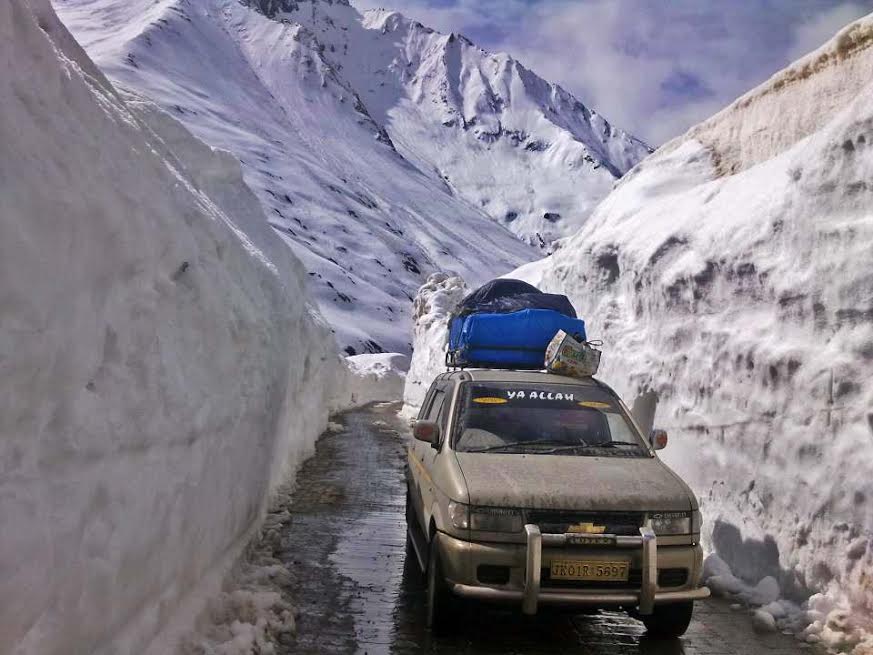
We arrived at Zoji La pass at 10:25 am and paused for a few minutes to capture the moment. After taking a few photographs, we continued our journey. Upon crossing Zoji La, we reached the Minamarg police station, the Gateway of Ladakh.
The police at this checkpoint verified our identity cards and asked us to register before proceeding towards Ladakh.
After completing the formalities, we moved ahead. Our next stop was the War Memorial in Bhimbet, Drass, which we reached at 11:35 am. This memorial commemorates the success of Operation Vijay during the 1999 Indo-Pak war. It honours the soldiers who lost their lives defending the borders against intruders.
We parked our vehicle and entered the Drass War Memorial, where Army personnel checked our identity cards and logged our entries. An Army officer then gave us instructions before we proceeded. We took a few photographs outside, noting that photography is prohibited inside the gallery. The memorial features an epitaph dedicated to the fallen soldiers’ selfless sacrifice, alongside Army emblems, war documents, and miniatures of the Himalayan range.
A special gallery, the Hut of Remembrance, displays photographs and seized Pakistani weapons from the war. The names of soldiers and officers who made the ultimate sacrifice are listed on the walls. After spending half an hour, we continued our journey to the next destination.
We arrived in Kargil at 1:20 pm. Located 205 kilometres from Srinagar on the road to Leh, Kargil is part of the Ladakh region. The region comprises two districts: Leh and Kargil. Kargil covers an area of 14,036 sq. kilometres, divided into four high-level valleys: Suru, Drass, Indus, and Upper Sindh Valley.
The district’s topography is mountainous, with minimal vegetation. Zoji La and Fotul La passes serve as gateways to the Kashmir Valley and Leh District. The landscape is characterised by high rocky mountains, desert aridity, and snow, with limited land available for agriculture.
Kargil is the second-largest town in Ladakh and has historically been an important trade centre. Merchants from China, Central Asia, and various parts of India traded goods such as tea, wool, carpets, silk, and precious stones, earning Kargil its reputation as a significant meeting point. The town is also known as the land of Agas, due to its predominantly Shia population, with Agas serving as religious leaders and preachers.
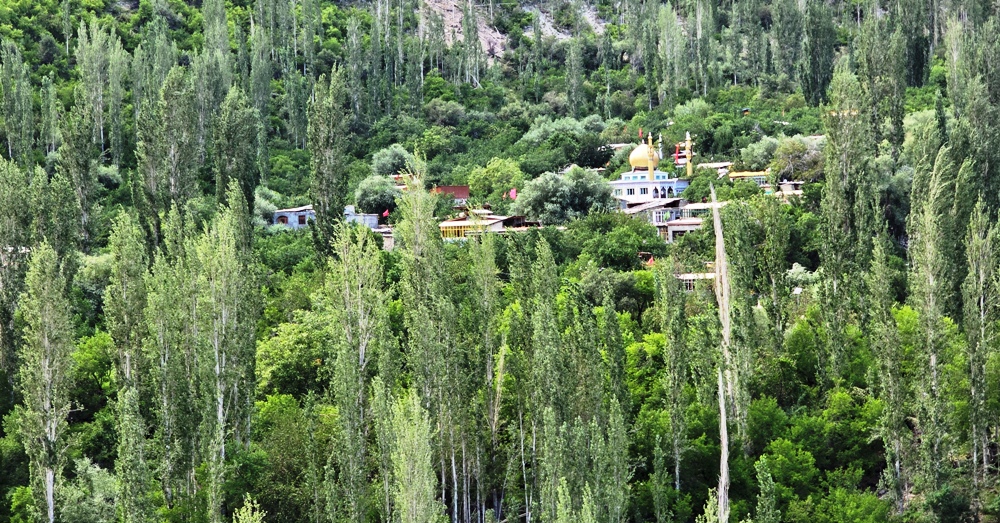
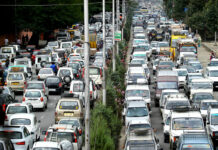
A few years ago, we visited Kargil during the month of Muharram, when the city was congested due to Azadari processions. We saw many Shia devotees, including men, women, and children, heading to the Imambara on foot and in vehicles. The traffic jam forced us to park and take a few photographs near the Suru River before continuing our journey to Leh.
We stopped for lunch at 2:00 pm near a stream in Vil Pakshum, after searching for a suitable spot. Later, we reached Namika La at 3:00 pm, which stands at an altitude of 12,139 ft. We took photographs with the yellow board at the sight viewing point, a popular spot for tourists.
Moving ahead, we reached the Moon Land plateau at 4:30 pm and stopped to take more photographs. On our way to Leh, we were stopped by women vendors at Khalsti, who insisted we buy dry apricots. We eventually relented and purchased two packets.
Upon reaching Leh, we checked into Hotel Honey Bee, where our friend Dr Amjad had booked a room for us. After freshening up, we went out for dinner and took a brief walk in the Leh market. The hotel manager informed us that we needed to obtain online permission to visit tourist places in Ladakh, which our friend Abdul Hamid Sofi arranged for a fee of Rs 1480 for four people.
The next day, we set out to visit Turtuk in the Nubra valley. After waking up at 5 am, we bathed, offered Fajr prayers, packed our bags, and paid our hotel rent before departing at 6 am via Khardung La pass.
As we passed through the stunning natural beauty of Khardung La, we enjoyed an adventurous tour through scenic mountain passes. This iconic trip in Ladakh offers a captivating experience, displaying the charm and serenity of famous destinations along the way. We reached Khardung La pass at 8:30 am, one of the highest motorable passes in Leh at an altitude of 17,882 ft. We spent half an hour there, having breakfast despite the exorbitant prices – one cup of tea and snacks cost Rs 120.
After a photography session in the bone-chilling cold, we left Khardung La by 9 am and reached the police check post at South Pullu an hour later. Our identity cards and tourist permission were verified before we were allowed to proceed. We stopped for 20 minutes at North Pullu, had Aaloo Paratha at a hotel, and continued onward. At the North Pullu controlling post, our identity cards and tourist permission were checked again. It is essential to carry sufficient photocopies of inner line permits when travelling in restricted areas, as they need to be furnished at control checkpoints.
The journey from Leh to Turtuk is a breathtaking adventure, encompassing local sightseeing and mountain pass crossings. The rugged terrain, towering mountains, and clear streams create a picturesque backdrop for travel.
Each turn of the tour itinerary reveals a new vista, taking your breath away. We stopped at a police check post before proceeding to the Shyok War Memorial, finally arriving in Turtuk at 3 pm. This hidden gem, nestled in a remote corner of Nubra Valley, boasts a unique Balti culture.
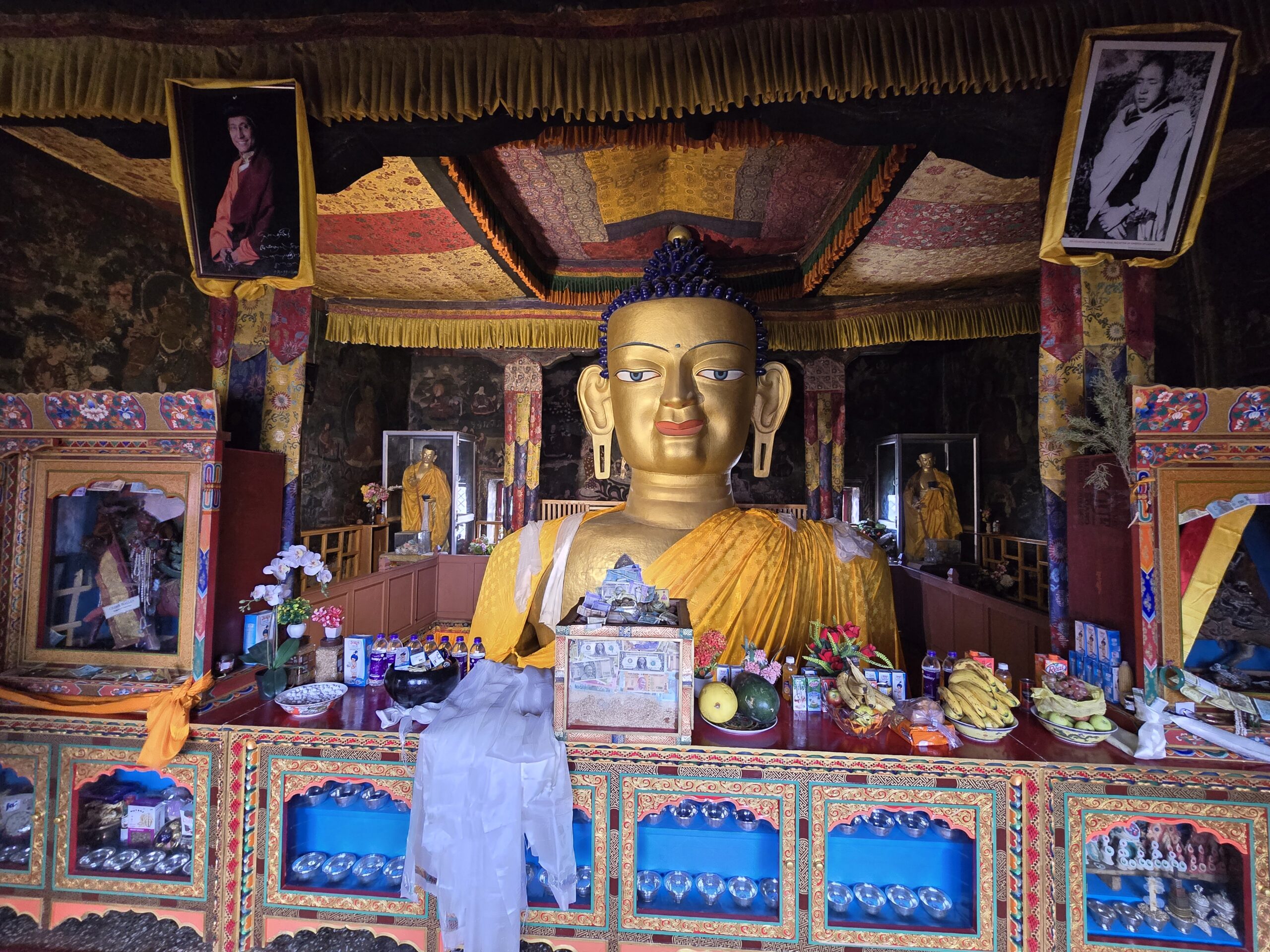
Turtuk village is a charming and tranquil destination in Leh, displaying picturesque landscapes at every turn. Upon arrival, we were captivated by the local culture and immersed in the villagers’ way of life. The villagers, eager to share their stories and traditions, welcomed our interactions.
Upon arrival in Turtuk, we lunched at Balistan Food Yard Cafe and Restaurant. Afterwards, we visited Thang, the last border village on the Line of Control (LoC) between India and Pakistan. En route, police requested we log our entry before proceeding. At Thang, we glimpsed Pharnu, a village on the other side of the border. A poignant iron board installed on the border tells the story of the LoC’s impact. Before 1971, Thang and Pharnu were twin villages, sharing a common heritage. However, during the intervening night of December 16 and 17, 1971, saw them were separated by the LoC, severing relationships. Now, families are divided, with husbands living on one side and wives on the other.
After spending half an hour near the LoC, we returned to Turtuk and met a Kashmiri hotelier, who accommodated us for the night. We freshened up, offered prayers, and enjoyed Namkeen tea at a local hotel. Later, we dined on Kashmiri Wazwan at Stream Edge Café and Restaurant, where we met tourists from Chennai. We discussed various destinations and shared a joint photograph before bidding farewell. Returning to our room, we retired for the night.
The following day, we rose early, bathed, and offered Fajr Prayers. By 10 am, we had departed our room and enjoyed breakfast at Balistan Food Yard Café and Restaurant. We left Turtuk at 10:30 am, bound for Hunder, another Nubra Valley destination. After a two-and-a-half-hour journey, we arrived in Hunder at 2 pm and lunched at a local hotel. Soon after, we booked a room at Hotel Yangdol for the night.
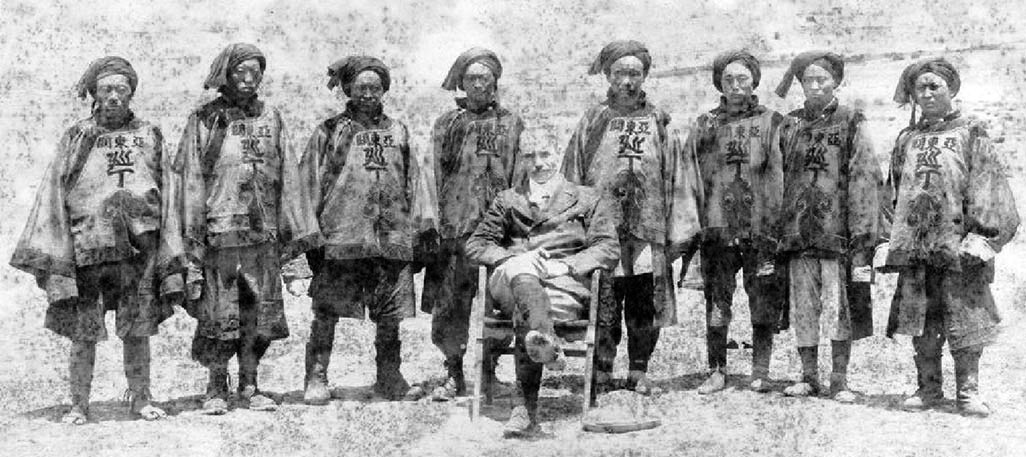
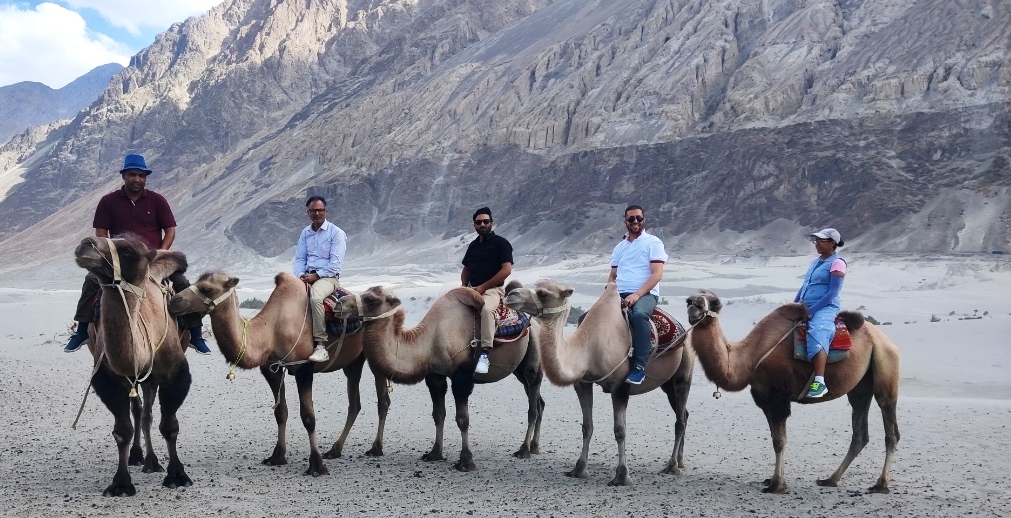
Hunder, a high-altitude cold desert, boasts breathtaking scenery. This former Nubra kingdom capital is nestled in the heart of the Nubra Valley, where dunes meet green poplar trees and picturesque bare mountains. At an elevation of approximately 10,370 ft, Hunder is surrounded by snow-clad mountains, creating a stunning backdrop for its arid landscape. The region is home to vast dunes, the Shyok River, and the famous Bactrian double-humped camels, said to have traversed the ancient Silk Route. We were eager to experience the thrill of a camel safari, so we visited a nearby riding site at 3 pm. After purchasing tickets, we enjoyed the ride, capturing memorable videos and photographs. The beauty of Hunder’s dunes cannot be adequately expressed in words; it must be experienced firsthand. Following our camel ride, we returned by 6 pm, had tea, and rested until 9:30 pm. Later, we dined at Wazwan Planet Restaurant, mere meters from our hotel, before retiring for the night.
We rose at 4 am the next day, bathed, and offered Fajr prayers. With our bags packed, we set off for Pangong Tso Lake at 5 am, via Shyok, notoriously known as the River of Death. The journey along the Shyok River is a captivating one, attracting tourists and adventure enthusiasts worldwide. They come to marvel at the stunning scenery and immerse themselves in the rich, vibrant culture of the Shyok Valley.
However, embarking on a day tour via Shyok necessitates an early start. The road trip to the Shyok River in Ladakh is daunting, as the river must be crossed multiple times. Unlike other Ladakh rivers, the Shyok River is turbulent and muddy, carrying minerals in its wake. The route is characterised by numerous water streams, off-roads, and a 30-35 km stretch of rough or non-existent road. Our pleasant drive up to Khalsar suddenly turned into a bumpy, arduous one, reducing our speed to a mere 10-15 km per hour.
Pangong Tso Lake is one of Ladakh’s less visited corners, due to its challenging accessibility. The road to the lake runs alongside the river, through valleys and villages, which are often vulnerable to glacial melt flows that can rapidly flood with water following rainfall and warm sunshine. During our journey, we passed through villages that had been swept away or cut off by the forces of nature.
We began our day at 5 am and, finding no hotels en route, continued driving until we reached Agham at 8 am, where we finally had breakfast. Departing Agham at 8:30 am, we took the Aagham-Shyok route to reach Pangong Lake. Unlike the Khalsar-Agham stretch, the road from Agham to Pangong was in good condition. After a six-hour journey, we arrived at Pangong Tso Lake at 10:45 am.

Pangong Tso Lake is a mesmerising sight, with its dramatic mountains and rugged terrain. The lake’s waters display various shades of blue. The lake gained worldwide recognition after featuring prominently in the Bollywood blockbuster, 3 Idiots. Its breathtaking beauty, with azure waters surrounded by majestic mountains, has captivated hearts worldwide. The movie played a significant role in increasing tourist footfall in Ladakh, primarily due to its stunning cinematography displaying the region’s breathtaking landscapes. The visuals left an impression on viewers, inspiring many to explore the real-life locations featured in the movie.
The iconic scene in the movie 3 Idiots, where the protagonists ride a scooter on Pangong Lake’s shores, left a lasting impression on viewers. This exposure drew attention to Ladakh’s remote and stunning location, making Pangong Lake a must-visit destination for travellers seeking to experience the same awe-inspiring vistas. Its newfound fame led to a surge in tourism, making it one of Ladakh’s most popular attractions and a bucket list destination for many.
At the lake, we encountered numerous tourists, including a group from California, USA. We engaged in a brief conversation and took photographs with these foreign tourists. We had a delightful time at the lake, capturing videos and scores of photos with a scooter like the one used in the movie. We visited various locations around the lake where the film was shot.
After spending an hour and a half at the lake, we departed Pangong at 12:20 pm towards Leh via Chang La Top. We reached Durbuk at 1:20 pm and had lunch. Following lunch, we left Durbuk and reached Chang La Top at 3 pm. The total distance from Pangong Lake to Leh via Chang La Top is approximately 135 kilometres, a journey that can be completed in three hours, depending on the road conditions.
At Chang La, Ladakh’s third-highest motorable mountain pass, we had a quick photography session. The pass, at an altitude of 17,688 ft above sea level, is named after a celebrated Sadhu, Chang La Baba. Finally, we arrived at our hotel, Honey Bee, in Leh at 5 pm.
After freshening up, we visited the main market, where we enjoyed a vanilla shake, before proceeding to the Central Asian Museum Leh. The museum is conveniently located near the Jamia Masjid Leh, just a few minutes away.
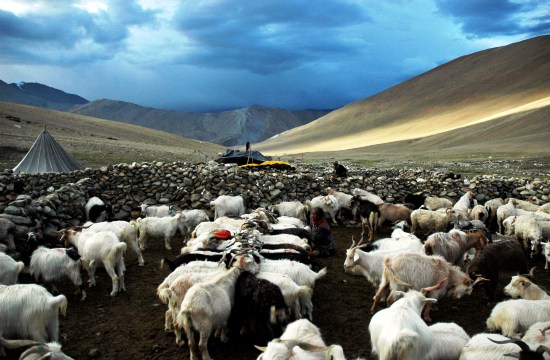
The museum is situated within the premises of the 17th-century Tsa Soma Masjid, which was restored in 2007 by the Anjuman Moin-Ul-Islam Society and Indian Trust for Art and Cultural Heritage (INTACH Jammu and Kashmir Chapter). Daily prayers are still held here. Outside the masjid stands a revered tree, Datun Sahib, sacred to Sikhs. A nearby bakery produces fresh traditional bread in a giant furnace.
Upon entering the museum, we were struck by its remarkable architecture. This four-storey stone building is a modern construction inspired by a historic Lhasa mansion, built on the site of an old caravan camp. The museum displays Ladakh’s age-old relations with its neighbours, attracting visitors from far and wide. Each floor is dedicated to a specific culture, such as Ladakhi, Balti, and Kashmiri, featuring photographs and objects that display the region’s cultural heritage.

The museum preserves the cultural roots for future generations, allowing them to remain connected to their past. Its rich collection includes artefacts, manuscripts, and pieces of heritage from Central Asia, Tibet, and Kashmir, dating back to the 18th and 19th centuries, with some items over 400 years old. During our visit, we met an Austrian tourist, and a yoga teacher exploring India’s yoga traditions. We had a brief conversation before exploring each floor of the museum.
The Museum houses an array of artefacts, including rock art, ancient Ladakhi instruments such as weighing balances and abacuses, coins from various Central Asian states, and a caravan water heater. Additionally, it features utensils from Yarkand, manuscripts like Bodhi and Turkish Tafseer of the Holy Quran, and handwritten chronologies of the Holy Prophet (peace be upon him) on cloth pieces. Each floor displays photographs and objects highlighting the historical trade routes between Central Asia and Ladakh, as well as the region’s cultural heritage and commercial exchanges.
After exiting the museum, we visited the 17th-century Tsa Soma Masjid, where numerous foreign tourists had gathered to glimpse the ancient structure.
By 7:45 pm, we departed the museum and Tsa Soma Masjid, proceeding to the historical Jamia Masjid Leh to offer Maghrib prayers. Located in the heart of Leh city, Jamia Masjid is the largest mosque in Ladakh, constructed in 1666-67 AD as part of an agreement between Ladakh’s ruler, Deldan Namgyal, and Mughal Emperor Aurangzeb.
Jamia Masjid boasts a unique architectural style, blending traditional Islamic design with local Tibetan influences, inspired by Turkish-Iranian architecture. Its white façade, intricate wooden carvings, and elegant minarets create a striking contrast against Ladakh’s rugged mountains. The mosque’s interior features unique architecture and decorated carvings, with a prayer hall adorned by beautiful arches and calligraphy, providing a peaceful space for worshippers and visitors.
After spending an hour at Jamia Masjid, we exited and had dinner at Natho’s Rasoi by 9 pm, returning to our hotel shortly thereafter. Following Isha’s prayers, we retired for the night.
The next day, we rose early for Fajr prayers, followed by breakfast. Determined to make the most of our last day in Leh, we set out to visit nearby attractions. Our first stop was the Shahi-Hamdan Masjid at Shey, approximately 15 km from Leh. This small mosque, built in 1382 CE by Mir Syed Ali Hamdani, a renowned Islamic missionary, is a significant historical site.
After offering prayers, we met Habibullah, the Imam of the Masjid, and engaged in a brief discussion. He shared the historical significance of Shey, once the capital of Ladakh, and its frequent visits from tourists. We recounted our travels in the Ladakh region, and he revealed that Shah-i-Hamdan had also visited Turtuk in Nubra Valley, offering prayers at Tyakshi Masjid, where a stone still bears witness to his presence. Unbeknownst to us, we had missed this opportunity during our previous visit.
Given the Masjid’s vast area and potential for development, we suggested building Sarais with modern facilities for tourists at affordable rates. This infrastructure would not only generate revenue but also facilitate worshipers attending the five daily obligatory prayers. Habibullah welcomed this idea and assured us that he would present it to the administration, as the government has proposed a developmental project for the Masjid, which is under the control and maintenance of Jamia Masjid Leh. After spending half an hour exploring the Masjid and taking photographs, we departed.
We departed for the renowned Druk Padma Karpo School, also known as Rancho School in Shey. This esteemed institution gained fame after featuring in the climax scenes of the Bollywood blockbuster, 3 Idiots, starring Aamir Khan. The school’s popularity soared, contributing significantly to Ladakh’s tourism, as thousands flocked to visit this picturesque location.
Upon arrival, we visited the infamous wall where a scene from the movie was filmed, now dubbed the Ranchos Wall or The 3 Idiot Wall. The wall, adorned with graffiti depicting the scene, has become a tourist attraction, with visitors posing for photographs and singing the iconic song “All is well.” We explored the school premises, capturing numerous photographs and videos. We also visited Ranchos Cafe, where we enjoyed vanilla ice cream before departing.
By 1 pm, we returned to our hotel, offered Zuhr prayers, and had lunch at New Wazwan Planet in Leh at 2 pm. As it was our last day in Ladakh, we devoted the afternoon to shopping and purchasing dry apricots, Chinese toffee, textiles, and kitchenware items. After a fulfilling day, we returned to our hotel at 8 pm, went out for dinner, and began packing our bags.
The next day, we departed the hotel at 6 am and returned home by 8 pm. I extend my gratitude to my friends, Abdul Hamid Sofi, Inayat Ullah Dar, and Irfan Hamid Ganie, who not only organised this memorable tour but also demonstrated remarkable driving skills, navigating challenging terrain and off-roads in the Ladakh region.