Ladakh’s two major bodies have submitted a comprehensive demand for Statehood, Sixth Schedule protections and general amnesty after the September violence, insisting these measures are essential for restoring trust and resuming meaningful talks, reports Babra Wani
If consistency and conviction have an address in erstwhile Jammu and Kashmir, it is the Ladakh region. After initially celebrating the Union Territory (UT) status in August 2019, the region quickly moved back and launched a movement for their rights, which they are still engaged in. Unlike Kashmir, the federal government is also very accommodating of their concerns.
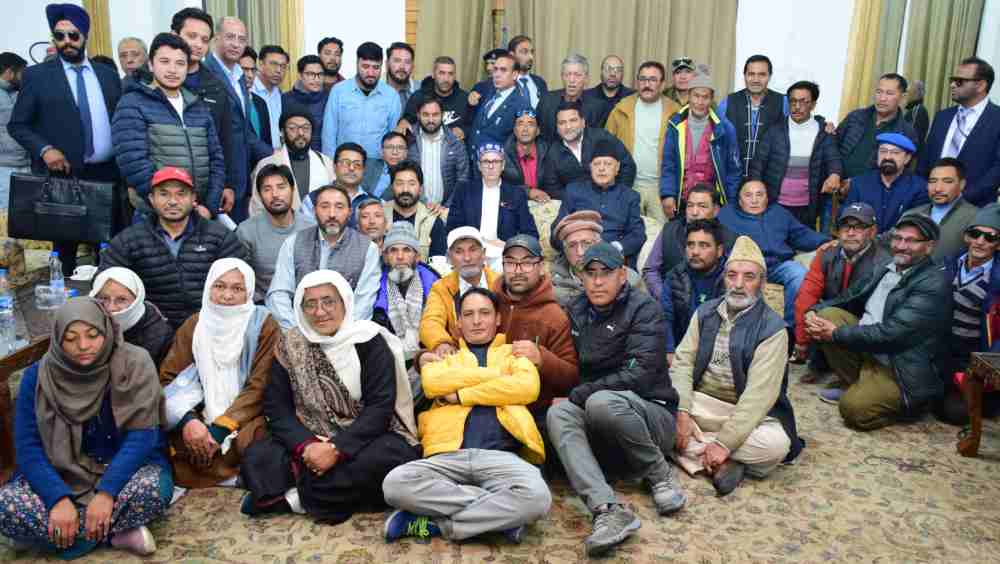
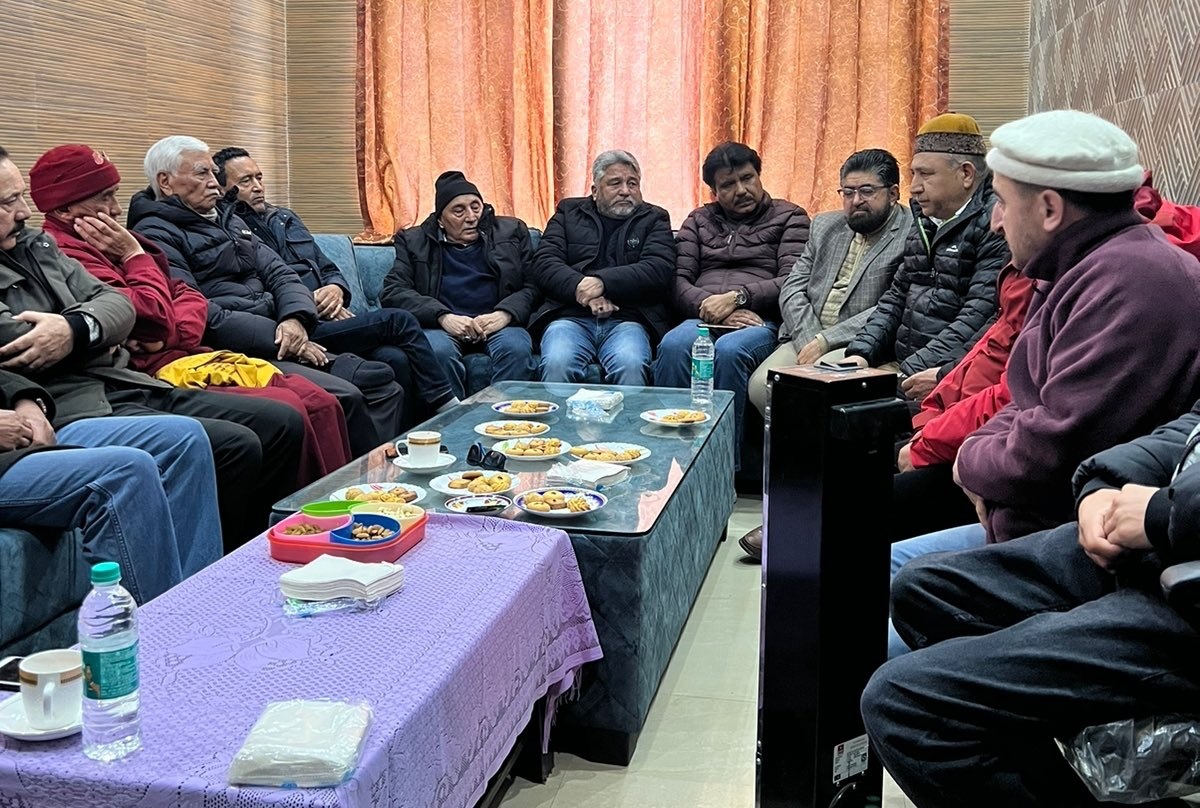
Last week, the Leh Apex Body (LAB) and the Kargil Democratic Alliance (KDA) submitted a fresh, 29-page document to the Home Ministry, outlining their demand for Statehood, Sixth Schedule status and seeking general amnesty for all those arrested after the September 24 violence in Leh, including climate activist Sonam Wangchuk. The document was the outcome of a consensus between both the groups representing Leh and Kargil. It was emailed after a sub-committee comprising Thupstan Chhewang and Qamar Ali Akhoon, Asgar Ali Karbalai and Sajjad Kargili, and MP Haji Haneefa took all sides on board.
The document, Sixth Schedule Provisions and a Case for Statehood: Draft Framework for Ladakh (A Sui Generis Model for Protected Statehood and Sixth Schedule), showcases extensive demands of integrating the proposed State of Ladakh under Article 371 as Article 371-K. It lays out the case for Ladakh’s inclusion under the special provisions of the Constitution, drawing from existing models implemented in other regions.
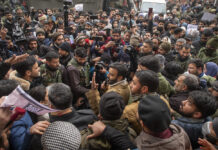
The LAB and KDA resumed the talks with the MHA on October 22. The process had hit a dead end in September after Wangchuk organised a three-week hunger strike to demand for early resumption of talks over Statehood and the Sixth Schedule. Tensions escalated on September 24, when residents, including Wangchuk’s supporters, took to the streets to protest the MHA’s delay in announcing the next round of talks. The demonstrations turned violent, leaving four natives dead and nearly 90 injured.
Focus on CBM
Ladakh leadership saw it as a watershed moment that deepened public mistrust. Following the incident, around 70 people were detained, including youth leaders and representatives of religious organisations. The negotiation process was called off.
The fresh demand document noted that keeping in consideration the conduct of the Ladakhis for the last many years and their peaceful means of protest, “it is therefore important to release all the persons detained in connection with those activities and withdraw the cases against them unconditionally.”
For the talks to proceed smoothly, “an unconditional withdrawal of all the cases is essential,” the demand draft reads. “The extension of such a general amnesty would serve as a huge confidence-building measure that would reinforce the spirit of dialogue and mutual trust between the people of Ladakh and the government of India.
“Such a gesture would also be in keeping with India’s long democratic tradition of reconciliation and goodwill. The Government of India has, in the past, adopted similar approaches in the North-east as well as in Jammu and Kashmir, where the withdrawal of cases and release of detainees played a pivotal role in restoring normalcy and strengthening public confidence in the Union’s intentions.”
Statehood Demand
The document strongly argues that Ladakh’s demand for statehood is rooted in its long political history within Jammu and Kashmir.
“Ladakh is a vast region with a unique and diverse population. Its geographical expanse and distinct socio-cultural identity justify a full-fledged state structure,” it reads. “There are several examples, such as Sikkim and Mizoram, in the country, wherein Union Territories have been upgraded to states, and therefore Ladakh, with its unique identity and history, holds all the qualifications to become a state.”
It notes that Ladakh had participated fully in the state’s representative structures, including the assembly, the legislative council, and even the Jammu Kashmir Constituent Assembly, where “Kushok Bakula Rinpoche and Syed Ibrahim Shah” served as members of the drafting committee. “However, Ladakh has now become the only state that has been demoted to a Union Territory. And after the Reorganisation Act of 2019, the central government has assured statehood for Jammu and Kashmir, while Ladakh continues to be a UT, that too without a Legislature.”
“This situation has created a deep sense of disappointment among the people of Ladakh who have lost their voice in the new set-up and feel disenfranchised,” it adds.
The Sixth Schedule
Besides, the region is also demanding representation under the Sixth Schedule, something they have been demanding for years. The memorandum asserts that Ladakh, being predominantly a tribal area, has more than 90 per cent of its population comprising scheduled tribes.
“There is a huge legal vacuum right now in Ladakh that could protect its demography, land and cultural identity… when various tribal protections that were applicable in the state of Jammu and Kashmir are no longer there. There is therefore a need to replace these Councils with Autonomous District Councils (ADCs) on the lines of ADCs under the Sixth Schedule.”
Another demand that they have put forward is that of the ownership and control of land, forests, pastures, minerals, water and other natural resources in Ladakh. The ownership of these, the document asserted, “shall vest in and be regulated by the State of Ladakh.”
They have also demanded empowered ADCs as they believe that most of the power still lies with the UT administration, “due to which there is a huge void in the legislative autonomy, participatory governance, and financial autonomy.”
The proposed ADCs, the document seeks, must be empowered to frame laws on a wide range of subjects, including land allotment and use, mining regulation, environmental safeguards, cultural preservation, public health, tourism, local recruitment and various forms of taxation.
An Assembly
Alongside the main draft, the groups have submitted The State of Ladakh Act, 2025, which seeks a 30-member Legislative Assembly for the proposed State, reserving 28 seats for the Scheduled Tribe communities of Ladakh. LAB and KDA are also seeking two Lok Sabha seats for the region.
“In the last 20 years, since the autonomous councils were formed, Ladakh has proved that the elected bodies can function well and in the interest of the people,” the memorandum reads. “There is enough study to demonstrate that the Hill Councils in Ladakh have been one of the most honest and efficient institutions compared to many other councils.”
“Therefore, there is already a case in favour of Ladakh that the elected representatives can run the government efficiently, honestly and within the spirit of the constitution of India.”
The document suggested adding a new Article 371-K to grant Ladakh’s future Legislative Assembly sole control over essential matters, including “land ownership and transfer, religious and cultural practices, customary laws, and even civil and criminal justice based on local tradition. It further stipulates that central rules on these issues would apply in Ladakh only if the state Assembly approved them.”
Leader Speaks
LAB co-chairman Chering Dorjay Lakruk told reporters in Leh that the document lays out the two core demands that both organisations have repeatedly placed before the Union Government: the grant of Statehood and the extension of the Sixth Schedule to Ladakh. He said the matters concerning reservations in government jobs and the conditions for domicile certificates have already been settled by the government.
Lakruk said the organisations have also sought a general amnesty for all those arrested after the September 24 violence in Leh. Wangchuk has been detained under the National Security Act, while others are facing charges under different provisions following the unrest, which broke out during a strike called by the LAB’s youth wing to press for early talks with the Ministry of Home Affairs. Four civilians were killed, and ninety people, including security personnel, were injured. BJP and Hill Council offices, along with several security vehicles, were damaged. Wangchuk, who was on a hunger strike at the time, was detained under the NSA, and the remaining arrests followed later. He said that earlier governments have, on occasion, granted amnesty to individuals who surrendered or cooperated with the authorities, and that the LAB and KDA have sought similar treatment in Ladakh’s case.

Talks Resumption
After the talks process hit a dead end, the MHA did many things to create a situation in which the talks could resume. One of the major interventions was to announce a judicial enquiry. Later, when Ladakh groups regretted that it lacked a local member, the MHA accommodated the concern and appointed a native as a member of the Commission. It was only after that that the talks resumed. It was in this backdrop that the MHA had said it would require a detailed document before the next round of talks. The LAB and KDA drafted their demands separately and then finalised a joint submission that was emailed to the ministry today.
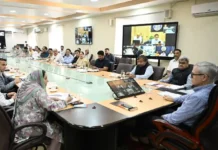
Now, the MHA team handling Ladakh affairs will study the document, following which the next meeting of either the Sub Committee or the High-Powered Committee will be convened in New Delhi. The Sub Committee includes senior officials of the MHA and the Ladakh administration, three representatives each from the LAB and KDA, the Ladakh MP and the Chairperson of the Kargil Hill Development Council. The High-Powered Committee is headed by Minister of State for Home Nityanand Rai and includes six members, each from LAB and KDA, the Ladakh MP and the Kargil Hill Council Chairperson, among others.
The last Sub Committee meeting, attended by senior MHA and Ladakh administration officials as well as representatives of the LAB, KDA, the Ladakh MP and the chairpersons of the Leh and Kargil Hill Councils, was held on October 22. Talks had resumed nearly five months after the previous round on May 27.
The ministry claimed that it would call the next meeting once the detailed document was received and examined. Sources said the schedule for the next round of dialogue will be finalised after the document is carefully reviewed.