Nagrota readies for a high-stakes triangular bye-poll testing legacy, alliances, and opposition unity as Devyani Rana, Shamim Begum, and Harsh Dev Singh clash, reports Syed Shadab Ali Gillani from ground zero
After years of being known as a fugitive hotspot under the shadow of security operations, the dusky highway town of Nagrota is now bracing for a very different contest on November 11, when its residents will cast their votes to elect a representative to the assembly. The familiar hum of the highway has been overtaken by the charged pulse of political activity surging through the town’s lanes. For voters, the decision goes beyond local representation; it is about influencing the broader political trajectory of the Jammu region, particularly the Hindu heartland that the BJP swept in 2024.
The vacancy arose after the passing away of business tycoon, BJP’s Devender Singh Rana, on October 31, 2024, days after he took the oath of office. Rana’s political journey, which saw him shifting from the JKNC to the BJP in 2021, symbolised the fluid and dynamic nature of politics in the region. In 2024, he won by a record margin of 30,472 votes.
Now, his daughter Devyani Rana seeks to build on her father’s legacy, with the party aiming to turn public sympathy into a renewed mandate by combining emotion with strategy. She faces JKNC’s Shamim Begum, though many believe former minister Harsh Dev Singh and his revived Panthers Party remain strong contenders.
The Alliance Strategy
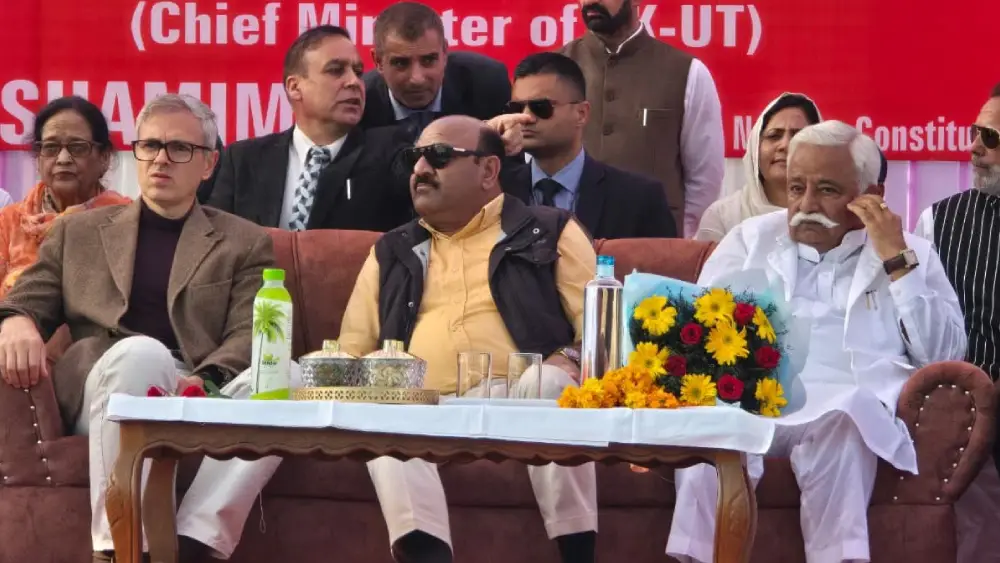
The opposition bloc, mainly the JKNC and Congress, have established a strategy focused on consolidating the anti-BJP vote. This arithmetic approach is crucial in a first-past-the-post system where fractured opposition votes can benefit a dominant party. Shamim, an incumbent District Development Council (DDC) member, had four years of local governance experience and knowledge of the area’s social composition, positioning her as a grassroots alternative.
The NC-Congress alliance relies on political arithmetic and optics of alliance strength, promoting Shamim’s record of grassroots work and experience. However, the campaign environment includes reports of internal friction and dissidence within the alliance, which could undermine the consolidation of the opposition vote.
“The biggest responsibility I feel in this bye-election is to fulfil my father, Rana sahab‘s, last wish,” Devyani stated. “In his final days, he spoke of keeping his promises to the people of Nagrota, putting them above himself even in distress. I used to joke that his true family was Nagrota, and he proved it. Now, I am determined to carry forward his work for the town.”

The Wild Card
Harsh Dev Singh’s entry into the fray carries the potential to fracture the anti-incumbency sentiment, setting the stage for a volatile triangular contest. A seasoned politician with an impressive record, Singh won three consecutive terms from the Ramnagar constituency between 1996 and 2014 and served as Minister of Education. Over the years, he has earned both recognition and respect among Dogra voters.
In the post-2019 political landscape, Singh briefly aligned with the Aam Aadmi Party before reviving the Panthers Party, a move that reaffirmed his image as an independent voice and an outspoken critic of both national and regional establishments. His current campaign casts him as a challenger to the dominance of the BJP as well as the traditional regional parties. Yet in Nagrota, his presence poses a dilemma for the NC-Congress alliance, as his appeal risks dividing the very opposition vote the coalition seeks to consolidate.
Local Issues
A semi-urban constituency, Nagrota mirrors the diverse cultural fabric of the region, with its mix of Dogra-Rajput and Gujjar populations. The area’s political history suggests that personal connections and local leadership often carry more weight than party affiliations.
Unlike nationalist themes that dominate the discourse in newspapers, the contest in Nagrota shows how appetite for immediate, everyday concerns like roads, water supply, land ownership, employment, and the region’s relationship with the civil secretariat. It reflects the broader tensions that shape Jammu’s politics – between Jammu and Kashmir over resource distribution, between local communities and Delhi’s centralised authority, and between long-standing political traditions and the forces of change seeking to redefine them.
Conversations across Nagrota, from Dansal block to the cantonment area, reveal two distinct strands of voter sentiment, often divided by generation or by proximity to the Devinder Rana. Older residents express a sense of reliance on established relationships and a deep loyalty rooted in tangible benefits.
“The Rana family knows the local roads; we had works done, we had contact,” one resident remarked, reflecting a preference for accessibility and familiarity in leadership.
Younger voters, however, speak a different language, one of opportunity, reform, and accountability. “Party promises matter, but we want concrete jobs, good infrastructure, and water supply in the villages,” said another voter. This generational divide captures the central challenge for all three campaigns: finding the right balance between the emotional power of legacy and the pressing need for real development.
The Shamim Phenomenon
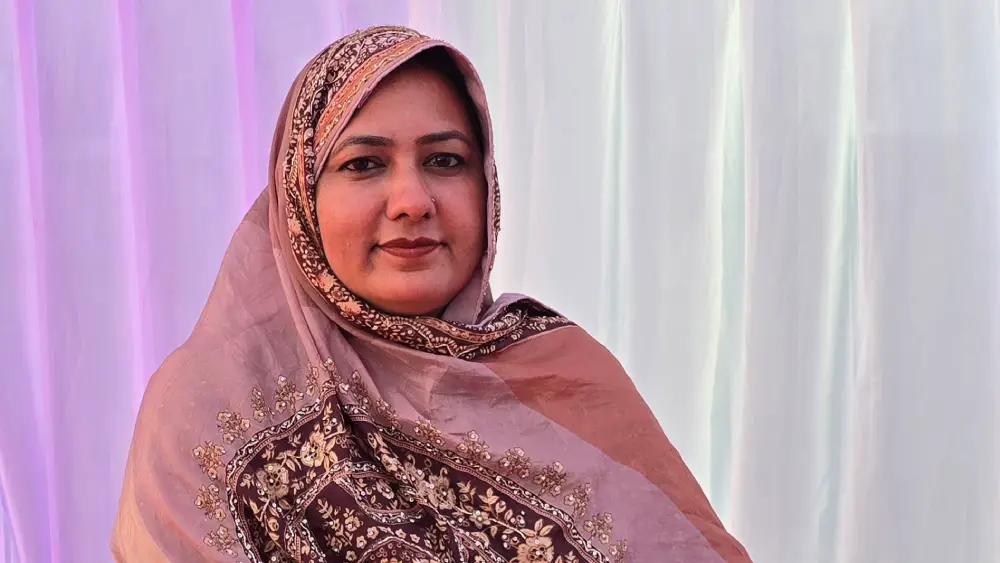
Shamim’s candidacy took shape through a series of inter-party deliberations and strategic manoeuvres within the opposition alliance. She described her nomination as the outcome of a pragmatic and evolving process shaped by consensus and circumstance
“The National Conference had initially decided to offer the Nagrota seat to the Congress, but they declined late in the evening,” Shamim recalled. “Within our party, it had already been agreed that if Congress chose not to contest, I would step in as the candidate. Until that very morning, I didn’t even know I was running. Once the mandate came, I accepted it and went straight to the field.”
Begum admitted that the scale and complexity of this election are far greater than her previous contest. “I had earlier won the DDC election, but this is a different challenge altogether. The assembly constituency has nearly doubled in size, now covering two additional blocks,” she said.
Relying on her deep connection with the people, particularly in areas she has already served, she added, “Wherever I go, people tell me they remember the good governance of the NC. For the past ten years, we haven’t been able to work, and our children remain unemployed. People want to have their say in the government again. We want to secure a better future for our children and ensure real development for our area.”
Begum rejected the pro-Devender ‘development narrative’. Much of it was achieved during the JKNC government, when Rana was the MLA. “Whatever work was done, it has all been done by Omar Abdullah,” she said. “It is his gift. If someone can point to a big development in the last 10 years, I would like to hear it.”
Her campaign centres on the idea that Nagrota stands to gain more with a representative aligned with the government. “People tell me that during the NC government, unemployment was low, and development was visible,” she said. “If you want development through an MLA’s limited funds or through the backing of the entire government, which will work for the growth of the constituency? Is not that a better option?”
Begum highlighted the persistent issues of access and exclusion. “Even when the IIM and IIT were set up in Nagrota, local youth hardly got 1–2% of the jobs, not even in basic positions like security or clerical work. Outsiders took those opportunities, leaving our children with almost nothing, even in private companies,” she alleged.
Devyani Campaign
For Rana Junior, the election is deeply personal. “We stand on the goodwill of Rana Sahab. This is a healing process, for me and the people to pay him a true tribute together. I feel the election has come as a blessing. I have never felt like we are visiting strangers in Nagrota.”
Rana outlined the three pillars of her campaign. “In this triangular contest, we are backed by the support of the BJP, the legacy of my father, and the on-ground work that we have been doing for the last eleven months.”
“We have set up the FPO Cooperative Limited to address the financial distress of our farmers, helped women create Self-Help Groups (SHGs), and assisted youth in job placements, particularly in the private sector,” she said. “The claims we are making are based on what is happening on the ground level.”
Rana focuses on holding the government accountable rather than debating statehood. She argues that the current administration already has most powers, yet fails to act locally in places like Nagrota. “Statehood won’t help if the government doesn’t use the power it already has,” she believes, almost echoing the Raj Bhawan.
Devyani presents herself as someone capable of bridging generations and addressing the modern economic realities. “At 31, I am in a unique position to understand both the older and younger generations in this constituency. I connect well with all ages, and the youth support me,” she said.
On unemployment, Devyani champions Central Sponsored Schemes. “We must push the implementation of new initiatives like the Pradhan Mantri Viksit Bharat Rozgar Yojana 2025 to boost private sector jobs,” she said. “I tell the youth—prepare for government exams, but also look to the private sector. No job is too small. If you’re capable, work. Skill matters more than a degree.”
She noted that the IIT and IIM were established during her father’s tenure before delimitation moved them out. “We still have the Food Craft Institute, and my focus now is on strengthening local economies through Self-Help Groups and cooperatives,” she said. “I want every household in Nagrota to see progress. With my background in economics and business development, I aim to promote micro-enterprises and MSMEs on the ground.”
Responding to criticism about “familyism,” Devyani reframed her candidacy as a continuation of her father’s bond with the people rather than a product of dynastic entitlement.
High Stakes
The Nagrota bye-poll holds significance well beyond its constituency limits, with its outcome likely to shape party strategies across the Jammu region. For the BJP, it will test its ability to manage succession and sustain inherited legacies; for the NC, it will gauge the strength and viability of its alliance strategy. Much will hinge on how far Harsh Dev Singh cuts into the vote share of the main contenders, particularly Shamim Begum, whose performance will signal the opposition’s cohesion.
The bye-election also bears institutional weight, as the vacant seat has delayed Jammu and Kashmir’s full representation in the Rajya Sabha. When results are declared on November 14, voters will have decided whether the victor is a daughter, a seasoned local leader, or the wildcard challenger.