A politically fraught demolition of journalist Arfaz Daing’s home in Jammu has triggered public outrage, official denials, political confrontation, and an unexpected chain of compassion that has revived the idea of communal harmony, reports Syed Shadab Ali Gillani.
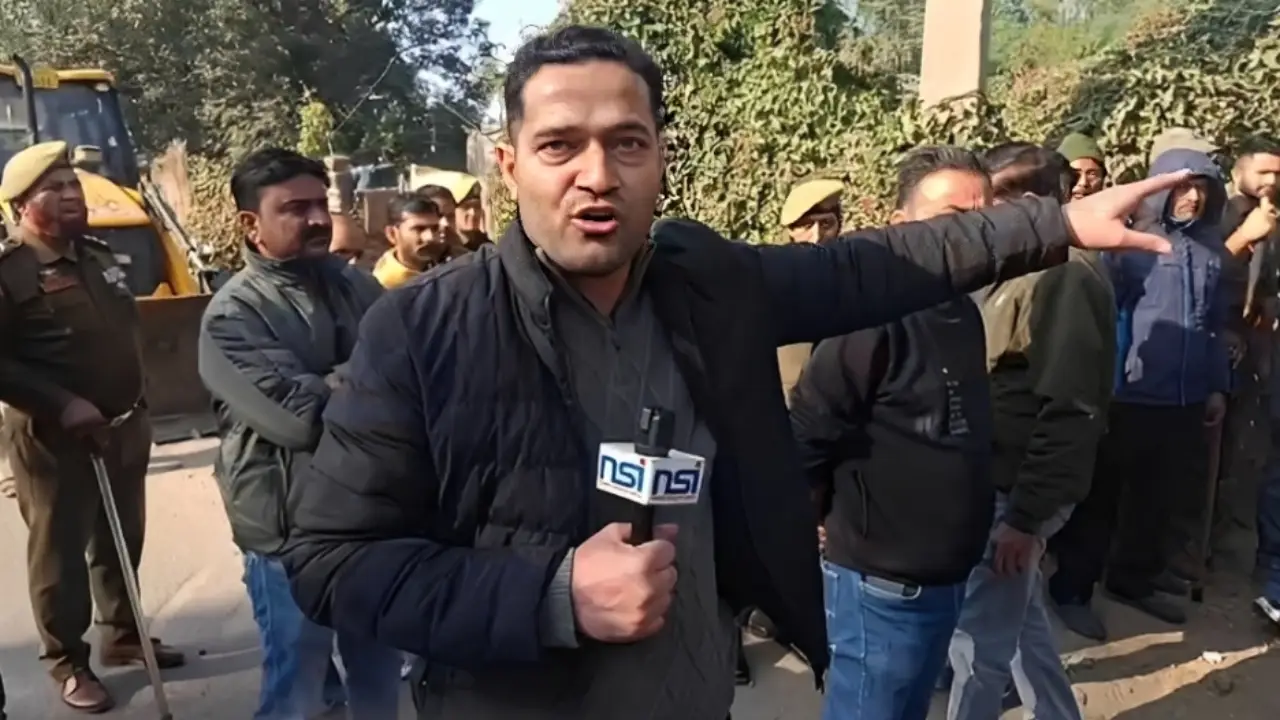
Demolitions, as they say, remain constant in India. Perhaps that is why Agha Ruhullah, Srinagar MP, told the Lok Sabha that Jammu and Kashmir is perhaps in competition with UP.
The recent home demolition in Jammu’s Narwal, and before that in Kangan (Kashmir), has spiralled into a political and administrative crisis. Interestingly, the Chief Minister’s Office was quick to dissociate itself from the decision. Raj Bhawan, recently renamed as Lok Bhawan, skipped comment, but a senior BJP leader spoke on its behalf, saying no such orders had come from the LG.
As an isolated Jammu Development Authority (JDA) is caught between the political executive and the administration, the families rendered homeless are searching for answers in the wreckage. The demolition, however, revived the lost narrative of communal co-existence and regional brotherhood. This was because of the destruction of the 40-year-old family home of journalist Arfaz Daing.
A First-Hand Account
The morning the bulldozers arrived was characterised not by the standard procedure of an anti-encroachment drive, but by an overwhelming, almost punitive show of force, Daing said. It was a deliberate, coordinated operation executed with military precision, yet devoid of essential legal paperwork.
“On November 27, the JDA arrived with police and CRPF, maybe 1,500 to 2,000 security personnel and four JCBs, including an L&T chain machine,” Daing recounted. The deployment of thousands of personnel, usually reserved for major security threats, for a simple property demolition suggested a political order far beyond routine municipal action.
The action was swift, brutal, and profoundly illegal, according to Daing. “We were not informed; no household items were permitted to be taken out. We were detained by the police. When I asked for a notice or order, they said it was an order from above. When I asked to show it, they said there was no written order, only a verbal one,” he said. This verbal order from above implies an unseen power other than the two ruling the roost in Jammu and Kashmir.
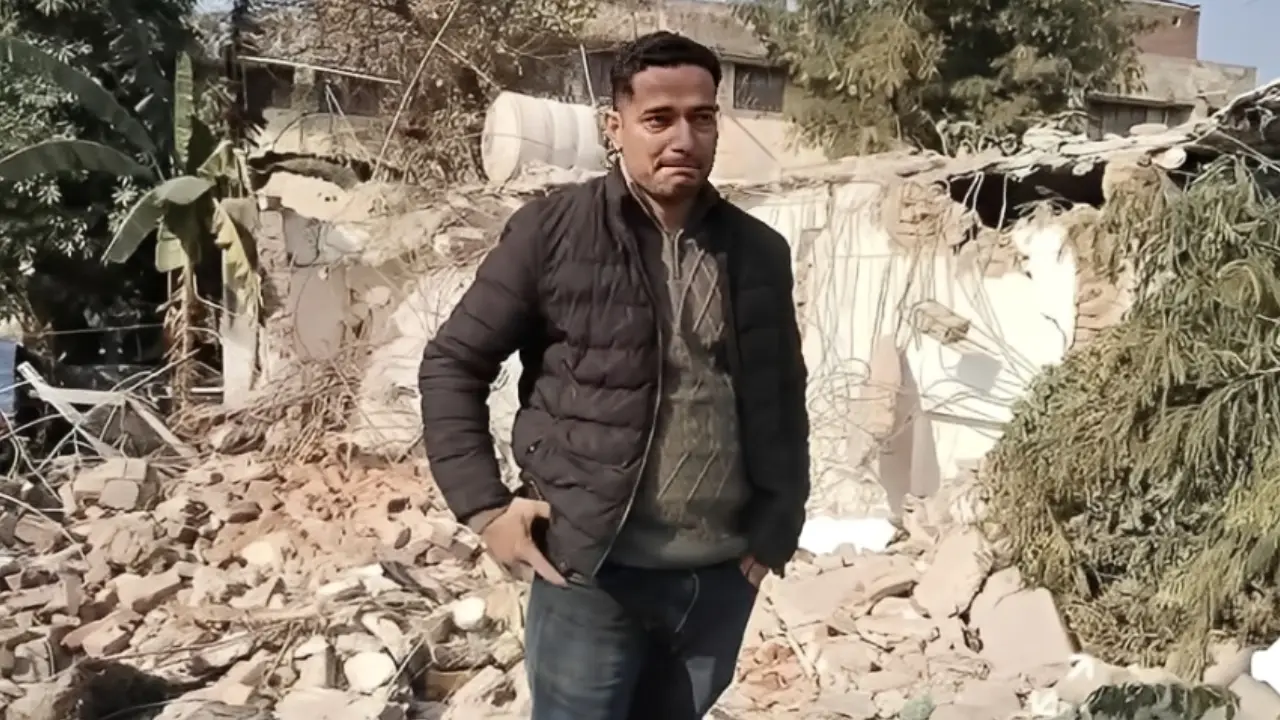
Being a journalist, Daing said he felt compelled to document the destruction of his own home, a decision that led to immediate conflict with the deployed security forces. “I said I would not take anything out and that I would do my work as a journalist,” he remembers. “When I started recording, they misbehaved with me, my cameraman, and other boys. We were detained for two and a half hours.” Later, this triggered public outrage.
“When I was set free and returned, half of our belongings were buried under the debris, my children’s books, uniforms, shoes, and my wife’s jewellery,” Daing shared. “The women in the house were taken aside by the cops and were not allowed to take things out.” Only a few large items were saved by JDA staff; the rest of the family’s history, financial security, and basic necessities were all lost.
Public Denials
A day later, when the demolition dominated social media, the twin centres of power disassociated themselves from the decision.
The elected head of the government, Chief Minister Omar Abdullah, was quick to deflect blame onto the administrative machinery he claimed to only partially control. Bulldozers, he said, were not used at his direction. “That officer (JDA Commissioner) is not my appointee. At least if they had to use a bulldozer, they should have consulted the concerned minister and taken him into confidence,” he said.
Omar said his government did not support illegal encroachment, but selectively targeting one community to malign the elected government was wrong. “Had there been no interference in the elected government’s affairs, how was the bulldozer used?” he asked.
Raj Bhawan remained silent. But senior BJP leader Ravindra Raina, who visited Daing’s family to express solidarity, insisted the LG administration had no role either. “I have spoken to LG Manoj Sinha, who conveyed that no official from his administration had authorised use of bulldozers in this case,” he said. “Our Prime Minister is building houses for people under PM Awas Yojana. Our government has constructed thousands and lakhs of houses for the poor. We are not among those who demolish houses.”
The Critique
MP Srinagar, Aga Ruhullah, wrote on social media, “Controlled democracy!”
“For the last three days, I have been giving notices in Parliament to raise the issue of the demolition of Arfaz Ahmad’s house in Jammu and the demolition of houses in Ganderbal district. I wanted to raise this issue during the Zero Hour discussion. I also intended to appreciate Mr Kuldeep Sharma of Jammu from the floor of the House for his humanitarian gesture,” he wrote. “Today, on the third day, the marshal responded to me, saying that the issue is controversial and the Speaker’s direction is not to allow such issues. They wanted me to change the topic to something convenient for them.”
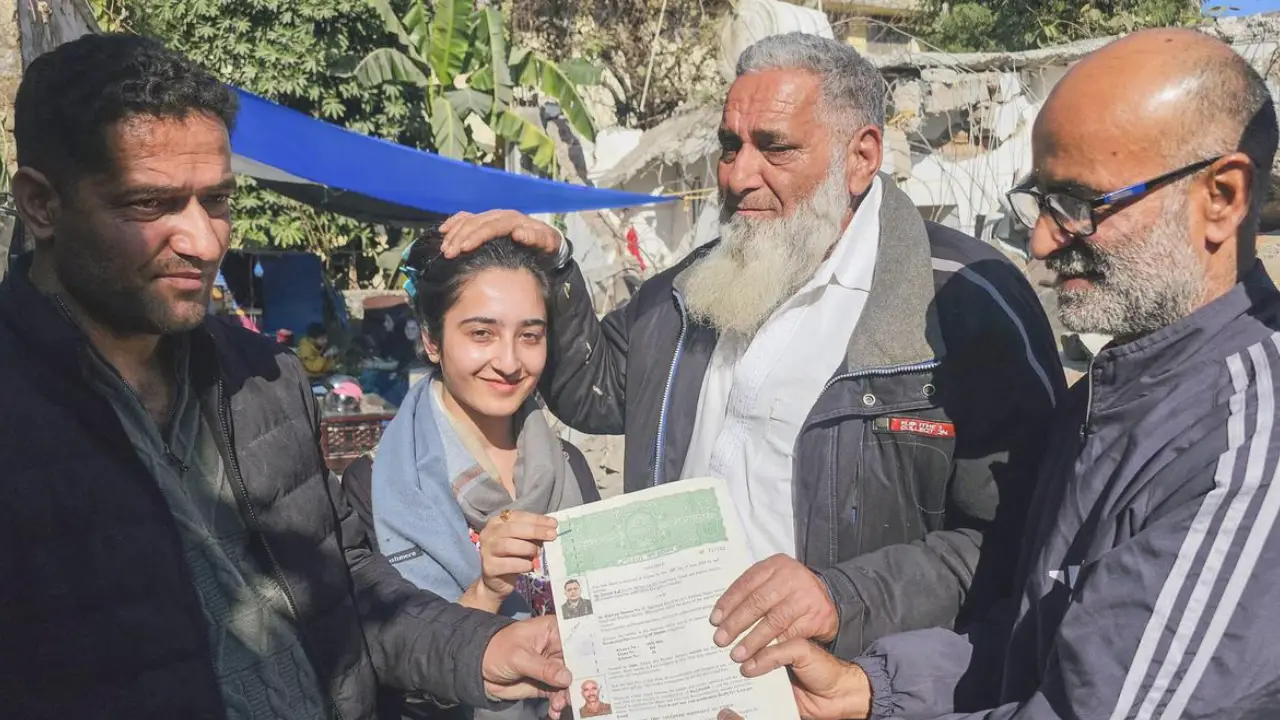
Speaking finally on December 5, Aga questioned “growing discriminatory actions” and urged the government to uphold legal procedures over “imported ideological biases.” He thanked Jammu resident Kuldeep Sharma for donating his land to Arfaz, whose house was “demolished illegally” without notice. Sharma’s gesture, he said, proved that “no matter how many minds are poisoned, we are one.”
In Jammu, Deputy Chief Minister Surinder Singh Choudhary also visited Daing’s residence and said JDA must explain who ordered the demolition. “The government will act against anyone responsible for unlawful orders,” he said, promising a full inquiry.
“In the context of counter-claims about who actually ordered demolitions, can sahib please issue a written order that henceforth no demolition is allowed until intimated to CM office and cleared by the CM office?” lawmaker Sajad Lone posted on X. “Any demolition undertaken after such an order will be in breach of the law. And the concerned officer or officers will face the consequences of breaking the law. If not today, for sure at a future date.”
“One question remains unanswered: who is driving this eviction and demolition campaign in J&K?” PDP’s Waheed Para posted. “Turning families landless is exactly why the PDP’s Land Rights & Anti-Bulldozer Bill was so important—a bill rejected by NC and BJP in the J&K Assembly, a vote that ignored the pain of people losing homes, land and dignity.”
In this backdrop, former Srinagar Mayor Junaid Mattu’s post on X offered the final, biting note of satire on the entire situation: “BJP leaders say they don’t support demolition. The NC Government says they were not informed, nor permission sought. Conclusion—nobody demolished Arfaz Daing’s house. The house demolished itself.”
A Chain of Compassion
For Daing, the Narwal destruction was the second blow. There, he was just seeking shelter at his parents’ house in Channi Rama after his own property in Bhatandi was demolished by “private people.”
This time, however, the rubble triggered a fierce reaction, purely humanitarian, devoid of regional or communal divide. “It is the eighth day, and people still come with sympathy and empathy,” he said. “I only put out the truth. My fault is that I do not fight. I report.”
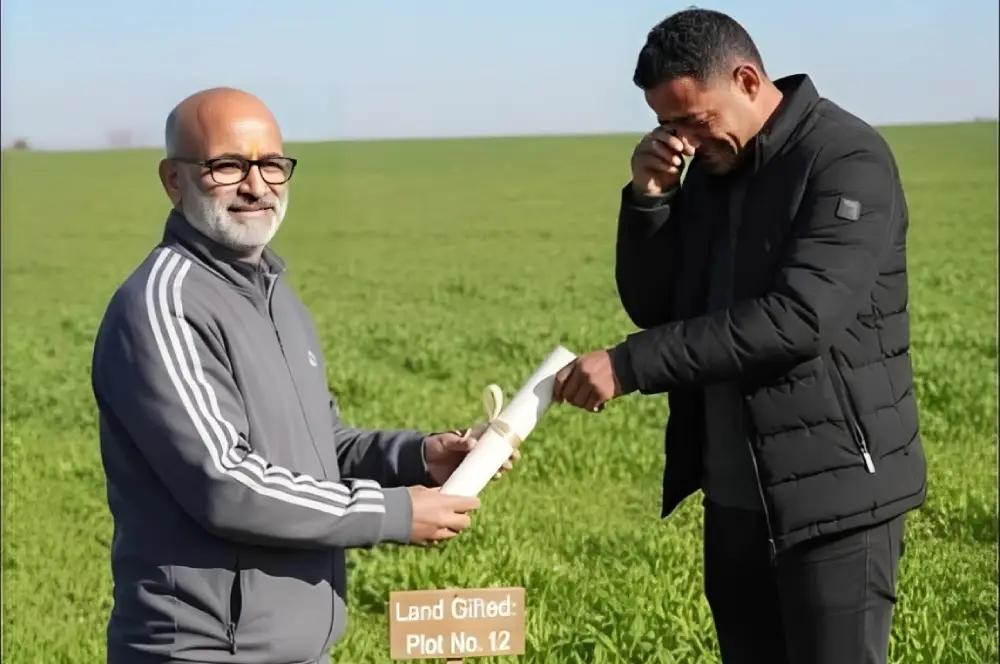
The act of compassion came from a former soldier, Kuldeep Sharma, who gifted Daing a piece of his proprietary land. “I acted on a basic human duty, beyond religion and community,” Sharma said, explaining his motivation. “I have two daughters. If my house had been demolished, where would I take them? This is what I thought when I saw Arfaz’s video.” He emphasised his belief system: “Insaan ka insaan se ho bhaichara is what I try to follow. Respect for every religion is my belief.”
Sharma’s act triggered a remarkable chain of reciprocity, demonstrating the enduring strength of the region’s shared culture. A Kashmiri businessman from Pampore, who wished to remain anonymous, offered Sharma one kanal of prime land, worth nearly Rs 1 crore, in return for his five marlas to Daing.
“At a time when people fight over caste, creed, colour, and religion, Kuldeep Sharma proved humanity is alive,” the businessman stated, deeply moved. “Not just land, I am ready to give my blood to Sharma. I cannot believe such humans exist. He rose above religious lines to help a Muslim man.”
This extraordinary act was swiftly followed by a second offer. Muhammad Iqbal Shah, a well-known businessman from Kapran (Shopian), announced an offer of ten marlas of valuable land, containing apple trees, to Sharma. Shah confirmed he would travel to Jammu to personally present the original documents.
Kuldeep Sharma is overwhelmed by the response. “The land given to me by a Kashmiri is a gesture in return for one small step I took. We are all one. One sun, one moon, one universe.”
Legal Scrutiny
Condemnations apart, the demolitions have pushed people to investigate the style and system of these enforced destructions.
“The demolitions have been selective. Poor families and nomadic groups are targeted. Officials are given targets, and influential people are not touched. There is no equal treatment in these cases,” Jammu-based advocate Sheikh Shakeel asserted, citing evidence that officials often operate with quotas and mandates to show action, often at the expense of the defenceless. He claimed that this practice creates a stark duality in governance: “Jammu and Kashmir is functioning with two sets of rules—one for the poor and one for the rich. There is no equal process.”
Shakeel stressed that any such action must adhere to the highest judicial standards. “Demolitions require due procedure under Supreme Court guidelines. Here, these guidelines are ignored.” He noted that the victims, mostly poor and marginalised, often lack the means to approach courts for relief, exacerbating their hardship, especially when these actions take place during harsh weather conditions.