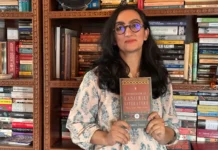
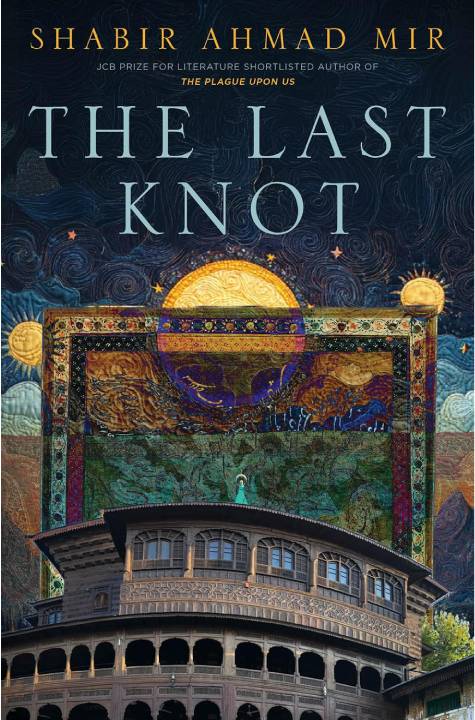
Set in nineteenth-century Srinagar, The Last Knot by Shabir Ahmad Mir is a lyrical tale of artistic defiance and spiritual resistance. Blending Kashmiri folklore with magical realism, Muhammad Nadeem reviews this novel that follows a carpet maker’s dream of flight—an allegory woven through memory, myth, and the unyielding threads of history.
Shabir Ahmad Mir’s novel, The Last Knot, emerges as a compelling work that bridges folklore, history, and the transformative power of art. Set against the evocative backdrop of 19th-century Srinagar, the narrative intertwines magical realism with historical depth to explore themes of resistance and creative defiance. At its core, the novel follows the journey of a devoted carpet weaver whose quest to weave a flying carpet symbolises both artistic aspiration and an escape from oppressive circumstances. It is rich with allegorical references, drawing on Kashmiri mythology and the region’s intricate cultural tapestry to reflect on how beauty and creativity can defy the limits imposed by societal forces.
The unfolding tale could inspire readers to consider alternative possibilities that lie beyond conventional constraints, as the protagonist envisions a world where art liberates and transcends the mundane. Mir’s narrative is firmly rooted in the traditions of Kashmiri literature, yet it simultaneously challenges them by reimagining myth through the lens of personal and collective struggle.
Historical Trauma
Mir situates The Last Knot within the textured and historically resonant setting of Srinagar, specifically on and around Haer Parbat. This locale is more than a physical backdrop it is a living, breathing presence that exerts emotional and psychological pressure on all characters. The mountains “let nothing pass,” the protagonist says, establishing a tone of entrapment and inertia that permeates the narrative. The city is divided both physically by the Jhelum River and its seven kadals and metaphysically, by the memory of conquest and the architecture of surveillance.
The fort atop Haer Parbat becomes a symbol of imperial control, described as “perching like a vulture… digging its talons into the flesh of memory.” Its looming visibility is a constant reminder of colonial violence and cultural erasure. The Dogra regime’s presence is felt not through exposition but through subtle, lived experiences: the levy on unclaimed labour, the brutal inspections, and the omnipresence of informers. This setting enables Mir to critique systems of power while grounding the narrative in Kashmir’s specific historical trauma.
Layered atop this colonial framework is the spiritual geography of Kashmir. The shrine of Makhdoom Sahib, situated just below the fort, serves as a counter-force, an embodiment of local memory, resistance, and sanctity. The act of pilgrimage to the shrine, described with breathless reverence, “Heaving, panting, I lie beside the tomb of my saint…”offers a momentary escape from worldly subjugation. The shrine operates as a moral and spiritual compass in a landscape otherwise saturated by violence.
Equally crucial is the cultural specificity Mir employs through language and symbolism. The use of Kashmiri terms taalim, karkhan, wusteh roots the text in its native linguistic soil. These aren’t simply ornamental inclusions but integral to the novel’s worldview. The chants of the taalim are likened to spells, affirming the magical realism of the text and reflecting a society where oral traditions preserve subversive knowledge.
Additionally, Kashmiri folklore such as the tale of Solomon and the Queen of Sheba, or the story of Zaina Kadal’s construction in fuses the novel with narrative legitimacy. These are not mere digressions but essential counter-histories that resist the linear progression of colonial time. Even the protagonist’s dream of the flying carpet emerges from these cultural fissures, underscoring how regional mythology offers an archive of change. Thus, the setting is not passive but provocatively alive, forcing characters and readers alike to confront the intimate relationship between geography, memory, and imagination.
Possibilities
The narrative follows the persistent journey of a gifted carpet maker immersed in the city’s mystical and historic milieu. Tasked with the seemingly impossible mission of weaving a carpet that could defy gravity and take flight, the protagonist embarks on a quest imbued with both artistic vision and subversive ambition. His journey is initiated in a bustling karkhan where traditional methods clash with his unconventional dream of a flying carpet, a dream that embodies the potential for liberation and change. Early in his endeavour, he encounters Abli Bab, a wizened and enigmatic figure whose presence provides crucial guidance; their interactions reveal layers of mystical lore and serve to deepen the carpet maker’s internal conflict between duty and aspiration.
In addition, the narrative introduces Heemal, whose courageous intervention during moments of imperial oppression shows the tension between individual desire and the strictures imposed by an authoritarian regime. Together, these characters navigate a complex landscape where loyalty and betrayal, traditional obligation and creative impulse, are intertwined. As the story unfolds, conflicts escalate with the advent of imperial forces whose menacing presence looms over the creative process, threatening both the physical act of weaving and the symbolic change it represents.
The narrative weaves through richly detailed episodes, from the intimate, almost ritualistic chant of the taalim to the harrowing confrontation with those enforcing imperial duty. Each episode is meticulously rendered, combining historical veracity with the mythical possibilities of a world where art could take flight. The tension builds as the protagonist’s dream becomes increasingly entangled with the fate of the larger community, raising questions about what could be achieved when creative rebellion meets ruthless authority. His journey is not only one of artistic endeavour but also a poignant struggle against the overwhelming forces of history and repression. An epic quest unfolds.
Liberation
The novel’s characters are drawn with remarkable intricacy, embodying conflicting forces of tradition, defiance, and hope. Foremost among them is the carpet maker, whose inner world is a blend of relentless ambition and existential despair. His singular obsession with weaving a flying carpet becomes a metaphor for liberation as well as a burden of unfulfilled promise. When he boldly declares, “I am going to weave a carpet that will fly”, his statement reveals both his rebellious spirit and the precarious nature of his dream. This moment encapsulates his struggle against an oppressive order that seeks to constrain him within a rigid tradition.
Equally significant is Abli Bab, who serves as both mentor and provocateur. His character is enigmatic yet deeply human; his wisdom and cynicism show the harsh realities faced by those who dare defy societal norms. Abli Bab’s speech, laden with allegories and allusions to age-old lore, demonstrates his role as an intergenerational conduit of mystical knowledge. His guidance is not given out of benevolence alone, but out of a recognition that the protagonist’s rebellion could reopen doors long sealed by fear. His repeated exhortation “Weave… for God’s sake, weave” reflects not just insistence but the existential urgency of an elder who understands the stakes of a failed resistance. Abli Bab’s missing thumbs, rendered symbolic in the line “You cannot weave,” are physical markers of past rebellion and loss. They offer a sombre warning of what awaits those who challenge imperial orthodoxy, yet they do not prevent him from helping the carpet-maker pursue his vision.
Heemal, meanwhile, embodies emotional and moral courage. Unlike the protagonist Abli Bab, her resistance is intimate and immediate. She confronts imperial guards with fierce defiance, declaring herself unafraid of consequences. Her voice, described as on “the verge of falling down a precipice,” conveys not fragility but the raw intensity of someone carrying emotional burdens beyond her years. Her decision to sacrifice herself by selling her body to a brothel to protect the carpet-maker demonstrates an agency as haunting as it is noble: “Giving them a name was only one half of the bargain to set you free… the other half was to pay up.” Her sacrifice reflects a potent commentary on how women’s bodies are often the final currency in systems of repression.
Together, these three characters form a triad that pushes the story forward through creativity, sacrifice, and wisdom. The carpet-maker’s relentless pursuit of flight could be seen as naive, but it is also urgent and human. Heemal’s tragic trade reveals the personal costs of love in a militarised, patriarchal society. And Abli Bab, disfigured by the very forces they seek to overcome, is a reminder that hope often clings to old wounds. Each character is marked by what they could have been, and what they still might become a delicate tension between hope and heartbreak.
Love is Transactional
At the heart of The Last Knot are themes of defiance, love, art’s transformative power, and the burden of history, all tied together through potent recurring motifs. Chief among these is the idea of weaving as both craft and rebellion. The protagonist’s loom, described as both a cobweb and a cocoon, becomes the crucible for existential transformation. The act of knotting threads evolves into an act of personal and political resistance, where each knot signifies a challenge to imperial domination. In this context, the motif of the flying carpet is central: it encapsulates not just literal flight but the possibility of escape, transcendence, and change. The question is not whether the carpet does fly, but what it could represent a world imagined, if not yet realised.
The star of Solomon and the mythical dye from Sheba’s court are woven throughout the narrative as metaphors for hidden wisdom and transformative possibility. When Abli Bab says, “Some say it was the carpet that flew… the Queen of Sheba’s gift,” he opens up a mythical alternate history, one in which art can surpass divine command. This intertwining of folklore and potentiality elevates the protagonist’s dream from mere fantasy to a subversive act. Solomon’s star becomes a symbol of secret knowledge, buried in folklore yet waiting to be unearthed.
Love, too, emerges as a motif that resists containment. Heemal’s affection for the carpet-maker is fierce, unsentimental, and sacrificial. Her love is expressed not through declarations but through choices, each more painful than the last. When she says, “Eventually, we all end up in brothels. It’s just a matter of time,” her bitterness echoes the broader theme of commodification in colonial societies. Even if love is transactional, it remains redemptive.
Entrapment
Another significant theme is memory’s entrapment within geography. The oppressive Haer Parbat looms over the novel as a constant reminder of what lies buried, “the flesh-worms whispering from beneath the hill.” The idea that “nothing is ever truly lost” extends beyond physical artefacts to include forgotten aspirations and repressed stories. The mountain is both a setting and a metaphor for collective trauma.
Finally, the motif of the loom as a site of unmaking and remaking offers a complex metaphor for the artist’s role. Art is both salvation and damnation, as exemplified by the chilling final scene where the flying carpet collapses mid-air. And yet, the possibility it could have flown remains the novel’s ultimate triumph, a testament to art’s ability to imagine change, even when reality denies it.
Triumph and Tragedy
Mir’s writing is lyrical, densely symbolic, and evocatively textured. He employs a narrative style that blends oral storytelling with poetic allegory, drawing readers into a hypnotic rhythm that mirrors the chants of the taalim. The prose is studded with metaphors and lush imagery: the carpet-maker compares the lake to “an inverted sky,” while the mountains become “cold, callous… implacable, immovable” both geographical and existential obstacles. Such descriptions give the setting a mythic scale, echoing the structure of fables and epic tales.

Mir’s use of allegory is particularly potent. The carpet itself becomes a symbol of possibility, hope, and resistance. But it is also a trap, a paradox: “The tree on my loom doesn’t grow from the seed of a dream… it erupts from a nightmare.” In such moments, the novel interrogates its narrative optimism, resisting a simplistic moral trajectory. The ambiguity of the carpet’s flight, which could have flown, suspends the story between triumph and tragedy. The ambiguity itself becomes a literary device that critiques deterministic histories.
Symbolism permeates every layer of the text. Solomon’s star, etched onto the bronze box, is not merely a relic but a cypher of divine potential, waiting to be decoded. The loom, described as a “web of fecund sterility,” is at once a space of creation and captivity. The blue dye, vivid and unyielding, stains permanently both physically and metaphorically, suggesting how transformative acts leave indelible marks.
Mir’s diction is deliberately rhythmic and recursive. Repetitions such as “Weave. Weave. Weave,” or “Run, run. Run, run. Run, run,” simulate mantras or spells, reinforcing the novel’s magical realism. They also express psychological entrapment, where the protagonist becomes ensnared in his desires and traumas. The narrative often moves through interior monologue, allowing the reader to experience the protagonist’s anxieties and epiphanies with visceral immediacy.
One of Mir’s most innovative literary techniques is his temporal fluidity. Time in the novel is non-linear, often collapsing past, present, and mythical time into a single moment. This not only reflects the disorienting effect of trauma but also aligns with the logic of folklore, where history is cyclic rather than progressive.
Reflection
The Last Knot is a remarkable achievement in literary fiction, especially within the context of Kashmiri literature. Its greatest strength lies in its thematic complexity and stylistic ambition. Mir successfully fuses the personal with the political, the mythical with the historical, and the aesthetic with the subversive. The flying carpet motif is not only an emblem of imaginative ambition but also a deeply political act, a challenge to inherited structures of power and oppression. The novel dares to ask, what could change look like? Not in some abstract future, but now, through art.
The emotional resonance of the novel is profound. As someone deeply interested in the idea of art as resistance, I found the final image of the carpet fluttering mid-air and collapsing to be haunting and unforgettable. It could have flown. Perhaps it did. That ambiguity, that refusal to resolve into neat closure, is the novel’s most courageous decision. It insists that change, like the flying carpet, is not a destination but a perpetual act of creation.