by Iqbal Ahmad
Devsar’s remarkable bronzes, ancient coins, temple remains, and memorial stones point to a rich archaeological past. Yet, despite accidental discoveries, its historical landscape remains largely unexplored and undocumented.
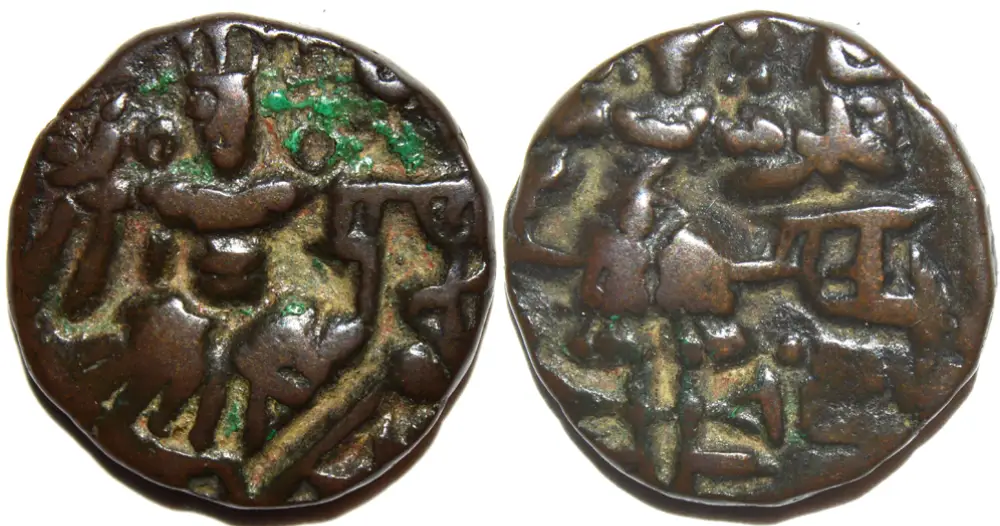
I am reminded of an interesting account narrated by an elderly man from the Devsar area. He recalled that during his childhood, village boys would frequently collect what they called “old paisa” (ancient coins) from the Devsar Wooder (plateau).
During the rainy season, heavy rainfall would wash away the surface soil from the slopes, exposing metallic objects that glittered in the sunlight. The boys would then visit the plateau in search of these old coins, collecting whatever they could find.
This fascinating recollection offers a glimpse into the archaeological wealth that has remained scattered across the landscape of Elaqai Devsar for generations. Things have changed considerably since then, and such discoveries are no longer reported. However, several ancient coins and other archaeological artefacts are recorded to have been found in Devsar in earlier times.
The Belt
Devsar, historically known as Devesara or Devesarasa, is picturesquely situated at the foothills of the Pir Panjal range, on the right bank of the Vishow Nallah in Kulgam district. The place is associated with several historical events, traditions and legends, many of which find mention in the chronicles of Kashmir.
Remarkable archaeological discoveries have already established the historical and artistic significance of ancient Devesara. Historical records and archaeological finds suggest that it was an important centre of cultural and artistic activity, with its bronze art reflecting influences associated with the wider Gandharan artistic tradition.
Among its most celebrated discoveries are a magnificent bronze sculpture of Lord Buddha, attributed to the Kushan period, and an extraordinary bronze frame associated with the reign of King Shankaravarman in the ninth century CE. Both are outstanding examples of Kashmir’s ancient bronze craftsmanship and are presently displayed in the Archaeological Gallery of the SPS Museum at Lal Mandi, Srinagar.
These remarkable antiquities are among the museum’s most distinguished exhibits, attracting the attention of visitors, scholars and art enthusiasts. Their significance extends beyond local archaeological and museum records, as they have also been discussed in international publications dealing with Indian art and archaeology. The artefacts have reportedly represented Kashmir’s artistic heritage at international art exhibitions and festivals, including events held in Russia, the United States and France.
The 1931 Discovery
The archaeological importance of Devsar came into particular prominence in 1931, when an extraordinary bronze frame was accidentally discovered on one of the village plateaus. The frame depicts several Hindu deities and is associated with the period of King Shankaravarman, who ruled Kashmir in the late ninth century CE.
The bronze frame is particularly remarkable for its artistic composition and the variety of divine representations it carries, including an impressive depiction of Surya, the Sun God. It measures approximately 6 feet 2 inches in length, 4 feet 4 inches in breadth and 1 foot 2 inches in thickness. Its recorded weight is three maunds and four seers.
Oval in shape, with its lower end flattened along the borders, the frame carries beautifully cast representations of Hindu deities, incorporating silver inlays. The use of silver and copper inlays, particularly around the eyes to give figures a vivid, lifelike expression, is a distinctive hallmark of Kashmir’s bronze tradition. Such inlays were occasionally used on the lips and accessories as well. This characteristic is clearly evident in the Devesar bronze frame
The quality of its workmanship makes it an exceptional specimen of Kashmir’s ancient metal art. It is regarded as a unique discovery in the archaeological record of the region and has been discussed in several important publications on Indian art and archaeology. The discovery provides valuable evidence of the artistic activities that flourished in Kashmir during the period associated with Shankaravarman.
Apart from this celebrated bronze discovery, Devsar has also yielded other antiquities, including ancient coins and the remains of miniature architectural structures. The surviving basement of a structure has been identified as the remains of the Narisema Temple, adding another dimension to the site’s archaeological importance.
A Memorial Stone
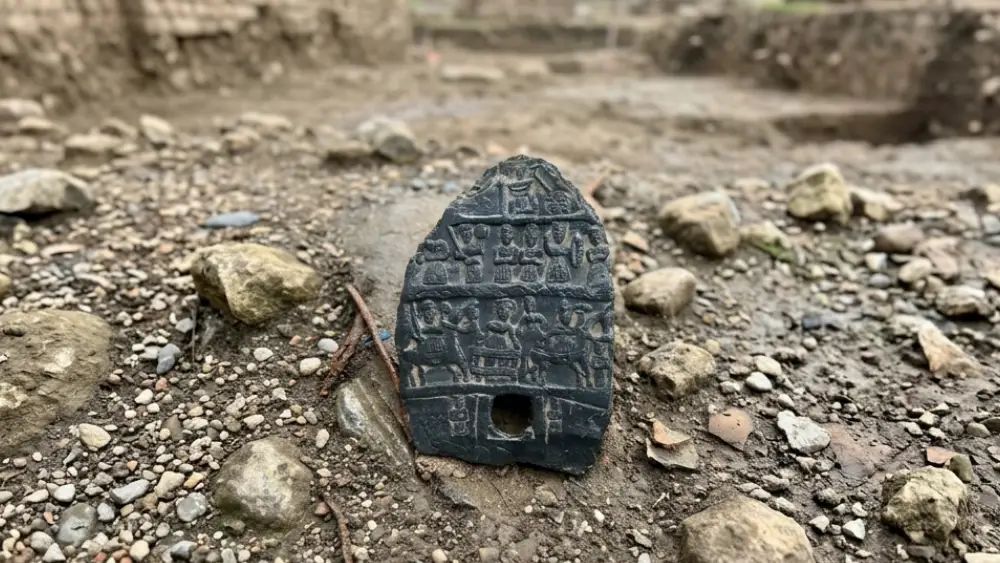
In the recent past, another interesting archaeological discovery was made at Lanker Pombay, on the outskirts of Devsar. It involved an old memorial stone that was accidentally brought to light during local activities.
The stone slab carries human figures arranged in two panels, depicting male and female figures alongside horse riders holding traditional weapons. Another standing figure is represented in the upper portion of the slab. The composition appears to portray a historical or commemorative scene, although its precise meaning and historical context remain uncertain.
The archaeological significance of this memorial stone deserves further investigation. Technically, the figures are rather crudely executed and do not display the refined workmanship associated with Kashmir’s earlier sculptural traditions. On stylistic grounds, the monument may belong to a relatively late period, possibly the eighteenth century CE, when the traditional sculptural arts of Kashmir had undergone considerable decline.
Although the artistic merit of the stone may not be particularly remarkable, the historical importance of its findspot is considerable. Its discovery raises questions about the existence of other archaeological remains in the surrounding area. A proper investigation could help establish the nature and significance of the historical activity that once took place there.
In the Chronicles
Devsar also occupies an interesting place in the political and military history of Kashmir. Historical chronicles contain references to the area and describe several important events associated with its surrounding plateaus and mountain routes. The region is also said to have received attention during the Sultanate and Mughal periods and to have formed an important administrative area.
One of the most dramatic episodes associated with Devsar concerns Zawalchu, the notorious invader who entered Kashmir during the reign of Raja Suhadeva in the fourteenth century. His invasion brought widespread destruction, terror and suffering to the population. Historical accounts state that Zawalchu killed numerous people and took thousands captive.
According to the traditional account, while attempting to find a route leading towards the Indian plains, he was directed towards the Devsar route crossing the Pir Panjal mountains. It was winter, and the mountain passes were experiencing heavy snowfall. Zawalchu and his forces became trapped in the snow-covered mountains, lost their way and eventually perished in the freezing conditions somewhere in the Devsar region.
Although the precise location of this episode requires historical and geographical investigation, the tradition adds another fascinating dimension to the historical landscape of Devsar.
An Unexplored Heritage
The historical and archaeological importance of Devsar has attracted the attention of several scholars and historians. Researchers such as PNK Bamzai, RC Kak, Pratapaditya Pal and John Siudmak have studied or referred to the region’s antiquities in their respective writings on Kashmir’s history, archaeology and art.
I have also attempted, through my own writings and research on the archaeology and numismatics of Jammu and Kashmir, to highlight the historical, artistic and numismatic significance of Devsar and its remarkable discoveries. I have documented the Devesar bronzes in my book on Ancient Sculptures of Kashmir.

Despite its repeated contribution to Kashmir’s archaeological record, Devsar remains one of the least explored historical sites of the region. Its ancient antiquities have largely come to light through accidental discoveries rather than planned archaeological investigations.
There is, therefore, an urgent need to explore Devsar and the right banks of the Vishow Nallah through systematic archaeological surveys, scientific documentation and, wherever justified, controlled excavations.
The Department of Archives, Archaeology and Museums, in collaboration with the Department of History and Archaeology at the University of Kashmir, could initiate a joint research project to investigate this historically important area.
Such an initiative would not merely help locate and document forgotten antiquities. It could also reconstruct the historical landscape of Devsar, establish the chronology of its settlements and artistic traditions, and bring to light a significant but neglected chapter of Kashmir’s cultural heritage.
(Author is a senior archaeologist. Ideas are personal.)