by Khalid Altaf Sherwani
The Constitution of India endures as a living guide, balancing rights and duties, shaped by landmark judgments, and relying on citizens to uphold justice, equality, dignity, and democratic values
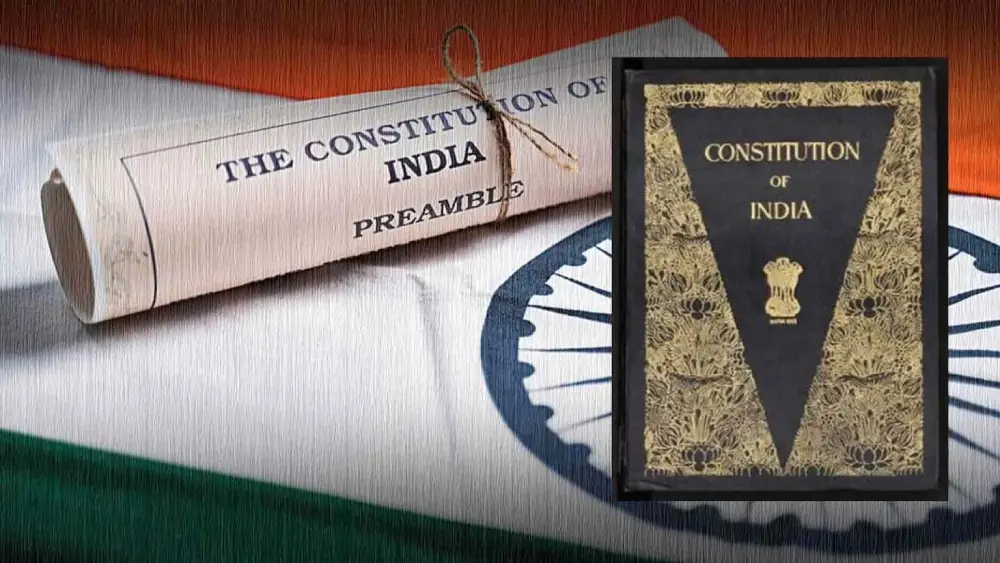
As India steps into its seventy-fifth year under the shelter of its Constitution, it is worth pausing for a moment and asking ourselves a simple question: What does a Constitution truly mean to a nation? For many, it is a thick book of articles, schedules, and clauses. For others, it is a moral compass. But in truth, the Constitution of India is something far more intimate; it is the quiet agreement a nation makes with itself, promising justice, dignity, and freedom to every citizen, regardless of circumstance.
When the Constituent Assembly first met in December 1946, India was a land troubled by partition, poverty, and deep social wounds. Yet inside that chamber, the mood was not despair but determination. Men and women from different regions, communities, and ideological worlds sat together with one ambition: to imagine India not as it was, but as it could be. The Constitution they drafted over the next three years did not merely reorganise the machinery of government; it re-imagined society itself.

Dr B R Ambedkar often reminded the Assembly that political independence alone would be incomplete unless accompanied by social and economic justice. His words still echo today: freedom without equality only changes the rulers, not the lives of the ruled. It was this conviction that shaped our fundamental rights, protection against discrimination, freedom of speech, liberty of thought, and the right to constitutional remedies. These were not just legal guarantees; they were moral commitments to every Indian.
Yet the Constitution is not only about rights. It also places responsibility on citizens. The framers believed that a nation cannot rely solely on the courts or the government to preserve democracy; it must rely on its people. That is why the Fundamental Duties, later added through the 42nd Amendment, remind us to respect the Constitution, cherish our heritage, and uphold the spirit of harmony. Duties may not be enforceable in a court of law, but they remain enforceable in the court of conscience.
What makes the Indian Constitution remarkable is its ability to grow without losing its core. Over the decades, it has been amended, interpreted, expanded, and stretched to meet changing needs. The right to education, privacy, environmental protections, and recognition of digital rights all show that the Constitution is alive, responsive, and evolving alongside society.
At the same time, its resilience is tested repeatedly. Social inequality, communal divisions, misuse of power, and disregard for democratic values continue to challenge the constitutional vision. The Constitution cannot defend itself; it depends on institutions, and more importantly, on people, to defend it. A document is only as strong as the belief placed in it.

As we celebrate Constitution Day, it is important to remember that the Constitution was never meant to be admired from a distance. It was meant to be lived. It calls upon each citizen to participate in democracy, not as a grand gesture, but through ordinary, everyday actions: questioning injustice, voting responsibly, respecting differences, and ensuring that the weakest among us enjoy the same dignity as the strongest.
India is home to countless identities, languages, faiths, and histories. Yet what binds this vast diversity is not uniformity, but a shared commitment to constitutional values. The Constitution does not ask Indians to become identical; it simply asks us to live together with mutual respect. Its greatest strength lies in its belief that diversity is not a burden but a source of national richness.
In an era of heightened polarisation and digital noise, the Constitution stands as a reminder that democracy is built not on anger, but on dialogue. Not on silence, but on expression. And not on fear, but on freedom. It asks each of us to look beyond immediate differences and recognise the long journey we are walking together as a nation.
As India prepares for the decades ahead, marked by technology, global challenges, and social transitions, the Constitution remains our most reliable guide. Not because it has all the answers, but because it gives us the tools to seek them peacefully, thoughtfully, and collectively. It is a framework that allows India to change without losing itself.
The Constitution is often described as a ‘living document’. But in truth, it is the people of India who breathe life into it. Its survival and strength rest not in the pages of a book, but in our choices, our voices, and our willingness to protect the ideals upon which this nation was built.
The framers of this sacred document were aware of the fact that society evolves and kept a way to adapt to these changes through the process of amendment by virtue of Article 368. The Supreme Court, being the guardian of the Constitution, has made sure that any amendment should not compromise the basic structure of the Constitution.
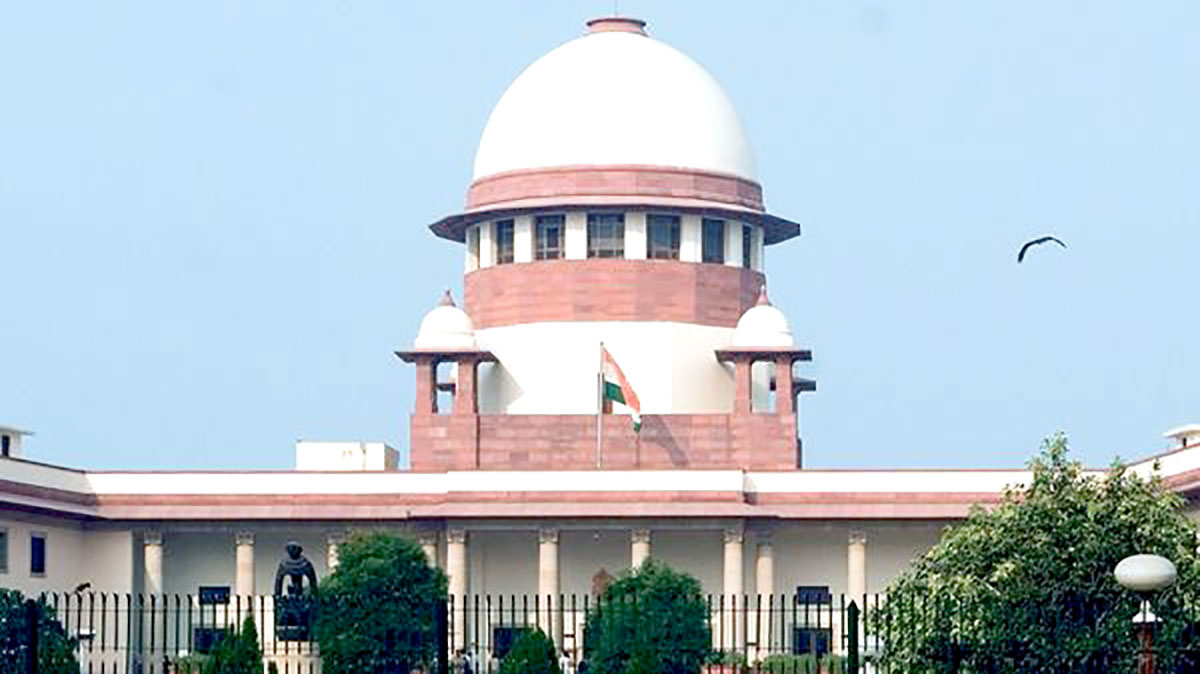
Let us take a moment to acknowledge and celebrate the judicial decisions that have interpreted the Constitution in ways that guarantee more freedom, liberty, equality, and justice. Some of the landmark judgments are:
Kesavananda Bharati v. State of Kerala (1973) – “Basic Structure Doctrine”
The Supreme Court held that Parliament can amend the Constitution but cannot destroy its basic structure. This case protects democracy from absolute majoritarian power.
Maneka Gandhi v. Union of India (1978) – “Expanded Meaning of Liberty”
The Court ruled that the right to life and personal liberty under Article 21 includes fairness, reasonableness, and due process. It made Article 21 a fountainhead of many modern rights.
Indira Nehru Gandhi v. Raj Narain (1975)
The Court struck down a constitutional amendment that attempted to place the Prime Minister’s election outside judicial review. It reaffirmed free and fair elections as part of the basic structure.

Minerva Mills v. Union of India (1980)
The Court held that a balance between Fundamental Rights and Directive Principles is part of the basic structure. It prevented Parliament from acquiring unlimited amendment power.
S R Bommai v. Union of India (1994)
The Court limited the misuse of Article 356 (President’s Rule). It strengthened federalism and ensured that democracy in states cannot be toppled easily.
I R Coelho v. State of Tamil Nadu (2007)
Laws placed under the Ninth Schedule are still open to judicial review if they violate fundamental rights. This prevented governments from bypassing rights protections.
Justice K S Puttaswamy v. Union of India (2017) – Right to Privacy
Privacy was recognised as a fundamental right under Article 21. It brought the Constitution into the digital age and acknowledged an evolving need of the times.
On this Constitution Day, as we turn our attention once again to that historic document, the message is simple: the Constitution does not belong to the past; it belongs to every generation willing to uphold liberty, equality, and justice. It is not just the foundation of our republic; it is the promise of what India strives to be. It is not just a day to be celebrated or a document to be rejoiced in. It is an idea to be lived, letters to be followed, and an essence to be felt.
(Author is an LLM Scholar at the University of Kashmir. Ideas are personal.)