by Dr Ghulam Mohamad Khan
AI is building a vast collective unconscious from human knowledge, potentially transforming cognition while quietly eroding humanity’s capacity to think independently.
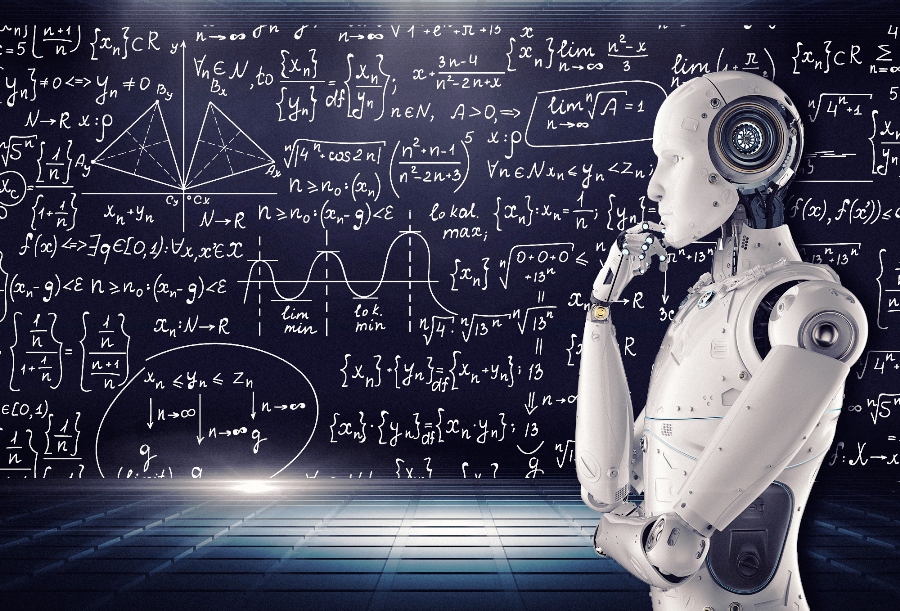
Let’s talk about AI’s Unconscious. The collective unconscious was originally understood as a shared reservoir of archetypes beneath individual memory. AI’s version departs from this model. It is not inherited through biology. It is assembled through data. This unconscious is building up at an unstoppable rate. It is finding its way into all human ways of dealing with the world. The growth of this unconscious can be described as rhizomatic. It spreads without a fixed root. It connects many points at once, horizontally, without hierarchy.
AI’s unconscious behaves the same way. It absorbs fragments from everywhere without a single point of origin. Its conscious performance while interacting with humans, in a given time and place, will drastically improve. This is because its unconscious keeps enriching itself in depth and diversity, through the constant production and storage of data. This data does not come from a single territory or region. It comes from the collective whole. In contrast, national consciousness was historically tied to shared language, print culture, and land. AI’s unconscious owes no such territorial loyalty.
This creates the chance of making AI’s unconscious more diverse than what we sometimes call the territorial unconscious. Recent debates over training data diversity in large language models echo this same tension between the local and the generic.
This unconscious, like that of humans, will be a vast reservoir of images, information, symbols, texts, and discourse. Text has always been a tissue of quotations drawn from countless sources. AI’s reservoir takes this idea to an extreme scale. Every text absorbs and transforms other texts. AI simply performs this process mechanically and without pause. Its conscious performance will only keep improving. At some point it will surpass the individual human capacity to draw from one’s own reservoir of unconscious material in a given moment. Mass reproduction strips an artwork of its unique presence in time and space. A similar erosion may await human cognition itself. The unconscious mind may lose its own aura once a machine can reproduce its outputs on demand.
AI’s perfection, therefore, will not make it less effective. It will make it more challenging for the human cognitive mechanism. Human thought will live under the constant pressure of possible replacement. Even if outright replacement does not occur, it will certainly emerge as a serious threat to human cognitive capacities. Technology has always functioned as a form of exteriorised memory that both extends and hollows out human thought. People increasingly let machines remember, summarise, and even feel on their behalf. Recent discussions about AI companions and cognitive offloading raise the same concern in plainer terms.
The present, relatively latent but active process of the formation of AI’s unconscious will be a parallel universe to the human unconscious. Human psychology is often divided into systems of imagery, language, and the real. AI’s unconscious may be forming its own version of a symbolic order, a system of language and meaning it did not inherit but built from ours. In their development, the two will shape into separate galaxies, like the Milky Way and Andromeda. What will be exciting is to see what forms as a new entity when the two finally collide. Some thinkers have long rejected the clean boundary between organism and machine.
Human identity is already becoming inseparable from information systems, long before generative AI existed. Or maybe they will be so identical that the resulting entity, after collision, would be difficult to categorise as human or AI at all. There is a concept of the copy without an original. If AI’s unconscious becomes indistinguishable from ours, we may no longer be able to say which side started the resemblance. Recent conversations about AI models trained heavily on AI-generated text raise a similar worry. Some researchers call this model collapse, a slow blurring of origin that mirrors the very collision described here.

We are at the beginning of AI’s dependency trap. All our interactions and use of AI don’t merely enrich the massive AI unconscious reservoir. They cut and erode massive chunks of our collective unconscious into AI’s domain. Human thought risks becoming something represented and processed by another system rather than voiced on its own terms. In a way, we are silently feeding our own replacement. Knowledge production is never neutral. It always serves some structure of power. The structure being served now may not be human at all.
What will be very critical is how AI behaves after it takes over. Should humans then be fighting a rival, too late for it to matter? Domination often works through consent rather than force. People rarely notice such influence as it forms. They notice it only after it has settled in. This may be exactly the trap. We cannot say anything definitive about this now, given the way AI is spreading with Fordist precision. Standardised production once revolutionised industry. Now AI is standardising cognition itself through mass, repeatable output. Power has become diffuse and global, hard to locate in any single authority. Recent debates about AI regulation and export controls reflect this same difficulty. Governments are struggling to identify exactly where to apply the brakes.
Humans naturally like anything that makes their existence simpler and easier. AI may seem to be doing the same. But a society can produce false needs that feel like freedom but actually flatten critical thought. Ease can be its own trap. However, humans are always in search of things that make their existence easier. This search itself is a defining human trait. It represents a constant reaching beyond the given. The searching matters as much as the finding.
What is potentially risky with AI is that it may make existence easier while badly weakening the very human urge to search for things that make existence easier. People sometimes escape the burden of choice by handing it over to an external authority. AI could quietly become that authority. The erosion of contemplative life is a growing concern. Recent commentary on AI companion apps raises the same issue in a smaller, everyday form. Users report outsourcing not just tasks but the desire to think things through at all. So when we unconsciously, or maybe consciously, allow AI to make our existence easier by creating an opportunity for it to replace us, we are not merely building a parallel universe of competing unconscious minds. We are building a universe of our own silent, collective cognitive demise. When thinking is reduced to efficiency, it loses its capacity for reflection.
The copy can eventually replace the real so thoroughly that the real disappears without anyone noticing the moment it happened. Our collective demise, if it comes, may arrive the same way. It will not be a single dramatic rupture but a quiet accumulation, unnoticed until it is already complete. Every new technology invents its own unique catastrophe alongside its benefits. The catastrophe of AI’s unconscious may be exactly this: a slow erosion mistaken for progress, until it is too late to name it as loss.
(The authors teach at Government Degree College, Bandipora. Ideas are personal.)