by News Desk
The Centre’s Special Assistance to States for Capital Investment scheme (SASCI), which offers 50-year interest-free loans for infrastructure, has emerged as a key funding source for Jammu and Kashmir, with nearly Rs 3,000 crore secured so far. While the government calls it a responsible fiscal opportunity, Opposition members have questioned whether the long-term borrowing could pose future risks, triggering a sharp debate in the Assembly.
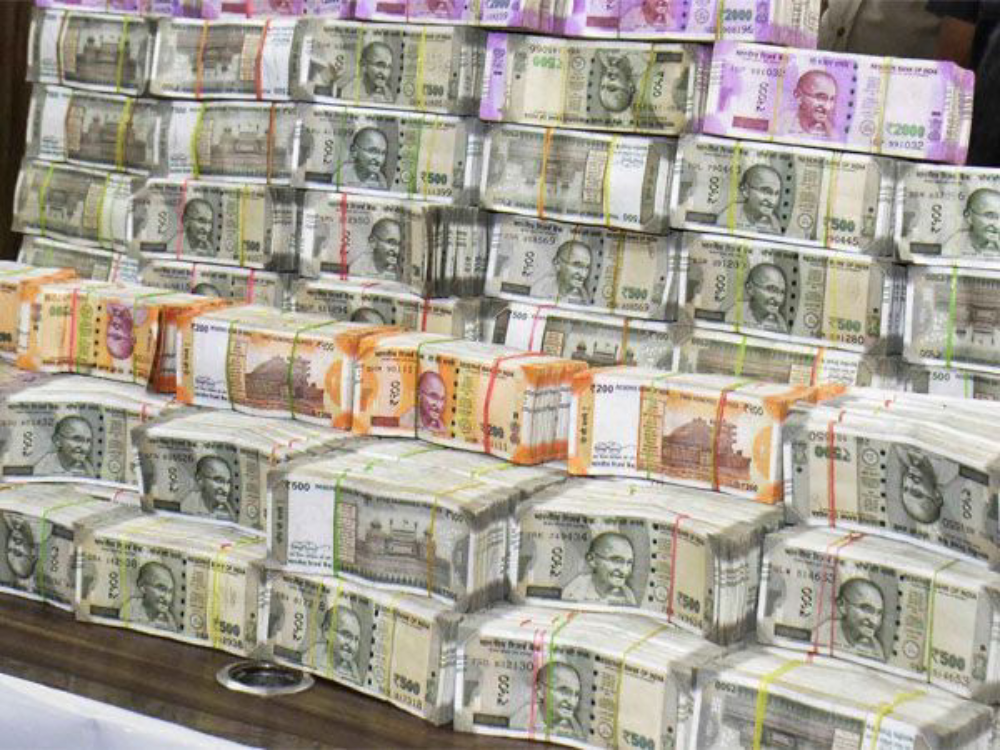
A relatively little-known fiscal programme of the Union government has unexpectedly moved to the centre of debate in the Jammu and Kashmir Assembly, drawing both sharp criticism from the Opposition and a strong defence from Chief Minister Omar Abdullah, who has described the scheme as a major financial opportunity rather than a liability for the Union Territory.
The programme in question is the Special Assistance to States for Capital Investment, or SASCI, under which the Centre provides long-term, interest-free loans to states and Union Territories to fund infrastructure and reform-linked capital projects. Introduced in the aftermath of the Covid-19 pandemic, when state revenues had weakened, and private investment had slowed sharply, the scheme was conceived as a way to sustain public spending on development without immediately straining government finances.
This year, Jammu and Kashmir entered the scheme for the first time and has so far secured nearly Rs 3,000 crore under different components. However, what the government projected as a fiscal gain soon became the subject of political contention, with some legislators warning that even interest-free borrowing over the long term could turn into a debt burden.
The issue figured prominently during the Budget discussion in the Assembly, where Omar Abdullah, while winding up the debate, rejected the suggestion that SASCI amounted to a “debt trap”. He said such criticism reflected a misunderstanding of the scheme’s provisions and its long-term financial implications. Describing the assistance as a responsible fiscal measure, he reminded the House that the loans carry no interest and come with a repayment period stretching across half a century.
“This is interest-free support for 50 years. The value of money after 50 years can be imagined. This is a significant relief,” he said, arguing that pushing repayment so far into the future drastically reduces the real financial burden on the present generation. He added that the administration had conducted its own financial assessment before opting for the funds and would not have accepted the scheme if it posed a risk to the Union Territory’s finances.
Abdullah also responded to claims that SASCI resembled corporate-style borrowing, saying the scheme was being wrongly portrayed as private debt. He clarified that it is sovereign financial support extended directly by the Centre to states and Union Territories for capital creation. To underline his point, he argued that even if the current assistance of Rs 3,000 crore were calculated in future value terms, it would amount to less than Rs 100 crore after 50 years, questioning how such a facility could be considered fiscally irresponsible.
Opposition members, however, urged caution. Congress MLA Tariq Hameed Karra said there were constraints and apprehensions related to the scheme and warned that borrowing without thorough scrutiny could create long-term financial risks. PDP MLA Wahid-ur-Rehman Para questioned the manner of implementation and demanded the formation of a House committee to examine the scheme’s long-term impact, terming it a potential debt trap.
Seeking to counter these concerns, the chief minister cited examples of other states that have drawn much larger sums under the same programme since its launch. He told the House that Punjab had availed Rs 296 crore in the first year, followed by Rs 223 crore, Rs 800 crore and Rs 2,070 crore in subsequent years, while Himachal Pradesh had taken Rs 91 crore initially, then Rs 135 crore, followed by Rs 1,270 crore and Rs 1,500 crore. If other states were accessing thousands of crores under the scheme, he said, securing Rs 3,000 crore for Jammu and Kashmir should be viewed as an achievement rather than a cause for alarm.
At its core, SASCI is structured differently from conventional loans. The assistance is provided exclusively for capital expenditure, which means the funds cannot be used for salaries, subsidies or routine administrative expenses. Instead, they must be spent on creating durable public assets such as roads, bridges, power projects, irrigation works, hospitals, schools, urban infrastructure and digital systems. The objective is to ensure that borrowing results in long-term economic gains rather than short-term consumption.
Another feature of the scheme is that part of the funding is linked to governance reforms. States are encouraged to undertake measures such as digitisation of land records, urban planning improvements, mining regulation reforms and better property tax systems to unlock additional allocations. The Centre intends to combine financial support with structural administrative improvements so that public investment is accompanied by better governance.
In his budget speech, Chief Minister Omar Abdullah said the inclusion reflects “confidence of the Government of India in the reform orientation, financial discipline and execution capacity of Jammu and Kashmir,” adding that SASCI provides 50-year interest-free loans for capital investments and infrastructure creation. He termed it a “transformative fiscal instrument” because it links funding with governance reforms.
Under the untied component alone, Jammu and Kashmir received Rs 1,431 crore to speed up capital works, including hydro-electric projects and core infrastructure. Recognising utilisation, the Centre cleared an additional Rs 1,431 crore. A further Rs 1,431 crore has been sanctioned for disaster mitigation and restoration following floods in parts of Jammu, to build protective and preventive infrastructure.
Reform incentives have also unlocked funds. Mining sector reforms earned Rs 100 crore, digitisation of land records and crop surveys brought Rs 60 crore, and aerial cadastral mapping under the NAKSHA initiative added Rs 5 crore. The government has also sought Rs 415 crore under urban planning reforms after integrating GIS-based land data and updating planning regulations.
Additional sums have also been unlocked through sectoral reforms, including funds for mining reforms, digitisation of land records and cadastral mapping initiatives. Taken together, these allocations have pushed the total assistance close to Rs 3,000 crore.
Nationally, the scheme has expanded rapidly since its introduction. What began as a temporary relief measure has evolved into one of the Centre’s largest channels of capital financing for states. Annual allocations have risen sharply over the years, and cumulative releases now run into several lakh crore rupees, making SASCI a central pillar of India’s public investment strategy.
For governments, the attraction lies in the absence of interest payments and the extremely long repayment horizon, which provides fiscal space to invest aggressively in infrastructure. For critics, the concern remains that any borrowing, even deferred, must be carefully managed to avoid future stress. That tension between opportunity and caution has now played out in Jammu and Kashmir’s Assembly.
In simple terms, SASCI offers governments access to long-term, interest-free capital today to build assets whose benefits begin immediately, while repayment is pushed decades into the future. Whether viewed as prudent fiscal support or potential liability, the scheme has clearly become one of the most consequential financial instruments shaping development policy in Jammu and Kashmir, and explains why it has suddenly dominated debate inside the House.