Each winter, thousands of Kashmiri men migrate across India for shawl selling, dry fruits, catering, and labour work, sustaining families amid limited local opportunities, uncertain incomes, and minimal protection, but they regret the lack of protection, reports Tahira Rafiq
Sahil Ahmad is a resident of Kupwara. For half of the year, he lives in Paonta, Himachal, where he has rented a shop and sells shawls. Besides, he keeps different dress materials and even dry fruits available in his shop.
Unlike many others who hawk shawls door to door and often face harassment that makes news back home, he runs a shop but supplies material to Kashmiri hawkers under a proper agreement.
“It is all about contacts,” Sahil said. “If you have contacts, you can get things without paying in advance, while others need to invest some amount in the beginning.”
Over the years, Sahil has built a dedicated clientele. His customers come to the shop and buy the goods they like. But it was not always like that. At one point, he also went from home to home, which made him recognisable among customers. Then he set up a shop and now makes a decent living.
Sahil’s shop remains functional for a few months until he returns home. He doesn’t vacate the shop due to the fear of not being able to rent it again next year, and prefers to pay rent for the whole year.
“I tried to stay longer, but there were no sales,” he said. “There, the cotton suits cost much less than what we sell, and people prefer the cheaper ones.” Due to the high temperature, the AC cost adds to his daily expenses, making it difficult to stay longer. So, in a way, he is a seasonal migrant who spends almost half of the year outside.
An Old Tradition
Sahil is not alone. He is one of thousands of Kashmiris who migrate during winter to make a living. Every year, when Kashmiri families prepare for the harsh realities of winter, young and healthy men quietly pack their bags and depart for different cities across India. There are no formal announcements, just phone calls within groups and the start of the journey. Some take trains, others board buses destined for their locations. By the time Kashmir wraps itself in a white blanket, the men are already settled thousands of kilometres away from home.
This seasonal migration has been going on for centuries, with Kashmiri men moving to other cities to provide for their families. It reached a new level during Sikh and early Dogra rule, when rulers tried to stop the migration, fearing that tyranny and economic exploitation would force people not to return home. Shimla has a colony of Kashmiri workers who have been there for ages, specialising in wood-cutting and harsh manual labour. Until recently, Kashmiri farmers would spend most of the winter working in paddy fields in Punjab and Haryana. They engaged in sukhai, the sun-drying of paddy, and the subsequent processes until the rice was loaded onto cargo trains. In the pre-Partition period, Amritsar and Lahore were the main destinations for Kashmir’s seasonal labour.
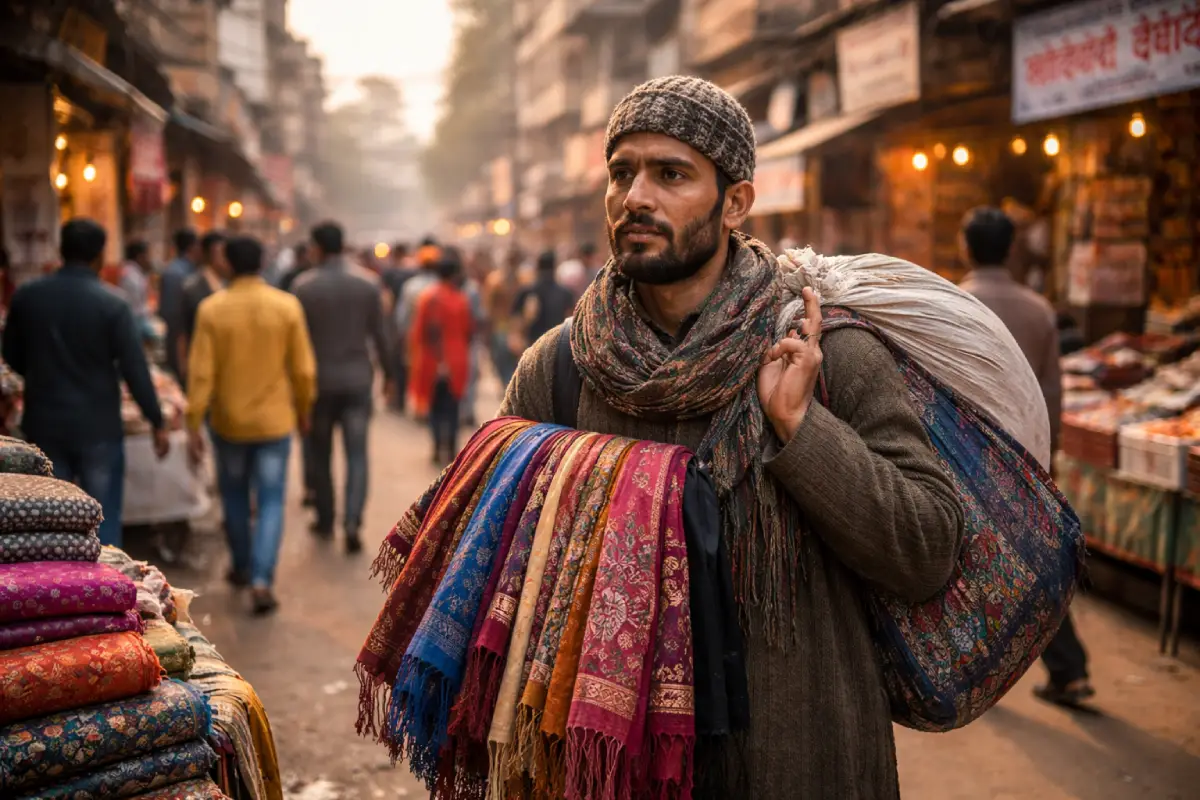
These men are often found in a few familiar occupations, with shawl selling the most common. They source goods from Srinagar and Budgam or places like Amritsar and Ludhiana, transport them to a godown, and from there sell them door to door in different areas. Usually, there is a supplier who sources goods for them. Some carry their loads on bicycles or rickshaws, while others, who cannot afford these, carry them on their shoulders.
Alongside this, many people take dry fruits and Kashmiri saffron to sell outside to earn their livelihood. There is a reasonable demand for these products in the plains. With the ingredients available, some even set up stalls and sell Kashmiri kehwa.
Shaped by shrinking work opportunities during the winter season, Kashmiri men work outside for a few months and return with some savings and memories. The movement that was once tied to responsibility has now expanded. Young men and students are increasingly involved in this routine, indicating that this mobility is often forced by a lack of overall opportunities back home.

Diverse Jobs
Nazakat Ahmad from Anantnag has been selling Kashmiri walnuts, saffron, and other dry fruits alongside shawls in Raipur, Chhattisgarh, since 2015. His selling pattern is slightly different. He sells at an exhibition held for 40 days and then goes door to door for the rest of his stay.
Back home in early summer, he works with the Amarnath Yatra and tourists during the peak season. When the season ends, there is no work left, which pushes him to move outside Kashmir.
“If there was a stable opportunity, I would prefer to stay at home even if I earn less than what I earn outside,” Nazakat said. “We are always tense about how to convince customers to buy our products. In certain cases, several days go without earnings, and it gets hard to manage our daily expenses.”
November and December are his peak sale months, and the subsequent days see sales dip gradually. “People from my area are familiar with only two work areas, the Amarnath Yatra and tourism. When it concludes, we move out instead of staying at home.”
They earn just enough to make ends meet, but it is mostly preferred because of the market and customers they have outside. Doing the same in Kashmir would take time, which they don’t have.
Widespread Migrations
This seasonal migration is not limited to one particular area. It happens across Kashmir; some go for physical labour, some sell shawls, and many others do different kinds of jobs.
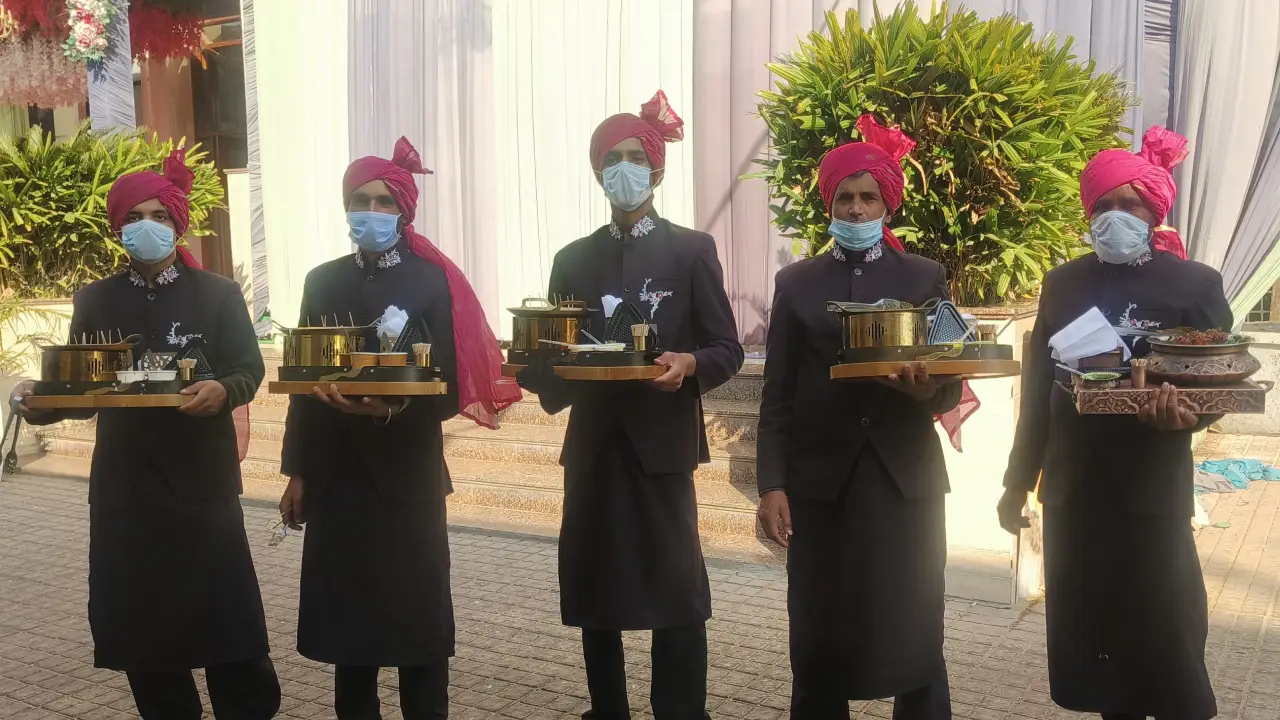
Catering services also absorb a significant number of Kashmiri men during the same season. They work as waiters at wedding events, parties, and engagements. The number keeps increasing year by year, often outnumbering workers from other states.
Syed Tasaduq from Handwara has been engaged in seasonal catering work since 2016 in Punjab and has witnessed significant involvement from Kashmiris in this seasonal activity. “We serve food and beverages, and that sometimes includes alcohol, which is not considered a good practice back home, but we have a responsibility on our shoulders that needs to be fulfilled,” Syed said. “Working, after all, is better than roaming the roads and indulging in undesired activities.”
While the work involves agreements, it operates without a clear structure and does not provide much experience. Tasaduq believes that working like this for 10 years is equivalent to working in a proper hotel for a year. “This just lacks structure. There is no training; they just want their work to be done.” He believes hotel-sourced caterers are guided and trained well, but here they will put a uniform on anyone on the road if the need arises.
Apparently, this job doesn’t depend on skills but on appearance. “We are hired because of our appearance and cleanliness,” he said. “And because of this, the employer can charge extra from the host.” He acknowledged that Kashmiris may not always be as skilful but are preferred for their discipline.
The wedding season starts from October 15 to March 15, and during this period, about a month from December 15 to January 15 goes without work because of the Lohri festival. Usually, a manager is contacted from outside to arrange a group of men. He reaches out to interested people, explains the job, and decides on the departure. He helps them with accommodation and other essentials. In cities like Delhi, Mumbai, and Gujarat, the monthly rent and food are taken care of by the manager, while in other places, they have to pay for them from their earnings.
Youth are mostly involved in this work. The reasons differ for different people, but the main driver for this migration is the lack of resources. Some carry responsibilities and want to earn for themselves and ease the burden on their families.
Waiters In Demand
Sahil Dar, who passed Class 12 in 2025, has been travelling to different states to work as a waiter. For him, this is an opportunity to become financially independent. “I work outside because I don’t want to burden my family with my tuition fee or other essentials,” he said. He leaves once the winter vacations are announced and returns days before classes resume.
Initially, he and his friends decided to go and see how things worked, and then he continued. “We friends discussed it and decided to give it a try and explore if we could really earn.” He has other aspirations, and this, for him, is a source to keep moving forward and achieve his dreams. Sahil’s family doesn’t want him to do it, but circumstances force him to be financially independent.
Though the work sustains families, it comes with risks that these men face from time to time. They regret that they don’t have formal protection of any kind. The security they arrange is limited to workplaces only. “We have safety at the places we work and during work, and we keep locals involved to ensure there are no conflicts,” said Irfan Ahmad, one of the seasonal migrants to the plains.
No Protection
Recent incidents of harassment against migrants show that there is a lack of protection. However, it does not create panic among them. “We hear about such incidents, but haven’t experienced anything ourselves,” one young man who works as a seasonal waiter said. According to them, shawl sellers are more prone to these incidents, which is evident from the cases reported.
There is, however, concern among these seasonal migrants. One shawl seller asked if Kashmir treats people from other states warmly, but why don’t they reciprocate the spirit? He said that despite going through proper entry procedures after reaching, they are still being harassed, and this issue needs to be solved to ensure their safety.
Despite the concerns, the cycle of economic activity goes on. Men leave, work, and return with savings, sweets, and stories. Some resume their daily labour, some rest, and others move back to their classes.