by Shabeer Ahmad Lone
Across philosophy, mysticism, and literature, true transcendence must remain grounded in ethical responsibility, social engagement, and lived reality, where insight transforms individuals and society
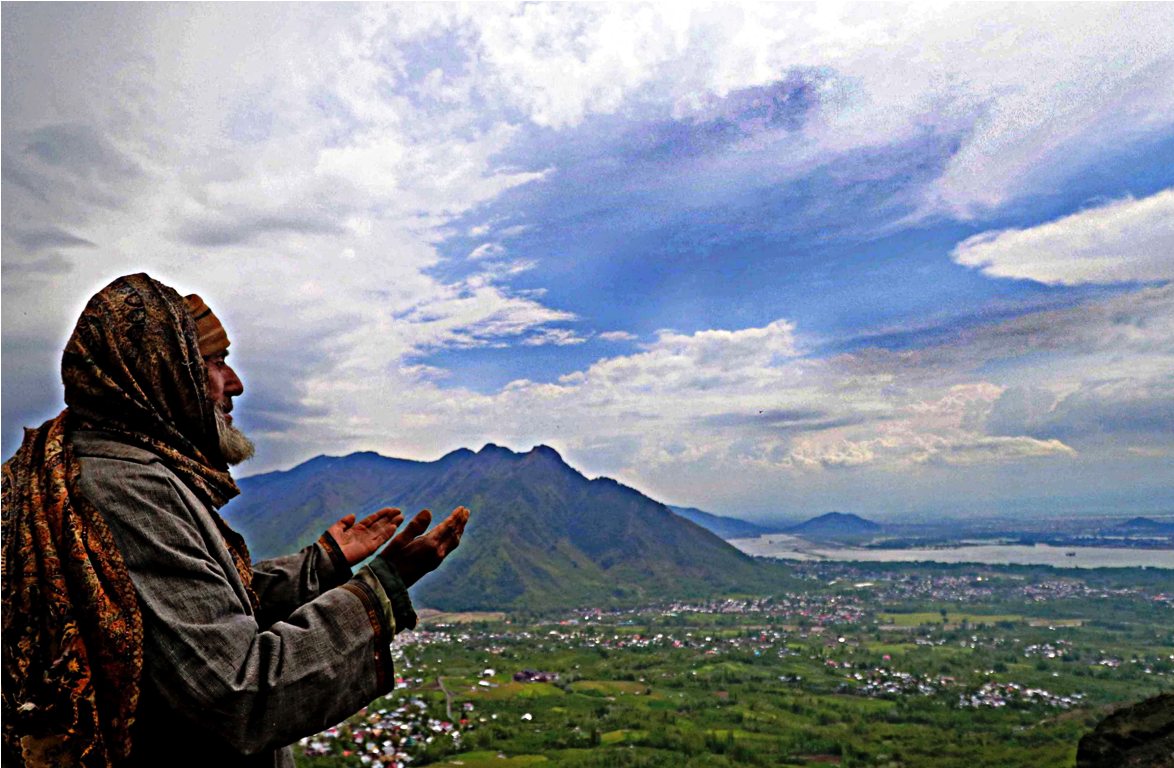
Transcendence, the pursuit of higher truth, profound insight, or spiritual and intellectual elevation and liberation, is most powerful when it confronts and is rooted in reality, tested by injustice, and accountable to human experience. Philosophy, from Aristotle’s ethics to Dewey’s pragmatism, shows that knowledge and virtue emerge through engagement with society. Science and systems thinking remind us that understanding is relational, interdependent, and contextual.
Literature and mysticism, from Dante’s Divine Comedy and Cervantes’ Don Quixote to Kabir, Mirabai, Rumi, and Iqbal, demonstrate that the profound flourishes not in abstraction but in dialogue with history, inequality, and moral responsibility. Grounded transcendence transforms thought into action, insight into justice, and imagination into illumination. Across cultures, geographies, and epochs, literature and mysticism across contexts teach that the inward journey and the outward world cannot be separated.
The flight of the spirit, when divorced from its source, risks becoming a hollow ascent, a transcendence that forgets its ground. Across the luminous traditions of human thought, from the introspective depths of the Upanishads and Vedanta to the contemplative heights of Persian Sufism, from Edward Carpenter’s insistence on returning transcendence to its ground to Emerson’s reflections on the unity of being, true elevation is never an escape from life; it is a return, a deliberate re-rooting in essential truth, the living soil of being.
It is in this grounded ascent that selfhood, society, and the cosmos meet. Allama Iqbal’s clarion call to self-realisation captures this insight with unmatched urgency: the soul must rise so fully that even destiny pauses to seek its consent. Such transcendence is transformative: it awakens the individual, illuminates collective conscience, and teaches that wisdom and power, unmoored from humility and responsibility, are incomplete.
Allama Iqbal’s call to self-realization captures the urgency of grounded transcendence:
خودی کو کر بلند اتنا کہ ہر تقدیر سے پہلے
خدا بندے سے خود پوچھے بتا تیری رضا کیا ہے
“Raise the self so high that before every destiny, God asks: What is your will?”
Such transcendence awakens the individual, illuminates the collective conscience, and teaches that wisdom and power, unmoored from humility and responsibility, are incomplete. Iqbal and Persian Sufi poets warn against transcendence divorced from life:
نکل کر خانقاہوں سے ادا کر رسمِ شبیّری
کہ فقرِ خانقاہی ہے فقط اندوہ و دلگیری
“Step out of the monasteries and follow the practice of Shabbir (martyrdom), for the monastic life is only grief and affliction.”
Or, as Iqbal writes:
Amal se zindagī bantī hai jannat bhī jahannam bhī
Yeh khākī apnī fitrat mein na nūrī hai na nārī hai
Life is shaped by action: it becomes heaven or hell through what we do. Thought gains weight only when lived, and meaning is born in responsibility.
Prof Khaliq Ahmad Nizami observes that Baba Farid embodied love and social harmony: “Do not give me scissors; give me a needle. I sew. I do not cut.”
He elaborates:
Faridā khāka nā̃ nindiō, khākī jehaṛā nā̃ koī.
Jīō̃diā̃ paĩ pair tahit, maũ kālī ūpar hōī.
“O Farid, do not insult dust—for none can live without it; when alive it is beneath our feet, and in death it lies above us.”
Edward Carpenter insists that transcendence must remain anchored in the everyday:
“Freedom! the deep breath! …
The earth remains and daily life remains,
But joy fills it, fills the house full, and swells to the sky.”
And Emerson affirms the unity of the absolute and the mundane:
“Far or forgot to me is near;
Shadow and sunlight are the same;
The vanished gods to me appear;
And one to me are shame and fame.”
“All know that the drop merges into the ocean, but few know that the ocean merges into the drop.” — Kabir
Finally, classical Sanskrit thought reminds us:
Tat Tvam Asi — “That Thou Art.”
The individual and the ultimate ground are one; transcendence without this grounding is illusion.
True transcendence, whether in thought, spirit, or action, flourishes only when rooted in ethical responsibility, social engagement, and human reality, a principle reflected across traditions: Kant, Hegel, Heidegger, Sartre, and Levinas on moral and existential accountability; Moore, Wittgenstein, and Davidson on relational understanding; Shankara and Nagarjuna on self and ultimate reality; Kabir, Mirabai, Rumi, Baba Farid, and Iqbal on devotion entwined with conscience; Emerson, Thoreau, and Edward Carpenter on freedom lived in the everyday. Grounded transcendence transforms individuals, society, and our shared world.
Grounded transcendence is also illuminated by Einstein, Jung, Maslow, Rogers, Durkheim, Weber, Skinner, Piaget, Capra, and Latour, showing that human insight, creativity, and wisdom thrive at the intersection of mind, society, and reality.
Across traditions, mystics demonstrate that true transcendence is inseparable from ethical responsibility, social engagement, and grounded human experience. Rumi, Baba Farid, Attar, Hafez, Kabir, Mirabai, Guru Nanak, Ibn Arabi, Al-Ghazali, Meister Eckhart, Julian of Norwich, Thomas Merton, and Simone Weil show that spiritual ascent, unmoored from compassion, justice, and the realities of life, risks becoming hollow; when grounded, it awakens the self, transforms society, and illuminates the moral and imaginative possibilities of the world.
Kabir, the fifteenth-century poet of northern India, illustrates this vividly. Forged in the artisanal milieu of his time, Kabir refused the authority of priests and abstract metaphysics, insisting instead on a vernacular truth that spoke to daily life, labour, and social inequity. His poetry embodies a transcendence inseparable from social accountability: it is not an escape but a confrontation, a form of ethical engagement.
Similarly, grounded spiritual insight surfaces wherever human beings confront inequality and limitation. Jewish mysticism emerged from exile and persecution; early Christian monasticism disciplined the soul in conversation with institutional power; Sufi poetry entwines devotion with ethical action; Indigenous cosmologies insist that spirit and land are inseparable; African humanist thought entwines moral insight with communal responsibility. Figures like Meister Eckhart challenged ecclesiastical authority, Rumi transformed exile into ecstatic devotion, and Simone Weil subjected philosophical rigour to factory labour and political engagement. Across these traditions, transcendence is never a retreat from reality; it is a lens for confronting and interpreting it.
Modern literature inherits this tension in secularised form, often intensified by historical and political complexity. Poets and thinkers such as Mirza Ghalib, Faiz Ahmed Faiz, Habib Jalib, Mahmoud Darwish, Pablo Neruda, Wole Soyinka, Adrienne Rich, and Rabindranath Tagore demonstrate how aesthetic and ethical consciousness can coexist. Ghalib destabilises metaphysical certainty while exposing the ways language can reinforce social power; Faiz binds beauty to historical injury; Jalib unmasks moral compromise beneath stylistic refinement; Darwish turns exile into philosophical inquiry; Rich interrogates gendered structures of epistemic authority; Tagore grounds universal humanism in colonial and material realities. Insight acquires its force not from abstraction alone but from accountability to history, society, and material conditions.

Gender, often overlooked in discussions of spiritual or intellectual transcendence, reveals further layers of complexity. Mysticism and intellectual abstraction have historically been masculinised, while women’s voices have been sentimentalised, domesticated, or dismissed. Adrienne Rich’s reclamation of voice, Simone Weil’s refusal of comfort, and the lives of countless women mystics demonstrate that true insight confronts systemic marginalisation alongside social and economic inequities. Grounded transcendence is therefore inseparable from awareness of how power, gender, and hierarchy shape experience.
Across disciplines, periods, and geographies, transcendence is inseparable from context and responsibility. Philosophy ties insight to action; science grounds knowledge in relationships and consequences. Literature and art fuse interior vision with historical realities. Mystics and poets link devotion with ethical engagement. Leaders such as Martin Luther King Jr., Nelson Mandela, and Václav Havel demonstrate that vision acquires power only when disciplined by accountability. Unmoored transcendence risks abstraction; grounded transcendence illuminates and transforms.
Abstraction is not inherently harmful. Under censorship or exile, abstraction can enable critique to circulate covertly. Yet institutions often domesticate these voices, translating insurgent critique into palatable forms. The meaning of thought and art is always co-produced, emerging in dialogue between creation, reception, and context.
Contemporary digital culture compounds these dynamics. Social media and algorithmic economies reward immediacy over reflection. Spirituality risks becoming consumable sentiment. Insight that refuses accountability becomes spectacle, while insight tested by reality becomes witness.
Across traditions, transcendence gains durability only when it contends with history, materiality, and responsibility. At its core, true transcendence does not diminish when it engages the world; it gains clarity and ethical power.
In an age marked by inequality, climate crisis, polarisation, and digital saturation, grounded transcendence is imperative. The highest reaches of understanding are reached not by floating above the human condition but by pressing into it, carrying responsibility, and leaving an ethical legacy.
True insight and human flourishing arise where transcendence and immanence meet—where the soul reaches toward universality while remaining rooted in lived reality. In this balance, imagination informs action, insight awakens conscience, and both the individual and society are illuminated.
(The author is an educator, researcher and writer. Ideas are personal.)