by Haroon Rashid
Kashmir’s education system, bound by outdated curricula, narrow career expectations, weak infrastructure, and stagnant institutions, leaves students unprepared, unmentored, and disconnected from innovation, entrepreneurship, and contemporary learning.
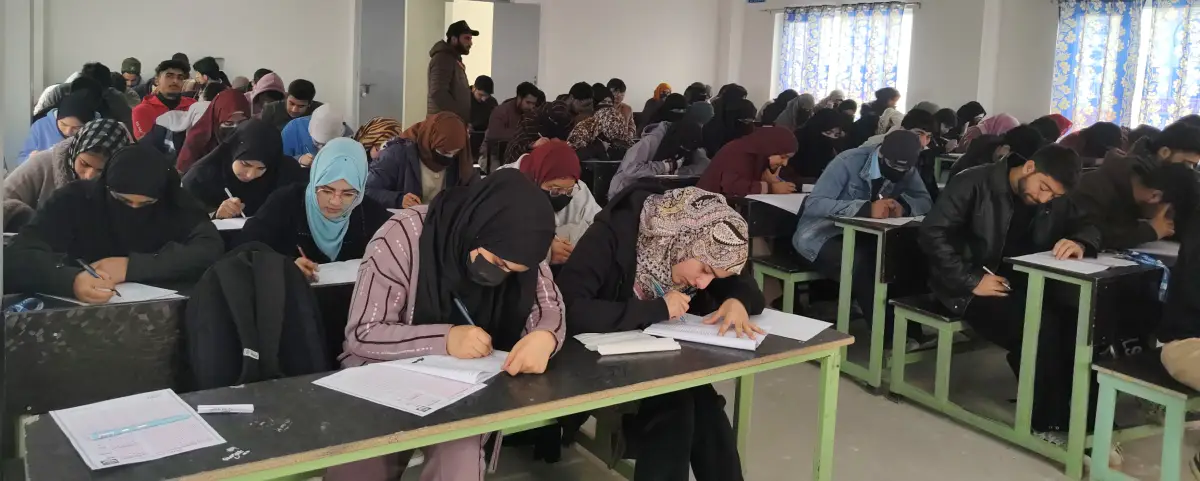
Kashmir’s educational ecosystem is facing a quiet yet steadily deepening crisis. From kindergarten to higher secondary levels, students continue to learn through a rote-based curriculum that has remained largely unchanged for decades. While the rest of the world advances in areas such as artificial intelligence, machine learning, digital literacy, critical thinking, innovation, and interdisciplinary learning, our classrooms remain anchored to memorisation, outdated textbooks, and an exam-centric approach. This widening gap between what students are taught and what the modern world demands leaves them unprepared, uncertain, and increasingly disengaged.
Limited Options
For most children in Kashmir, only three professions are presented as respectable futures: doctor, engineer, or civil servant. Schools, coaching institutes, and even families reinforce this narrow imagination, turning NEET, JEE, and the Civil Services Examination into the ultimate markers of success.
Each year, thousands of teenagers pour into coaching centres, where learning becomes mechanical. Formulas are memorised, shortcuts replace reasoning, and ranks overshadow understanding. Those who fail these competitive exams often feel defeated, not because they lack ability, but because the system never showed them a world beyond these three gateways. Careers in research, the humanities, design, business, the arts, social sciences, technology, environmental studies, or entrepreneurship are rarely discussed.
This silence around entrepreneurship is particularly damaging. In a world where start-ups are reshaping economies, creating new industries, and driving innovation, students in Kashmir often lack even the most basic understanding of entrepreneurial thinking.
Schools seldom offer courses on financial literacy, business innovation, or problem-solving for real-world challenges. Colleges lack incubation centres, start-up labs, or mentorship networks that could help young people turn ideas into ventures.
As a result, creativity remains unchannelled, and the region loses out on the energy and imagination of its youth. Instead of being encouraged to build something of their own, students are conditioned to chase a small set of competitive exams, even when their interests and talents lie elsewhere.

No Practical Learning
The absence of extracurricular and practical learning compounds this problem. Sports, arts, debate, music, theatre, and creative clubs, essential pillars of holistic development, receive little attention. Many schools lack playgrounds, functional laboratories, or active cultural spaces. In STEM subjects, practical work is reduced to completing files instead of nurturing curiosity and experimentation. Students study science without ever experiencing it firsthand, and the consequences become painfully apparent in higher education.
The coaching culture has further weakened genuine mentorship. Coaching centres function as exam factories calibrated towards NEET, JEE, and civil services prelims. Schools, too, seldom offer career counselling. Students pass through the system without understanding their strengths, without exposure to diverse fields, and without someone to help them identify meaningful academic or professional paths. In this vacuum, the idea that a young person might build a start-up, develop a product, or craft a new service sector simply does not arise.
Institutional Stagnation
A deeper structural issue lies in institutional stagnation. Fresh recruitment of young, trained educators has been limited, and many key academic positions are repeatedly filled by retired personnel. Experience matters, but an overreliance on the past can hinder institutions from adapting to the times. The New Education Policy, promising on paper, remains difficult to implement because colleges and universities lack the trained faculty, infrastructure, laboratories, and research environments necessary to make reforms real, let alone to support innovation or entrepreneurial ecosystems.
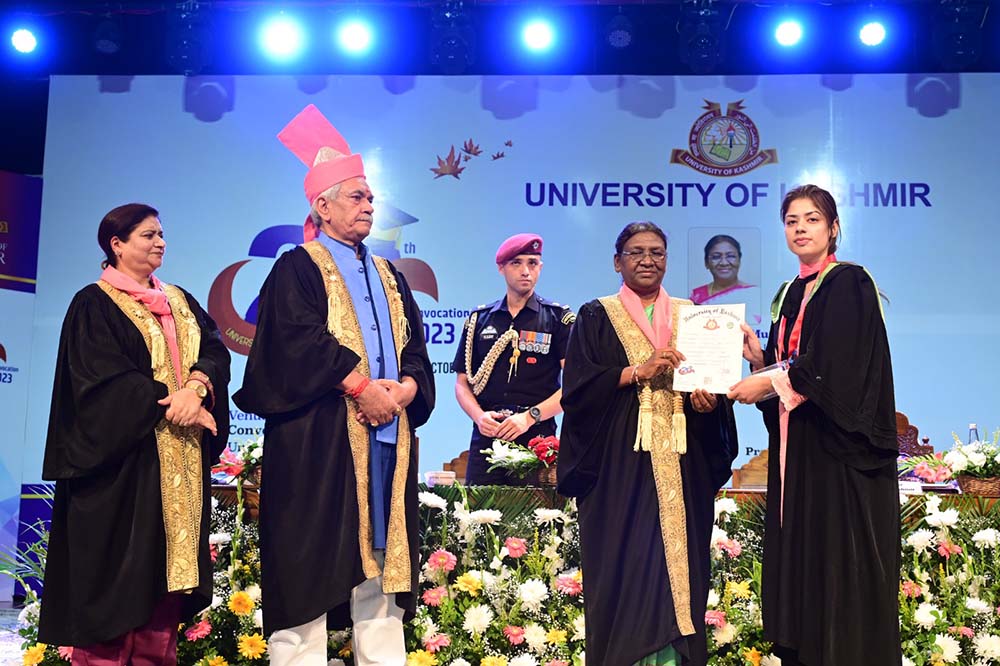
As students move into higher education, the situation becomes even more discouraging. Many hesitate to pursue advanced degrees because job opportunities within the region, especially in the private sector, remain scarce. Even highly qualified individuals, including PhD holders, struggle to find stable employment, deepening the sense of disillusionment among younger students. The lesson they absorb is harsh: even academic excellence may not translate into livelihood. In such a landscape, the idea of starting a business feels risky, unsupported, and unrealistic. Naturally, many see government jobs as the only secure path, a rational response to a system that does little to nurture confidence, innovation, or risk-taking.
Sham Hiring
Another painful truth rarely spoken about openly is the state of academic hiring in Kashmir’s higher education institutions. For many young scholars often trained at some of the best universities in India and abroad, the hiring process itself becomes a disheartening lesson in how institutions fail their own future. Academic positions are often filled through opaque processes, where merit takes a back seat to connections, internal lobbying, and predetermined selections.
In some cases, candidates are aware of the outcome even before the interview is announced; in others, advertisements appear to be merely a formality. This culture not only pushes away capable researchers but also deprives students of the mentors they deserve. When mediocrity is institutionalised, innovation becomes impossible.
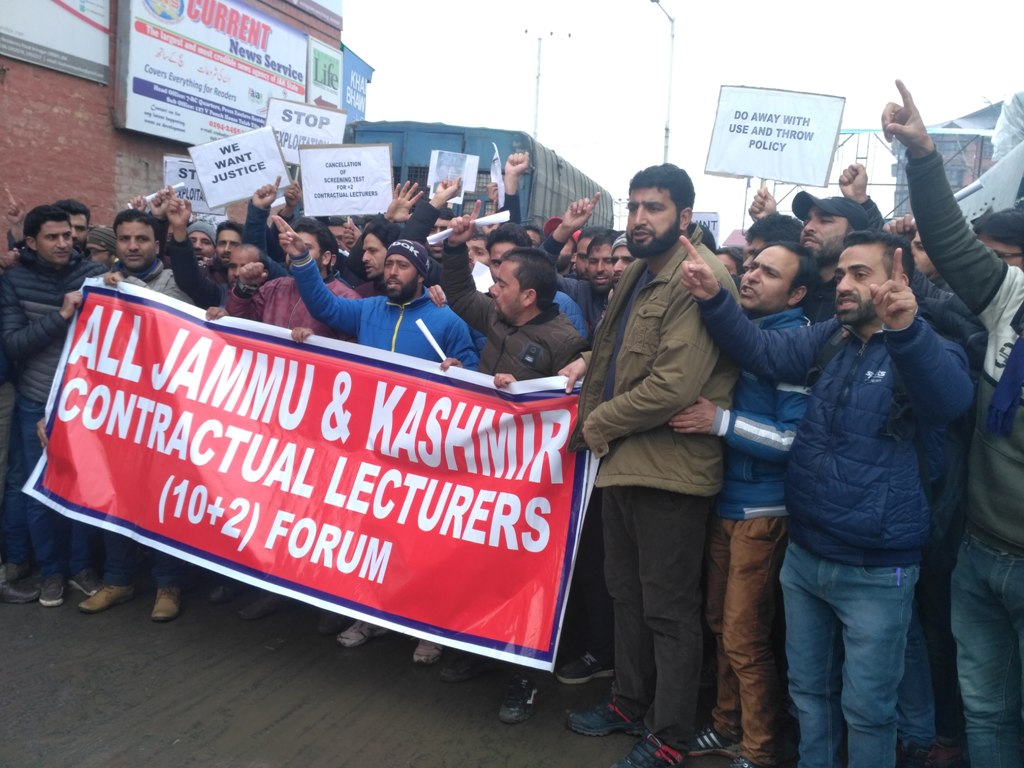
Our universities, spaces that should inspire ideas, debate, and research, have become victims of stagnation themselves. Syllabi in many departments have remained unchanged for 10–20 years, despite the global knowledge landscape evolving every six months. Courses are taught the same way they were taught to previous generations: dictated notes, outdated references, and almost no hands-on engagement. Students often find themselves learning theories that the rest of the world has already discarded. This leaves them underprepared, not because they lack intellect, but because the system denies them access to contemporary thinking.
Suffering Student
The decline of Kashmir’s education ecosystem is not the fault of its students. It is the result of outdated curricula, narrow career expectations, weak infrastructure, minimal practical learning, absence of mentorship, stagnation in hiring, and a broader economic environment that stifles creativity and offers little support to new ventures. Repairing this system will require more than cosmetic changes. It demands curriculum reform, the hiring of qualified young educators, investment in laboratories and sports facilities, meaningful mentorship programmes, strong universities, incubation centres, start-up grants, and an atmosphere where students feel empowered to build, experiment, and explore beyond convention.
Kashmir’s youth are bright, capable, and full of potential. What they lack is a system that believes in them. A system that hires the best teachers, rather than the most familiar ones. A system where universities are places of discovery, not stagnation. A system that rewards curiosity, not conformity. Until these structural gaps are acknowledged honestly, our students will continue to dream bigger than the institutions meant to support them.

(The author is a postdoctoral researcher at the French Alternative Energies and Atomic Energy Commission and serves on the Board of Directors of JK Scientists, where he volunteers in mentorship and outreach programmes. Ideas are personal.)