by Amir Suhail Wani
Iqbal’s profound affection for Kashmir creates a reciprocal obligation. We must love Iqbal with the full depth of our minds, cultivating a sustained and serious engagement with his art and thought.
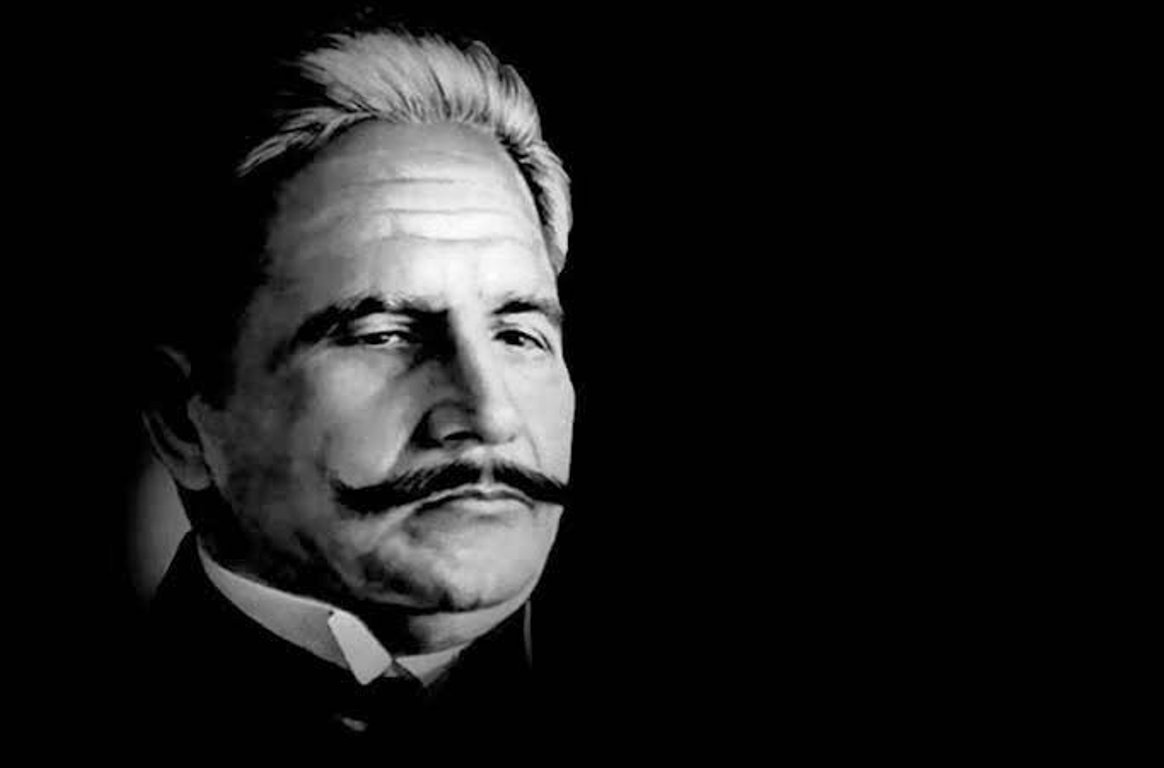
Iqbal embodies an intellectual paradox, akin to the Eastern incarnation of Le Penseur. He stands as the heir to three disparate intellectual realms: Western, Islamic, and Indian. This multifaceted inheritance imposes upon him the singular challenge of reconciliation. Drawing from vastly divergent intellectual and spiritual frameworks, Iqbal finds himself perplexed by the complexities.
His greatness does not reside in the conclusions he drew or the final synthesis he proposed. Rather, it lies in the ideals he pursued, the harmony he envisioned and the reconciliation he strove for. These elements collectively define Iqbal’s unparalleled stature.
Iqbal developed a comprehensive philosophy encompassing life, infusing existence with renewed vitality. He recognised, however, that such a framework could only be constructed by revisiting and reinterpreting past philosophies. His endeavour was thus one of reconstruction, not innovation.
In this pursuit, Iqbal delved into diverse systems of thought, seeking the elusive East-West Synthesis. A unique fusion of concepts emerges in his philosophy, exemplified by the synthesis of Jilli’s Insan i Kamil and Nietzsche’s Ubermensch. This synergy yields the paradigmatic equation: Insan i Kamil (East) + Ubermensch (West) = Mardi Moomin (Iqbalian Paradigm). This framework serves as a guiding principle, applicable to Iqbal’s seminal concepts – God, Self, Time and Universe.
Furthermore, it can be argued that Iqbal’s concept of God converges Ibn Arabi’s notion of Being with Hegel’s concept of the absolute. Additional influences are drawn from Bergson’s Ontology of Becoming, enriching Iqbal’s philosophical tapestry.
Synthesis of diverse sources inevitably yields contradictions and inconsistencies. Iqbal’s oeuvre exemplifies this dilemma. His poetry reverberates with devotion to a Personal God, whereas his philosophical treatise, The Reconstruction, moulds God after Aristotle’s prime mover and Bergson’s mystical conception.
Iqbal’s poetic voice soars, advocating universalism, globalism and mystical unity, yet his prose reveals a calculated statesman, envisioning a distinct political future for the subcontinent’s Muslims. This dichotomy is striking.
In Reconstruction, he passionately advocates for Ijtihad, while dedicating considerable poetic space to cautioning against its dangers. His reverence for Rumi contrasts with reservations about Hafiz, despite both embodying the same Sufi tradition.
Iqbal elevates love, passion and intuition above reason and rationality, yet Reconstruction showcases his rational prowess. Concurrent engagements with the New Age Movement, Advaita, Modern Psychology and Eastern Mystic Cults (explored in The Evolution of Metaphysics in Persia) render his thought complex and resistant to categorisation.
This multifaceted intellectual landscape complicates understanding Iqbal, defying straightforward classification. His synthesis of disparate influences enriches his philosophy but also fosters seeming paradoxes, underscoring the intricacies of his thought.
The foregoing observations are not intended to diminish the monumental poetic and philosophical contributions of Iqbal. We should aim to illuminate the sources that informed his work, encouraging discerning readers to transcend superficial evaluations. By reassessing Iqbal within the context of his influences, we may gain a deeper understanding.
Regrettably, discussions about Iqbal often devolve into extremes: either venerating him as the pinnacle of philosophical thought or disparaging him as a plagiarist or charlatan. Proponents of both perspectives abound, yet few venture beyond their biases in pursuit of truth.
Iqbal’s indebtedness to Western philosophers is well-documented, notably by Jagan Nath Azad in Iqbal aur Magribi Mufakireen. Conversely, the profound impact of Rumi, Al Ghazali, Bedil, Ghalib and others on Iqbal’s art and thought is equally acknowledged. To label this cross-pollination as plagiarism, however, is unbefitting serious scholarship.
Notably, Marx’s engagement with Feuerbach and Hegel, and Nietzsche’s dialogue with Kierkegaard and Wagner, are not dismissed as plagiarism. Rather, they exemplify the natural exchange of ideas inherent to intellectual discourse. Iqbal’s synthesis, similarly, merits nuanced evaluation.
The provenance of inspiration holds less significance than the synthesis it yields. Iqbal stands paramount among master synthesizers, weaving the sacred and secular into a seamless philosophical tapestry. His framework pivots on the primacy of human selfhood and the spiritual reality of life and the universe.
Iqbal’s radiant thought is fuelled by Eastern and Western influences. Serious scholarship within the realm of Iqbal studies must acknowledge these nuances.
Regrettably, prevailing misinterpretations pose significant challenges. Iqbal’s poetry has been reduced to didactic lessons or, worse, sectarian dogma. Isolated critics – Gopi Chand Narang, Shameem Hanafi, Shams Ur Rehman Farouqi and Saleem Akhtar – have bucked this trend. The dominant approach venerates Iqbal’s verse, exploiting it for sloganeering.
Iqbal awaits his Heidegger, a philosopher to unravel the multifaceted literary richness. Laity and scholars alike have yet to explore this depth.
His seminal philosophical works, Reconstruction and The Evolution of Metaphysics in Persia, fare worse. Most scholars have merely touched upon these tomes, dismissing them as “heavy stones”, unexamined and unappreciated.
Amidst boasts of Iqbal Shinasi and Iqbal Fehmi, a glaring disparity exists. Our dearth of innovative, engaging works on Iqbaliyat betrays a disconnect.
Complacency has beset us, as we regurgitate select couplets, deceiving ourselves into believing we grasp Iqbal’s complexities. Reality, however, suggests otherwise. Many scholars struggle to expound upon foundational poems like Masjid i Qurtuba.
The significance of Iqbal invoking Nazzam’s atomic motion theory or Iraqi’s concepts on time and duration eludes them. These oversights stem from a false consciousness.
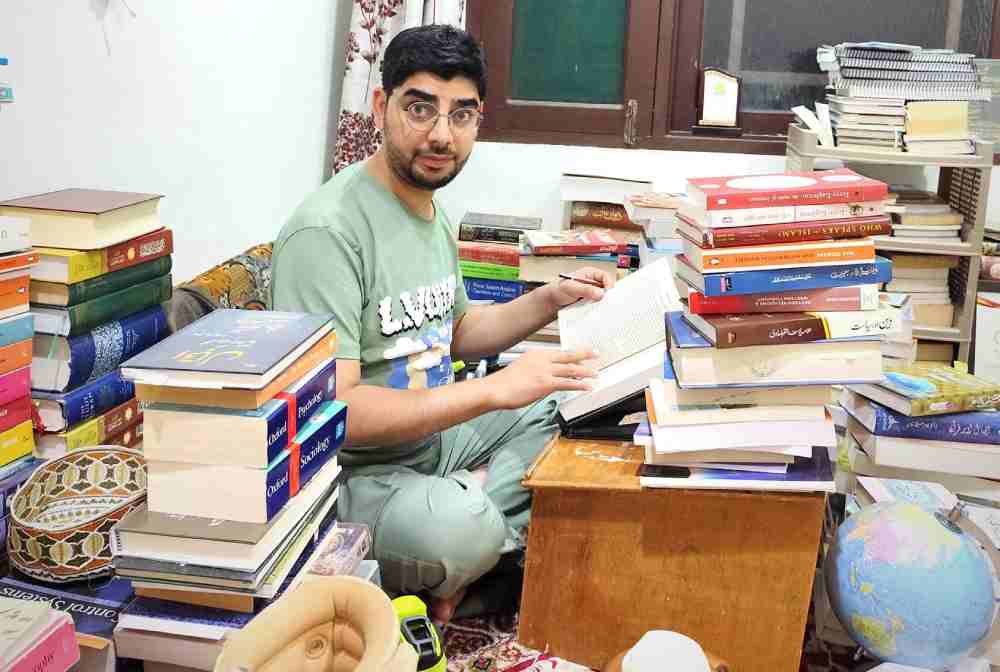
Our superficial familiarity masks profound ignorance, underscoring the imperative for nuanced exploration and authentic scholarship to illuminate Iqbal’s multifaceted thought.
Iqbal’s profound affection for Kashmir creates a reciprocal obligation. We must love Iqbal with the full depth of our minds, cultivating a sustained and serious engagement with his art and thought.
This endeavour necessitates delving into the intricacies of Iqbal’s philosophy, unravelling its nuances for the contemporary world. A poignant question arises: Will Kashmir nurture the next Annemarie Schimmel or Khalifa Abdul Hakim, visionary scholars to illuminate Iqbal’s relevance anew?
This aspiration forms a worthy pursuit, beckoning a new generation of thinkers to forge meaningful connections between Iqbal’s timeless wisdom and the complexities of our modern era.
(Amir Suhail Wani is an engineer and author who delves into the relationship between faith and modernity, particularly in the context of Kashmir’s spiritual landscape. Ideas are personal)