by Nazira Maqbool
A woman’s silence in the face of harassment is not consent—it is fear, conditioned by a society that judges her before the offender. Break the silence, change the narrative.
For years, the dominant discourse in Kashmir has centred on the insecurity faced by boys, the overall volatility of the region, and the daily struggles of its people. Yet, one question remains conspicuously absent—are girls safe in Kashmir? Has anyone truly acknowledged the fears and challenges that women encounter every day?
Public transport, intended as a safe and convenient means of travel, often becomes a source of distress for women. The introduction of E-Bus services was meant to offer a secure commuting experience, yet overcrowding has turned them into a space rife with discomfort. Who speaks of the young girls and women forced to stand shoulder to shoulder with strangers, enduring silent harassment? No one acknowledges their plight; their suffering remains an unspoken reality.
Even the simplest errands can transform into moments of unease. A visit to the tailor, an act as mundane as it is necessary, can expose women to unwanted attention and harassment. Many endure such experiences in silence, constrained by fear and societal expectations. When such incidents occur in public spaces, the response is often indifference. Bystanders choose to look away, their silence complicit, or worse, they cast blame upon the victim, as if her mere presence is an invitation for harassment.
The workplace, too, offers no refuge. Women navigate an environment where inappropriate glances and unsettling behaviour are commonplace. Even married men, bound by vows of fidelity, stoop to predatory conduct. Some girls avoid public places altogether, knowing that certain men loiter with the sole intention of making them uncomfortable, smoking near them, or attempting to lure them into distressing situations.
Even hospitals, places meant for care and healing, are not immune to such threats. Women working night shifts often find themselves vulnerable, facing harassment not just from patients but from colleagues, staff, and even doctors. In spaces designed for safety, they are left to fend for themselves, their discomfort dismissed, their concerns unheard.
The question persists—are girls safe in Kashmir? And if not, why does no one ask?
Why do they remain silent? Because a single thought lingers in their minds—if they speak up, it will tarnish their character, not the offender’s. This deeply ingrained mindset passed down through generations, must change.
Harassment is not confined to workplaces; it exists within college walls too. Even in the early years of the twenty-first century, many young women avoided higher education due to the fear of harassment, just as some boys stayed away to escape ragging. The shadow of harassment follows women everywhere. Delivery boys, shopkeepers, and even familiar faces in their communities make them feel unsafe, especially here in Kashmir.
A woman’s silence in the face of harassment is not consent—it is fear, conditioned by a society that judges her before the offender. Break the silence, change the narrative.
In 2022, Jammu and Kashmir recorded 3,214 cases of assault on women with intent to outrage their modesty. A 2005 study by Médecins Sans Frontières found that 11.6 per cent of respondents in Kashmir had personally experienced sexual abuse. The same study revealed that 63 per cent of participants had heard of rape cases since 1989, yet many remained unreported due to societal stigma and fear.
Beyond physical harassment, the dowry system remains a cruel reality for many Kashmiri women, leading to devastating consequences. Countless young women have lost their lives because their families could not meet the relentless demands of their in-laws. Some cases have been particularly harrowing—the brutal rape and murder of a girl in Budgam, the horrific incident in Srinagar where a woman was raped by her brother-in-law before being killed in the very room she once called home.
Why does this continue? Why do so many women endure their suffering in silence until it becomes unbearable? Has anyone considered the unimaginable torment they face in those moments?
Even today, both married and unmarried women remain trapped in this cycle of suffering. In Srinagar alone, countless women remain unmarried as their families struggle to meet dowry expectations, their years slipping away in quiet despair. Why has this injustice persisted for so long? Why do women feel powerless to resist it? It is time to question, to challenge, and to demand change.
Women must report harassment—not only to seek justice for themselves but to prevent others from suffering the same fate. Every unpunished crime emboldens the perpetrator. The more cases that come to light, the stronger the laws and policies protecting women in workplaces, colleges, and public spaces become. Fear and societal judgment should not silence them. Speaking up empowers others, shatters outdated mindsets, and compels governments and institutions to take women’s safety seriously. Silence only deepens trauma; seeking justice is the first step towards healing.
Workplaces such as hospitals, universities, and public transport must enforce strict anti-harassment policies, install surveillance systems, and conduct regular gender-sensitivity training. Without such measures, these spaces will remain fraught with fear, forcing women to navigate daily life with caution rather than confidence.
Now, more than ever, women need access to reliable support systems—safe spaces where they can share their experiences without fear of judgment, healthcare services that prioritise their well-being, and strong networks that empower them. The media and religious leaders, with their immense influence, must play a role in fostering a culture of respect, dignity, and protection for women. Their voices must champion justice, not perpetuate silence.
This silence must be shattered. The time to rise is now. The voices of women must be heard, their struggles acknowledged, and their safety ensured. This is not merely a woman’s fight; it is a fight for humanity, for dignity, for justice.
You are here to take a stand for yourself. I am here to take a stand for all of you—for every girl across India who faces harassment. Let us unite and act before we are left regretting more tragedies like the RGKAR Medical College case and the countless other horrific crimes that continue to stain our conscience.
The era of ignorance and inaction is over. We must stand together and create a Kashmir where every woman feels safe, respected, and protected.
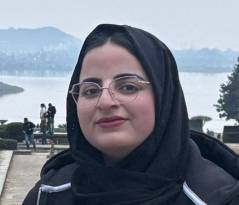
(The writer is a BA (Economics) student from Cluster University, Srinagar. Ideas are personal.)