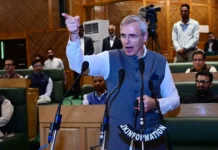
Omar Abdullah’s August 15 speech highlighted his limited powers as UT Chief Minister, announced a door-to-door signature campaign for restoring statehood, criticised governance constraints, and urged equal status for Jammu and Kashmir within India, reports Babra Wani
For Omar Abdullah, the Chief Minister of Jammu and Kashmir, now a UT, the August 15 speech was a challenge. His office was working on it for days. It was significant because an elected representative was supposed to speak for the first time after 2018, and he feels disempowered in comparison to his earlier stint as Chief Minister of the state.
Credit goes to him for acknowledging all this. “How should I address people? What words should be used? The situation?” he said. “The speech written by the government, I did not want to read that. Because had I read that out, maybe people of Jammu and Kashmir would have thought that everything was fine.”
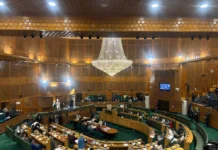
“After more than six years, this podium saw an elected head addressing the gathering,” Omar said in his speech, 11 years after his last I-Day speech. “In these past ten years, a lot of things have changed.
Nevertheless, he said, it is better late than never. “At least now, people of Jammu and Kashmir have their own elected government, finally, for which people have participated overwhelmingly.”
A Signature Campaign
Omar opened his speech with a Padder cloudburst, but his focus soon shifted towards statehood, the Pahalgam massacre, Operation Sindoor and other developments that dominated Jammu and Kashmir after his October 2024 takeover. Offering condolences to the 60 people who perished in the tragedy,
Omar asserted that while the government will try to compensate the victims, it will also look at its own failures. “We owe that to the people.”
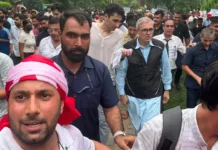
Statehood was on his mind. He announced a signature campaign spanning across 90 constituencies. The campaign will last for the next eight weeks. “We will go to every village, every area. We will ask for one thing: the restoration of statehood.”
The campaign, he said, was not about power or position. “If we fail, I will accept that,” he told the gathering. “But I believe people want their state back. We will take these signatures to Delhi, to the court. Only then will I take rest.”
The Change
Omar said that the change that he hoped for was to get Jammu Kashmir at par with the rest of the country, “That Jammu Kashmir has to be made better and equal to the rest of the country. But the question remains, have we attained that equality? Have we attained the same status as other states? If the answer to these questions is a yes, then I have nothing else to say. But if there is a no for an answer, then tell us what our fault was? What did we do to see ourselves in such a messy situation?”
Omar said that the last time he stood there, “we had our own identity in this country. We had a special status, our own flag and even our separate constitution. But today we have nothing. Not even our statehood. To even attain democracy, we had to wait. Why are we being made to wait is still in question.” He paused. “Today, I am the Chief Minister of a Union Territory.”
As he talked about being a UT chief minister, he acknowledged that he has repeatedly established that the current system of governance “is a system good on papers but in reality the less we talk about it, the better.”
Omar acknowledged that (he knew) it would not be a bed of roses. “Some people, after hearing my speech, may also start questioning me about being present here today,” he said. “My eyes were not closed, I knew these elections for electing the UT government, and that I knew I would be elected as the CM of Jammu Kashmir, the Union Territory and not the state. But what I did not know was the level of difficulty. I had no idea that the cabinet decisions would be changed without the permission of the cabinet. That many of them would not get the clearance. Some files will not return. And others will simply disappear.”
Sometimes, he continued, the current governance feels like a horse, “whose front legs have been tied up and is asked to run. The horse may be able to crawl or reach somewhere, but with great struggle and at a negligible speed. The same is the case with us. We have been given a government, an authority, but with our hands tied up.”
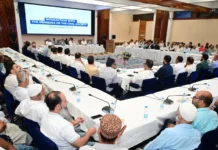
But, Omar said, saying that the elected government did nothing will be wrong and an injustice, “If we feel we wasted these 10 months, it will be wrong on our part. We passed a resolution in the Assembly, while standing there, to restore the Special Status we once had. We passed a resolution with the approval of the cabinet for the restoration of the statehood. We made some decisions following the Budget to make the life of the residents easy, be it transportation, tourism, social welfare or health.”
Every department of the government, he said, “Within our authority tried our best to work for the welfare of the people. We tried our best. The government worked tirelessly to restore electricity during the snowy winters and water during the harsh summers. We created avenues and schemes to tackle the unemployment crisis in the UT.”
The powers of the elected representatives, the MLAs, he said, were restored. “We increased the constituency development funds, from three crore to four crore, to give them the capacity to help the people.” But somewhere, he acknowledged that this system will not be able to work properly.”
The Broken Chain
Omar referred to a recent observation made by the Supreme Court. “It referred to a triple chain of accountability, which means that the bureaucracy is accountable to the government, and the government is accountable to the Assembly or the Parliament, and the latter are answerable to the people,” he said. “But here in Jammu and Kashmir, that triple chain of accountability does not work.”
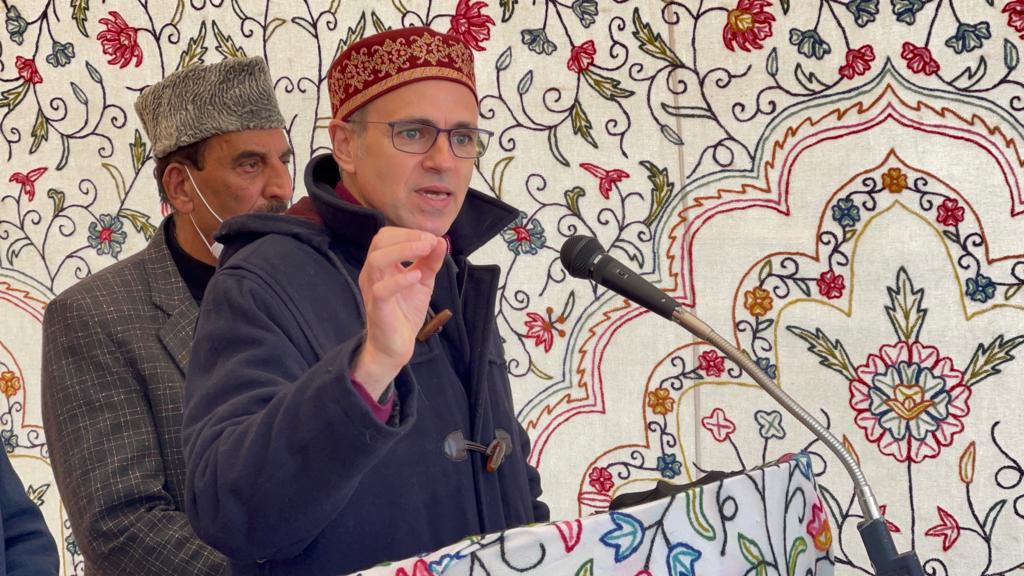
Undoubtedly, he said he and his cabinet ministers are answerable to the Assembly. The members of the Assembly are accountable to the people, “that goes beyond doubt, too. But our officers are no longer answerable to the government, elected government to be precise, is beyond doubt too.”
The triple chain that the Supreme Court mentioned for the benefit of the people, Omar said, needs to be implemented in Jammu and Kashmir, earnestly, too. “How does the government function? The elected representatives draw a sketch, while adding the colours to the sketch is the job of the people. The elected members are the brains of the government, but the officers act as the arms.”
That is why, he said, he has repeatedly stressed that the new Jammu Kashmir will be new when better changes will be brought into place.
“Just using the new word does not make something new. The word should hold a meaning, an essence; unfortunately, we do not have that power. We have the right to be statehood, we were promised the restoration of statehood. That is why it is upsetting what we heard in the Supreme Government.”
Pahalgam Attack
The recent hearing in the Supreme Court on Statehood, he said, included a reference to the Pahalgam attack.
“We were told the Pahalgam incident cannot be ignored,” Omar said. “I agree. But should we be punished for it again? But my question is, who will decide on the restoration of statehood? If not the government, if not the Supreme Court, then who?The culprits of the Pahalgam or the powers behind them? Or will the people on the other side of the border take a call on the restoration of the statehood? We are being punished for a crime we did not commit.”
Omar continued that those who attacked have already been dealt with through Operation Sindoor. “Now that same attack is being used to delay statehood.”
People of Jammu and Kashmir are now being punished for the attack, he added, “the same people who took to the streets to protest the attack. Who condemned the attack, but despite that we are being punished.”
It was not the elected government’s fault, he pointed out. “It did not happen because of our governance. When I served as the Chief Minister previously, and even during the reigns of many of the previous governments, the occurrence of such incidents declined. Not by chance, but through work.”
Now it is said that the current elected government cannot be trusted in running the affairs of Jammu and Kashmir, Omar complained. “When did we ever show or prove that we are not trustworthy? Try trusting us once, and we will never fail.”
He paused for a few seconds before continuing that he is pressing for statehood to change the future of the people of Jammu and Kashmir; it is the first step. “And I will keep talking about it because it is the right of the people.”
As soon as he took charge of the government, he said, he took the risk. “I emphasised two things, one, that whatever will be provided to the people will be following the constitution and democracy of India. Apart from that, I also said that the fight against the Centre will not reap any profits, but working closely with the Centre will benefit us. I was taunted, made fun of, and mocked for it. I even went through political losses, but I am ready for it because it will help people.”
It is time, he said, “our voices should reach the people who make decisions for us. We tried by passing resolutions, holding meetings, and writing letters. But now we have decided.”
For restoring statehood, he said he is taking the campaign to the people. The signature campaign will be taken to all 20 districts. He said his party workers and public representatives will be on the ground, asking people to sign. “Now, I, along with my colleagues, will visit every Legislative Assembly segment and conduct a door-to-door campaign across Jammu and Kashmir to collect public signatures and thumb impressions in support of restoring the UT statehood.”
Omar said, “The Supreme Court has given eight weeks, and we will not let them go to waste. We will reach every segment and ensure no household or individual is left without endorsing this cause.” He concluded by saying that he is optimistic that by collecting the signatures from people and presenting them to the Supreme Court, justice will be served. “We will keep our hopes and the hopes of others alive. We will attain India, where everyone is equal.”