In the first Rajya Sabha election held after 2019, the Jammu and Kashmir National Conference retained three seats while the BJP secured one, triggering allegations of horse-trading after the BJP candidate won with four ‘unexpected’ votes from the ‘secular’ bloc, reports Babra Wani
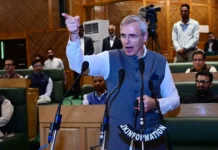
“BJP never keeps any election normal and we have said it time and again,” JKNC’s spokesman, Imran Nabi Dar, told reporters after he gushed out of the assembly premises, moments after he lost the seat by four votes. “The BJP did not have the numbers to win this seat; they only have 28 seats, so how could they win? There has been horse-trading. BJP has used all their resources and won this seat.”
Visibly upset, Dar, son of slain JKNC’s leader and Kulgam lawmaker of yore, Ghulam Nabi Dar, got into plain statistics. “BJP has only 28 MLAs, but their candidate got 32 votes. They have purchased these votes,” an angry Dar said. “The people voted for them, and had promised their support to us. I hope that if they still have a conscience alive, they must come forward and admit voting for the BJP, and we are working on exposing them for cross-voting and breaching their promises. I am disappointed, but at the same time very proud of JKNC for giving me this chance.”
There were four seats on which the indirect voting took place. It was already known that the ruling JKNC has comfortable numbers to manage three berths. In alliance with all non-BJP parties and the independent lawmakers, they had enough numbers. The four berths were part of three notifications. While two notifications were for one election for one seat each, the third notification involved two berths. It was already known that the real contest was for the fourth seat.
The JKNC’s Trio
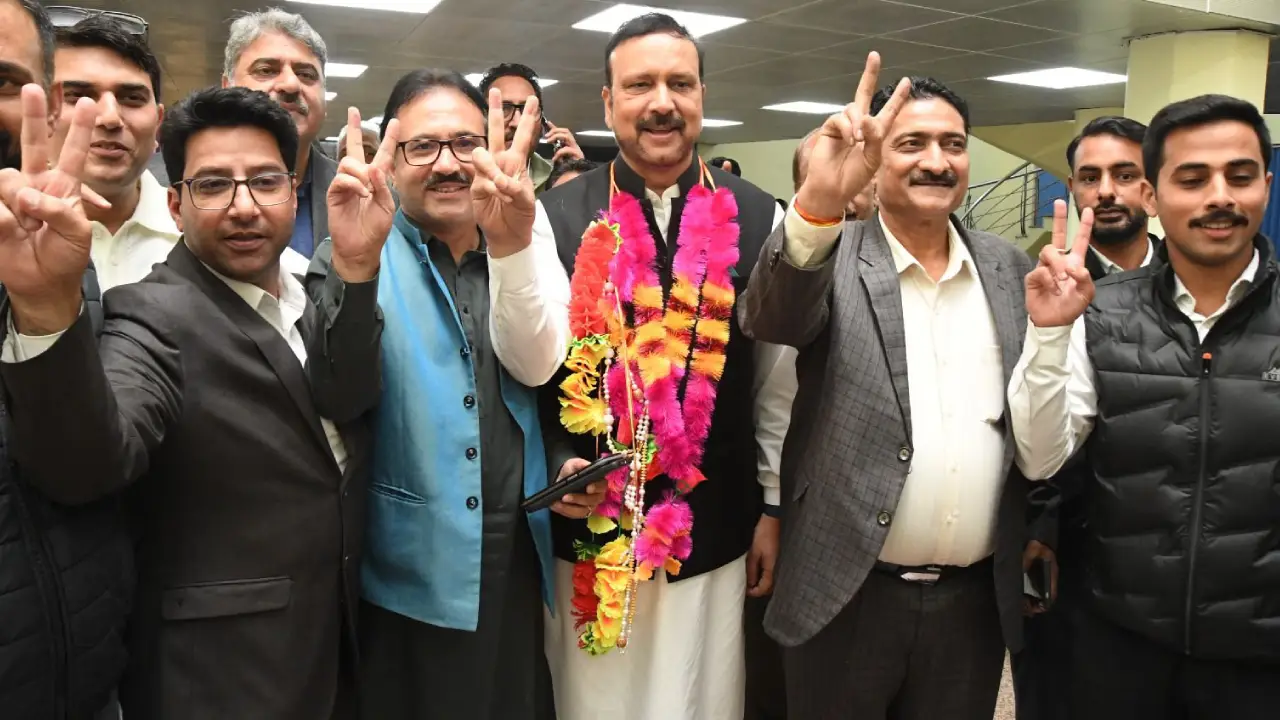
After a day-long polling, the results were on expected lines. NC won three, and BJP won one. In the first election, Sajad Ahmad Kitchloo, the JKNC heavyweight from Kishtwar, won his nomination. He polled 56 votes.
“I am thankful to my Lord for bestowing this honour upon me. I express my heartfelt gratitude to my party and its leadership for their unwavering support, and to the people of the Chenab region, especially Kishtwar, who have stood by me through every high and low,” a beaming Sajad told reporters. He was taken out from the secretariat by Kishtwar’s Hindu Muslim supporters chanting – Kyoun Paday Thay Chakar Main-Koi Nahi Hai takkar Main. “I am deeply content that the leadership recognised and gave representation to our remote region.
For the election for the second notification, it was JKNC’s former minister and a north Kashmir heavyweight, Choudhary Mohammad Ramzan, who bagged the seat. He polled the maximum votes.
“This is a resounding victory for the JKNC. We are deeply grateful to all the members of the Legislative Assembly, whether independents or from the PDP and Congress, whose support made this decisive win possible,” Choudhary told reporters soon after being declared a winner after a series of setbacks at the home front. “Their votes ensured a sweeping margin of victory. Through this mandate, the JKNC has once again demonstrated that the people have rejected the decision of 2019.”

In the elections for the third notification, JKNC’s Shami Oberoi won. He got 31 votes. It was this election in which the vote spill over from the first seat was counted for the second one. It was won by BJP’s Sat Sharma, who bagged 32 votes, and JKNC’s Dar got only 22.
“I am delighted that we have secured three seats. We will now take the voices of our people to Parliament and work to address their issues and concerns,” Shammi, a close confidant of Omar, said. “Although we could not win one seat, I am thankful for the trust that brought us victory in the remaining three. I will strive to honour every hope and expectation placed in me, and I extend my heartfelt gratitude to everyone for their support.”
A Rare Victory
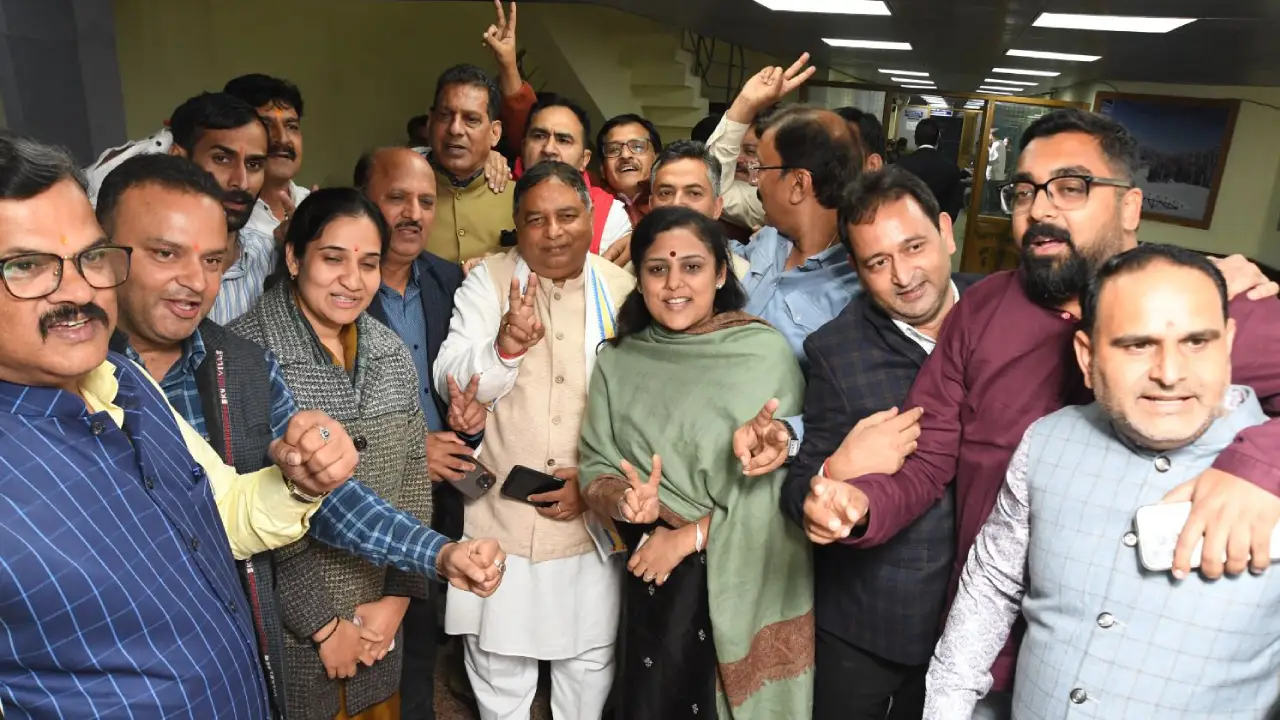
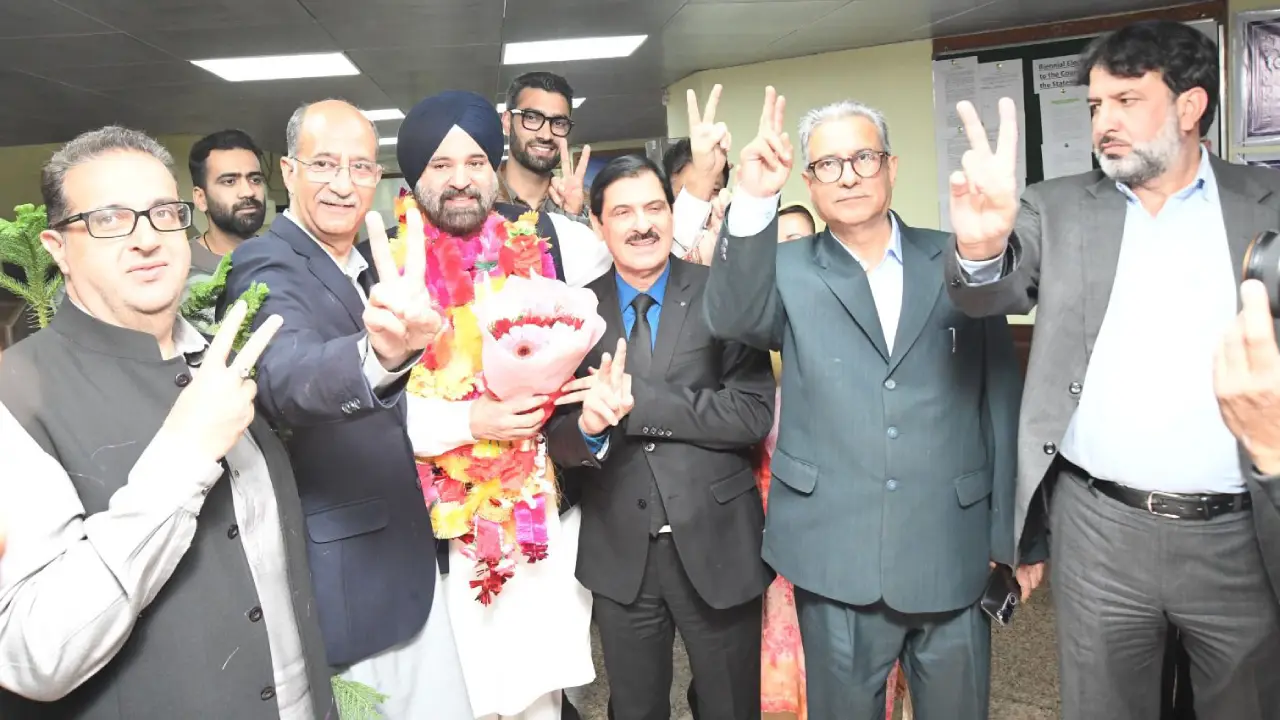
An excited Sharma could not hide his happiness over the historic win, a victory that was challenging given the fact that JKNC had a huge vote bank of almost 59, none of them supportive of the BJP.
“I am deeply grateful to all the leaders who considered me for this election, to the lawmakers who voted and supported me, and to the voters who responded to my appeal to vote with their conscience and choose a representative committed to serving the people of this country,” Sharma told reporters. Asked about the cross-voting, he said: “Those who voted for me followed their conscience. I reached out to everyone, regardless of party lines, and told them my only aim is to work in the nation’s interest. I am especially grateful to the four voters who placed their trust in me.”
A calm politician, Sharma, 48, worked behind the scenes to face a dominating majority. The chances were bleak, especially after some of the independent lawmakers came out publicly with their intention to vote against the BJP. Eventually, he managed to get four votes and clinched his victory. BJP sources indicate that the four votes came from independents as well as some from some parties.
The Controversy
Since the BJP has only 28 votes on its own, it is clear that four lawmakers supported them. Sajad Lone, who stayed away from the polls, had his own axe to grind. He alleged it to be a “fixed match”.
“So, BJP wins the fourth seat. As predicted fixed match. Axis of evil. NC and BJP. Thank God I abstained. Imagine what my plight would have been,” he wrote on microblogging site X, the erstwhile Twitter. “Now mathematically proved. That it was a fixed match. Why did NC poll extra votes for candidate 3. They didn’t need to. They polled 31 votes for candidate 3. Only 29 votes would have sufficed. Even 28. Because the BJP was fighting for seat 4. Who cross voted? Whose votes were rejected. And who was hand in glove.”
Reports suggest that of the 88 votes, 87 were polled. There was only one abstention. AAP’s Mehraj Malik, who is incarcerated under the Public Safety Act, also posted his ballot. JKNC has 41 votes of its own, its ally Congress has six, PDP has three, CPIM and AAP have one each and then there are seven independents. Most of the independents have Pakoda Chai with Chief Minister Omar Abdullah during the election, and he was happy to upload on his Twitter account.
Omar Abdullah, however, was quick to rebut. “All of JKNC’s votes remained intact across the four elections, as witnessed by our election agent who saw each polling slip,” Omar wrote. “There was no cross-voting from any of our MLAs, so the questions arise – where did the 4 extra votes of the BJP come from? Who were the MLAs who deliberately invalidated their votes by marking the wrong preference number while voting? Do they have the guts to put their hands up and own up to helping the BJP after promising us their votes? What pressure or inducement helped them make this choice? Let’s see if any of the BJP’s secret team own up to selling their souls!”
While four votes were bagged by the BJP from unknown sources, reports suggest that several votes were rejected, which reduced Dar’s tally.
A Much-Awaited Poll
Since the reorganisation of Jammu and Kashmir into a Union Territory, the erstwhile state witnessed its first Rajya Sabha elections. Jammu and Kashmir’s four Upper House seats have been vacant since 2021. Ghulam Nabi Azad and Nazir Ahmed Laway terminated their terms on February 15, 2021, and before them, Fayaz Ahmed Mir and Shamsheer Singh Manhas had finished theirs on February 10, 2021. Following the bifurcation of the erstwhile state into the Union Territories of Jammu and Kashmir and Ladakh, the Jammu and Kashmir Reorganisation Act stated that the four sitting Rajya Sabha members of the erstwhile state would be considered elected to the seats allocated to the new Union Territory.
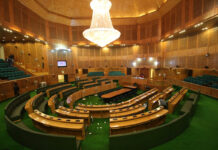
The 88-member Assembly witnessed near-complete participation, barring Peoples Conference (PC) president Sajad Gani Lone, who abstained from voting. Malik, meanwhile, exercised his franchise through a postal ballot from detention.
Jammu and Kashmir has a 90-member Assembly, out of which two seats, Nagrota and Budgam, are vacant. In Nagrota, the winning candidate, BJP’s Devender Singh Rana, passed away, leaving the seat vacant, while in Budgam, Omar Abdullah won the seat but left it for the Ganderbal seat, since he won both those seats. These vacant constituencies, though minor numerically, hold significance in the electoral math for the Rajya Sabha polls, where even a single vote can shift outcomes in a tightly contested race.
The National Conference (NC), supported by the Congress, People’s Democratic Party (PDP), Communist Party of India-Marxist (CPI-M), and several independents, is expected to secure all four seats with a combined strength of 58 votes.
Given the alliance’s numbers, the BJP faced an uphill task, relying on possible cross-voting from MLAs belonging to the INDIA bloc to claim even one seat. The ruling alliance had 29 votes each for the third and fourth seats, against the BJP’s 28.
In anticipation of the voting, all the independents came openly in support of the JKNC. These included Sheikh Khursheed, brother of Er Rashid, and Shabir Kullay.
“We will vote for the National Conference against the BJP,” Khursheed said, adding that he would also meet Chief Minister Omar Abdullah. He added that their main purpose behind supporting JKNC is ousting the BJP, as they are “anti-Kashmir”. “We would not have voted for JKNC as they have underperformed in the past year, but it is against the BJP.”
Kullay also had the same sentiments. “We are against the BJP and we will support whoever is opposite them,” Kullay said. “We should unite to fight in favour of Kashmir, and forget about the past rivalries and differences.” He added that this fight should be unconditional and in favour of the idea of secularism.
“Our legislators, with their experience, understand what the BJP has done to the people of Jammu and Kashmir, to their rights and their constitutional guarantees,” said Yousuf Tarigami, a staunch supporter of the anti-BJP forces. “That is why, despite internal differences, all secular parties have come together with one clear purpose: to vote against the BJP and support the National Conference candidates. This unity reflects a collective resolve to ensure that the voice of the people of Jammu and Kashmir reaches the Rajya Sabha, where our issues and rights can finally be defended.”
Though there were tensions between JKNC and Congress over the “safe seat”, they mended the fences later as JKNC president Dr Farooq Abdullah met senior Congress leader Sonia Gandhi and Congress president Mallikarjun Kharge.
“Despite every effort by the BJP to influence outcomes or create indirect fronts, the mandate was clear, the people rejected them,” Congress leader G A Mir told reporters during the day. “However, on one seat, the result may hinge on the newcomers. If any of the new MLAs made an error in their voting pattern, it could alter the outcome. Otherwise, all four seats reflect the people’s will and the unity of secular forces.”
People’s Democratic Party (PDP) president Mehbooba Mufti had announced earlier that her party will support the JKNC for the third seat from Jammu and Kashmir, but will not extend support for the fourth seat. “Our support is for the third seat only and not for the fourth,” Mufti stated, underlining that the party’s priorities remain focused on preserving regional interests and ensuring a balanced representation of Jammu and Kashmir in Parliament.
Post Script
The election saw an unusual pattern of invalid votes, which rose from one in the first round to two in the second and three in the final round, totalling six.
In the first round, JKNC’s Choudhary Mohammad Ramzan defeated BJP’s Ali Mohammad Mir with 58 votes against 28, out of 87 polled, while one vote was declared invalid.
In the second round, NC’s Sajjad Ahmad Kitchloo won with 55 votes against BJP’s Rakesh Mahajan, who received 29 votes, one more than the party’s strength, indicating cross-voting, as two votes were found invalid.
The final round saw NC’s Shammi Oberoi and Imran Nabi Dar contesting alongside BJP’s Sharma; the latter won with 32 votes, four higher than the BJP’s Assembly strength, while Oberoi and Dar secured 31 and 21 votes, respectively, with three votes invalid.
The pattern of rising invalid votes and cross-voting has raised questions within the political circles of Jammu and Kashmir.