Jammu and Kashmir’s anti-drug campaign is evolving into a coordinated system linking treatment, enforcement, and technology, with Jammu emerging as the new challenge even as Kashmir shows signs of gradual stabilisation, Umaima Reshi reports
As Jammu and Kashmir intensifies its war against drug abuse, the latest official data presents a story of growing capacity and deepening resolve, but also of challenges that continue to test the system’s limits. The government’s Nasha Mukt Abhiyan now stretches from hospitals and rehabilitation centres to classrooms and courtrooms, tying together the strands of treatment, awareness, policing, and technology.
At a recent high-level meeting, the Health Department provided details of the layered progress, including a surge in patient registrations, improved staffing and drug availability, and a growing network of grassroots rehabilitation initiatives. The briefing marked a shift from ad-hoc interventions to a structured, system-wide response to one of Jammu and Kashmir’s most pressing social concerns.
Rising OPD Numbers
The data on Out-Patient Department (OPD) attendance reflects a mixed trend. The Jammu division recorded a 111.5 per cent rise in new patients registered at de-addiction centres, driven mainly by GMC Jammu and GMC Udhampur, which saw increases of 110.8 per cent and 654.6 per cent, respectively.
The data tells a disturbing story in Jammu, where the OPD cases have increased from 2,250 cases in the period January-September 2024 to 4,759 cases for the same period in 2025. GMC Jammu data jumped from 1451 to 3058, and GMC Udhamour from 77 to 747.
Officials say this surge points to both greater awareness and better access. “Earlier, most patients never reached institutional care. Now, awareness and referral linkages are improving, which is why we see more registrations,” said a senior health officer.
In contrast, the Kashmir division remained largely stable, showing a negligible 0.1 per cent overall rise. Yet, this balance conceals regional variations; Handwara reported a sharp increase, while SKIMS Bemina and Anantnag saw declines, revealing uneven reporting and accessibility.
The 12 medical facilities where the drug addict cases are managed had recorded 2620 registered patients between January to September 2024, which is almost the same at 2623 for the same period in 2025. The numbers have fallen at least at four of these facilities.
The OPDs recorded the new patients swelling from 6952 for 2024 to 7382 in 2025 (nine months till September). The follow-up visits actually offer the details of the crisis. The health facilities had recorded 757275 follow-up visits in 2024 (323301 in Jammu and 433974 in Kashmir). For the first nine months of 2025, the follow-up visits fell to 275064 – 104967 in Jammu and 170097 in Kashmir. It indicates that people are healing after getting de-addicted.
IPD and Staffing
Inpatient admissions between January and September 2025 have increased steadily, reflecting stronger institutional care.
Between January and September 2025, 551 new admissions were recorded across all de-addiction facilities- 311 in Jammu and 240 in Kashmir. Remarkably, the entire three-year dataset, from September 2022 onward, reports zero deaths among admitted patients, underscoring stronger clinical management and follow-up protocols.
Jammu alone has handled over 1,100 admissions since 2022, while Kashmir’s facilities have treated more than 970 inpatients during the same period. The figures suggest that supervised detoxification, once the weakest link in the treatment chain, is now an established service across most districts
Most Addiction Treatment Facilities (ATFs) now have adequate staffing, doctors, nurses, counsellors, and data managers, though Doda, Ramban and Ganderbal districts still lack a full-time psychiatrist. The Health Department reports a consistent stock of key de-addiction drugs, including Buprenorphine, Naloxone, and Disulfiram, across the majority of centres.
This consistent availability, combined with better staffing, has helped convert fragmented services into a stable treatment system. “The biggest success has been the creation of dependable human infrastructure,” a district medical officer said.
Community-Based Rehab
At the community level, the administration is expanding its rehabilitation and outreach model through self-help groups under the National Rural Livelihood Mission, paramedic staff, and school and college networks. Training modules focus on life-skill enhancement, motivational counselling, and referral pathways, teaching local teams to recognise early signs of addiction, use screening tools, and document behaviour for early intervention.
A Warm Handoff protocol now ensures that people identified in the community are smoothly transferred to clinical facilities without losing follow-up. Officials say this new bridge between awareness and treatment is helping keep more individuals engaged in recovery programmes.
Technology In
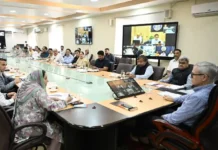
Even as the Health Department consolidates the treatment framework, the enforcement side of the anti-drug campaign is undergoing a digital transformation. At the meeting recently, Chief Secretary Atal Dulloo directed the Jammu and Kashmir Police to develop an Artificial Intelligence-enabled system for preparing watertight charge sheets under the Narcotic Drugs and Psychotropic Substances (NDPS) Act.
The proposed AI module, to be built in coordination with the Law and Prosecution Departments, aims to remove procedural lapses that often weaken court cases. Dulloo said the system would help officers identify missing documents, evidence gaps, or compliance errors before a case is filed, making the prosecution process stronger and more efficient.
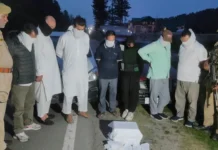
The meeting also reviewed anti-narcotics operations, with ADGP Crime Sujit K Singh reporting that 1,342 NDPS cases had been registered till September 2025, of which 1,305 were charge-sheeted. Out of 339 completed trials, there were 142 convictions and 197 acquittals. The police invoked 215 preventive detentions under the PITNDPS Act, placed 1,350 individuals under surveillance, and identified 222 drug hotspots, demolishing 44 of them.
Singh said 81 properties worth Rs 16.64 crore had been attached under the NDPS Act, and nearly 99 per cent of retail pharmacies were now covered under CCTV and computerised billing systems, helping track psychotropic drug sales.
Dulloo also called for strict monitoring of de-addiction medicines to prevent diversion and instructed the Forensic Science Laboratory to fast-track drug sample testing for credible, time-bound reports. His directives complement the Health Department’s push for data-driven, transparent operations across both divisions.
Expanding Capacity
The Health and Medical Education Department reported that more than 32,000 patients had used outpatient services at de-addiction centres this year, with 551 new admissions in inpatient facilities since January. The Chief Secretary instructed that manpower at these centres be strengthened by hiring psychiatrists on academic arrangements and training medical officers at the Institute of Mental Health and Neurosciences (IMHANS).
Officials say the next phase will involve extending services to peripheral districts, integrating mental health counselling, and ensuring that data on relapse and recovery is centrally tracked.
The government’s digital oversight measures have transformed regulation at the retail level. Nearly all medical sales establishments in both Jammu and Kashmir divisions have installed CCTV cameras and adopted computerised billing systems, which allow authorities to track medicine distribution in real time. In Jammu, as many as 8605 retailers and 2100 wholesale pharmacies have installed CCTV, which is a compliance of 99.6 per cent, officials said. In Kashmir, it is 100 per cent for 8527 retailers and 3916 wholesale pharmacies.
Since January 2025, enforcement teams have carried out 1,304 inspections, leading to the suspension of 92 drug sale licences and the cancellation of 13. Ninety-eight per cent of retail pharmacies across the Union Territory have installed computerised billing systems to maintain accurate sale and purchase records of medicines. This digitisation has resulted in multiple suspensions of pharmacies that failed to comply, creating a new layer of accountability in the sale of controlled substances.
The CID Department has verified all operational Drug De-addiction Centres across Jammu and Kashmir and, through its October 6, 2025, advisory, directed the immediate closure of unregistered facilities. Following the review, one centre in Kashmir was shut, admissions were halted in two others for compliance issues, and 13 of the 17 clinics inspected in Jammu were closed.
From Policing to Public Health
Officials describe the emerging framework as a shift from a reactive law-and-order response to a public health-led model, in which policing, healthcare, and community welfare are interlinked. The dual thrust of enforcement and rehabilitation aims not only to curb supply but also to reduce demand through awareness, early intervention, and social reintegration.
However, challenges remain. Staffing gaps, uneven reporting across districts, and social stigma continue to constrain progress. “Community rehab must not stop at awareness drives. We need active follow-ups, family counselling, and employment linkages for sustained recovery,” said a senior official involved in the mission.
An Integrated Response
As Jammu and Kashmir steps deeper into its Nasha Mukt Abhiyan, the combination of AI-driven prosecution, transparent pharmacy regulation, and expanding de-addiction networks signals a more mature phase of its anti-drug strategy. Yet, officials acknowledge that the effort must sustain momentum and adapt to the evolving nature of the crisis.
For a region grappling with both youth vulnerability and rising social stress, success will depend on how well the system balances its two imperatives, strict enforcement and humane rehabilitation. The current trajectory suggests that, while the battle is far from over, Jammu and Kashmir’s fight against narcotics is becoming smarter, broader, and more coordinated than ever before.