As the Ministry of Home Affairs reiterated the provisions outlined in Jammu and Kashmir’s post-2019 reorganisation, the political class expressed their anger and frustration over the state and status of democracy, as well as the extent of power they might wield if assembly elections were to occur, reports Syed Shadab Ali Gillani.
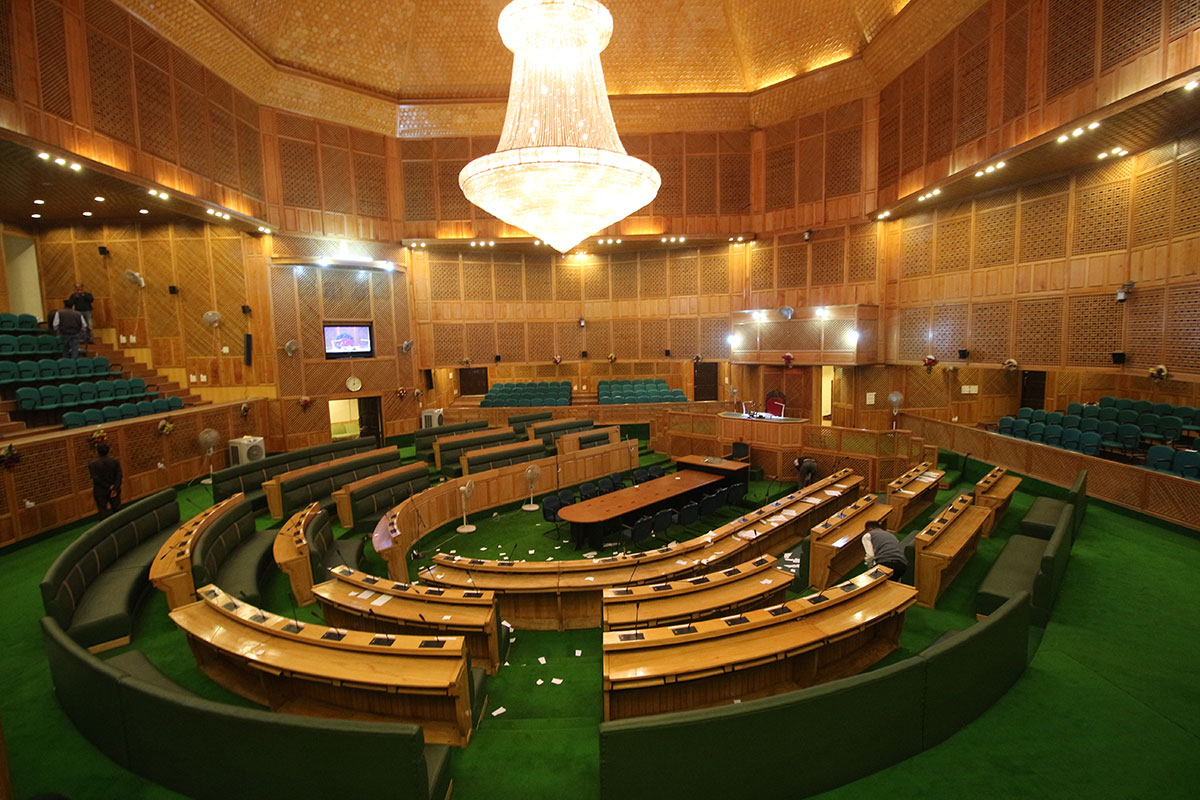
Amid a heat wave, Kashmir’s political class responded with heightened fervour to pressing governance issues, intensifying the stifling heat and the political tumult. On the Jammu and Kashmir front, there were two significant developments, last week. Firstly, the Ministry of Home Affairs (MHA) issued a notification that significantly increased the powers of the Lieutenant Governor. Simultaneously, the police chief of Jammu and Kashmir made certain remarks, that which political class did not take so kindly.
Though the two developments took place in two different situations, the political class presumes they are interlinked and aimed at disempowering Jammu and Kashmir further.
These developments took place at a time when the Jammu exhibited a surge in militant violence and Kashmir saw a chain of arrests of senior lawyers. Commentaries in various newspapers even invoked a possible September 2024 assembly election hinting it may even get delayed.
The Curious Controversy
The power and politics of Jammu and Kashmir has always been in the limelight. From being the most empowered assembly in the Union of India to becoming a Union Territory, Jammu and Kashmir has seen historic ups and downs. It has kept the situation in a hyperactive state with even the residents not able to understand the changes, sometimes. The recent MHA notification, issued in anticipation of the possible elections to a hugely disempowered assembly in September 2024, slays out the areas of administration over which the Lieutenant Governor of Jammu and Kashmir has sole responsibility, regardless of the existence of an elected legislative assembly.
It underlined that the Centre-appointed LG will be the sole authority to decide on matters related to police, public order, appointment and transfer of All India Services officers and senior law officers, including the advocate general of Jammu and Kashmir. The LG will also decide whether to grant sanctions for prosecution in different cases and matters connected with prisons.
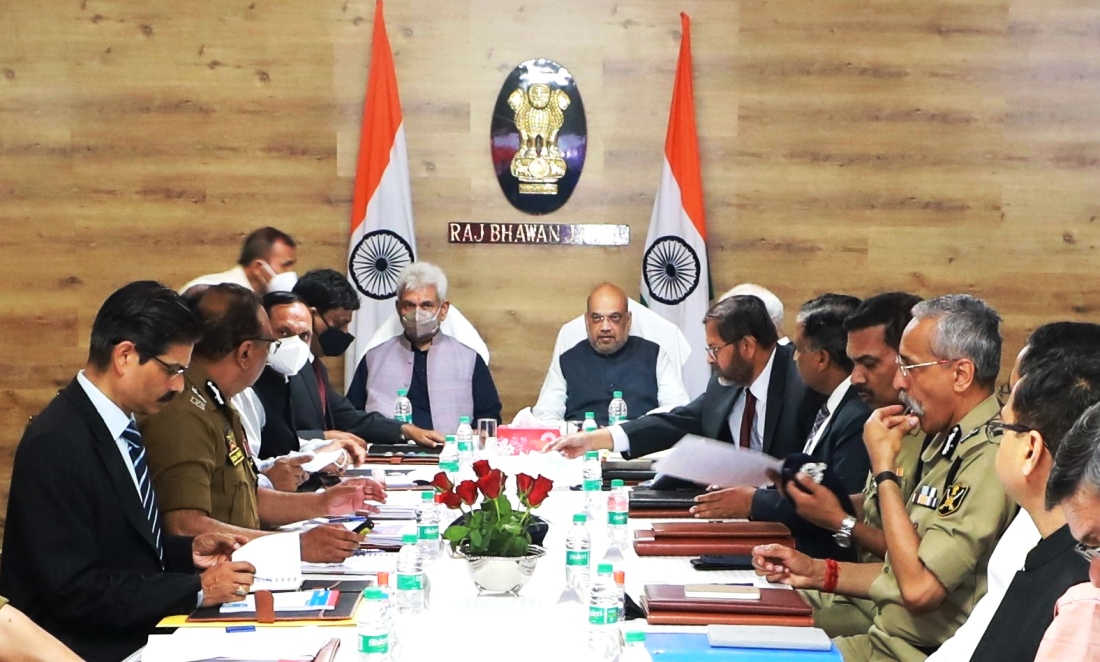
The notification came days ahead of the Supreme Court’s fixed deadline for the assembly elections in Jammu and Kashmir. The last assembly elections were held in 2014 when the People’s Democratic Party (PDP) formed an alliance government with the Bharatiya Janta Party (BJP) and the BJPDP government lasted till summer 2018. Since then no elected government has been in place and Jammu and Kashmir came under direct central rule. Initially, it was the governor who ruled Jammu and Kashmir and after Article 370 and state status was undone on August 5, 2019, Jammu and Kashmir started getting managed by a Lt Governor. The Chief Executive of the erstwhile state, Lt Governor is helped by an adviser. The latest notification has sparked significant concern and condemnation from political parties, who see the power changes as additional “disempowerment” of Jammu and Kashmir.
“This should serve as a wake-up call for the people of Jammu and Kashmir. The BJP-led government’s agenda is to dis-empower the people by stripping them of their rightful political power,” the Jammu and Kashmir National Conference (JKNC) Chief Spokesperson Tanvir Sadiq said. “The measure is designed to silence the democratic voice of the people. This manipulation is evident in the recent MHA order, which consolidates its authority and marginalises representation. The government’s decision to empower an unelected Lt Governor over an elected government is a blatant attack on the future of democracy.”
In December last year, while hearing petitions challenging the abrogation of Article 370, the Supreme Court directed the Election Commission of India to hold elections in Jammu and Kashmir by September 2024.
A Glorified Municipality
After the reading down of the Article 370 of the Indian Constitution, the Jammu and Kashmir Reorganisation Act, 2019 was passed in the Parliament, when the whole of Kashmir was under a curfew and communication blockade. The act bifurcated the erstwhile state of Jammu and Kashmir into two Union territories in 2019 – Ladakh without an assembly and Jammu and Kashmir UT with an assembly.
In August 2020, the MHA notified the transaction of business of the government of Union territory of Jammu and Kashmir Rules, 2019 and on July 12, 2024, certain amendments were made by adding new clauses to it.
When the transaction of business rules was first notified by the MHA in August 2020, political parties and legal experts identified a fundamental issue. According to Section 55 of the Jammu and Kashmir Reorganisation Act, 2019, these rules had to be enacted by the Lt Governor “on the advice of the Council of Ministers.” However, the Union government proceeded with the framing of business rules without an elected government in place.

To avoid this requirement, the central government relied on a proclamation issued by the President of India on October 31, 2019, which imposed President’s Rule in Jammu and Kashmir. This proclamation allowed the President to assume all functions of the government and suspend the operation of Section 55, thus enabling the central government to frame and amend business rules without consulting elected representatives.
A former senior official of the Jammu and Kashmir government called this action as ‘anti-democratic’.
Explaining the act, the retired officer who knows the evolution of the laws about Jammu and Kashmir, mentioned that, according to Section 32 of the Reorganisation Act, 2019, the legislative assembly of Jammu and Kashmir is only empowered to make laws in the State List except for matters related to ‘Public Order’ and “Police”. The Concurrent List in the Seventh Schedule to the Constitution of India is off-limits.
Under the Constitution, a state’s executive power extends to the items on which the state legislature has legislative competence. “In the case of Jammu and Kashmir, legislative competence has been limited to the state list, excluding police and public order. So there is nothing exceptional about the proposed modifications because they are consistent with the fundamental arrangement outlined in the 2019 Reorganisation Act,” the former officer explained.
Detailing the authority the Chief Minister and Ministers of Jammu and Kashmir will enjoy, this legal expert suggested the politicians should contest panchayat or municipal elections. “Sarpanch and councillors will be more powerful as they have defined roles and powers. Chief Minister will just be a rubber stamp,” he said. “Bureaucrats will be more powerful than the elected members which itself shows how helpless will be the elected government.”
The political class of Jammu and Kashmir understands these things and that is the reason that they reacted to the issue strongly.
Another indicator that elections are around the corner in J&K. This is why a firm commitment laying out the timeline for restoration of full, undiluted statehood for J&K is a prerequisite for these elections. The people of J&K deserve better than powerless, rubber stamp CM who… https://t.co/THvouV1TxF
— Omar Abdullah (@OmarAbdullah) July 13, 2024
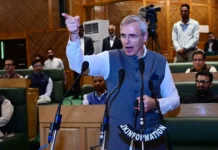
The former chief minister and JKNC Vice President Omar Abdullah said the people of Jammu and Kashmir deserve better than a “powerless, rubber stamp” chief minister who will have to beg the Lt Governor to get a peon appointed.
He, however, said the move was “another indicator that elections are around the corner”. “This is why a firm commitment to laying out the timeline for restoration of full, undiluted statehood for JK is a prerequisite for these elections. The people of JK deserve better than a powerless, rubber stamp CM who will have to beg the LG to get his/her peon appointed,” he said.
Another former chief minister and President of PDP, Mehbooba Mufti in a video statement said the amendments raised a fundamental question about the way New Delhi thinks of the people of Jammu and Kashmir.
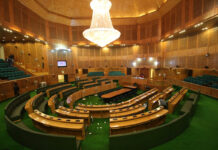
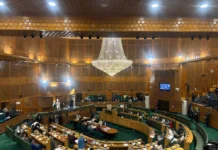
“You have brought such an ordinance by which you have snatched everything from the most powerful assembly of Jammu and Kashmir in the entire country. Today, you want to convert it into a municipality,” said Mufti.
Jammu and Kashmir Pradesh Congress Committee (JKPCC) president Vikar Rasool Wani termed the move a “murder of democracy”.
“The murder of democracy in Jammu and Kashmir is evident before the restoration of proper democracy and statehood. MHA gave more powers, including the Police, Law and order, and the transfer of officers etc have been vested in the LG,” Wani said on X.
Apni Party chief Altaf Bukhari, seen as pro-government, appealed to Jammu and Kashmir’s political parties to shun differences and unitedly raise voices against the Centre’s move.
“This new decision aims at making the state hollow in which no powers will be left for an elected government… The people of Jammu and Kashmir do not support this,” Bukhari said in a press conference. Bukhari, a former minister, said if the Centre wants to create a “powerless assembly” in Jammu and Kashmir, it will not be acceptable.“If they want the chief minister to be a toothless tiger and befool the people, then I do not think this will solve any of the issues confronting the people of Jammu and Kashmir,” he said.
The Apni Party chief said this is not an issue that affects any one political party.
“We appeal to all parties to shun political differences and come together on this issue. If we cannot stand united today, then we will never be. We should ensure that the statehood that we get is not hollow and has all powers to serve people,” he said. “We have to be united to serve the interests of the people.”
“Earlier you would use democracy as a means to counter separatism and terrorism but now you are seeing democracy and democratic empowerment as a source of separation that is how mandates are being treated and electoral powers are being treated,” PDP Youth leader Waheed Para, who ended runner up in the last Lok Sabha elections, said. “It is seen as a barrier between integration.”
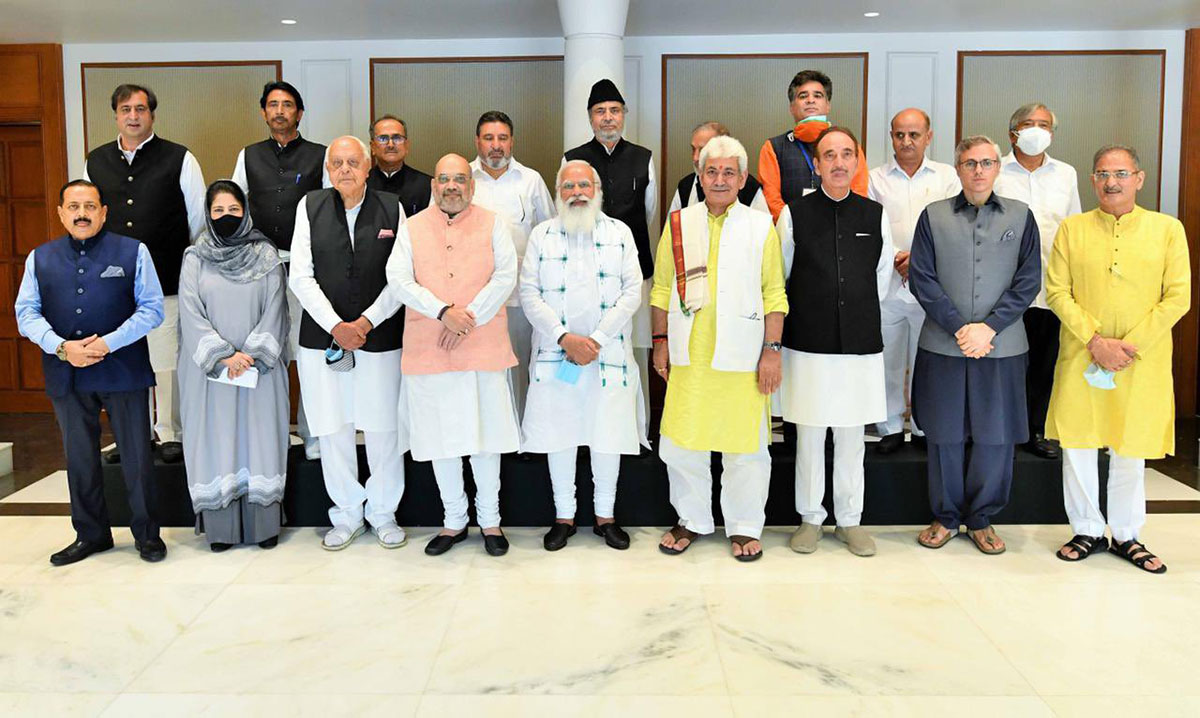
Terming it unfortunate, Parra said the abrogation was done with an idea to integrate and mainstream Kashmir with the country, but now it is coming with “additional disempowerment.” He believes the chief minister will have no role other than that every file will become a source of conflict rather than governance. “Every file will become a power tussle and empowerment fight, disempowerment fight so every file will become equivalent to the question of power negotiation between LG and the chief minister. LG is already powerful and more powers have been added to him.”
Peoples Conference chairman Sajad Lone also lambasted the centre, calling the amendments part of a “continued systematic disempowerment” of the people of Jammu and Kashmir.
Government Response
Though nobody responded to the chain of reactions from Kashmir’s political class, media reports quoted some official sources saying that the amendments are nothing new. “Nothing new has been provided in these rules, it is already mentioned in the State Reorganisation Act of 2019,” an unnamed source was quoted in the media. “The current amendment to rules is just clarificatory in nature flowing from the existing provisions of SRA 2019.”
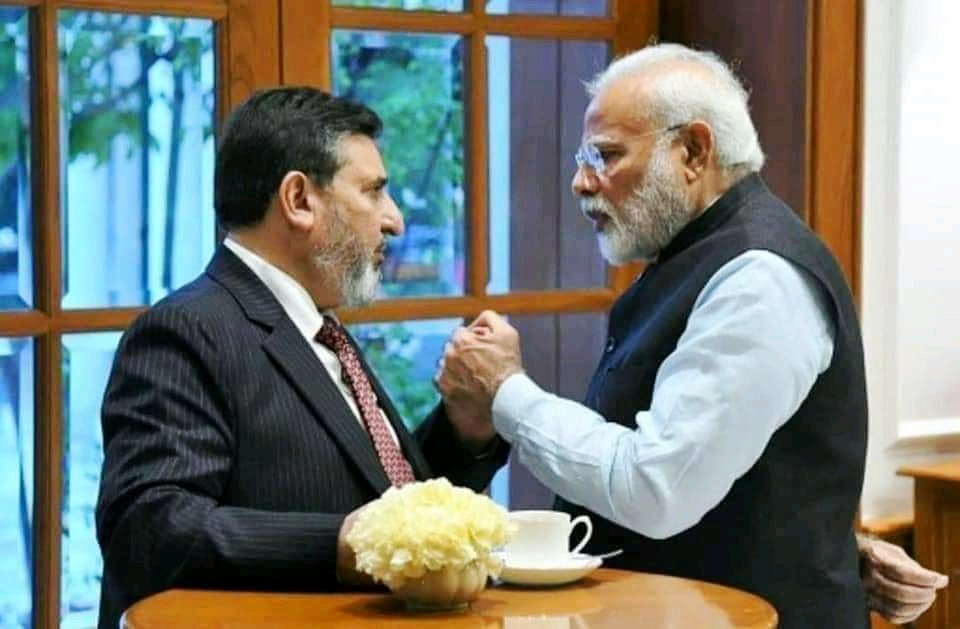
In anticipation of these amendments, a report exclusively appearing in a Jammu newspaper said that this fiscal, the budget of Jammu and Kashmir Police will be taken away from the budget of Jammu and Kashmir and added to the MHA grants on the lines of the Delhi Police. The proposal for inclusion of the budget of Jammu and Kashmir Police within the budget grants of the MHA, the newspaper reported has been “agreed in principle by the Department of Economic Affairs. “And this will be done from the current year itself as Sitharaman is likely to present the first budget of Modi 3.0 Government on July 22,” the newspaper reported. Orders have been issued for completing formalities. “The formalities include ensuring proper inclusion of the balance budget for 2024-25 for adoption in the budget of the Union MHA on the lines of Delhi Police and putting in place, in coordination with CCA of the Union Home Ministry, the mechanism for release of budget, delegation of financial powers and expenditure management under various heads for smooth operations of J&K Police starting from the Union budget approval.”
On July 23, the Finance Minister announced that MHA has taken over the Jammu Kashmir Police’s Rs 17000 crore budget.
DGP Remarks
The political class was busy in reacting to the MHA notification when police chief RR Swain made a speech at IIM Jammu. It triggered a Himalayan controversy. In his speech, parts of which were published by various news agencies, the top officer indicated the regional parties were “cultivating terrorist network leaders for electoral benefits”.
Swain stated that there was “overwhelming evidence” to link mainstream leaders based in Kashmir with militancy, as Pakistan “successfully came to infiltrate all important aspects of our civil society” when Jammu Kashmir was a state.
“Things had come to such a pass that the so-called regional mainstream parties started cultivating leaders of terrorist networks through intimidations and sometimes directly to further their electoral prospects,” the DGP was quoted as having said during a lecture at the IIM Jammu. He also alleged that before the reading down of Article 370 in 2019, the governments headed by Kashmir-based mainstream parties “sabotaged investigations” of suspects who were allegedly involved in the “facilitation and financing” of militant recruitments.
As these statements triggered a lot of dust and heat, Additional DGP Law and Order, Vijay Kumar asserted the JKP was an apolitical and professional force. “Jammu and Kashmir Police from the beginning has been an apolitical force. The DGP’s statement could be in his personal capacity,” he said. “Jammu and Kashmir Police is an apolitical, professional, and impartial force.”

Fierce Reactions
The reactions were scathing and it was cutting across party lines. “By now, heads should have rolled and the DGP should have been sacked,” Mehbooba Mufti said in a presser. “In the last 32 months, nearly 50 soldiers have lost their lives. No one is being held accountable while the current DGP is busy fixing things politically.”
The PDP president alleged that Swain was more focused on breaking her party and harassing the people of Kashmir than doing his job. She accused him of communal bias. “We don’t need a fixer here,” Mufti said. “We need a DGP. In the past, a lot of non-local DGPs and administrative officers have worked efficiently here, but today, J&K is being run on communal lines.”
“Obtaining a passport has become a weapon and journalists are harassed. His job is to arrest more and more people under the UAPA and to conduct raids, including on businesses, by agencies such as ED and CBI. Even mosque leaders are not spared. They are forced to work for the government or warned to prepare for prison time,” she added.
Hitting out at the top officer, MP and senior JKNC leader, Aga Syed Ruhullah Mehdi, lashed out at him in a long Twitter thread. “This DGP, who has now arrogantly and overtly started bad-mouthing, needs to be reminded that while he has been working like a district president or at best the State president for a particular political ideology and political party; While he was busy breaking and making political parties in Kashmir, more than 55 army personnel, including officers of different ranks up to JCO, have lost their lives in different attacks in Jammu since 2023 only,” Ruhullah wrote. “Had he been dedicated more to his job as a cop and worked less as a political worker, these tragedies could have been avoided.”
Sajad Lone also reacted sharply to the comments, terming them as “an indication of the disdain and the contempt for anything remotely pertaining to democracy” in Jammu and Kashmir which is under the direct administration of the Union government since 2019. “Such statements by serving officers are an indication of the disdain and the contempt for anything remotely pertaining to democracy. Such a sad state of affairs and even sadder is the fact that the scriptwriters of this sad state of affairs take pride in having brought J and K to this level,” Lone said in a post on X.
A Clarification
Amid the reactions, Swain had his say.”I was in an academic institution in Jammu. We were discussing how important is it to frame strategies, be it for management institutions or those institutions which are into designing their national security. So when you are designing any strategy you need to analyse as to where you need intervention and you really need to find out what exactly needs to be done. If you are treading the same path and expecting to reach a different destination, it is not certainly going to happen,” Swain was quoted saying to a media outlet. “So, I didn’t think it is aimed at any particular individual or any political party. What I was intending was to make was a diagnosis and an analysis..” Refusing that he was backtracking, Swain told the outlet that it was introspection.